
Steady heat for prairie winters that drop past -20°C.
From Regina and Moose Jaw to the smaller towns strung along the grid roads, gas fireplaces give Southern Saskatchewan homes heat that starts at the flip of a switch, no matter how long the cold stretch runs. I match you with a trusted local dealer who knows whether SaskEnergy mains or a propane tank is the right fuel path for your address.
Every Project Starts From One of These Five Situations
Instant heat built for a five-month heating season.
Southern Saskatchewan covers a wide stretch of open prairie and grain-belt towns, from Regina and Moose Jaw through Weyburn, Estevan, Swift Current, and Assiniboia, home to roughly 330,000 people spread across cities, farm towns, and surrounding rural municipalities. In climate zone 7B, with average winter lows near -20.1°C, the heating season here runs five months or more, similar to what Winnipeg deals with just across the border. Trembling aspen, paper birch, jack pine, and white spruce cut from the northern forest fringe still heat plenty of rural homes and cabins, but inside the incorporated towns and cities where most of the population actually lives, gas has become the default for daily heat because it works the same on the coldest night of January as it does in October.
SaskEnergy's distribution network reaches nearly every incorporated municipality across the settled south, so a direct-vent gas fireplace or insert on natural gas is realistic for most in-town addresses. Step out onto an acreage or farmyard past the mains and propane, delivered and stored in a bulk tank, becomes the standard fuel instead, with the fireplace itself running the same way. Either way, installation goes through the municipal building department, gas line work follows CSA B365 code and has to be done by a licensed gas fitter, and a full-service local dealer typically coordinates all of it rather than leaving you to schedule separate trades in the middle of a prairie winter.
Three steps. No salesperson until you're ready.
Tell us about your project
Your postal code, your situation, and the fuel you're leaning toward—or let the answers point you to one.
See what's actually available
The brands dealers within 100 miles genuinely carry—real options, never a catalog mirage.
Get your dealer & Project Guide
A trusted local dealer, plus the free Project Guide & Parts List that names every component of the job.
Frequently Asked Questions
How much does a gas fireplace installation cost in Southern Saskatchewan?
Most installations run $6,000 to $15,000 CAD. A direct-vent insert going into an existing masonry firebox in an older Regina or Moose Jaw home, with a gas line already nearby, tends to land toward the lower end. A new built-in unit for a renovation or new construction, with framing, venting, and a fresh gas run, sits in the middle of the range. Rural properties that need a new propane tank set or a longer buried line from the tank to the house push toward the top, and acreages well outside town may see a modest travel charge added by the installer.
Can I convert my existing wood fireplace to gas?
Yes, and it is a common upgrade in older housing stock across Weyburn, Swift Current, and Moose Jaw where original masonry fireplaces are common but rarely used because splitting and hauling wood into town isn't practical anymore. A gas insert drops into the existing firebox and vents through a stainless liner run up the current chimney, so the look stays the same while the heat output becomes controllable and instant. Expect $6,000 to $10,000 depending on whether the home is on SaskEnergy natural gas or needs a propane setup, and whether any new gas line work is required to reach the fireplace wall.
Is natural gas available everywhere in Southern Saskatchewan, or do some homes need propane?
SaskEnergy serves natural gas to the great majority of incorporated cities and towns across the region, including Regina, Moose Jaw, Weyburn, Estevan, and Swift Current, so if your home already has a gas furnace or water heater, adding a fireplace on that same line is straightforward. Once you're outside town limits, on a farmyard or acreage in one of the surrounding rural municipalities, there usually isn't a gas main nearby, and propane from a regional bulk supplier becomes the standard fuel, either off an existing tank or a new one your propane company sets and fills.
Will my gas fireplace still work if the power goes out?
Most modern gas fireplaces are built to run through a power outage. Units with intermittent pilot ignition carry a battery backup, typically AA batteries built into the unit, that automatically takes over lighting and running the fireplace when the power drops. Valor fireplaces go further, using a millivolt pilot assembly that generates its own electricity through the thermocouple, so there's no battery at all to keep charged. That distinction matters here, since a prairie blizzard or ice storm can knock out power across a wide stretch of Southern Saskatchewan for more than a day. Ask your local dealer which ignition system is on any model you're considering.
What's the difference between a gas fireplace, gas insert, and gas stove?
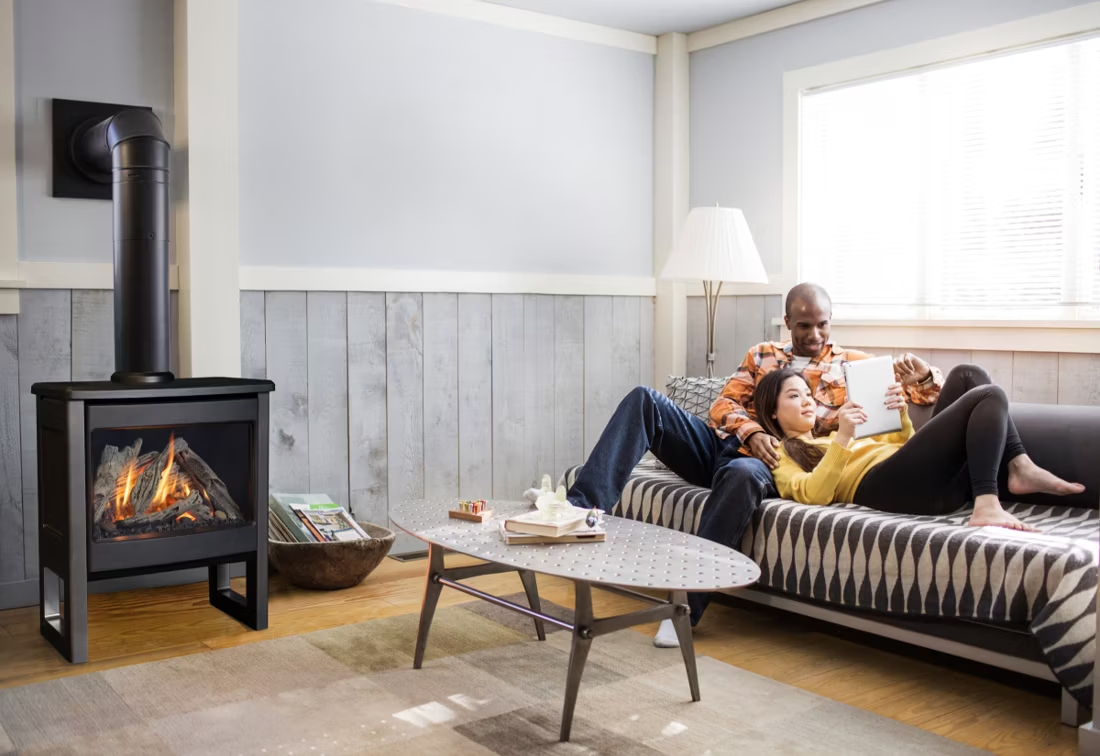
A gas fireplace is a fully built-in unit framed into a wall, the right call for new construction or a major renovation in newer Regina or Moose Jaw subdivisions. A gas insert slides into an existing masonry firebox and uses the current chimney as the vent path, which fits a lot of older homes across the region that already have a fireplace they want to upgrade. A gas stove is a freestanding cabinet-style unit that sits on the floor like a wood stove but runs on gas, a useful option for a room without an existing chimney, or for a farmhouse being converted away from wood heat. A local dealer can walk your space and tell you which configuration actually works.
Do I need a permit to install a gas fireplace in Southern Saskatchewan?
Yes. New gas fireplace installations go through the municipal building department for the jurisdiction you're in, and the gas line portion has to follow CSA B365 installation code and be completed by a licensed gas fitter, whether you're inside Regina city limits or in a surrounding rural municipality. This is one reason to go through a full-service hearth dealer rather than a handyman install, since a proper dealer coordinates the gas work, the venting, and the inspection sign-off as one job instead of you chasing separate trades.
Should I choose a vented or vent-free gas fireplace?
Direct-vent (vented) gas fireplaces pull combustion air from outside and exhaust it back outside through a sealed pipe, so nothing from the burner ends up in the room. Vent-free units burn directly into the living space and are legal in Saskatchewan under specific room-sizing rules, but given how tightly sealed most homes here are built for a long, dry prairie winter, most local dealers steer homeowners toward direct-vent units. They heat just as effectively and don't add moisture or combustion byproducts to indoor air during the stretch of the year when windows stay shut for months at a time.
How often does a gas fireplace need to be serviced?
Plan on an annual inspection, ideally in September before the heating season takes hold. A technician checks the burner, pilot or ignition assembly, gas connections, and venting, and cleans the glass and interior, a much quicker visit than a wood chimney sweep but still worthwhile for a unit that may run daily for five months straight. A standard annual service call from a local gas appliance technician typically runs $150 to $250 CAD.
Gas or wood, which makes more sense for a home in Southern Saskatchewan?
Wood, cut as trembling aspen, paper birch, jack pine, or white spruce under a free dead-and-down permit through the Saskatchewan Ministry of Environment's Forest Service Branch, still makes sense for rural properties with land access, a woodlot, or a real interest in a backup heat source that works with no electricity at all. Gas offers instant, thermostat-controlled heat with no ash, no hauling, and no chimney sweep, which is why it's the default choice for in-town homes across Regina, Moose Jaw, and the rest of the region. Households on acreages sometimes run both, wood for backup and cost control, gas for daily convenience in the main living space. If your priority is low-maintenance heat that performs the same on every one of the season's coldest nights, gas is the simpler starting point.
Can a gas fireplace run on a thermostat?
Most modern gas fireplaces can—turn it on and off from the couch with a remote, or set a room temperature and let the fireplace hold the comfort zone for you. If low maintenance matters to your family, this is the feature set that makes gas the convenience pick over wood and pellet.
Why do fireplace quotes vary so much?
Because a fireplace is an iceberg—there's more behind the wall than in front of it. A low quote often covers only the unit; the full scope includes vent pipe, gas line or electrical, framing, and the tile or stone that has to come off and go back on. Make every bidder price the whole job. If a dealer can't speak to the full scope with confidence, that's your signal to keep looking.
What does it take to replace an existing fireplace?
Fireplaces are like icebergs—bigger behind the wall than in front of it. Replacement means removing the surrounding tile or stone (the finish material laps onto the fireplace face), pulling the old unit, setting the new one in the same enclosure, and re-finishing the wall. A hearth professional can determine what's behind your wall without demolition during an in-home preview.
Why is my open fireplace making my house colder?
Open fireplaces suck—literally. As the fire burns, it consumes air your furnace already paid to heat and pulls it out through the chimney, so the house is actually colder after the fire goes out than before you lit it. An insert fixes this: it seals the chimney, puts fixed glass across the front, and turns that hole in your house into a real heat source.
Stove and Fireplace Dealers in Southern Saskatchewan
Listings include WhyFire partner dealers, dealers we have verified as authorized for the brands we recommend, and established local businesses that carry hearth products. Every listing shows which one it is. The ones marked Preferred run on WhyFire's software, so they can show you real pricing and book your appointment right here. No manufacturer pays for placement. How we verify dealers →
Timberstone Distribution Regina
Aquifer Distributing
Universal Plumbing & Heating Inc
Natural Gas Service in Southern Saskatchewan
Confirm service at your address before planning a gas fireplace—a quick call settles it.
SaskEnergy
Get your free Project Guide & Parts List for a gas fireplace in Southern Saskatchewan.
Tell me a bit about your home, whether you're on SaskEnergy natural gas or propane, and I'll match you with a trusted local dealer and send over a free Project Guide & Parts List, the exact equipment, vent kit, and recommended dealer for your gas project, no big-box guesswork.
Find Your Fireplace →