
Set-and-forget heat for a prairie winter that doesn't quit.
Southern Saskatchewan winters average -20.1°C on the coldest nights, and the heating season runs long past what most people expect from a Canadian prairie. A pellet stove gives you thermostat-controlled heat without cutting or splitting a cord. I'll match you with a trusted local dealer who knows the fuel supply, the permits, and what actually fits your home.
Every Project Starts From One of These Five Situations
Automated heat, minus the splitting and stacking.
Southern Saskatchewan covers the open prairie stretching from Regina and Moose Jaw east through Weyburn and Estevan, a climate zone 7B region where winter lows average -20.1°C and the heating season starts well before Thanksgiving and holds on into April—a stretch of cold on par with Winnipeg. Most towns here run on SaskEnergy natural gas as the default heat source, so a pellet stove usually isn't the primary furnace replacement—it's the zone heater for a farmhouse living room, the backup for an acreage that loses power in a blizzard, or the upgrade for a household that wants real heat output without babysitting a wood fire every few hours.
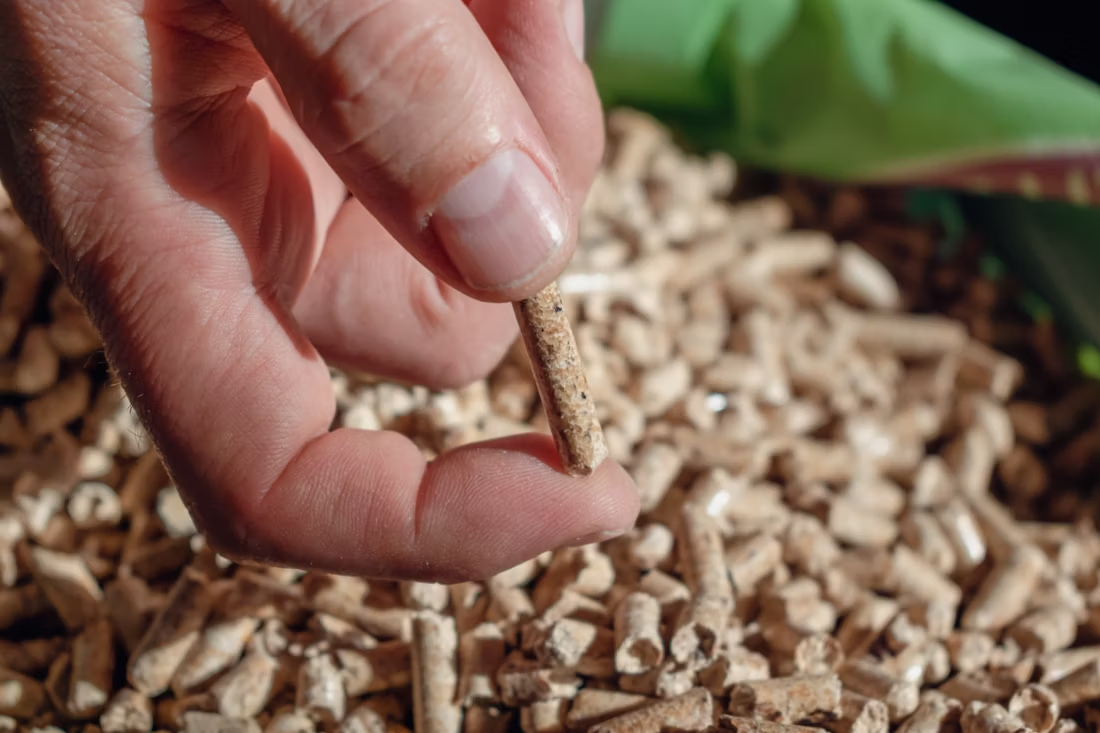
Pellet supply on the prairie runs through regional brands like La Crete Sawmills and Pinnacle Premium, typically $400-$575 per tonne through local hearth dealers and farm supply outlets—made from the same aspen, spruce, and pine byproduct that comes off the northern forest fringe supplying most of the region's cut-your-own firewood. Installation still has to clear the municipal building department and meet CSA B365 code, and most insurers ask for a WETT-qualified inspection on any solid-fuel appliance, pellet included, before they'll add it to a homeowner's policy.
Three steps. No salesperson until you're ready.
Tell us about your project
Your postal code, your situation, and the fuel you're leaning toward—or let the answers point you to one.
See what's actually available
The brands dealers within 100 miles genuinely carry—real options, never a catalog mirage.
Get your dealer & Project Guide
A trusted local dealer, plus the free Project Guide & Parts List that names every component of the job.
Frequently Asked Questions
How much does a pellet stove installation cost in Southern Saskatchewan?
A typical pellet stove or insert installation across Southern Saskatchewan runs $6,000 to $10,000 CAD, covering the unit, venting, and a hearth pad where needed. A pellet insert going into an existing masonry fireplace in a Regina or Moose Jaw home usually lands toward the lower end, since the chimney cavity is already there to run a liner through. A freestanding pellet stove in a farmhouse or acreage without any existing venting, common outside Weyburn and Estevan, runs higher once wall penetration and exterior termination are added. A local dealer will confirm the number after seeing the space and the existing gas or electrical setup.
What size pellet stove do I need for a prairie home?
Most Southern Saskatchewan living rooms and open-concept farmhouse main floors call for a stove rated in the 1,200 to 2,000 sq ft range, but wind exposure matters as much as square footage out here. A home on an open quarter-section outside Weyburn or Assiniboia with no windbreak loses heat faster than a similar-sized house tucked into a Regina neighbourhood, so the same floor plan can call for different hopper capacity and BTU output depending on the site. A dealer sizing the unit in person, rather than off a generic chart, is the difference between a stove that coasts through a -20°C night and one that runs flat-out and still falls short.
Do I need a permit to install a pellet stove in Southern Saskatchewan?
Yes. New installations go through the municipal building department for whichever town or rural municipality you're in, and the work has to meet CSA B365 installation code. Separately, most home insurers require a WETT-qualified inspection before they'll cover a solid-fuel appliance, pellet stoves included, even though they burn cleaner and more automated than a wood stove. A local dealer who handles pellet installs regularly usually has a working relationship with a WETT inspector and builds that step into the timeline instead of leaving it as a surprise before your policy renewal.
Where do I buy pellets in Southern Saskatchewan, and how much do they cost?
Regional brands like La Crete Sawmills and Pinnacle Premium are the ones local dealers stock most consistently, running roughly $400 to $575 per tonne depending on the season and where you're buying—farm supply stores and hearth shops both carry bagged pellets across the region. Buying your season's supply in late summer, before demand and price both climb with the first cold snap, is standard practice for anyone running a pellet stove as a serious heat source rather than occasional ambiance. Store bags off a concrete floor and away from any dampness—pellets swell and crumble the moment they take on moisture.
How much maintenance does a pellet stove need?
More than a gas fireplace, less than a wood stove. Plan on emptying the ash pan every few days during steady winter use, cleaning the burn pot weekly, and running a full auger and venting cleaning once a season, ideally before the heating season starts in October. A stove running most of a Southern Saskatchewan winter can burn through several tonnes of pellets, and buildup in the exhaust venting is the most common cause of the error codes and feed issues local dealers get called out for. An annual professional service visit catches problems before they show up as a cold house at -20°C.
Will my pellet stove still work if the power goes out?
Not without a backup plan. Pellet stoves rely on an electric auger to feed fuel and a blower to move heat, so a SaskPower outage during a prairie blizzard shuts the stove down along with everything else. Many rural Southern Saskatchewan households running a pellet stove as their storm backup pair it with a small battery backup unit or a generator sized to carry the stove's modest draw. If your priority is heat that works no matter what the grid is doing, that's worth discussing with your dealer up front, since it changes which model and accessories make sense.
Why choose a pellet stove over wood when firewood permits are free here?
The Saskatchewan Ministry of Environment's Forest Service Branch issues free dead-and-down cutting permits year-round, and plenty of Southern Saskatchewan households still heat with trembling aspen, birch, and jack pine cut from the northern forest fringe. Wood costs less if you're willing to cut, haul, split, and stack it yourself. A pellet stove trades that labour for a thermostat and a bag of fuel from a local supplier: you load the hopper, set the temperature, and it holds steady overnight without you tending a fire at 2 a.m. For a household without the time, land access, or truck to haul cordwood, pellet is usually the more realistic option.
I already have natural gas, why would I add a pellet stove?
SaskEnergy service covers most towns across Southern Saskatchewan, so a gas furnace is already doing the heavy lifting in most homes. A pellet stove on top of that isn't about replacing the furnace—it's a supplemental heat source that lets you drop the thermostat elsewhere in the house, a hedge against gas price swings, or a heat source for a room the furnace doesn't reach well, like a converted garage or a farmhouse addition. It also gives you a fallback if you're worried about a prolonged outage, provided you've got a battery backup for the auger.
When's the best time to install a pellet stove before winter hits?
Late summer through early fall, before the first hard frost. Local dealers across Southern Saskatchewan see their busiest stretch from September through November, right when everyone remembers winter is coming, and projects booked in July or August tend to get scheduled faster and avoid any pre-winter backlog. It also gives you time to line up a WETT inspection for insurance and get your first tonne of pellets ordered before prices climb with demand.
Why do fireplace quotes vary so much?
Because a fireplace is an iceberg—there's more behind the wall than in front of it. A low quote often covers only the unit; the full scope includes vent pipe, gas line or electrical, framing, and the tile or stone that has to come off and go back on. Make every bidder price the whole job. If a dealer can't speak to the full scope with confidence, that's your signal to keep looking.
Is it worth replacing an old fireplace that still sort of works?
Ask three questions: Is it ugly? Is it drafty? Does it actually work? Most old fireplaces fail at least two. Beyond looks, an old unit leaks air around the damper year-round and—if it's gas with a standing pilot—quietly burns a couple hundred dollars a year. A modern replacement seals the wall, heats the room, and changes how the whole space gets used.
What's the difference between an insert and a zero-clearance fireplace?
An insert is a fireplace that slides into a pre-existing wood-burning fireplace—if you don't have one, there's nothing to insert it into. A zero-clearance fireplace is built into a framed wall, which makes it the answer for remodels and new construction. Simple test: existing masonry fireplace means insert; blank or framed wall means zero-clearance.
How often does a pellet stove need cleaning?
A clean pellet stove is a happy pellet stove. Plan on cleaning the burn pot about once a week when you're burning regularly—ash and clinkers gum up the air holes just like a pellet barbecue. Most pellet stove problems trace back to skipped cleaning that nobody explained up front. Some designs make it easy with a trapdoor burn pot: pull a lever and the gunk drops into the ash pan.
Stove and Fireplace Dealers in Southern Saskatchewan
Listings include WhyFire partner dealers, dealers we have verified as authorized for the brands we recommend, and established local businesses that carry hearth products. Every listing shows which one it is. The ones marked Preferred run on WhyFire's software, so they can show you real pricing and book your appointment right here. No manufacturer pays for placement. How we verify dealers →
Timberstone Distribution Regina
Aquifer Distributing
Universal Plumbing & Heating Inc
Pellet Brands Stocked Around Southern Saskatchewan
Typical price runs $400-$575 per ton—buy early-season for the best rates. Manufacturers will point you to the nearest stocking dealer.
La Crete Sawmills
Pinnacle Premium
Get your free Project Guide & Parts List for a pellet stove in Southern Saskatchewan.
Tell me about your home, its heating setup, and how you plan to use the stove, and I'll match you with a trusted local Southern Saskatchewan dealer and send a free Project Guide & Parts List, the exact parts, including the vent kit, for your pellet project.
Find Your Fireplace →