
Reliable heat for a prairie town where January nights sit near -18.7°C.
Gravelbourg sits on the open Saskatchewan prairie at 699 metres, on a long, severe heating season that runs five months or more. SaskEnergy mains reach the town, so we'll help you find a trusted local dealer who knows the gas line work, the venting, and what's actually installable on your street.
Every Project Starts From One of These Five Situations
Heat that starts long before the woodpile does.
Gravelbourg's winters run colder and longer than the mild image some people carry of southern Saskatchewan—an average low near -18.7°C, with stretches that dip well past that, and a heating season that starts in October and doesn't loosen its grip until April. It's the same long-haul continental cold that Regina and Saskatoon residents know well, and it's a climate where a fireplace that fires instantly at the flip of a switch, without hauling in cordwood at -25°C, earns its keep fast.
Trembling aspen, paper birch, jack pine, and white spruce are the woods locals still split for wood stoves, much of it cut free of charge as dead-and-down timber through the Saskatchewan Ministry of Environment's Forest Service Branch. But SaskEnergy's mains actually run through Gravelbourg, which is not a given in a town this size, and that access has pushed a good number of households toward gas for their main living space—keeping wood or a pellet stove as backup for the days SaskPower's grid takes a hit in a prairie storm.
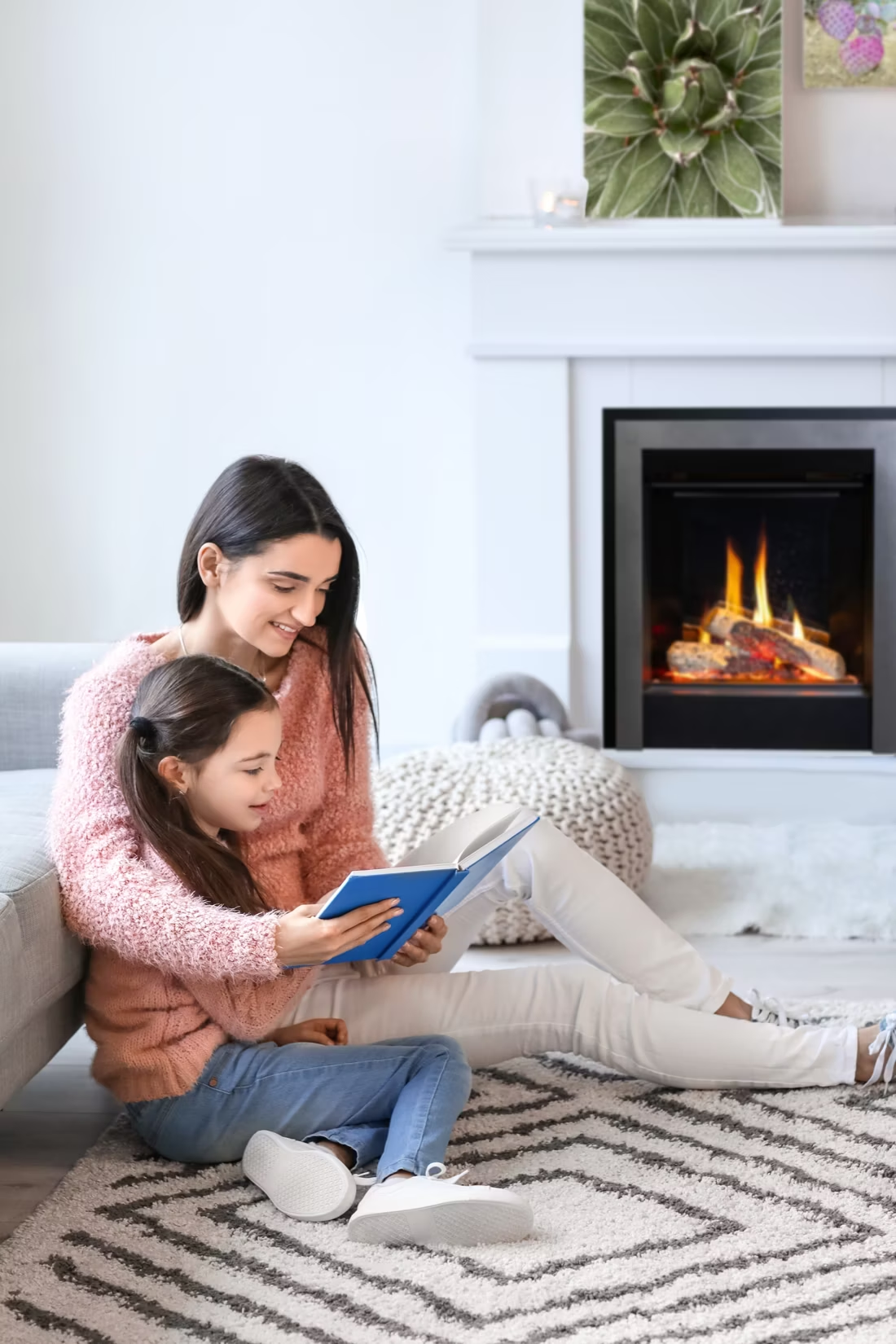
Three steps. No salesperson until you're ready.
Tell us about your project
Your postal code, your situation, and the fuel you're leaning toward—or let the answers point you to one.
See what's actually available
The brands dealers within 100 miles genuinely carry—real options, never a catalog mirage.
Get your dealer & Project Guide
A trusted local dealer, plus the free Project Guide & Parts List that names every component of the job.
Frequently Asked Questions
How much does a gas fireplace installation cost in Gravelbourg?
Typical installs here run $6,000 to $15,000 CAD. A direct-vent insert going into an existing masonry firebox that's already near a gas line sits toward the lower end. A new built-in unit for a renovation or addition—with a fresh SaskEnergy line run and venting through an exterior wall—lands toward the top. Properties just outside town limits that fall off the SaskEnergy footprint should budget extra for a propane tank set instead of a gas line tie-in.
Can I convert my existing wood fireplace to gas?
Yes, and it's a common request in a town where older masonry fireplaces were originally built to burn aspen or jack pine. A gas insert typically slides into the existing firebox with a liner run through the current chimney, usually landing in the $6,000-$9,500 range depending on whether you tie into SaskEnergy or run propane. Note that the WETT inspection commonly required for wood appliance insurance doesn't apply to a gas conversion—the municipal building department still requires a permit under the CSA B365 code, but the inspection is a gas-fitter sign-off, not a WETT one.
Does every home in Gravelbourg have natural gas service?
Most in-town addresses do—SaskEnergy runs mains through Gravelbourg, which puts a genuine gas fireplace within reach for the majority of homes rather than the propane workaround that a lot of small Saskatchewan towns need. Acreages and farmyards just outside town limits are usually off the mains, though, and rely on a propane tank instead. Either fuel works in the same fireplace body—your dealer just configures the orifice and regulator for whichever supply your address has.
Will a gas fireplace still work if the power goes out?
Most models will, which matters given how often prairie storms knock out SaskPower service across Southern Saskatchewan for hours at a stretch. Units with intermittent pilot ignition run on AA battery backup that kicks in automatically when the grid drops. Standing-pilot models skip the battery altogether since the pilot's thermocouple generates its own current. Ask your dealer which ignition system is on any model you're considering—in a town with a long, severe heating season, it's a real decision, not a footnote.
What's the difference between a gas fireplace, insert, and stove?
A gas fireplace is a built-in unit framed into a wall, typical in new construction or a full renovation. A gas insert fits inside an existing masonry firebox, which is the common upgrade in Gravelbourg's older homes that originally burned aspen or spruce and want to keep using the chimney chase. A gas stove is freestanding on a hearth pad, similar footprint to a wood stove but running off a gas line or propane tank instead of split wood. For most existing homes in town, an insert is the least disruptive route.
Do I need a permit to install a gas fireplace in Gravelbourg?
Yes. You'll pull a building permit through the municipal building department, and the installation itself has to meet the CSA B365 code. A licensed gas fitter handles the line hookup and final gas inspection separately from the building permit. Most dealers who work in Gravelbourg coordinate both pieces as part of the job, so you're not managing two separate sign-offs on your own.
Vented vs. vent-free gas fireplaces—what should I know for a Gravelbourg home?
Direct-vent units pull combustion air from outside and exhaust it back outside through sealed venting—they're code-compliant everywhere in Saskatchewan and the standard choice for a unit that's going to run daily through a long prairie winter. Vent-free units burn into the room and carry strict room-sizing rules; most local dealers steer homeowners here toward direct-vent so the fireplace isn't adding moisture and combustion byproducts to a tightly sealed home during the coldest stretches of the year.
How often does a gas fireplace need to be serviced?
Plan on an annual check, ideally in late summer or early fall before the first cold snap rather than mid-winter when technicians in the region are booked solid. A technician checks the burner, pilot assembly, gas connections, and venting, and cleans the glass. On a unit running most days through a five-month-plus heating season, skipping that visit is how an ignition problem shows up on the coldest night of January. Expect roughly $150-$250 for a standard visit.
Gas vs. wood vs. pellet—which makes the most sense for a Gravelbourg home?
Wood—trembling aspen, paper birch, jack pine, or white spruce, often cut free as dead-and-down timber through the Forest Service Branch's year-round permit—still wins on raw fuel cost and keeps working without electricity during an outage. Pellet stoves burning La Crete Sawmills or Pinnacle Premium pellets at roughly $400-$575 a ton burn cleaner and load easier than cordwood but need power for the auger. Gas wins on convenience: no stacking, no ash, and instant heat, with SaskEnergy's mains already running through town making it a realistic primary choice rather than a rare upgrade. A lot of Gravelbourg households run gas in the main living space and keep a wood or pellet stove elsewhere as backup for the days SaskPower's grid goes down.
Can a gas fireplace run on a thermostat?
Most modern gas fireplaces can—turn it on and off from the couch with a remote, or set a room temperature and let the fireplace hold the comfort zone for you. If low maintenance matters to your family, this is the feature set that makes gas the convenience pick over wood and pellet.
Why do fireplace quotes vary so much?
Because a fireplace is an iceberg—there's more behind the wall than in front of it. A low quote often covers only the unit; the full scope includes vent pipe, gas line or electrical, framing, and the tile or stone that has to come off and go back on. Make every bidder price the whole job. If a dealer can't speak to the full scope with confidence, that's your signal to keep looking.
Louvered or clean face—which fireplace front is better?
Louvered fronts have grill work above and below the glass for airflow, move heat a little better with a fan, and suit traditional mantels. Clean face designs drop the louvers entirely so finish work runs to the fire's edge—they fit both modern and traditional rooms. When we did our own home we chose clean face: a big viewing area beat a little extra airflow. It depends on your room, not on a rulebook.
Is it worth replacing an old fireplace that still sort of works?
Ask three questions: Is it ugly? Is it drafty? Does it actually work? Most old fireplaces fail at least two. Beyond looks, an old unit leaks air around the damper year-round and—if it's gas with a standing pilot—quietly burns a couple hundred dollars a year. A modern replacement seals the wall, heats the room, and changes how the whole space gets used.
Nearby Dealers
Hearth shops serving Gravelbourg and the surrounding area. Every listing shows whether it is a WhyFire partner, a dealer we have verified as authorized for the brands we recommend, or a local business carrying hearth products. No manufacturer pays for placement. How we verify dealers →
We’ve paused dealer listings for this connection today. Enter your zip or postal code above to find dealers near you, or come back tomorrow.
Popular Gas Brands
Where each brand came from, what's inside it today, and every current model. No brand pays to be here. Not every dealer carries every brand, so enter your postal code to see what's sold near Gravelbourg.
Kozy Heat
Kozy Heat was founded in 1976 by Dudley Hussong in Lakefield, Minnesota, and incorporated as Hussong Manufacturing Co., Inc. in 1978.
28 gas models →Fireplace Xtrordinair
Fireplace Xtrordinair, now often called FireplaceX, is the fireplace brand of Travis Industries, Inc., of Mukilteo, Washington.
25 gas models →Town & Country
Town & Country Fireplaces is the luxury gas fireplace brand of Pacific Energy Fireplace Products Ltd., of Duncan, British Columbia.
14 gas models →Lopi
Lopi is a wood, pellet, and gas stove brand founded by Kurt Rumens in Bellevue, Washington, in 1979.
7 gas models →Forge & Flame
Forge & Flame is the stove brand Hearth & Home Technologies introduced in August 2023 to bring Vermont Castings, Harman, and Quadra-Fire under one name.
6 gas models →Vermont Castings
Vermont Castings was founded in 1975 by Duncan Syme, the designer, and his brother-in-law Murray Howell, the business partner, in Randolph, Vermont.
6 gas models →Natural Gas Service in Gravelbourg
Confirm service at your address before planning a gas fireplace—a quick call settles it.
SaskEnergy
Get your free Project Guide & Parts List for a Gravelbourg gas fireplace.
Tell us about your home and whether you're on SaskEnergy or propane, and we'll help you find a trusted local dealer and send a free Project Guide & Parts List with the exact vent kit and parts your project needs.
Find Your Fireplace →