
Automated warmth for the coldest town in Quebec.
Fermont sits at 607 metres in climate zone 8, the province's most severe rating, with winter lows averaging -27.8°C and a heating season that stretches close to eight months. I'll match you with a trusted local dealer who knows what pellet equipment actually holds up here and can put together a real project plan for your home.
Every Project Starts From One of These Five Situations
A steady burn for a town built to withstand the cold.
Fermont is about as far into Quebec's cold-climate territory as a town gets: at 607 metres elevation in climate zone 8, average winter lows sit at -27.8°C and routinely drop lower during the same blocking cold fronts that settle over Whitehorse and Fort McMurray each January. The heating season here runs nearly eight months, and the town itself was built around that reality—Fermont's famous kilometre-long mur-écran apartment block was designed specifically to shield residents from the wind. Any heat source chosen for a home this far north has to perform through months of sustained cold, not just an occasional cold snap.
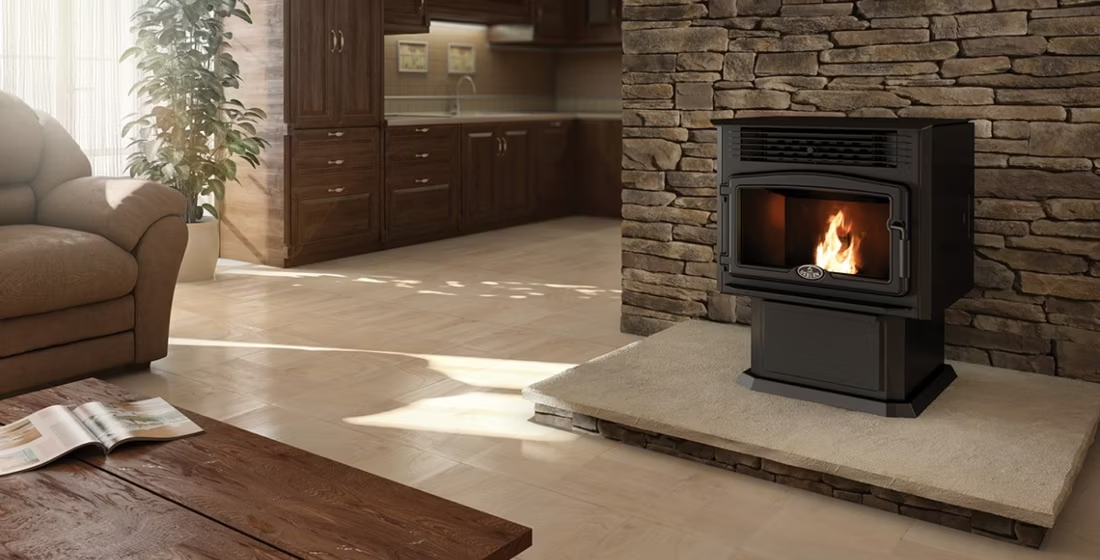
Pellet appliances suit that reality well: modern units from Granules LG, Energex, and Trebio—the brands most commonly trucked up Route 389 into the region—burn cleaner than cordwood and don't require splitting or hauling wood in temperatures that make outdoor work brutal for half the year. Expect to pay $400-$575 CAD per tonne, a bit above what homes closer to Baie-Comeau or Sept-Îles pay, since freight over that distance adds to the price. Most Fermont homes already run on electric baseboards fed by Hydro-Québec's low $0.078/kWh residential rate, so a pellet stove or insert here usually works as a supplemental heat source with real ambiance and a hedge against the cost of running baseboards flat-out through an eight-month winter—though it's worth knowing upfront that pellet units need electricity to run the auger and blower, so they won't help during an outage unless paired with a battery backup.
Three steps. No salesperson until you're ready.
Tell us about your project
Your postal code, your situation, and the fuel you're leaning toward—or let the answers point you to one.
See what's actually available
The brands dealers within 100 miles genuinely carry—real options, never a catalog mirage.
Get your dealer & Project Guide
A trusted local dealer, plus the free Project Guide & Parts List that names every component of the job.
Frequently Asked Questions
How much does a pellet stove or insert cost to install in Fermont?
Installed pellet stoves and inserts in Fermont typically run $6,000-$10,000 CAD. Where you land in that range depends less on the appliance itself and more on venting and freight—Fermont is reached only by Route 389 or the QNS&L rail line, so getting a stove, vent kit, and any masonry work up here costs more than it would closer to Sept-Îles or Baie-Comeau. A straightforward insert into an existing chimney sits toward the lower end; a new freestanding unit needing full through-wall venting in a home without existing masonry runs higher.
Is pellet fuel reliably available this far north?
Yes, but plan ahead. Granules LG, Energex, and Trebio all reach Fermont, generally by truck along Route 389, and most residents order their season's supply in the fall rather than buying a bag or two at a time in January. At $400-$575 CAD a tonne—higher than towns closer to the St. Lawrence—it makes sense to buy in bulk and store several tonnes in a dry garage or shed, since a mid-winter closure on the 389 can delay a delivery for days.
What permits or codes apply to installing a pellet stove in Fermont?
You'll need a permit through Fermont's municipal building department, and the installation itself has to meet the CSA B365 solid-fuel-burning appliance code, same as anywhere else in Quebec. If you're insuring the home afterward, expect your insurer to ask for a WETT inspection on the completed installation—most local dealers who work in the region are used to arranging this as part of the job so it doesn't become a separate errand.
What size pellet stove do I need for a home in Fermont?
Homes in Fermont are generally built to hold heat—construction codes for climate zone 8 demand it—but with average lows near -27.8°C and real cold snaps well below that, undersizing is still the more common mistake. If the pellet unit is meant to carry a room or two as a supplemental heat source alongside your electric baseboards, a stove rated for 1,200 to 2,000 square feet usually has enough capacity to run efficiently without maxing out. A local dealer will size it against your home's actual insulation and layout rather than square footage alone, especially in older mining-era housing versus newer construction.
What happens to a pellet stove during a power outage?
Pellet stoves need electricity to run the auger and combustion blower, so a standard unit stops working the moment the power does—worth knowing in a town this remote, where a downed line along the transmission corridor can mean an outage lasting longer than it might closer to the grid's core. Battery backup packs are available for most modern units and will carry a stove through a shorter outage; for anything longer, a generator sized for the stove's draw is the more reliable fix. Many Fermont households that lean on pellet heat keep a wood stove or fireplace as an outage-proof backup for exactly this reason.
Pellet vs. wood—which makes more sense in Fermont?
Both fuels work, but they suit different households. A wood-cutting permit through the Ministère des Ressources naturelles et des Forêts costs about $1.85/m3 plus taxes, capped at 22.5 m3, and runs the season from April 1 to March 31—species like sugar maple, yellow birch, American beech, and red oak are available on permitted lots. The tradeoff is the physical work of harvesting, splitting, and hauling wood through months of sustained cold, which is exactly what a pellet stove's automated auger avoids. If you want the lowest fuel cost and don't mind the labour, wood wins; if you want a stove that loads once a day without daily splitting duty, pellet is the easier fit for most Fermont households.
How often does a pellet stove need maintenance in Fermont?
With a heating season stretching close to eight months here, a pellet stove earns its keep and needs the maintenance to match. Plan on emptying the ash pan every few days during steady use, cleaning the burn pot and glass weekly, and having a technician do a full annual service on the hopper, auger, exhaust fan, and gaskets—ideally in late summer before the season's first real cold arrives, since service techs get booked up fast once temperatures drop.
Can I install a gas fireplace instead in Fermont?
Realistically, no—not through the mains gas network. Énergir's distribution system doesn't reach this far up the Côte-Nord, so a natural gas fireplace isn't an option for the vast majority of Fermont homes. A propane-fed unit is technically possible with a tank delivered by truck, but it's uncommon here, and most homeowners choose between pellet, wood, and electric heat instead. If gas ambiance really matters to you, ask a local dealer about propane conversion options, but go in knowing it's the exception rather than the norm in this region.
Why choose a pellet stove over just running electric baseboards?
Hydro-Québec's residential rate of $0.078/kWh is among the lowest in the country, and that's exactly why most Fermont homes lean on electric baseboards as the primary heat source. But running baseboards flat-out for nearly eight months still shows up on the bill, and a pellet stove or insert in the main living space gives you visible flame and radiant heat that can let you turn the baseboards down in that room without sacrificing comfort. It's not a fuel-cost slam dunk the way it might be in a region with pricier electricity, but plenty of homeowners here choose pellet for the ambiance and the flexibility, then treat the savings as a secondary benefit.
Why do fireplace quotes vary so much?
Because a fireplace is an iceberg—there's more behind the wall than in front of it. A low quote often covers only the unit; the full scope includes vent pipe, gas line or electrical, framing, and the tile or stone that has to come off and go back on. Make every bidder price the whole job. If a dealer can't speak to the full scope with confidence, that's your signal to keep looking.
Is it worth replacing an old fireplace that still sort of works?
Ask three questions: Is it ugly? Is it drafty? Does it actually work? Most old fireplaces fail at least two. Beyond looks, an old unit leaks air around the damper year-round and—if it's gas with a standing pilot—quietly burns a couple hundred dollars a year. A modern replacement seals the wall, heats the room, and changes how the whole space gets used.
What do I measure to size a fireplace insert?
Four numbers tell you what fits: the front width, the front height, the back width, and the overall depth of your existing fireplace opening. Grab a tape measure, jot those down, and snap a photo of the wall—those two things do more to move your project forward than anything else you can do today.
Are pellet stoves loud?
They make some noise—there are two fans running plus an auger motor that turns as it feeds pellets. But there's a real range: premium models are engineered quiet, and the best offer a whisper-quiet mode you can comfortably watch TV next to. If noise matters in your room, ask to hear a stove running before you buy—it's a five-minute test that saves years of annoyance.
Nearby Dealers
Hearth shops serving Fermont and the surrounding area. Every listing shows whether it is a WhyFire partner, a dealer we have verified as authorized for the brands we recommend, or a local business carrying hearth products. No manufacturer pays for placement. How we verify dealers →
Benoit Vigneault
Propane Lavoie Inc
Pellet Brands Stocked Around Fermont
Typical price runs $400-$575 per ton—buy early-season for the best rates. Manufacturers will point you to the nearest stocking dealer.
Granules Lg
Trebio
Get your free Project Guide & Parts List for a Fermont pellet project.
Tell me about your home and how you currently heat it, and I'll match you with a trusted local dealer and send a free Project Guide & Parts List—sized for climate zone 8 winters, with the vent kit and parts specified for your address.
Find Your Fireplace →