
Steady heat for North Shore winters that pass -20°C.
From Baie-Comeau to Sept-Îles and Port-Cartier, Côte-Nord runs long, hard winters with average lows near -20.8°C. Pellet stoves give you thermostat-set heat without splitting or hauling wood, and I'll match you with a trusted local dealer who knows what actually holds up on this coast.
Every Project Starts From One of These Five Situations
A boreal, hydro-powered region that still wants a live flame.
Côte-Nord stretches more than 1,300 kilometres along the St. Lawrence's north shore, from Tadoussac out to Blanc-Sablon, with a population of just over 91,000 spread thin across Baie-Comeau, Sept-Îles, Port-Cartier, and Havre-Saint-Pierre. This is climate zone 7A, one of the coldest classifications used in the country, with winter lows averaging -20.8°C—a season on par with Fort McMurray. The region's economy runs on forestry, aluminum, and iron ore, and its sawmills feed a genuine pellet industry: Granules LG, Energex, and Trebio all produce in Quebec, so the pellets sold here don't have to travel far, unlike propane trucked up Route 138 from the south.
Hydro-Québec's low electricity rates mean most homes on the North Shore already run electric baseboard as their default heat, and natural gas is essentially absent—Énergir's distribution network doesn't reach this far up the coast, which makes gas fireplaces a rare fit here at best. Pellet stoves fill the space in between: automated, thermostat-controlled heat that beats splitting and stacking wood, at a fraction of the electrical draw of whole-house baseboard. Installations still fall under CSA B365 and go through your municipal building department, and most insurers ask for a WETT inspection before they'll cover a wood-burning or pellet appliance—a step a good local dealer builds into the job rather than leaving you to chase down afterward.
Three steps. No salesperson until you're ready.
Tell us about your project
Your postal code, your situation, and the fuel you're leaning toward—or let the answers point you to one.
See what's actually available
The brands dealers within 100 miles genuinely carry—real options, never a catalog mirage.
Get your dealer & Project Guide
A trusted local dealer, plus the free Project Guide & Parts List that names every component of the job.
Frequently Asked Questions
How much does a pellet stove installation cost in Côte-Nord?
Most installations across the region run $6,000 to $10,000 CAD, covering the stove, hearth pad, and exterior venting through a wall. Older housing stock in Baie-Comeau or Port-Cartier sometimes needs a dedicated electrical circuit added for the auger and blower, which pushes toward the top of that range. Homes in more remote communities like Natashquan or Blanc-Sablon, farther from dealers based in Sept-Îles or Baie-Comeau, may see a modest travel charge added to the quote.
Will my pellet stove still work if the power goes out?
No, not on its own—the hopper's feed auger and the combustion blower both need electricity to run. That matters here because Route 138's exposed coastal stretch takes the brunt of North Shore winter storms, and Hydro-Québec lines along that corridor can go down for hours at a time. A small battery backup unit or a modest generator will keep a pellet stove running through most outages, since its draw is much lower than a house full of electric baseboard. If a fully off-grid backup matters more to your household, a wood stove is worth pairing alongside it.
Is a wood stove a better choice than a pellet stove out here?
It depends on how much labor you want to trade for convenience. The Ministère des Ressources naturelles et des Forêts issues personal-use cutting permits for about $1.85 per cubic metre plus tax, capped at 22.5 cubic metres, valid April 1 through March 31—and a lot of North Shore households still cut their own wood from the surrounding boreal forest, which makes wood the cheapest fuel around. A pellet stove trades that labor for a hopper you load every day or two instead of splitting, stacking, and feeding a firebox by hand, which is part of why it's a common choice for retirees and shift workers at the aluminum smelter or the iron mines who want scheduled heat without the extra work.
Do I need a permit to install a pellet stove in Côte-Nord?
Yes. Your municipal building department, whether that's Baie-Comeau, Sept-Îles, Port-Cartier, or another North Shore municipality, issues the permit, and the installation itself needs to follow the CSA B365 code. On top of that, most home insurers require a WETT inspection before they'll cover a pellet or wood-burning appliance, so plan on that step alongside the permit rather than after the fact—a local dealer typically coordinates both.
What size pellet stove do I need for a home on the North Shore?
Climate zone 7A and lows averaging -20.8°C already call for a stove sized toward the upper end of most manufacturers' ratings, but coastal wind exposure adds another factor. A home sitting right on the water in Sept-Îles or Port-Cartier loses heat faster than the same floor plan set back in a more sheltered inland community, so it often needs the next size up. A local dealer sizes this from an in-home visit that accounts for insulation and wind exposure, not a generic square-footage chart.
Where do I buy pellets, and how much storage do I need?
Regional brands Granules LG, Energex, and Trebio typically run $400 to $575 per ton and are the mainstay for North Shore dealers. Because Route 138 is the only road link for much of the region and can be affected by snow and ice through the winter, most households here order their season's pellets in bulk before the cold sets in rather than counting on mid-winter restocking. Store bags in a dry, covered space—coastal humidity along the St. Lawrence can soften pellets faster than in drier inland climates.
How often does a pellet stove need maintenance?
Plan on a full professional service once a year, ideally before the season starts, covering the burn pot, auger, gaskets, and venting. If you're running the stove as a primary heat source through the North Shore's long winter, weekly glass and ash-pan cleaning keeps it burning efficiently between services. Having a WETT-certified technician handle the annual service also keeps your insurance inspection current, since most policies here ask for it.
How does a pellet stove compare to electric baseboard heat, which most homes already have?
Hydro-Québec's rates are low enough that electric baseboard is the default heat source in most North Shore homes, and it's cheap to install—typically $500 to $1,600 CAD versus $6,000 to $10,000 for a pellet stove. What pellet adds is a zone of live-fire heat that draws far less power than a house full of baseboard, so it can keep running on a small generator during an outage when whole-house electric heat can't. For a lot of households here, pellet ends up as a supplemental heat source layered on top of baseboard rather than a full replacement.
Is a natural gas fireplace an option in Côte-Nord?
Realistically, no—Énergir's natural gas distribution network doesn't extend this far up the North Shore, so a true gas fireplace isn't on the table for almost anyone in the region. What people sometimes mean by gas here is a propane-fed unit, trucked in at a higher cost per unit of heat than pellets or self-cut wood. That's a big part of why pellet, wood, and electric baseboard are the three fuels that actually dominate heating decisions across Côte-Nord.
Why do fireplace quotes vary so much?
Because a fireplace is an iceberg—there's more behind the wall than in front of it. A low quote often covers only the unit; the full scope includes vent pipe, gas line or electrical, framing, and the tile or stone that has to come off and go back on. Make every bidder price the whole job. If a dealer can't speak to the full scope with confidence, that's your signal to keep looking.
Is it worth replacing an old fireplace that still sort of works?
Ask three questions: Is it ugly? Is it drafty? Does it actually work? Most old fireplaces fail at least two. Beyond looks, an old unit leaks air around the damper year-round and—if it's gas with a standing pilot—quietly burns a couple hundred dollars a year. A modern replacement seals the wall, heats the room, and changes how the whole space gets used.
How often does a pellet stove need cleaning?
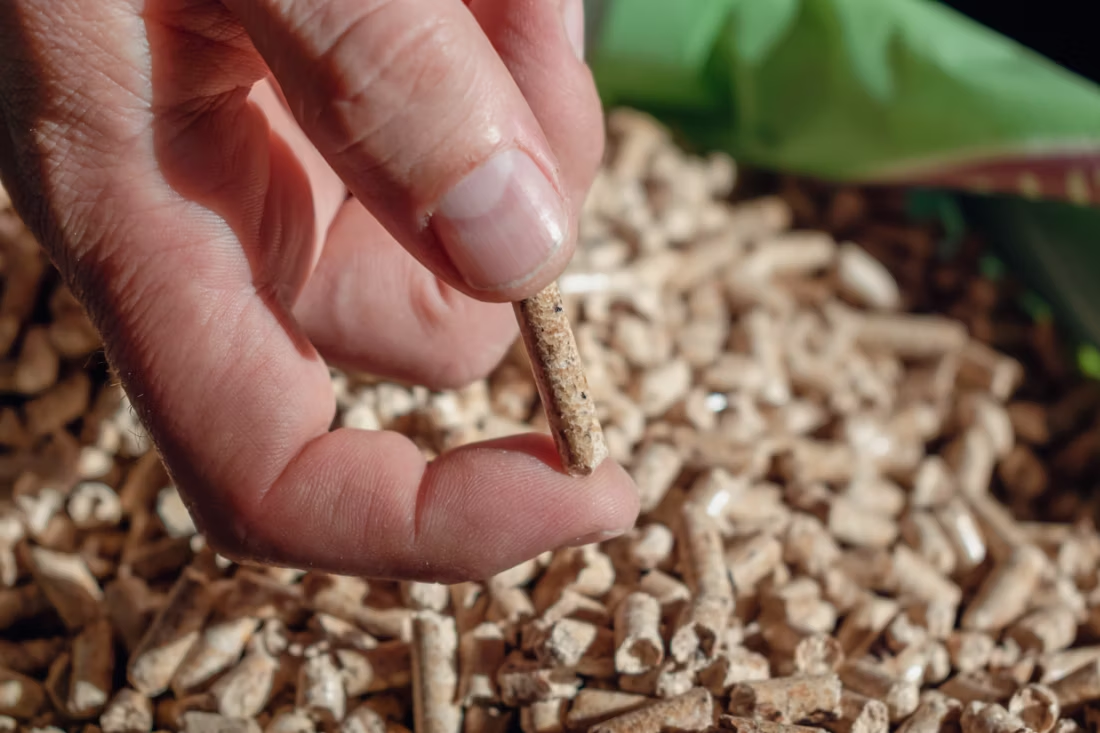
A clean pellet stove is a happy pellet stove. Plan on cleaning the burn pot about once a week when you're burning regularly—ash and clinkers gum up the air holes just like a pellet barbecue. Most pellet stove problems trace back to skipped cleaning that nobody explained up front. Some designs make it easy with a trapdoor burn pot: pull a lever and the gunk drops into the ash pan.
Why is a fireplace insert so efficient?
An insert does two things: it seals the chimney completely, so you stop losing air you already paid to heat, and it radiates warmth into the room through the firebox and glass. Most add a heat-exchange fan that pulls cool room air underneath, wraps it around the hot firebox, and pushes it back out warm. Your home is more efficient before you've even lit the first fire.
Stove and Fireplace Dealers in Côte-Nord
Listings include WhyFire partner dealers, dealers we have verified as authorized for the brands we recommend, and established local businesses that carry hearth products. Every listing shows which one it is. The ones marked Preferred run on WhyFire's software, so they can show you real pricing and book your appointment right here. No manufacturer pays for placement. How we verify dealers →
Propane Nord Cotier
Propane Lavoie Inc
Plomberie G.d. Gauthier - Chauffage C.g.
Lamarre Gaz Industriel Inc
Benoit Vigneault
Pellet Brands Stocked Around Côte-Nord
Typical price runs $400-$575 per ton—buy early-season for the best rates. Manufacturers will point you to the nearest stocking dealer.
Granules Lg
Trebio
Get your free Project Guide & Parts List for a pellet stove in Côte-Nord.
Tell me about your home, where along the coast you're located, and how you plan to use the stove, and I'll match you with a trusted local dealer and send a free Project Guide & Parts List—the exact parts, including the vent kit, for your pellet project.
Find Your Fireplace →