
Find your fireplace across Côte-Nord.
Wood, pellet, electric, and propane-fed gas resources for the whole North Shore, from Tadoussac and Baie-Comeau out to Havre-Saint-Pierre and inland to Fermont. Pick a fuel and get matched with a local dealer who actually works in your town.
Every Project Starts From One of These Five Situations
Winter lows near -20.8°C and a coastline that runs over 800 kilometres define how Côte-Nord heats itself.
Côte-Nord stretches from Tadoussac and Baie-Comeau in the west along the St. Lawrence to Havre-Saint-Pierre, Natashquan, and the isolated communities of the Basse-Côte-Nord, then inland to the mining town of Fermont near the Labrador border. It's climate zone 7A, and an average winter low of -20.8°C means the heating season here runs long, comparable in severity to Fort McMurray, Alberta, or Whitehorse, Yukon, especially once you're inland at Fermont. Sugar maple, yellow birch, American beech, and red oak are the hardwoods most households burn for a long, steady overnight fire, much of it cut under Ministère des Ressources naturelles et des Forêts permits or bought from firewood dealers who truck cordwood in from the region's southern reaches.
Every municipality along the coast, from Baie-Comeau to Port-Cartier to Havre-Saint-Pierre, issues its own building permits, and any wood-burning install here needs to meet the CSA B365 installation code; insurers commonly require a WETT inspection before they'll cover a wood stove or insert, regardless of which town you're in. Natural gas service doesn't reach this far up the St. Lawrence—Énergir's pipeline network stays close to Montréal and the south shore—so a 'gas fireplace' in Côte-Nord almost always means a propane unit fed by a bulk tank, a real but genuinely secondary option here. What fills the gap instead is electricity: Hydro-Québec's low rates make electric baseboards and electric fireplaces a mainstream heat source in town, often paired with a wood or pellet stove for backup during storms. Pellet stoves have their own foothold too, running on Quebec-made fuel from Granules LG, Energex, or Trebio, which keeps supply local even in the more remote communities.
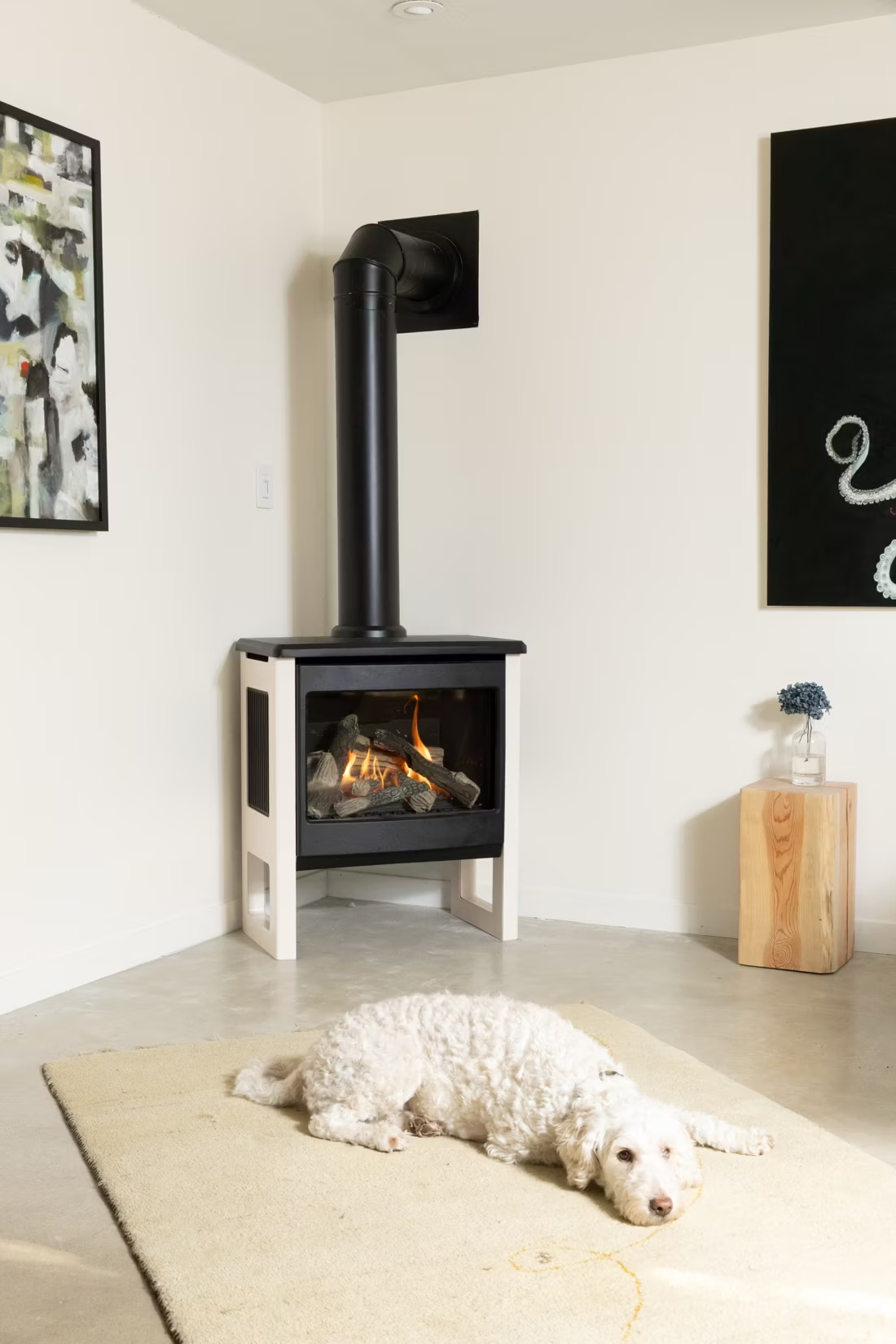
Four fuels. One honest answer for Côte-Nord.
Three steps. No salesperson until you're ready.
Tell us about your project
Your postal code, your situation, and the fuel you're leaning toward—or let the answers point you to one.
See what's actually available
The brands dealers within 100 miles genuinely carry—real options, never a catalog mirage.
Get your dealer & Project Guide
A trusted local dealer, plus the free Project Guide & Parts List that names every component of the job.
Frequently Asked Questions
Which fireplace fuel actually makes sense across Côte-Nord?
It depends on where you sit along the coast, but three fuels do most of the real work here. Wood remains the backbone in most towns—sugar maple, yellow birch, American beech, and red oak burn long and hot enough to hold a fire through a -20.8°C night, and a lot of it comes from Ministère des Ressources naturelles et des Forêts permits or local firewood dealers. Pellet stoves have a genuine following too, partly because Quebec-made fuel from Granules LG, Energex, or Trebio stays available even when winter roads or ferry schedules get unpredictable. Electric fireplaces are mainstream here in a way they aren't everywhere else, simply because Hydro-Québec's rates make electric heat affordable—expect to see them as a primary heat source in some homes and a supplemental one in most others. Gas is the outlier: without a natural gas pipeline this far up the St. Lawrence, a gas fireplace almost always means propane, and it's a real but distinctly minority choice.
Do I need a permit to install a wood stove in Côte-Nord?
Yes. Building permits are issued by whichever municipal building department covers your address—Baie-Comeau, Sept-Îles, Port-Cartier, Havre-Saint-Pierre, and Fermont each handle their own—and any wood-burning installation needs to meet the CSA B365 installation code regardless of town. Most insurers in the region also require a WETT inspection before they'll cover a new wood stove or insert on your policy, so budget the inspection fee alongside the install itself. If you're cutting your own firewood on public land, you'll also need a permit from the Ministère des Ressources naturelles et des Forêts. A local dealer who works regularly in your town usually handles the permit paperwork and can point you to a WETT inspector directly.
Is natural gas actually available in Côte-Nord?
Realistically, no—not in the way it is around Montréal. Énergir's pipeline network stays within a few corridors of the south shore and greater Montréal, and it doesn't extend this far up the St. Lawrence. What people call a 'gas fireplace' in Côte-Nord is almost always a propane unit, fed by a bulk tank rather than a buried line, and it's a genuinely secondary option next to wood, pellet, and electric heat here. If gas ambiance or backup heat still appeals to you, a local dealer can size a propane system correctly and tell you honestly whether it makes sense for your address before you commit to it.
Are there emission rules for wood stoves here like the ones in Montréal?
Not the same fine-particle bylaw—Montréal's 2.5 g/h limit and registration requirement apply on the island and don't extend to Côte-Nord's municipalities. That said, the practical bar is similar: insurers here want a WETT inspection before they'll cover a wood appliance, and any new install needs to meet the CSA B365 code, which in practice means an EPA/CSA-certified low-emission stove rather than an old uncertified unit. Given how long and cold the season is here, a certified stove or insert also just burns better and uses less wood per night, so it's the standard choice regardless of what the bylaw does or doesn't require.
What does a fireplace installation typically cost in Côte-Nord?
Costs run a bit higher here than in southern Quebec once you factor in freight—getting a stove, insert, or venting kit trucked up Route 138 to Havre-Saint-Pierre or flown into Fermont adds to the bottom line. Wood stove and insert installs typically land around $4,500-$10,000 CAD, with full new chimney work pushing toward the top of that range. Pellet stove installs usually run $4,000-$8,000, propane fireplaces or inserts run roughly $4,500-$10,000 depending on tank setup and venting, and electric fireplaces are the exception at $300-$3,000 for the unit itself, with modest labour unless you're adding a new circuit. A local dealer quoting your project will factor in the actual freight to your town rather than a generic regional number.
How does installation and service work across a region this spread out?
Côte-Nord runs over 800 kilometres of coastline, so most dealers and technicians are based in Baie-Comeau or Sept-Îles and travel out along Route 138 to Port-Cartier, Havre-Saint-Pierre, and beyond, or make scheduled trips inland to Fermont. Expect a travel fee built into quotes for the farther communities, and expect booking windows to tighten fast once the first hard frost hits—getting your wood stove swept, your pellet stove serviced, or your propane fireplace inspected in September or early October, well before winter really sets in, keeps you off the waitlist. For homes in the more remote Basse-Côte-Nord communities, it's worth asking your dealer about spare parts on hand locally, since a return service trip can take longer to arrange once the season's underway.
How many BTUs do I need in a fireplace?
Wrong question—and the industry's favorite way to confuse you. More BTUs isn't better if the fireplace cooks you out of the room you spent thousands to enjoy. Think in terms you can verify: how many square feet the unit heats, whether it's primary or backup heat, and whether you want it running overnight. Those three answers size a fireplace correctly every time.
Will we actually use a fireplace once we have one?
In my own home, the room with the fireplace has never been the same—it became the social hub. Game nights, holidays, date nights after the kids are down: the fire is where the house gathers. There's a reason people in this industry joke that we're really in the romance and entertainment business. You won't wonder whether you'll use it; you'll wonder how the room worked before.
Can I install a fireplace myself?
If you're putting a fire in your house on purpose, it's best to work with an expert. Unless you're genuinely experienced in framing, gas line, vent pipe, and the national code on clearances to combustibles, have a professional do it—and ideally the same company that sells you the fireplace, so warranty, service, and liability all live under one roof.
Why is my open fireplace making my house colder?
Open fireplaces suck—literally. As the fire burns, it consumes air your furnace already paid to heat and pulls it out through the chimney, so the house is actually colder after the fire goes out than before you lit it. An insert fixes this: it seals the chimney, puts fixed glass across the front, and turns that hole in your house into a real heat source.
Stove and Fireplace Dealers in Côte-Nord
Listings include WhyFire partner dealers, dealers we have verified as authorized for the brands we recommend, and established local businesses that carry hearth products. Every listing shows which one it is. The ones marked Preferred run on WhyFire's software, so they can show you real pricing and book your appointment right here. No manufacturer pays for placement. How we verify dealers →
Propane Nord Cotier
Propane Lavoie Inc
Plomberie G.d. Gauthier - Chauffage C.g.
Lamarre Gaz Industriel Inc
Benoit Vigneault
Get matched with a trusted local dealer across Côte-Nord.
Tell us which fuel you're considering and we'll put together a free Project Guide & Parts List—the right unit, the vent kit it needs, and the local dealer we recommend for your town.
Find Your Fireplace →