
Gas heat is the exception, not the rule, in Fermont.
At 607 metres elevation in the Côte-Nord region, Fermont sees winter lows averaging -27.8°C and one of the longest heating seasons in Quebec. Énergir's gas lines stop hundreds of kilometres south of here, so a gas fireplace in Fermont almost always means a propane appliance. I'll match you with a local dealer who knows the difference and can source what's actually installable this far north.
Every Project Starts From One of These Five Situations
Most Fermont homes heat with electricity or wood, not gas.
Fermont sits at 607 metres in the Côte-Nord region, closer to the Labrador border than to most other Quebec towns, reachable only by Route 389 running roughly 550 km north from Baie-Comeau. Winters here average -27.8°C at their coldest, cold enough that the town's original planners built Le Mur—a 1.3-kilometre residential block—specifically to shield the rest of Fermont from prevailing Arctic wind. It's the kind of cold more associated with Whitehorse or Fort McMurray than with the Saint Lawrence lowlands, and it shapes almost every heating decision residents make.
That's part of why gas is the rare choice here. Énergir's distribution network is built out through southern and urban Quebec corridors, and it simply doesn't reach a mining town this far north—the province-wide partial coverage you'll see quoted doesn't extend up Route 389. Most Fermont homes run on Hydro-Québec electricity, priced at roughly 7.8 cents per kWh, among the cheapest power in the country, with wood stoves burning sugar maple, yellow birch, American beech, and red oak as a common serious backup. When someone here does want a gas fireplace, it's almost always a propane-fired unit with its own tank, sized and vented by a dealer who has handled this kind of remote install before.
Three steps. No salesperson until you're ready.
Tell us about your project
Your postal code, your situation, and the fuel you're leaning toward—or let the answers point you to one.
See what's actually available
The brands dealers within 100 miles genuinely carry—real options, never a catalog mirage.
Get your dealer & Project Guide
A trusted local dealer, plus the free Project Guide & Parts List that names every component of the job.
Frequently Asked Questions
Is natural gas even available in Fermont?
Énergir's distribution network is concentrated in southern Quebec cities and corridor towns; Fermont, roughly 550 km north of Baie-Comeau at the end of Route 389, sits well outside any mains gas line. So while the province-wide picture describes natural gas access as partial, in practical terms a Fermont fireplace running on gas means propane delivered and stored in a tank on site, not a hookup to a utility main. That distinction matters before you start planning a project.
If there's no Énergir line, what does a gas fireplace mean here?
In Fermont it almost always means a propane-fired unit. The appliance looks and burns the same as a natural-gas model—same instant flame, same direct-vent options—but it draws from a propane tank rather than a buried gas main. Local dealers who work this far up Route 389 are used to specifying propane-configured units and sizing the tank for a heating season that regularly drops below -27.8°C overnight.
How much does a propane fireplace installation cost in Fermont?
Budget $6,000 to $15,000 CAD. That range runs wider here than in southern Quebec because logistics matter—materials, and often the crew, have to travel the length of Route 389 to reach town, and remote-area scheduling adds to the base cost of the unit and venting. A straightforward insert into an existing chase lands toward the lower end; a new built-in unit with fresh venting runs higher.
Why do most Fermont homes heat with electricity instead of gas?
Hydro-Québec service here runs about 7.8 cents per kWh, among the cheapest electricity rates in the country, so baseboard and forced-air electric heat is the default in most homes and apartments, including the long residential block known locally as Le Mur, built to shield the town from the wind. Electric fireplace or insert projects typically run just $500-$1,600, which makes electric heat hard to beat on both fuel cost and install cost for a supplemental unit.
What permits do I need for a propane fireplace in Fermont?
You'll need a building permit through the municipal building department, and the gas-fitting work itself has to be done by a licensed technician under the CSA B365 installation code. Given how few homes in town run gas or propane appliances, it's worth asking any dealer you're considering how many propane fireplace projects they've actually completed this far north—tank sizing and venting details differ from a southern Quebec install.
Would wood or pellet make more sense than gas for my Fermont home?
For most homes here, yes. Wood is a standard, well-used fuel in Fermont—sugar maple, yellow birch, American beech, and red oak are the species locals split, and a Ministère des Ressources naturelles et des Forêts permit runs about $1.85 per cubic metre plus taxes for up to 22.5 m3 a season. Pellet stoves are also standard here, with Granules LG, Energex, and Trebio sold regionally at roughly $400-$575 a ton. Gas, meaning propane, is the fuel most homeowners have to actively choose to bring in rather than the default—it tends to appeal to people who want instant, low-mess heat in one room rather than a whole-home solution.
When's the best time to schedule a fireplace project in Fermont?
Late summer into early fall, before Route 389 deliveries and dealer schedules get squeezed by the first snow. With winter lows averaging -27.8°C and a heating season that stretches deep into spring, a unit ordered in June or July gives your dealer time to source a propane-rated model and tank, and gets your fireplace running before the cold really sets in.
Vented vs. vent-free propane units—does it matter in a climate this cold?
It does. Direct-vent propane fireplaces pull combustion air from outside and exhaust it back out through sealed venting, which is the right call in a tightly built, well-insulated Fermont home where you don't want combustion byproducts trapped indoors through a winter this long and this cold. Vent-free units are legal in Quebec within room-size limits, but most dealers serving this area steer homeowners toward direct-vent given how many months a year the windows stay shut.
Gas, wood, or electric—which actually makes sense for Fermont's climate?
Electric wins on cost and simplicity for most households given Hydro-Québec's low rate and the town's compact housing stock. Wood remains popular as a serious backup or primary heat source, split from maple, birch, beech, or oak harvested under an MRNF permit, and it keeps working if anything ever disrupts the grid this far from anywhere. Propane-fired gas fireplaces are the least common of the three—a fine choice for instant ambiance heat in one room, but not a fuel most Fermont homes are built around, since the town sits well outside Énergir's actual pipeline network.
Can a gas fireplace run on a thermostat?
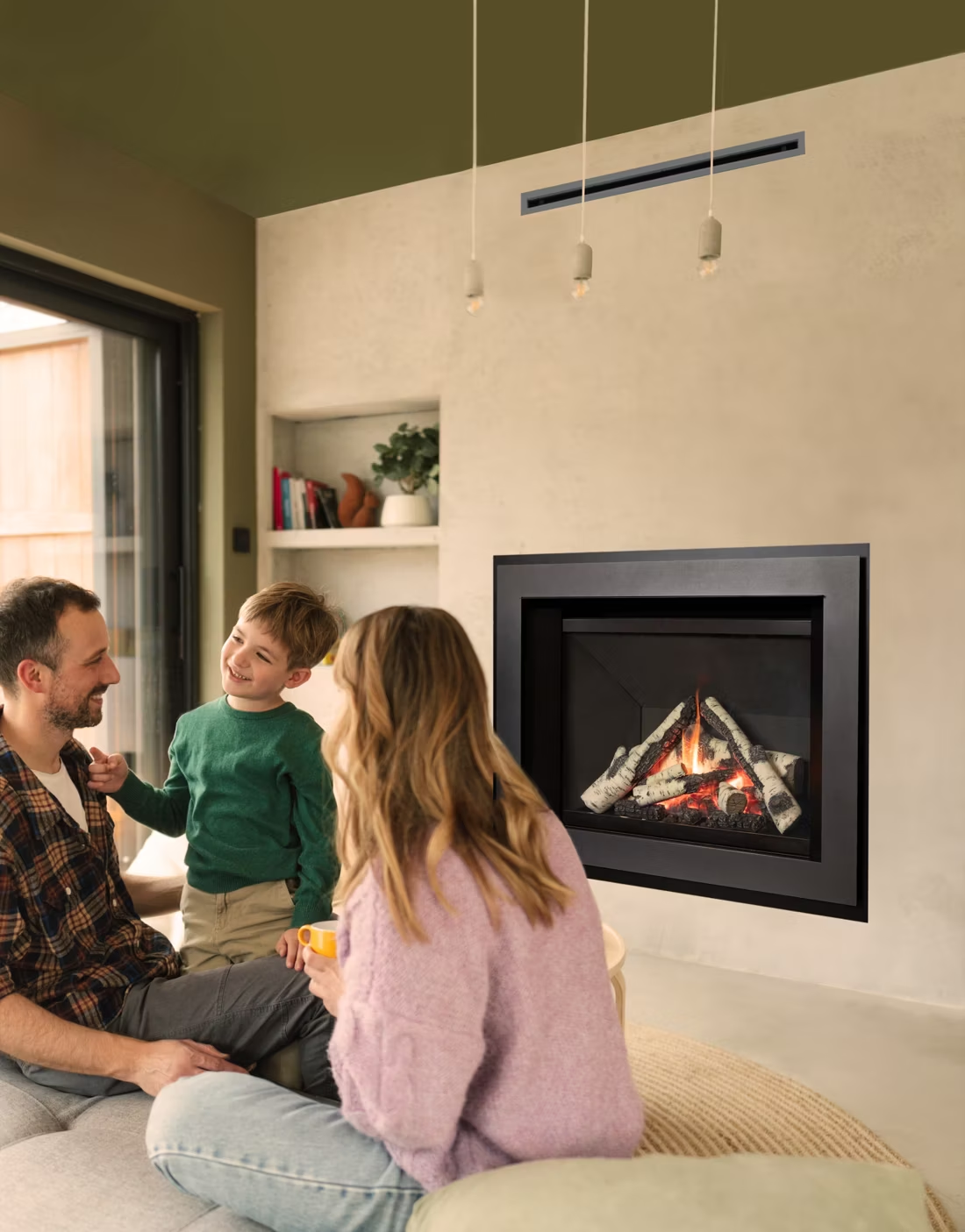
Most modern gas fireplaces can—turn it on and off from the couch with a remote, or set a room temperature and let the fireplace hold the comfort zone for you. If low maintenance matters to your family, this is the feature set that makes gas the convenience pick over wood and pellet.
Why do fireplace quotes vary so much?
Because a fireplace is an iceberg—there's more behind the wall than in front of it. A low quote often covers only the unit; the full scope includes vent pipe, gas line or electrical, framing, and the tile or stone that has to come off and go back on. Make every bidder price the whole job. If a dealer can't speak to the full scope with confidence, that's your signal to keep looking.
Why is my open fireplace making my house colder?
Open fireplaces suck—literally. As the fire burns, it consumes air your furnace already paid to heat and pulls it out through the chimney, so the house is actually colder after the fire goes out than before you lit it. An insert fixes this: it seals the chimney, puts fixed glass across the front, and turns that hole in your house into a real heat source.
Is my gas fireplace wasting gas?
If it was installed more than 15 years ago, probably. Older gas fireplaces keep a standing pilot light burning all the time, and that little flame can cost a couple hundred dollars a year. Newer models use pilot-on-demand ignition—the pilot lights only when you use the fireplace and goes out when you turn it off.
Nearby Dealers
Hearth shops serving Fermont and the surrounding area. Every listing shows whether it is a WhyFire partner, a dealer we have verified as authorized for the brands we recommend, or a local business carrying hearth products. No manufacturer pays for placement. How we verify dealers →
Benoit Vigneault
Propane Lavoie Inc
Natural Gas Service in Fermont
Confirm service at your address before planning a gas fireplace—a quick call settles it.
énergir
Get your free Project Guide & Parts List for a Fermont propane fireplace.
Tell me about your home and I'll match you with a local dealer experienced in propane installs this far up Route 389, and send a free Project Guide & Parts List with the tank sizing, vent kit, and parts your project actually needs.
Find Your Fireplace →