
Gas heat is the exception on the North Shore.
Énergir's pipeline network stops well south of Côte-Nord, so a genuine natural gas fireplace isn't really on the table here. What is on the table: a direct-vent propane unit, if your community gets tank delivery. I'll connect you with a local dealer who can tell you honestly whether that's a good fit for your home, or whether wood or pellet makes more sense given -20.8°C winters and Hydro-Québec's low electricity rates.
Every Project Starts From One of These Five Situations
Why gas is the rare choice across Côte-Nord.
Côte-Nord runs nearly 1,300 kilometres along the St. Lawrence's north shore, from Tadoussac past Baie-Comeau, Sept-Îles, and Port-Cartier out to Havre-Saint-Pierre and the Basse-Côte-Nord communities beyond. Roughly 91,000 people are spread across that distance, most of them in small coastal towns separated by long stretches of boreal forest. Winters here sit in climate zone 7A, with average lows around -20.8°C and a heating season that starts early and runs long—closer to what Fort McMurray or Whitehorse residents deal with than anything in southern Quebec. With that kind of cold and Hydro-Québec's relatively cheap electricity, most homes here heat with electric baseboards, supplemented by wood cut from the surrounding sugar maple, yellow birch, American beech, and red oak stands.
Natural gas simply isn't part of that mix. Énergir's distribution network is concentrated in the greater Montréal area, the south shore, and a handful of urban corridors—it doesn't extend anywhere near Côte-Nord. So when someone here asks about a 'gas fireplace,' what they usually mean, once we dig in, is a direct-vent propane unit fed by a bulk tank, which is a real option in communities served by regional propane delivery. Before anyone spends money on equipment, the honest first step is confirming propane delivery actually reaches your address and that a tank placement works with your lot—that's exactly what a local dealer sorts out before recommending equipment.
Three steps. No salesperson until you're ready.
Tell us about your project
Your postal code, your situation, and the fuel you're leaning toward—or let the answers point you to one.
See what's actually available
The brands dealers within 100 miles genuinely carry—real options, never a catalog mirage.
Get your dealer & Project Guide
A trusted local dealer, plus the free Project Guide & Parts List that names every component of the job.
Frequently Asked Questions
Is natural gas available anywhere in Côte-Nord?
Not through mains service. Énergir's pipeline network ends well south and west of here, in the greater Montréal area and a few other urban corridors, and there's no natural gas utility infrastructure serving Baie-Comeau, Sept-Îles, Port-Cartier, or any of the smaller communities along the North Shore. Anything described locally as a 'gas fireplace' is almost always running on propane delivered by tank, not piped natural gas.
How much does a propane fireplace installation cost in Côte-Nord?
Budget $6,000 to $15,000 CAD installed, similar to what you'd see for a natural gas unit elsewhere in the province, though the propane tank set and delivery contract add a variable not every homeowner expects. A direct-vent insert going into an existing masonry opening lands toward the lower end; a new-construction fireplace with a fresh gas line run from a new tank, plus venting through an exterior wall built for -20.8°C winters, pushes toward the top. Your local dealer will confirm tank sizing and placement as part of the quote.
Why do most Côte-Nord homes heat with wood or electricity instead of gas?
Two reasons. First, there's no piped natural gas out here, so gas was never the default the way it is in parts of southern Quebec. Second, Hydro-Québec's electricity rates are low enough that electric baseboard heat is genuinely affordable, and wood cut from local sugar maple, yellow birch, American beech, and red oak stands has always been the practical backup fuel in a region this remote from major supply lines. Propane fireplaces exist here, but they're a supplemental or aesthetic choice, not the backbone of anyone's heating plan.
What permits does a wood-burning appliance need in Côte-Nord?
New wood-burning installations fall under the CSA B365 installation code, and most insurers require a WETT inspection before they'll cover a wood appliance, regardless of whether you're in Sept-Îles, Baie-Comeau, or a smaller municipality. Building permits go through your local municipal building department. A trusted local dealer handles this as routine paperwork on nearly every wood install—it's not a special hurdle, just a step that gets scheduled alongside the project.
Can I cut my own firewood in Côte-Nord?
Yes, through the Ministère des Ressources naturelles et des Forêts. Personal-use cutting permits run about $1.85 per cubic metre plus taxes, with a cap of 22.5 cubic metres, and the permit year runs April 1 to March 31 with harvest windows that vary by regional sector. Given how far Côte-Nord sits from any centralized fuel supply, a lot of households treat a cutting permit as the most reliable way to stock a winter's worth of sugar maple, yellow birch, or beech.
What's the real difference between a propane fireplace and a wood stove for a home here?
A direct-vent propane fireplace gives you instant, thermostat-controlled flame with no ash and no wood to haul, but it depends on a tank delivery contract that has to reach your community, and propane costs more per unit of heat than electricity or self-cut wood. A wood stove costs more to install upfront ($6,000 to $12,000 CAD is typical here) but runs on fuel you can cut yourself under an MRNF permit or buy locally, and it keeps working through a power outage—a real consideration on a coastline that sees its share of winter storms. Most Côte-Nord households lean wood or electric as primary heat and treat propane, where available, as a secondary or ambiance option.
Would a pellet stove make more sense than gas for my home?
For a lot of Côte-Nord homes, yes. Pellet appliances are a standard, well-supported option here, unlike gas—regional brands like Granules LG, Energex, and Trebio are sold through local dealers, with pellets running $400 to $575 CAD per tonne. Installed cost typically runs $6,000 to $10,000 CAD. Pellet stoves need electricity to run the auger and blower, so they're not a storm-outage fallback the way a wood stove is, but they burn cleaner and hold a longer, steadier heat than most people expect, which suits the region's long cold stretch from November into April.
How often does a propane fireplace need servicing in a climate this cold?
Plan on an annual inspection, ideally before the heating season starts in early fall. A technician checks the burner, pilot assembly, propane line connections, and venting—units that run daily through a long Côte-Nord winter see more cumulative hours than a fireplace in a milder climate, so don't skip a season. Your propane supplier or the dealer who handled the installation can usually arrange this in the same visit as a tank check.
If my home already has propane heat, can I still add a gas fireplace?
Often, yes—if your existing tank has enough reserve capacity and the delivery contract can support the added draw, adding a direct-vent propane fireplace to a home already set up with propane is usually simpler than starting a service from scratch. A local dealer will check your current tank size, delivery schedule, and line pressure before recommending a unit, since undersizing the fuel supply is the most common reason a propane fireplace underperforms in a cold climate like Côte-Nord's.
Can a gas fireplace run on a thermostat?
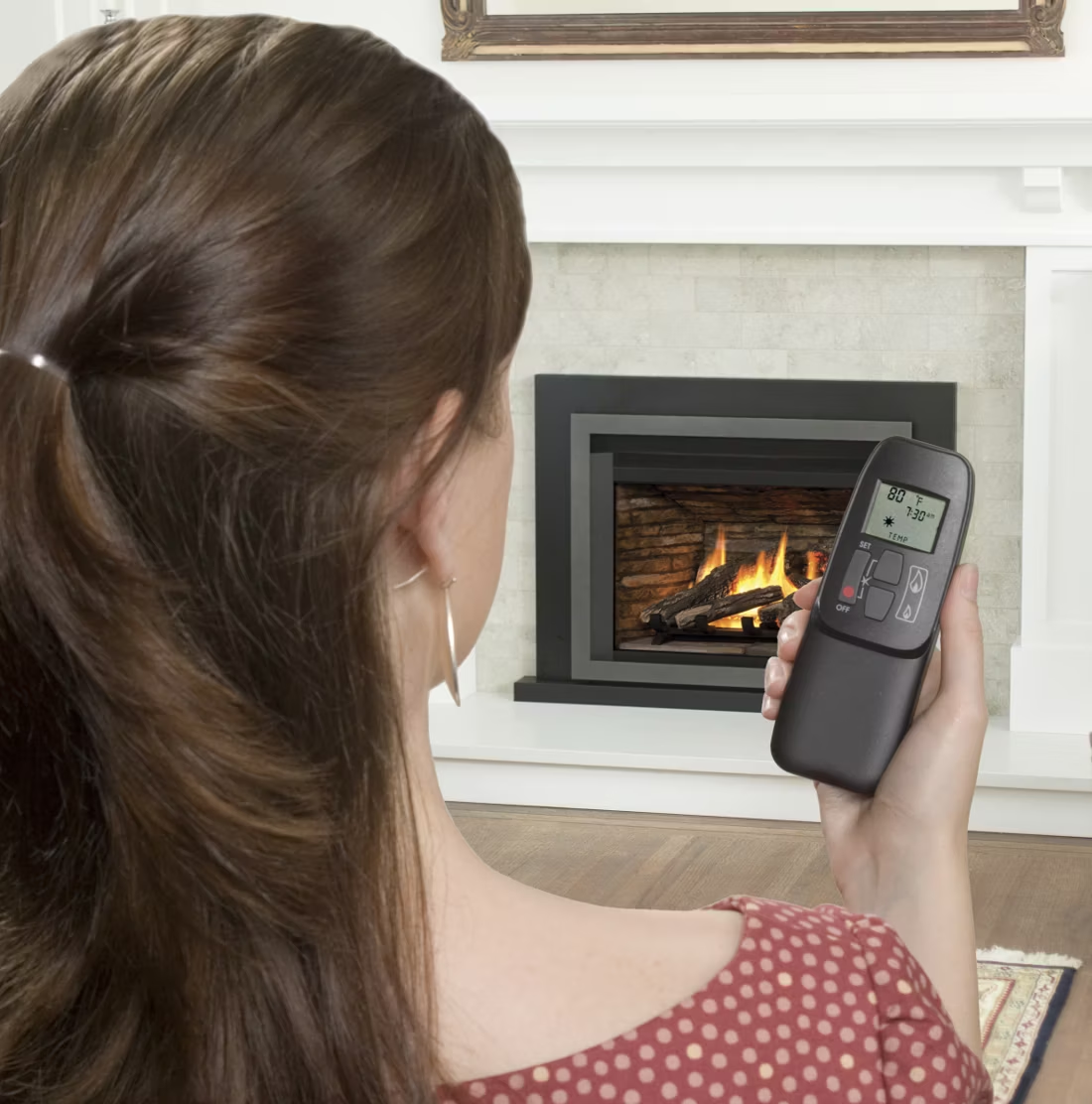
Most modern gas fireplaces can—turn it on and off from the couch with a remote, or set a room temperature and let the fireplace hold the comfort zone for you. If low maintenance matters to your family, this is the feature set that makes gas the convenience pick over wood and pellet.
Why do fireplace quotes vary so much?
Because a fireplace is an iceberg—there's more behind the wall than in front of it. A low quote often covers only the unit; the full scope includes vent pipe, gas line or electrical, framing, and the tile or stone that has to come off and go back on. Make every bidder price the whole job. If a dealer can't speak to the full scope with confidence, that's your signal to keep looking.
What's the difference between radiant and convective fireplace heat?
Most fireplaces are a thin metal box—they heat fine, but you rely on the fan to move the warmth into the room. Radiant models use a thick cast-ceramic firebox, about an inch and a quarter thick, that soaks up the fire's heat and radiates roughly 25–30% more warmth into the room with no fan running. If you watch TV in the same room or want heat in a power outage, radiant is worth asking about.
What does it take to replace an existing fireplace?
Fireplaces are like icebergs—bigger behind the wall than in front of it. Replacement means removing the surrounding tile or stone (the finish material laps onto the fireplace face), pulling the old unit, setting the new one in the same enclosure, and re-finishing the wall. A hearth professional can determine what's behind your wall without demolition during an in-home preview.
Stove and Fireplace Dealers in Côte-Nord
Listings include WhyFire partner dealers, dealers we have verified as authorized for the brands we recommend, and established local businesses that carry hearth products. Every listing shows which one it is. The ones marked Preferred run on WhyFire's software, so they can show you real pricing and book your appointment right here. No manufacturer pays for placement. How we verify dealers →
Propane Nord Cotier
Propane Lavoie Inc
Plomberie G.d. Gauthier - Chauffage C.g.
Lamarre Gaz Industriel Inc
Benoit Vigneault
Natural Gas Service in Côte-Nord
Confirm service at your address before planning a gas fireplace—a quick call settles it.
énergir
Get your free Côte-Nord Project Guide & Parts List.
Tell me about your home and your community, and I'll match you with a trusted local dealer who can tell you honestly whether propane, wood, or pellet is the right call—then send a free Project Guide & Parts List with the exact equipment, including the vent kit, for your project.
Find Your Fireplace →