
No Chimney? No Problem, Wilson.
Zero-clearance electric heat that drops into century-old rowhomes and modern additions alike—no flue, no gas line, no masonry. Find the right unit and connect with a trusted local dealer.
Every Project Starts From One of These Five Situations
Built for tight lots and century-old rowhomes.
Wilson is a tightly packed borough of about 8,200 people wedged between Easton and the Lehigh Valley's rolling farmland, and its housing stock reflects it: narrow lots, shared party walls, and early-1900s twin homes and rowhouses where a masonry chimney was never part of the original plan. At 418 feet elevation with 5,516 heating degree days and winter lows averaging 22°F, the heating season here is real—colder than Philadelphia, milder than Buffalo or Duluth—but it's the housing stock, not the climate, that rules wood and pellet appliances out for most residents.
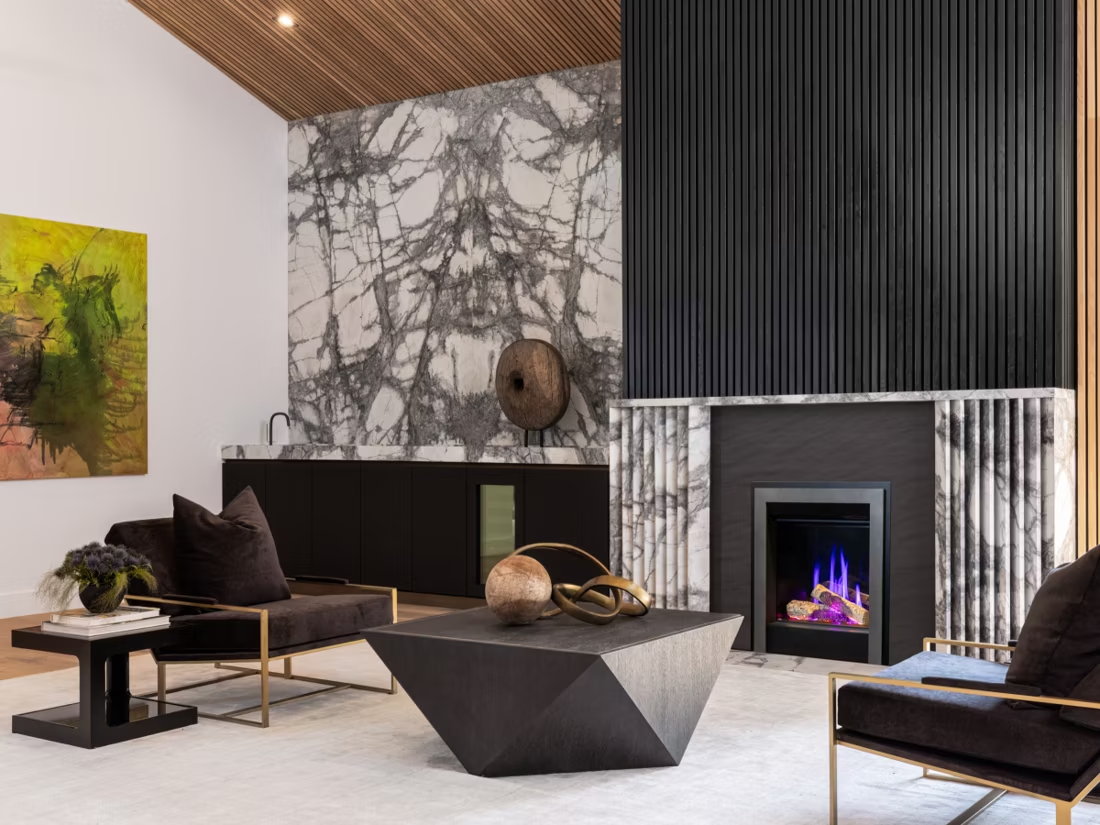
That's where electric fireplaces fit in. There's no flue to run through a shared wall, no gas line to trench, and no cord of oak, hickory, maple, or cherry to store in a yard that barely fits a trash can. Metropolitan Edison serves electric service to Wilson at a residential rate around 15.45 cents per kWh, and a modern electric insert or built-in unit plugs into a standard outlet or a dedicated circuit and delivers supplemental zone heat to a single room within the hour—a practical retrofit for the decorative, non-functioning brick fireplace openings found in many of Wilson's older homes.
Three steps. No salesperson until you're ready.
Tell us about your project
Your zip code, your situation, and the fuel you're leaning toward—or let the answers point you to one.
See what's actually available
The brands dealers within 100 miles genuinely carry—real options, never a catalog mirage.
Get your dealer & Project Guide
A trusted local dealer, plus the free Project Guide & Parts List that names every component of the job.
Frequently Asked Questions
How much does it cost to install an electric fireplace in Wilson?
Costs vary widely by unit type. A freestanding or wall-mount electric fireplace that plugs into an existing 120-volt outlet typically runs $200 to $800 including the unit and basic mounting—no electrician needed. A built-in electric fireplace or insert set into an existing masonry opening, which often requires a dedicated 120V or 240V circuit run by a licensed electrician, typically runs $1,200 to $3,500 depending on the unit, any mantel or surround carpentry, and electrical work. Given how many Wilson rowhomes have decorative, non-working fireplace openings, an insert-style retrofit is one of the most common projects local dealers see here.
Do I need a permit to install an electric fireplace in Wilson?
A plug-in freestanding or wall-mount unit generally doesn't require a permit since it uses an existing outlet. If your installation requires a new dedicated electrical circuit—common for larger built-in units—Wilson Borough requires an electrical permit, and the work must be done by a licensed electrician. There's no venting, chimney, or gas line inspection involved, which is one reason electric installs move faster through the permitting process than wood or gas projects in Northampton County.
What does it cost to run an electric fireplace in Wilson?
At Metropolitan Edison's residential rate of roughly 15.45 cents per kWh, a typical electric fireplace on its 1,500-watt heat setting costs about 23 cents an hour to run. Used for a few hours each evening through a Lehigh Valley winter, that's a modest add to the electric bill compared to running a whole-home heating system—which is exactly the point: electric fireplaces here work best as zone heat for the room you're actually sitting in, not as a replacement for your furnace.
Electric vs. gas fireplace—which is right for my Wilson home?
Gas fireplaces are common in Wilson too, and if your home already has gas service, a direct-vent gas insert delivers more heat output and a more traditional flame. But gas installation means running a gas line and venting through an exterior wall or roof—real work in a rowhome with shared walls. Electric skips all of that: no venting, no gas line, and a unit that can go into almost any wall or existing fireplace opening in an afternoon. For homes without existing gas service, or for upper-floor rooms and additions where running gas line is impractical, electric is usually the simpler and cheaper path.
Why don't more homes in Wilson use wood-burning fireplaces?
Wood heat is rare in Wilson, and it comes down to the housing stock more than the climate. Most of the borough's homes are early-1900s twin homes and rowhouses on narrow lots with shared party walls—there's often no room for a masonry chimney, no place to store cordwood, and shared-wall construction makes new solid-fuel venting difficult and expensive. A handful of older Wilson homes do have original brick fireplaces with working flues, and homeowners there sometimes do burn oak, hickory, or cherry. But for the vast majority of the borough's housing, wood stoves simply aren't a practical fit, which is a big part of why electric and gas dominate the local market.
What's the best type of electric fireplace for a Wilson rowhome?
Many Wilson homes have a decorative brick fireplace opening that hasn't functioned as a real chimney flue in decades. An electric insert sized to that existing opening is one of the most popular projects local dealers handle here—it restores the look of a working fireplace without any venting work. For homes without an existing opening, a wall-mounted or built-in linear electric fireplace works well in a living room or primary bedroom, especially in additions or upper floors where running a gas line isn't practical.
How much space can an electric fireplace actually heat?
Most electric fireplaces are rated to supplement heat in a single room of 400 to 1,000 square feet, not to replace central heating. With Wilson's heating degree day count at 5,516 and winter lows averaging 22°F, that's an important distinction—an electric fireplace makes a great zone heater for a living room or bedroom while your furnace or boiler handles the rest of the house, but it won't carry a whole home through a Lehigh Valley winter on its own.
Are electric fireplaces safe for older Wilson rowhomes?
Yes, and in some ways more so than solid-fuel alternatives. There's no open flame, no combustion byproducts, no risk of chimney fire, and no carbon monoxide to monitor—which matters in shared-wall construction where a venting mistake next door isn't something you control. The main safety consideration is electrical: any built-in unit pulling more than a standard 15-amp circuit should be installed on a dedicated circuit by a licensed electrician, which local dealers coordinate as part of the install.
Can I install an electric fireplace if I rent my home in Wilson?
Often, yes—a plug-in freestanding or wall-mount electric fireplace requires no permanent alteration and can typically go with you when you move, which makes it a popular option for renters in Wilson's many rowhome and twin-home rentals. Built-in units that require new wiring or cutting into a wall need landlord approval, since that's a permanent change to the property. Either way, check with your landlord before any installation involving new electrical work.
Can I put a TV above my fireplace?
Yes—with an asterisk. Fireplaces are hot and TVs don't like heat. Either put a mantel between them to deflect rising warmth, or choose a fireplace with heat-management technology that creates a cool zone on the wall above—the wall stays around 125 degrees, barely warm, while the room still gets full heat. If you like clean lines and don't want a mantel, heat management is the answer.
Do electric fireplaces actually produce heat?
Yes—most put out around 4,800–5,000 BTUs from a standard outlet, which comfortably warms a bedroom, office, or den as a comfort-zone heater. What they won't do is carry a whole house the way wood, gas, or pellet can. Think of electric as ambiance-first with honest supplemental heat: flames on with no heat in July, flames plus warmth in January.
Can I install a fireplace myself?
If you're putting a fire in your house on purpose, it's best to work with an expert. Unless you're genuinely experienced in framing, gas line, vent pipe, and the national code on clearances to combustibles, have a professional do it—and ideally the same company that sells you the fireplace, so warranty, service, and liability all live under one roof.
Does a fireplace add value to my home?
On average, a fireplace adds back to the home about the same amount you spent installing it. Add the monthly savings from heating the rooms you actually use instead of the whole house—often hundreds of dollars a year—and the value case is strong before you even count what a fire does for how your family uses the room.
Nearby Dealers
Hearth shops serving Wilson and the surrounding area. Every listing shows whether it is a WhyFire partner, a dealer we have verified as authorized for the brands we recommend, or a local business carrying hearth products. No manufacturer pays for placement. How we verify dealers →
East Lawn Supply Co., Inc.
Glen-Gery Brick
Hinton & Sons Inc.
Keller Enterprises
Abe Fence / Landscape Supply
Progressive Propane
Stoves N Stuff Ltd
Penn Hearth Llc.
Atlantic Building Prodcuts Inc
Krings Hearth & Home - Schnecksville
S.o.s Wood Stoves, Inc
Kozy By The Fire
Forest Inn Masonry Supply
Tor Chimney & Fireplace
My Deck, Llc
Flemington Supply Co. Inc
Pennsburg Ace Hardware
Electric Service in Wilson
An electric fireplace's heater draws about 1,500 watts—pennies per hour at local rates.
Metropolitan Edison Co
Find your electric fireplace in Wilson.
Tell us a bit about your home and we'll match you with the right electric fireplace or insert—plus a free Project Guide & Parts List and a trusted local dealer to install it.
Find Your Fireplace →