
Instant heat for Wilson's Lehigh Valley winters.
Clean, thermostat-controlled gas heat that fits Wilson's tight rowhome lots and older housing stock. Find the right fireplace or insert, and connect with a trusted local dealer.
Every Project Starts From One of These Five Situations
The practical fit for a small, dense borough.
Wilson is a compact borough of about 8,200 people packed into a little over a square mile across the Lehigh River from Easton. With roughly 5,500 heating degree days and average winter lows around 22°F, it's a real heating climate—colder than Philadelphia, though nowhere near the deep-freeze territory of a place like Buffalo, NY. What sets Wilson apart is its housing stock: tightly spaced rowhomes and modest early-1900s single-family lots, many with small masonry fireplaces that were never designed to feed a wood pile or store cordwood in a side yard.
That's a big part of why gas has become the default upgrade path here rather than wood. UGI Utilities serves natural gas throughout most of Wilson, so homes already piped for a gas water heater or furnace can usually add a fireplace or insert without a new service line. A direct-vent gas insert dropped into an existing masonry firebox is by far the most common project in this borough—it keeps the historic look of the fireplace while delivering real, controllable heat through a thermostat rather than a damper and a match. Metropolitan Edison provides the electric service here, and it's worth noting for cost purposes: even gas units draw a small amount of power for the blower and ignition system, though nothing close to the load of electric heat.
Three steps. No salesperson until you're ready.
Tell us about your project
Your zip code, your situation, and the fuel you're leaning toward—or let the answers point you to one.
See what's actually available
The brands dealers within 100 miles genuinely carry—real options, never a catalog mirage.
Get your dealer & Project Guide
A trusted local dealer, plus the free Project Guide & Parts List that names every component of the job.
Frequently Asked Questions
How much does a gas fireplace installation cost in Wilson?
Most gas fireplace or insert installations in Wilson run between roughly $4,500 and $10,000. On the lower end are direct-vent gas inserts dropped into an existing masonry fireplace where a gas line already reaches the house—common in Wilson's older rowhomes. On the higher end are new direct-vent fireplaces built into a wall where framing, a fresh gas line from the meter, and through-wall venting all have to be added, which is more involved in a rowhome with shared walls and tight side-yard clearances. A local installer will walk your specific unit and give you a firm number after seeing the house.
Can I convert my rowhome's existing fireplace to gas?
Yes, and it's the most common gas project in Wilson. Many of the borough's rowhomes and early-20th-century single-family homes have small masonry fireboxes originally built for coal or wood that are rarely used today. A gas insert sized to that opening, vented through a stainless liner run up the existing flue, converts it into a real heat source you can run daily. Because UGI Utilities gas service already reaches most homes in Wilson, the main cost driver is usually the insert itself and the liner work rather than a new gas line—which keeps these conversions on the more affordable end of the local cost range.
Is natural gas available everywhere in Wilson, or do some homes need propane?
UGI Utilities provides natural gas service across most of Wilson, since the borough is fully built out within the Lehigh Valley's urban service area—this isn't a rural township where propane tanks are the norm. If your home already has a gas range, water heater, or furnace, adding a fireplace is typically a straightforward tie-in. Propane is rarely needed here, but if your specific address happens to sit outside the gas main, a local installer can quote a propane setup with a small exterior tank as an alternative.
Will my gas fireplace still work if the power goes out?
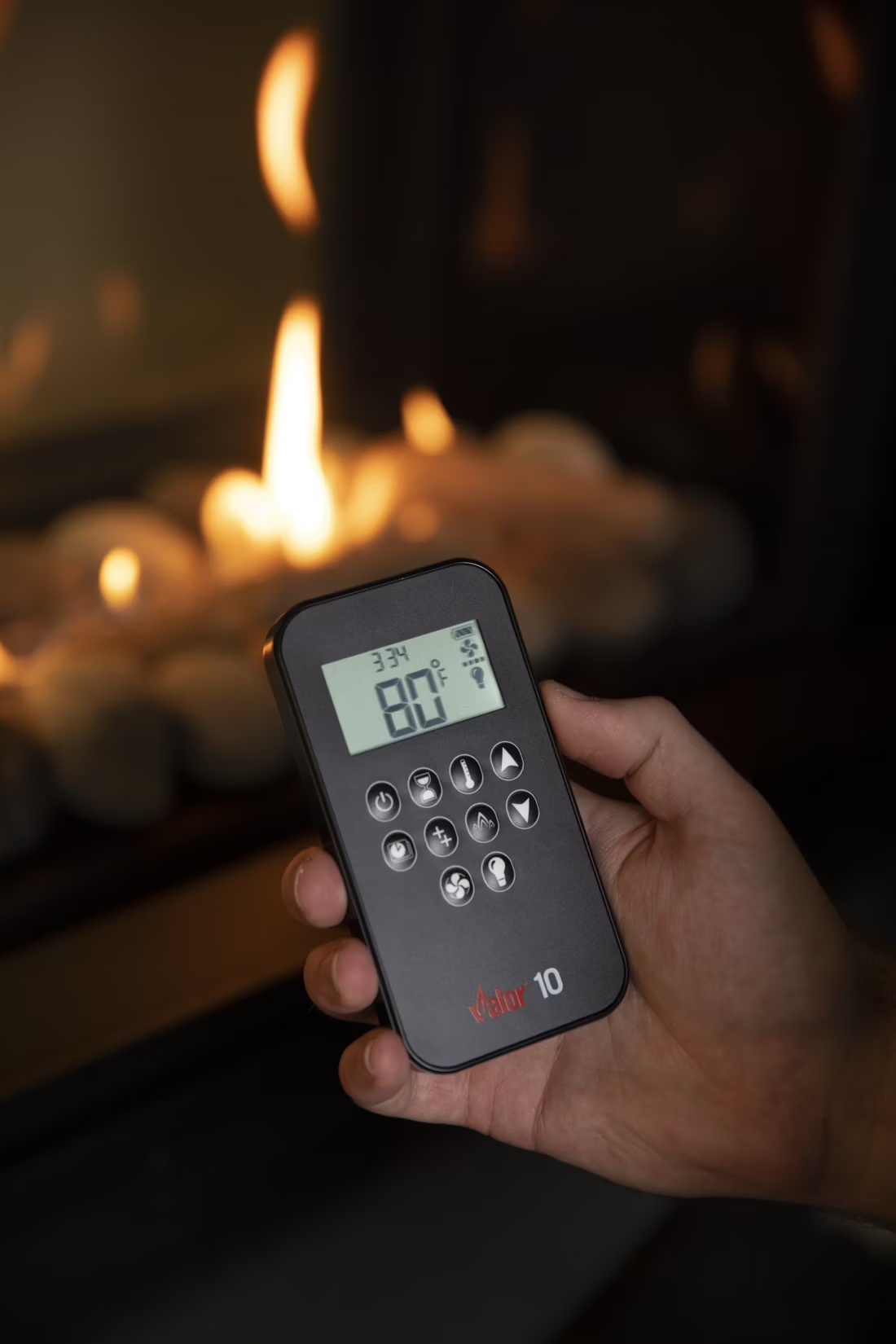
Most direct-vent gas fireplaces with a standing pilot or IPI (intermittent pilot ignition) system will still light and run during a Met-Ed outage, since the flame itself doesn't need household power—though IPI units rely on a small battery backup to fire the igniter, so keeping fresh batteries on hand matters. Some brands, like Valor, use a self-powered thermopile system that generates its own electricity from the pilot flame, so there's no battery to remember at all. In a rowhome block where a downed line can mean a shared outage, that distinction is worth asking your local dealer about.
Gas fireplace, insert, or stove—what fits a Wilson home best?
A gas insert is built to slide into an existing masonry firebox—the natural fit for Wilson's older rowhomes and early-1900s houses that already have a fireplace opening. A built-in gas fireplace is framed into a wall from scratch, which suits newer construction or a remodel where there's no existing chimney to work with. A freestanding gas stove sits on the floor on a small hearth pad and can work well in a rowhome basement or a room without any fireplace at all, since it only needs a short run of direct-vent pipe through an exterior wall rather than a full chimney.
Do I need a permit to install a gas fireplace in Wilson?
Yes. Wilson Borough requires a building permit for the installation, and the gas line work itself has to be done or signed off by a licensed PA gas fitter—it's not a DIY-friendly step given the shared-wall construction common in the borough. Most hearth dealers who install gas fireplaces in this area handle the permit application and inspection scheduling as part of the job, so you're not coordinating separate trades yourself.
Are vent-free gas fireplaces allowed in Wilson?
Pennsylvania allows vent-free (unvented) gas fireplaces, but they come with strict room-size and ventilation requirements tied to the BTU output of the unit—something to check carefully in a rowhome with smaller rooms and shared walls, where an oversized vent-free unit can run into code and comfort issues fast. Direct-vent units, which draw combustion air from outside and exhaust it back outside through a sealed pipe, are the more common and more universally recommended choice in Wilson's housing stock, and they don't put any moisture or combustion byproducts into the living space. A local dealer can tell you whether a specific vent-free model would even be legal for your room's dimensions.
How often does a gas fireplace need to be serviced?
Plan on an annual inspection, ideally before the first cold snap each fall. A technician checks the burner, pilot assembly, venting, and gas connections, and cleans the glass and interior—a much shorter visit than a wood chimney sweep, but just as important for carbon monoxide safety, especially in a rowhome where venting runs through a shared wall. Local gas appliance service providers typically charge somewhere in the $150–$250 range for this annual check.
Why isn't wood or pellet heat more common in Wilson?
Wood and pellet stoves are genuinely uncommon here, and it's worth being upfront about that rather than pretending otherwise. Wilson's rowhomes and tight single-family lots leave little room for cordwood storage or a pellet bag pallet, there's no nearby public forest land offering cutting permits the way there might be in a rural county, and bulk pellet delivery infrastructure just hasn't built up in this small, urban borough the way it has in more rural parts of Pennsylvania. Gas, by contrast, arrives through a pipe already run to most homes via UGI Utilities, which is the practical reason it dominates here. A handful of Wilson homeowners still burn oak, hickory, or cherry in an old masonry fireplace for occasional ambiance, but as a primary heat source, gas is the borough's default.
What's the difference between an insert and a zero-clearance fireplace?
An insert is a fireplace that slides into a pre-existing wood-burning fireplace—if you don't have one, there's nothing to insert it into. A zero-clearance fireplace is built into a framed wall, which makes it the answer for remodels and new construction. Simple test: existing masonry fireplace means insert; blank or framed wall means zero-clearance.
Does a gas fireplace work when the power is out?
Yes—modern gas fireplaces have a battery backup for the ignition system that lasts for weeks, so no power equals no problem. Your furnace can't say that: no electricity, no blower, no heat. It's one of the most common reasons families add a fireplace, and worth confirming on any model you're considering.
Can I install a fireplace myself?
If you're putting a fire in your house on purpose, it's best to work with an expert. Unless you're genuinely experienced in framing, gas line, vent pipe, and the national code on clearances to combustibles, have a professional do it—and ideally the same company that sells you the fireplace, so warranty, service, and liability all live under one roof.
Can a fireplace actually lower my heating bill?
Yes—by creating a comfort zone. A furnace heats every square foot of the house just to warm the one room you're in; a gas fireplace on low burns roughly a sixth of the gas a typical furnace does. Set the furnace around 55–60 degrees as a baseline, then heat the rooms your family actually uses. Families who heat this way commonly save $20–$60 a month.
Nearby Dealers
Hearth shops serving Wilson and the surrounding area. Every listing shows whether it is a WhyFire partner, a dealer we have verified as authorized for the brands we recommend, or a local business carrying hearth products. No manufacturer pays for placement. How we verify dealers →
East Lawn Supply Co., Inc.
Glen-Gery Brick
Hinton & Sons Inc.
Keller Enterprises
Abe Fence / Landscape Supply
Progressive Propane
Stoves N Stuff Ltd
Penn Hearth Llc.
Atlantic Building Prodcuts Inc
Krings Hearth & Home - Schnecksville
S.o.s Wood Stoves, Inc
Kozy By The Fire
Forest Inn Masonry Supply
Tor Chimney & Fireplace
My Deck, Llc
Flemington Supply Co. Inc
Pennsburg Ace Hardware
Find your gas fireplace in Wilson.
Tell us a bit about your rowhome or your Wilson property, and we'll match you with a trusted local dealer and put together your free Project Guide & Parts List—the exact parts, vent kit, and installer recommended for your home.
Find Your Fireplace →