
Real heat, zero venting, installed in an afternoon.
From rowhomes in Easton to farmhouses outside Bangor, an electric fireplace or insert gives Northampton County homeowners real supplemental warmth without a chimney, gas line, or masonry work. We'll match you with a trusted local dealer who can size the right unit for your space.
Every Project Starts From One of These Five Situations
The no-venting option for older Lehigh Valley housing stock.
Northampton County stretches from the rowhomes and brownstones of Easton and Bethlehem's north side out to the farmhouses and ridge-top homes around Bangor, Pen Argyl, and Nazareth. Winters here average a low around 22°F with roughly 5,293 heating degree days a season—moderate by cold-climate standards, well under half the annual load of a place like Bismarck, ND, but still enough sustained cold that most Northampton County homes run a primary furnace or heat pump through five or six months of the year. In a lot of that older housing stock—pre-war rowhomes in Easton's West Ward, converted attic spaces, additions built without ductwork—running a new chimney or gas line isn't realistic, which is exactly where electric fireplaces and inserts fit in.
Electric units plug into a standard outlet or run off a dedicated circuit, need no venting, and can be installed in a single afternoon by an electrician rather than a multi-day chimney or gas-line project. PPL Electric Utilities serves most of Northampton County, and running a 1,500-watt electric fireplace for supplemental heat in a den or finished basement typically costs a fraction of what it takes to push extra heat through an oil or gas furnace zone. It's not a whole-house heating solution, but for zone heat in a sunroom, a basement rec room, or a bedroom that never quite gets warm enough, it's the fastest and least disruptive option most homeowners in the county have.
Three steps. No salesperson until you're ready.
Tell us about your project
Your zip code, your situation, and the fuel you're leaning toward—or let the answers point you to one.
See what's actually available
The brands dealers within 100 miles genuinely carry—real options, never a catalog mirage.
Get your dealer & Project Guide
A trusted local dealer, plus the free Project Guide & Parts List that names every component of the job.
Frequently Asked Questions
How much does an electric fireplace installation cost in Northampton County?
A plug-in electric insert or freestanding unit runs $150 to $800 for the unit itself and needs no professional installation beyond plugging it in—some homeowners install these themselves. A built-in wall unit or a larger insert that requires a dedicated 20-amp circuit typically runs $1,500 to $4,000 installed, once you factor in the unit, a licensed electrician's labor, and any surround or mantel work. Converting an existing masonry fireplace to an electric log insert—common in older Easton and Bethlehem rowhomes with unused or capped flues—usually falls in the $600 to $2,000 range depending on the insert and whether new wiring is needed.
Can I put an electric insert into my existing wood fireplace?
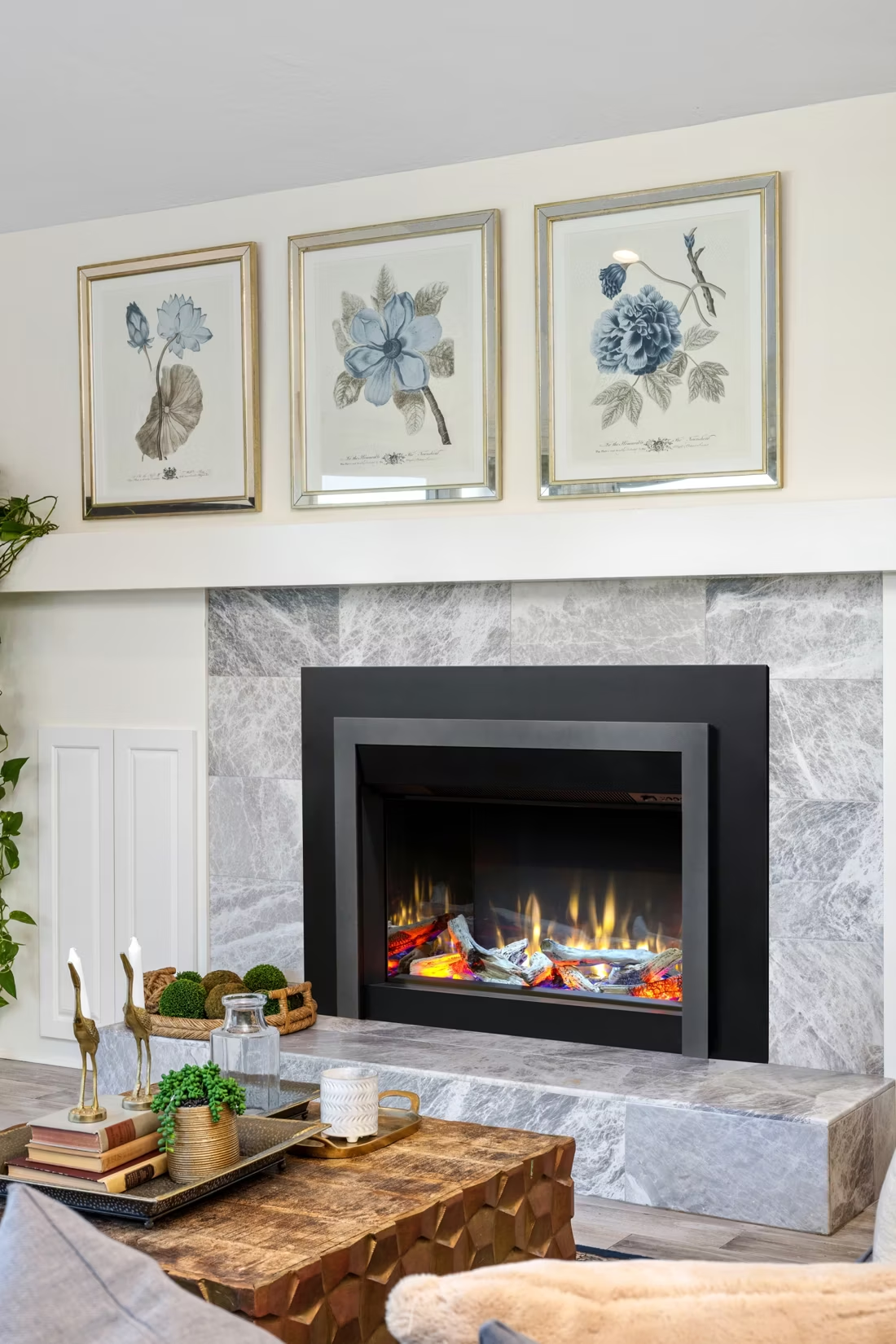
Yes, and it's one of the more common projects in Northampton County's older housing stock, where a lot of Easton and Bethlehem rowhomes have a masonry fireplace with a flue that's been capped or is no longer safe to use. An electric log insert slides into the existing firebox opening, plugs into a nearby outlet or a new dedicated circuit, and gives you the look of a fire without touching the chimney at all. It's a straightforward retrofit compared to a gas or wood conversion, since there's no venting, gas line, or liner work involved.
Do I need a permit to install an electric fireplace in Northampton County?
A plug-in electric fireplace or insert generally doesn't require a permit since it's no different from plugging in any other appliance. A built-in unit that requires a new dedicated circuit does typically need an electrical permit, and Northampton County doesn't have a single county-wide building department—each municipality handles its own permitting, so you'd go through the City of Easton's Bureau of Codes, the City of Bethlehem's Department of Community and Economic Development, or the relevant borough or township office in places like Nazareth, Bangor, or Pen Argyl. A licensed electrician doing the circuit work will typically pull the permit as part of the job.
Will an electric fireplace heat my whole house?
No—electric fireplaces are built for zone heating, not whole-house heating. With 5,293 heating degree days a year, most Northampton County homes rely on an oil furnace, gas furnace, or heat pump as the primary system, and an electric fireplace supplements that in a specific room: a finished basement, a home office, a sunroom addition that the main system doesn't reach well. A single unit typically covers 400 to 1,000 square feet depending on the model and the room's insulation, which makes it a good fit for one problem room rather than an entire house.
What should I look for in an electric fireplace for a Northampton County home?
Since the heating job here is supplemental rather than primary, look for a unit with a real thermostat (not just a high/low switch) so it can actually maintain a room temperature through a Lehigh Valley winter evening, and check the heater's rated square footage against the room you're putting it in—an undersized unit in a drafty sunroom or converted porch won't keep up. Beyond that, the flame effect and cabinet style are mostly personal preference; local dealers carry models from brands with the strongest track record for heater longevity, which matters more here than in warmer climates since these units get real daily use for a good chunk of the year.
Electric vs. gas fireplace—which makes more sense in Northampton County?
Natural gas service through UGI Utilities is widely available across Northampton County, including Easton, Bethlehem, and Nazareth, which makes gas fireplaces a realistic option for homeowners who want higher heat output and don't mind the venting and gas line work. Electric wins on installation simplicity and cost—no venting, no gas line, no masonry work—and it's the better fit for rooms where running gas isn't practical, like a finished basement far from the meter or an apartment-style addition. If real heat output and a more authentic flame matter more than installation ease, a local dealer can walk you through both.
How much does it cost to run an electric fireplace in Northampton County?
Most electric fireplaces run 750 to 1,500 watts on the heat setting. At typical PPL Electric Utilities residential rates, running a 1,500-watt unit for a few hours an evening costs somewhere in the range of a dollar or two per day—considerably cheaper than pushing extra heat through an oil-fired furnace zone, which is one of the reasons electric fireplaces are popular for supplemental heat in the county's older, harder-to-heat additions and converted spaces.
How do I find a trustworthy electric fireplace dealer in Northampton County?
I built Find My Fireplace to solve exactly this—we're not a manufacturer or a retailer, and we don't sell or ship product. We match Northampton County homeowners with a trusted local dealer who actually installs in the Lehigh Valley, knows the difference between a plug-in unit and a job that needs a licensed electrician, and can size a unit correctly for your specific room. You get a free Project Guide & Parts List rather than a sales pitch.
Electric vs. wood—which is right for my home?
Electric fireplaces win on convenience—no venting, no ash, no fuel to store, and instant on-off operation—but they're useless during a power outage, which matters in a county where ice storms occasionally take down lines for a day or more. Wood, burned in local oak, hickory, maple, or cherry, works without power and can genuinely heat a room during an outage, but it means chimney maintenance, fuel storage, and more day-to-day work. A lot of Northampton County homeowners end up with both: electric for daily convenience in a finished basement or sunroom, wood or a backup heat source elsewhere for the nights the power doesn't cooperate.
Do electric fireplaces actually produce heat?
Yes—most put out around 4,800–5,000 BTUs from a standard outlet, which comfortably warms a bedroom, office, or den as a comfort-zone heater. What they won't do is carry a whole house the way wood, gas, or pellet can. Think of electric as ambiance-first with honest supplemental heat: flames on with no heat in July, flames plus warmth in January.
Can I put a TV above my fireplace?
Yes—with an asterisk. Fireplaces are hot and TVs don't like heat. Either put a mantel between them to deflect rising warmth, or choose a fireplace with heat-management technology that creates a cool zone on the wall above—the wall stays around 125 degrees, barely warm, while the room still gets full heat. If you like clean lines and don't want a mantel, heat management is the answer.
Can a fireplace actually lower my heating bill?
Yes—by creating a comfort zone. A furnace heats every square foot of the house just to warm the one room you're in; a gas fireplace on low burns roughly a sixth of the gas a typical furnace does. Set the furnace around 55–60 degrees as a baseline, then heat the rooms your family actually uses. Families who heat this way commonly save $20–$60 a month.
How much should I budget for a fireplace?
For an average home—covering the fireplace, the vent pipe, and basic installation—a budget between $3,900 and $5,500 gives you a lot of options across wood, gas, and pellet. By the time you add finish work, gas line, and electrical, the average complete installation lands between $5,000 and $12,000 all-in. In a remodel or new build, a good rule is to put about 2.5% of the total project cost toward the fireplace.
Stove and Fireplace Dealers in Northampton County
Listings include WhyFire partner dealers, dealers we have verified as authorized for the brands we recommend, and established local businesses that carry hearth products. Every listing shows which one it is. The ones marked Preferred run on WhyFire's software, so they can show you real pricing and book your appointment right here. No manufacturer pays for placement. How we verify dealers →
East Lawn Supply Co., Inc.
Glen-Gery Brick
Hinton & Sons Inc.
Keller Enterprises
Abe Fence / Landscape Supply
Penn Hearth Llc.
Stoves N Stuff Ltd
Krings Hearth & Home - Schnecksville
Progressive Propane
Kozy By The Fire
Forest Inn Masonry Supply
Atlantic Building Prodcuts Inc
Liberty Oil & Propane
Pennsburg Ace Hardware
S.o.s Wood Stoves, Inc
Find your electric fireplace in Northampton County.
Tell us about your room and we'll match you with a trusted local dealer, plus a free Project Guide & Parts List for your Northampton County electric fireplace or insert project.
Find Your Fireplace →