
Consistent Warmth Without the Woodpile.
Thermostat-controlled heat for Lancaster County's long winter season, without splitting, stacking, or hauling logs. Find the right pellet stove or insert and get matched with a trusted local dealer.
Every Project Starts From One of These Five Situations
Set-it-and-forget-it heat for Lancaster County winters.
Willow Street sits in Manor Township at about 424 feet elevation, in climate zone 5A with roughly 5,129 heating degree days and winter lows averaging 22°F. That's a real heating season—colder and longer than the Mid-Atlantic coast, though nowhere near what a place like Burlington, Vermont deals with. It's the kind of climate where a supplemental heat source runs steadily from November through March without needing to be built for sub-zero extremes. Lancaster County also has no active air quality nonattainment designation, which means no winter burn curtailment days to plan around—pellet stoves here run on the homeowner's schedule, not the county's.
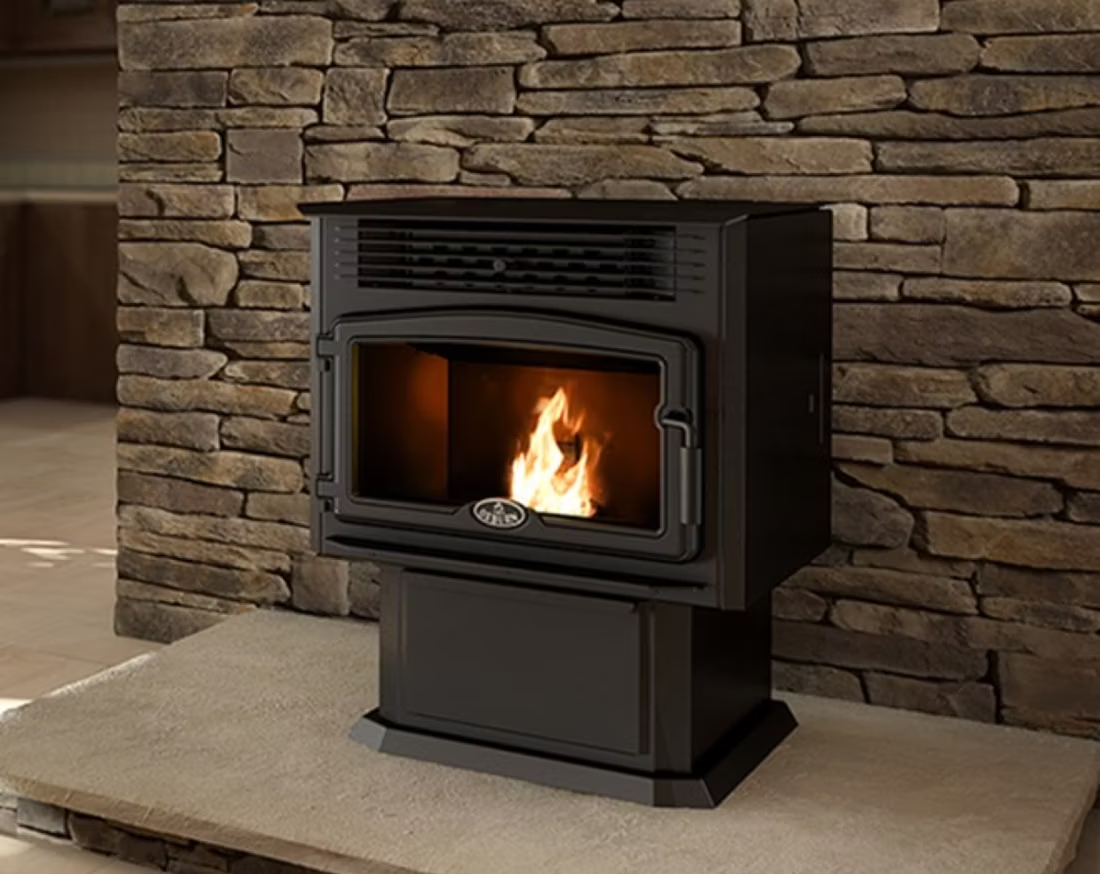
This is farm country, and plenty of Willow Street homes have easy access to seasoned oak, hickory, maple, and cherry for a wood stove. Pellet heat appeals to a different kind of household: one that wants the radiant, steady heat of a stove without the cutting, splitting, and ash-hauling that comes with cordwood. Bagged hardwood and softwood pellets from regional producers like Energex, Hamer Pellet Fuel, and Greene Team Pellet Fuel are sold at hearth shops and farm supply stores throughout the county, and a pellet stove's auto-feed hopper and thermostat control mean you load it once a day and forget about it—a real advantage for a household without time to tend a fire.
Three steps. No salesperson until you're ready.
Tell us about your project
Your zip code, your situation, and the fuel you're leaning toward—or let the answers point you to one.
See what's actually available
The brands dealers within 100 miles genuinely carry—real options, never a catalog mirage.
Get your dealer & Project Guide
A trusted local dealer, plus the free Project Guide & Parts List that names every component of the job.
Frequently Asked Questions
How much does a pellet stove installation cost in Willow Street?
A freestanding pellet stove installation in Willow Street typically runs $3,000 to $6,500, depending on the unit and whether the vent run through an exterior wall is short and straightforward or requires more complex framing. A pellet insert going into an existing masonry fireplace usually costs a bit more once a liner is factored in. Because pellet stoves vent through a small-diameter PL pipe rather than a full masonry chimney, installs are generally less expensive than wood stove installations. New construction in Manor Township requires a building permit, which most local installers pull as part of the job.
Pellet stove vs. wood stove—which makes more sense in Willow Street?
Wood is genuinely abundant here—Lancaster County's farms and woodlots supply plenty of seasoned oak, hickory, maple, and cherry, and a wood stove works fine without electricity, which matters during a PPL Electric outage. But a pellet stove trades that self-sufficiency for convenience: no splitting, stacking, or cleaning creosote from a chimney, just a hopper you refill and a thermostat you set. If you don't already have a woodpile or the time to maintain one, and you don't mind that pellet stoves need power to run the auger and blower, pellet heat is usually the lower-hassle choice for a primary or supplemental heat source.
Where can I buy pellets in Willow Street, and what do they cost?
Regional producers including Energex, Hamer Pellet Fuel, and Greene Team Pellet Fuel supply bagged pellets to hearth shops and farm supply stores across Lancaster County. Expect to pay roughly $5 to $6.50 per 40-lb bag, or somewhat less per ton if you buy a full season's supply—commonly a ton (50 bags) at a time—before cold weather hits and demand drives prices up. Buying early in the fall, before the first cold snap, is the best way to avoid the price spikes that hit pellet retailers every winter.
Does a pellet stove work during a power outage?
Not without help. Pellet stoves rely on an electric auger to feed fuel and a blower to distribute heat, so a standard unit shuts down the moment PPL Electric Utilities' power drops—which does happen in Lancaster County during ice storms and summer thunderstorms. Most pellet stove owners here pair their unit with a small battery backup or inverter-generator setup sized for the stove's low wattage draw, which is enough to keep the auger and igniter running through a typical outage. If uninterrupted backup heat during outages is a priority, a wood stove or a battery-backed setup are the two paths worth discussing with a local dealer.
Do I need a permit to install a pellet stove in Willow Street?
Yes—new installations require a building permit through Manor Township, since Willow Street isn't its own incorporated municipality. Most local hearth retailers handle the permit application and inspection as part of the installation. Because Lancaster County has no air quality nonattainment designation, there are no winter burn curtailment restrictions to navigate here, unlike some parts of the country where pellet or wood stoves are limited to certain days during poor air quality events.
What size pellet stove do I need for my home?
Pellet stoves are rated by BTU output and square footage coverage, similar to wood stoves. For a Willow Street home with average insulation, a small unit (rated for up to around 1,000 sq ft) suits a single room or supplemental use, while a mid-size unit (1,500-2,200 sq ft) handles most main living areas through a 5,129-HDD winter. Homes wanting whole-house coverage from a single unit should look at larger, higher-output models. A local dealer will size the stove to your actual floor plan and insulation level during an in-home visit—oversizing wastes pellets and undersizing leaves you running the auger nonstop on the coldest nights.
How much maintenance does a pellet stove need?
Less than a wood stove, but it's not zero-maintenance. The ash pan typically needs emptying every few days to weekly depending on use, the hopper and burn pot benefit from a quick brush-out weekly, and the exhaust venting and heat exchanger tubes should get a deeper cleaning at least once a season—usually at the end of burn season or before it starts. Unlike a wood-burning chimney, there's no annual CSIA sweep requirement, but an annual professional service visit to check the auger motor, gaskets, and blower is worth scheduling with a local dealer.
Pellet stove vs. gas fireplace—which is right for my home?
Gas fireplaces offer instant on-off heat with no fuel storage or feeding required, and many models still function during a power outage thanks to battery-backed ignition. Pellet stoves require you to keep a fuel supply on hand and depend on electricity to run, but they produce a real, visible flame with radiant heat and burn a renewable, often locally sourced fuel rather than piped gas or propane. For a Willow Street home already on natural gas or propane, a gas fireplace may be the simpler retrofit; for households drawn to a wood-fire look without the labor of cordwood, pellet is the better fit. A local dealer can walk through both options for your specific room.
Can a pellet stove vent through my existing fireplace or does it need a wall vent?
Most pellet stoves vent through a 3- or 4-inch PL (pellet-listed) pipe, which can run horizontally out an exterior wall—a much simpler and less expensive path than a full masonry chimney. For Willow Street homes with an existing fireplace, a pellet insert can also use the existing chimney with a properly sized liner, though a direct wall vent is often cheaper if you don't already have a masonry fireplace to convert. Either approach needs correct clearances and termination height above grade and nearby windows, which is why professional installation and a Manor Township permit matter even for a
What's the difference between an insert and a zero-clearance fireplace?
An insert is a fireplace that slides into a pre-existing wood-burning fireplace—if you don't have one, there's nothing to insert it into. A zero-clearance fireplace is built into a framed wall, which makes it the answer for remodels and new construction. Simple test: existing masonry fireplace means insert; blank or framed wall means zero-clearance.
Why is a fireplace insert so efficient?
An insert does two things: it seals the chimney completely, so you stop losing air you already paid to heat, and it radiates warmth into the room through the firebox and glass. Most add a heat-exchange fan that pulls cool room air underneath, wraps it around the hot firebox, and pushes it back out warm. Your home is more efficient before you've even lit the first fire.
Can a fireplace actually lower my heating bill?
Yes—by creating a comfort zone. A furnace heats every square foot of the house just to warm the one room you're in; a gas fireplace on low burns roughly a sixth of the gas a typical furnace does. Set the furnace around 55–60 degrees as a baseline, then heat the rooms your family actually uses. Families who heat this way commonly save $20–$60 a month.
Does a fireplace add value to my home?
On average, a fireplace adds back to the home about the same amount you spent installing it. Add the monthly savings from heating the rooms you actually use instead of the whole house—often hundreds of dollars a year—and the value case is strong before you even count what a fire does for how your family uses the room.
Nearby Dealers
Hearth shops serving Willow Street and the surrounding area. Every listing shows whether it is a WhyFire partner, a dealer we have verified as authorized for the brands we recommend, or a local business carrying hearth products. No manufacturer pays for placement. How we verify dealers →
Penn Stone
Hillside Acres Stoves
Kring's Hearth & Home - Lancaster
Ds Stoves
Peak Distribution
Sauder's Hardscape Supply
Keystone Custom Decks
Firestarters Custom Fireplace & Stove
Se Outdoor & Design
Duvall's Lawn & Garden Inc.
H2 LLC
Pellet Brands Stocked Around Willow Street
Manufacturers will point you to the nearest stocking dealer.
Find your pellet stove in Willow Street.
Tell us a bit about your home and we'll match you with a trusted local dealer and send over your free Project Guide & Parts List—a complete plan for your pellet project in Willow Street, including the exact parts and vent kit you'll need.
Find Your Fireplace →