
Plug-In Warmth for Willow Street's Coldest Nights.
No chimney, no gas line, no permit headaches—just real fireplace ambiance and zone heat for Manor Township homes. Find the right unit and get matched with a trusted local dealer.
Every Project Starts From One of These Five Situations
Electric heat that fits Lancaster County's older farmhouses.
Willow Street sits in Manor Township at about 424 feet elevation, with average winter lows near 22°F and roughly 5,129 heating degree days a year—a real but moderate Mid-Atlantic winter, nothing like the deep cold of Fargo or Duluth. That's exactly the kind of climate where electric fireplaces earn their keep: they're not asked to be the primary heat source for a whole farmhouse, they're asked to take the edge off a den, sunroom, or finished basement without opening up a wall or running a flue.
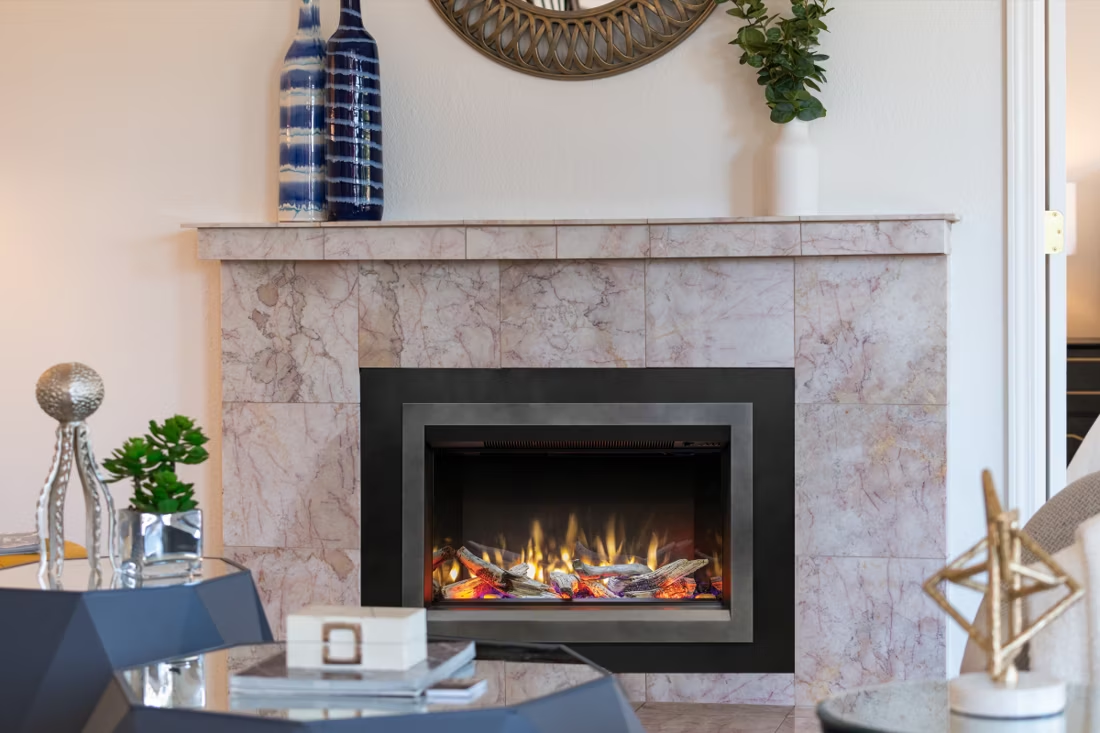
A lot of the housing stock around Willow Street is older stone and brick farmhouse construction, some with masonry fireplaces that no longer draft well or were bricked up decades ago. An electric insert drops into that existing opening with no venting and no masonry work. PPL Electric Utilities serves the area at a residential rate around $0.1234 per kWh—below the national average—which keeps day-to-day running costs low for supplemental zone heating. For newer construction or apartments near Lancaster and Willow Street proper, a wall-mount or built-in unit adds fireplace atmosphere without any of the wood-handling or gas-line coordination the other fuels require.
Three steps. No salesperson until you're ready.
Tell us about your project
Your zip code, your situation, and the fuel you're leaning toward—or let the answers point you to one.
See what's actually available
The brands dealers within 100 miles genuinely carry—real options, never a catalog mirage.
Get your dealer & Project Guide
A trusted local dealer, plus the free Project Guide & Parts List that names every component of the job.
Frequently Asked Questions
How much does an electric fireplace installation cost in Willow Street?
Freestanding or insert-style plug-in units run $300 to $900 installed, since most just need a standard 120V outlet and no electrician. Built-in electric fireplaces set into a wall, mantel surround, or existing masonry opening typically run $1,200 to $3,500 once you factor in framing, a mantel or surround, and—if the unit calls for a dedicated 20-amp circuit—a licensed electrician to run it. Older Manor Township farmhouses with knob-and-tube or older panel wiring sometimes need a panel assessment first, which a local dealer will flag during the in-home visit.
Do I need a permit for an electric fireplace in Manor Township?
Most plug-in electric fireplaces and inserts don't require a permit at all—they're treated like any other appliance. Where a permit does come into play is electrical work: if your unit needs a new dedicated circuit or panel upgrade, that portion of the job falls under Manor Township's building and electrical permitting, and it needs to be pulled by a licensed electrician. A reputable local dealer will tell you upfront whether your chosen model needs new wiring or can run off an existing outlet.
How much does it cost to run an electric fireplace on PPL Electric rates?
At PPL Electric's residential rate of roughly $0.1234 per kWh, a typical 1,500-watt electric fireplace costs about 18.5 cents per hour to run on the heater setting. Used for ambiance a few hours a night without the heater engaged, most units draw under 100 watts and cost pennies a day. Running one as supplemental heat for 4 hours a day through a Willow Street winter adds roughly $22 to $25 a month to a PPL bill—far less than most homeowners expect, and with no fuel to buy or store.
Can I put an electric insert into my existing masonry fireplace?
Yes, and it's one of the most common projects for older homes around Willow Street. Many stone and brick farmhouses in this part of Lancaster County have fireplaces that were closed off years ago or never drafted well. An electric insert slides into that existing firebox opening, plugs into a nearby outlet, and needs zero venting or chimney work. It restores the visual anchor of the fireplace and adds real zone heat, without the masonry repairs a wood-burning restoration would require.
Electric vs. wood—which makes more sense for my home?
Wood remains common in Lancaster County, with oak, hickory, maple, and cherry all readily available locally, and it keeps working during a power outage—a real consideration given how often winter storms knock out lines in this region. Electric offers none of that outage resilience, but it also means no wood handling, no ash, no chimney sweep, and no creosote risk in an older home's flue. For a primary residence with a working chimney, wood or a wood insert often makes sense as backup heat. For a den, sunroom, rental, or a home where nobody wants to deal with firewood, electric is usually the simpler, lower-maintenance answer.
How big of an electric fireplace do I need for supplemental heat?
Most residential electric fireplaces are rated around 1,500 watts, which translates to roughly 5,000 BTUs—enough to comfortably heat a single room of 300 to 400 square feet, which covers most dens, sunrooms, and finished basement rooms in the Willow Street area. Given average winter lows around 22°F here, that's realistic supplemental heat for a closed room, not whole-house heating. If you're trying to warm an open-concept space or a large addition, a local dealer can point you toward larger built-in units or suggest running two smaller units on separate circuits instead of overloading one.
How much maintenance does an electric fireplace need?
Very little compared to wood or gas. There's no chimney to sweep and no annual gas line inspection required. Maintenance is mostly dusting the unit, occasionally cleaning the glass front, and replacing the LED light strips or heater fan after years of use—most manufacturers rate those parts for 10,000+ hours. It's one of the reasons electric appeals to homeowners in older Willow Street houses who don't want to add another appliance that needs yearly professional service.
Electric fireplace vs. pellet stove—which fits my home better?
Pellet stoves burning regional fuel from brands like Energex, Hamer Pellet Fuel, or Greene Team Pellet Fuel put out real heat—often 40,000+ BTUs—and can genuinely warm a whole floor of a Lancaster County home, but they need venting, a hopper to reload, and electricity to run the auger and blower. Electric fireplaces skip the venting and the fuel entirely, plug into a standard outlet, and require no ash removal, but they're built for zone heating a single room, not whole-home output. If you're looking to meaningfully cut a heating bill, pellet is the stronger tool. If you want fireplace ambiance and light supplemental warmth with the least amount of ongoing upkeep, electric wins.
What style of electric fireplace works best—insert, wall-mount, or mantel package?
It depends on what you're starting with. If you already have a masonry fireplace opening, an insert is almost always the right call—it uses the space you have. If you're finishing a basement or building out a media wall with no existing fireplace, a linear wall-mount unit set into framing gives a clean, modern look. If you want the traditional look of a freestanding fireplace with a mantel—common in older Willow Street farmhouse-style homes—a mantel package pairs a surround with an insert or built-in unit. A local dealer will walk your space and tell you which option actually fits the wall, the outlet access, and the look you're after.
Can I put a TV above my fireplace?
Yes—with an asterisk. Fireplaces are hot and TVs don't like heat. Either put a mantel between them to deflect rising warmth, or choose a fireplace with heat-management technology that creates a cool zone on the wall above—the wall stays around 125 degrees, barely warm, while the room still gets full heat. If you like clean lines and don't want a mantel, heat management is the answer.
Does an electric fireplace need a vent or chimney?
No—that's its superpower. An electric fireplace needs a wall and an outlet, period. No vent pipe, no gas line, no clearances to design around, which is why it works in bedrooms, offices, apartments, and walls where venting a gas or wood unit would be impractical or impossible. Installation is typically the simplest and least expensive of any fireplace type.
Can a fireplace actually lower my heating bill?
Yes—by creating a comfort zone. A furnace heats every square foot of the house just to warm the one room you're in; a gas fireplace on low burns roughly a sixth of the gas a typical furnace does. Set the furnace around 55–60 degrees as a baseline, then heat the rooms your family actually uses. Families who heat this way commonly save $20–$60 a month.
Can I install a fireplace myself?
If you're putting a fire in your house on purpose, it's best to work with an expert. Unless you're genuinely experienced in framing, gas line, vent pipe, and the national code on clearances to combustibles, have a professional do it—and ideally the same company that sells you the fireplace, so warranty, service, and liability all live under one roof.
Nearby Dealers
Hearth shops serving Willow Street and the surrounding area. Every listing shows whether it is a WhyFire partner, a dealer we have verified as authorized for the brands we recommend, or a local business carrying hearth products. No manufacturer pays for placement. How we verify dealers →
Penn Stone
Hillside Acres Stoves
Kring's Hearth & Home - Lancaster
Ds Stoves
Peak Distribution
Sauder's Hardscape Supply
Keystone Custom Decks
Firestarters Custom Fireplace & Stove
Se Outdoor & Design
Duvall's Lawn & Garden Inc.
H2 LLC
Electric Service in Willow Street
An electric fireplace's heater draws about 1,500 watts—pennies per hour at local rates.
Ppl Electric Utilities Corp
Find your electric fireplace in Willow Street.
Tell us a bit about your home and we'll match you with a trusted local Lancaster County dealer and send over your free Project Guide & Parts List—the exact unit, mounting or insert parts, and next steps for your Willow Street home.
Find Your Fireplace →