
In Williamsport, wood is the default—pellet is the exception.
Pellet heat isn't the local norm here, but for the right home—a camp, a garage, a spot off the gas line—it can still make sense. We'll help you figure out if it's the right call and connect you with a dealer who actually installs them nearby.
Every Project Starts From One of These Five Situations
Hardwood surrounds Williamsport. Pellet stoves rarely make the cut.
Williamsport built its identity on hardwood—the city was once known as the Lumber Capital of the World, and Lycoming County's forests still produce oak, hickory, maple, and cherry in abundance. For most homeowners here, that means cordwood is cheap, plentiful, and culturally the default choice for anyone who wants a wood-burning appliance. Add in that natural gas service reaches much of the city and surrounding boroughs, and you end up with two dominant heating paths—wood for tradition and cost, gas for convenience—that leave little room for pellet stoves in between.
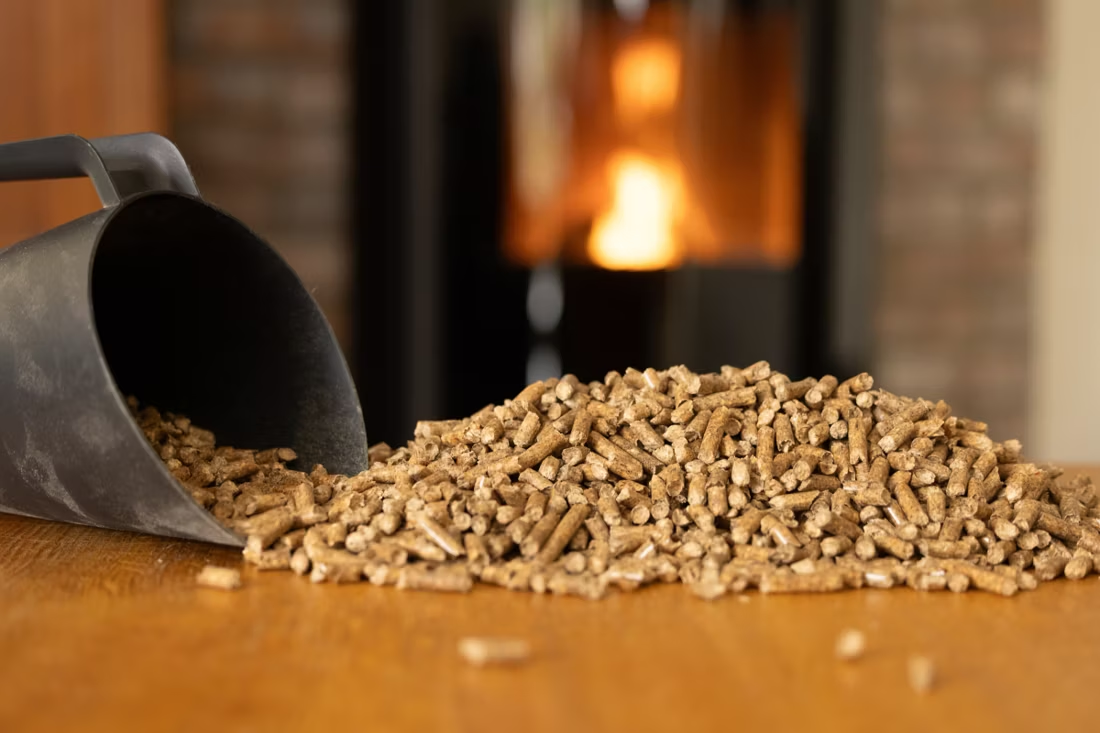
There's a real irony here: north-central Pennsylvania is pellet-manufacturing country. Brands like Energex, Hamer Pellet Fuel, and Greene Team Pellet Fuel are all produced within a few hours of Williamsport, and plenty of that fuel gets trucked out to homes in other states. Locally, though, demand for the stoves themselves stays thin. Where we do see pellet installs in the Williamsport area, it's usually a hunting camp without a chimney, a garage or workshop, a home off the gas main in rural Lycoming County, or someone who wants hopper convenience without splitting and stacking wood. If that's you, a trusted local dealer can size the right unit and handle the vent kit properly—we just want you going in with clear eyes about how uncommon this path is around here.
Three steps. No salesperson until you're ready.
Tell us about your project
Your zip code, your situation, and the fuel you're leaning toward—or let the answers point you to one.
See what's actually available
The brands dealers within 100 miles genuinely carry—real options, never a catalog mirage.
Get your dealer & Project Guide
A trusted local dealer, plus the free Project Guide & Parts List that names every component of the job.
Frequently Asked Questions
Are pellet stoves actually common in Williamsport?
Not really—and we'd rather tell you that upfront than sell you a fantasy. Between the abundance of oak, hickory, maple, and cherry cordwood from Lycoming County's forests and the reach of natural gas service through the city and nearby boroughs, most Williamsport homeowners land on wood or gas as their heating appliance. Pellet stoves show up occasionally, but they're a minority choice here, not the default the way they might be in parts of the Northeast with tighter wood-lot access or stricter wood-burning air rules.
How much does a pellet stove installation cost in Williamsport?
Because so few get installed locally, there isn't a well-established Williamsport-specific price range the way there is for gas or wood. As a general planning number, a pellet stove installation—unit, venting, and labor—typically runs somewhere in the $3,000 to $6,500 range depending on the model and whether you're venting through an existing wall or building new. Because local installer volume is low, you may find dealers pulling from a wider service radius covering Lycoming, Union, and Clinton counties rather than a Williamsport-only specialist. Get a firm quote from whoever you're matched with before assuming a number.
Where can I buy pellet fuel near Williamsport?
You're actually in good territory for pellet fuel itself, even if the stoves are scarce—Energex, Hamer Pellet Fuel, and Greene Team Pellet Fuel are all Pennsylvania-based brands, and bags typically show up at farm supply and hardware stores throughout Lycoming County. The bottleneck isn't fuel supply, it's appliance demand: most retailers keep bags on the shelf for the handful of local pellet stove owners and for customers stocking up before winter, not because pellet heat is the regional standard the way cordwood is.
Do I need a permit to install a pellet stove in Williamsport?
Yes—any new solid-fuel appliance, including a pellet stove, typically requires a building permit through your local municipal codes office, whether that's the City of Williamsport or your township in Lycoming County if you're outside city limits. The permit process checks clearances, hearth pad requirements, and that the vent kit is UL-listed and installed per the manufacturer's specs. Because pellet installs are relatively rare here, it's worth confirming with your inspector ahead of time rather than assuming the process mirrors a wood stove permit—the venting requirements differ.
What's the difference between a pellet stove and a wood stove for a Williamsport home?
A wood stove burns cordwood you split and stack yourself—and with oak, hickory, maple, and cherry all growing locally, that's the path most Lycoming County homeowners already know. A pellet stove burns bagged, compressed wood pellets fed automatically by an electric auger, which means less physical labor but a dependency on both bagged fuel and household power. Given how established the cordwood supply chain already is around Williamsport, most people who want a wood-burning appliance here default to a wood stove rather than switching to pellets—pellet tends to win out only when someone specifically wants to avoid hauling and stacking wood.
Will a pellet stove keep working during a power outage?
No—pellet stoves rely on an electric auger and blower to feed fuel and circulate heat, so a PPL Electric Utilities outage during an ice storm or a nor'easter will shut the unit down unless you've added a battery backup or inverter setup. This is one of the bigger reasons wood or a well-vented gas unit tends to win out in this area for anyone worried about winter outages—a cast iron wood stove keeps burning with zero electricity, which matters more in a Susquehanna Valley ice storm than most people expect.
Is Williamsport's climate cold enough to justify a pellet stove as primary heat?
Williamsport sits in climate zone 5A with about 5,674 heating degree days and an average winter low around 20°F—a real winter, but a moderate one compared to places like Burlington, VT or Duluth, MN. That moderate climate is actually part of why pellet doesn't gain much traction here: homes don't need the sustained overnight burn times of a serious cold-climate wood stove, and gas furnaces and boilers handle whole-home heating comfortably. Pellet stoves work fine as supplemental zone heat in this climate, but few Williamsport households need to reach for pellet specifically to survive the winter.
Pellet vs. gas—which makes more sense for my Williamsport home?
For most homes here, gas wins on convenience: natural gas service reaches much of the city and nearby boroughs, a gas fireplace or insert runs at the flip of a switch with no fuel deliveries or hopper refills, and it keeps working without you thinking about it. Pellet asks more of you—buying and storing bags, cleaning the burn pot, keeping the auger running on household power—in exchange for a fuel that's often cheaper per BTU than propane in areas without gas lines. If you're already on the gas grid, gas is the more natural fit for Williamsport. If you're in a rural pocket of Lycoming County without gas access and don't want to deal with cordwood, pellet is worth a look.
If pellet stoves are uncommon here, why would anyone in Williamsport still choose one?
A handful of situations still make sense: hunting camps and cabins around Lycoming County without an existing chimney, garages or workshops that want dedicated zone heat, rural properties off the natural gas main where propane delivery is the only competing option, or homeowners who like the idea of wood heat but don't want to source, split, and stack cordwood every fall. If one of those describes your situation, a trusted local dealer can confirm it's the right call for your specific building and handle the venting correctly—just don't expect it to be the neighborhood norm the way it might be in a heavier pellet-heating region.
Why is my open fireplace making my house colder?
Open fireplaces suck—literally. As the fire burns, it consumes air your furnace already paid to heat and pulls it out through the chimney, so the house is actually colder after the fire goes out than before you lit it. An insert fixes this: it seals the chimney, puts fixed glass across the front, and turns that hole in your house into a real heat source.
Why is a fireplace insert so efficient?
An insert does two things: it seals the chimney completely, so you stop losing air you already paid to heat, and it radiates warmth into the room through the firebox and glass. Most add a heat-exchange fan that pulls cool room air underneath, wraps it around the hot firebox, and pushes it back out warm. Your home is more efficient before you've even lit the first fire.
Can I install a fireplace myself?
If you're putting a fire in your house on purpose, it's best to work with an expert. Unless you're genuinely experienced in framing, gas line, vent pipe, and the national code on clearances to combustibles, have a professional do it—and ideally the same company that sells you the fireplace, so warranty, service, and liability all live under one roof.
Can a fireplace actually lower my heating bill?
Yes—by creating a comfort zone. A furnace heats every square foot of the house just to warm the one room you're in; a gas fireplace on low burns roughly a sixth of the gas a typical furnace does. Set the furnace around 55–60 degrees as a baseline, then heat the rooms your family actually uses. Families who heat this way commonly save $20–$60 a month.
Nearby Dealers
Hearth shops serving Williamsport and the surrounding area.
Pellet Brands Stocked Around Williamsport
Manufacturers will point you to the nearest stocking dealer.
See if pellet heat makes sense for your Williamsport property.
Tell us about your home and how you plan to use it, and we'll give you a straight answer on whether pellet fits—plus a free Project Guide & Parts List with the exact parts, vent kit, and a recommended local dealer if it does.
Find Your Fireplace →