
Find the right pellet stove for your Washington County home.
Automated, hardwood-fueled heat for the long southwestern Pennsylvania winter—from Canonsburg and Peters Township to Charleroi, Monongahela, and California. Find the right stove or insert, and connect with a trusted local dealer.
Every Project Starts From One of These Five Situations
Steady, hands-off heat for a long southwestern PA heating season.
Washington County sits in the rolling hill country southwest of Pittsburgh, home to more than 101,000 people spread across the county seat of Washington and dozens of boroughs and townships—Canonsburg, McMurray, Peters Township, Monongahela, Charleroi, California, and small crossroads towns like Eighty Four. Winters here fall in climate zone 5A, with average lows around 20°F and a real but not extreme heating load, somewhere around four-fifths the severity of a place like Buffalo, NY. That's enough cold, sustained over enough months, that a lot of households want a heat source that doesn't require tending every few hours through January and February.
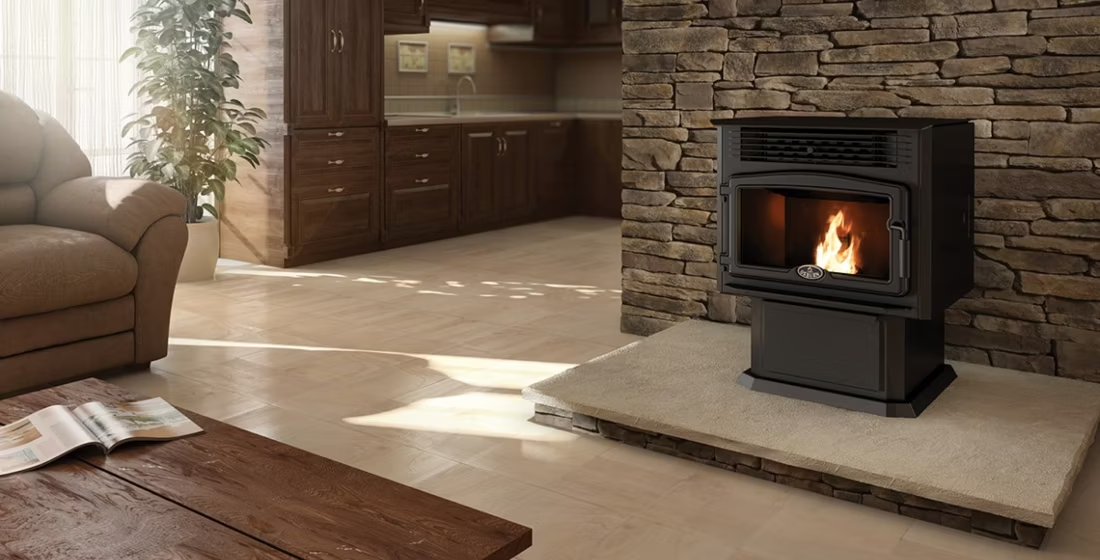
That's where pellet stoves have found a real foothold locally. Regional producers including Energex, Hamer Pellet Fuel, and Greene Team Pellet Fuel turn Appalachian hardwoods—the same oak, hickory, maple, and cherry that fuel the county's traditional wood stoves—into dense, consistent-burning fuel sold by the ton at hearth shops and farm stores throughout the region. Washington County doesn't have any air quality non-attainment issues or burn restrictions, so the appeal of pellet heat here isn't regulatory—it's convenience. Load a hopper, set a thermostat, and get steady radiant or forced-air heat without hauling and stacking cordwood, all while still burning a locally sourced hardwood fuel.
Three steps. No salesperson until you're ready.
Tell us about your project
Your zip code, your situation, and the fuel you're leaning toward—or let the answers point you to one.
See what's actually available
The brands dealers within 100 miles genuinely carry—real options, never a catalog mirage.
Get your dealer & Project Guide
A trusted local dealer, plus the free Project Guide & Parts List that names every component of the job.
Frequently Asked Questions
How much does a pellet stove or insert installation cost in Washington County?
Pellet stove and insert installations in Washington County typically run somewhere between $2,500 and $6,500, depending on whether you're installing a freestanding stove or an insert into an existing masonry fireplace, the length and complexity of the vent run, and whether a hearth pad upgrade is needed for code clearance. Inserts going into older borough homes in places like Washington, Monongahela, or Charleroi—where a masonry fireplace and chimney already exist—tend to land toward the lower end since the existing chimney cavity does most of the work. New freestanding installations in homes without an existing chimney run higher once wall or roof venting is factored in. A local dealer will give you a firm number after an in-home look at your space.
What size pellet stove do I need for my home?
Sizing depends on square footage, insulation, and whether the stove is your primary or supplemental heat source. Washington County's climate zone 5A winters—average lows around 20°F and a heating season with real sustained cold—call for realistic sizing rather than guesswork: a smaller unit is fine for a single room or a well-sealed newer home in a Peters Township or McMurray subdivision, while an older, larger farmhouse outside Charleroi or California with less insulation typically needs a stove rated for 1,800 to 2,500+ square feet to keep up through a full winter. A local dealer can size your home properly during a walkthrough—oversizing wastes fuel and undersizing means you're cold on the worst nights.
Do I need a permit to install a pellet stove in Washington County?
In most cases, yes, though the process runs through your specific municipality rather than a single county office. Washington County is made up of dozens of separate boroughs and townships—Canonsburg, California, Charleroi, Peters Township, and others—and each maintains its own Uniform Construction Code (UCC) permitting and inspection process for hearth appliance installations. Most local dealers install regularly across these jurisdictions and handle the permit paperwork as part of the job, so you generally don't have to track down the right office yourself.
Will my pellet stove work during a power outage?
Not without backup power. Pellet stoves rely on an electric auger to feed fuel, an igniter to start the fire, and a blower to push heat into the room—cut the power and the stove stops working, even with a hopper full of pellets. That matters in Washington County, where ice storms and heavy winter systems can knock out power for hours at a time. Homeowners who want pellet convenience but also want a true power-outage backup often pair a small battery backup or inverter generator with their stove, or keep a wood-burning stove as a secondary heat source—cordwood from local oak, hickory, or cherry is easy to come by in this part of the state and needs no electricity to burn.
Where can I buy pellets in Washington County?
Regional producers Energex, Hamer Pellet Fuel, and Greene Team Pellet Fuel all supply hardwood pellets to hearth retailers, hardware stores, and farm supply outlets throughout southwestern Pennsylvania, and most Washington County dealers carry at least one of these brands year-round with heavier stock arriving in early fall. Pellets are sold by the 40-pound bag or by the ton (roughly 50 bags), and buying by the ton ahead of the season is typically the better value—just make sure you've got dry, covered storage in a garage or shed, since pellets that get damp will swell and jam a stove's feed system.
How many tons of pellets will I need for a Washington County winter?
With a heating season of real sustained cold and average winter lows around 20°F, a pellet stove used as a primary heat source in an average-sized, reasonably insulated Washington County home typically burns through 2 to 3 tons of pellets over a full winter. Larger or older homes—the kind of drafty farmhouses common outside Monongahela and Charleroi—can run closer to 3.5 to 4 tons. If you're using the stove for supplemental heat in one room or zone rather than whole-house heating, expect well under a ton.
What's the difference between a pellet stove and a pellet insert?
A pellet stove is a freestanding unit that sits on its own hearth pad and vents through a wall or roof—it can go almost anywhere in a room with the right clearances. A pellet insert is built to slide into an existing masonry fireplace opening, using a stainless liner run up the existing chimney for venting. Washington County has plenty of older housing stock in Washington proper, Monongahela, and Charleroi with existing wood-burning fireplaces that are rarely used—for those homes, an insert is usually the more cost-effective route since it reuses the chimney you already have rather than requiring new venting from scratch.
How often does a pellet stove need to be cleaned or serviced?
Plan on emptying the ash pan and cleaning the burn pot every few days to weekly depending on how much you're running the stove, plus a deeper cleaning of the hopper, auger, and glass every few weeks during heavy use. Beyond that, an annual professional service—checking the blower, gaskets, and venting, and doing a full internal vacuum—is worth scheduling before the season starts, typically September or early October in Washington County. Pellet stoves produce far less creosote than wood stoves, but skipping the annual service is still the most common reason for mid-winter breakdowns.
Pellet vs. wood stove—which is right for my Washington County home?
Wood stoves burn cordwood—often self-sourced oak, hickory, maple, or cherry if you've got land or a local supplier—work with zero electricity, and tend to run cheaper per BTU if you're willing to season and stack your own wood. Pellet stoves trade some of that independence for convenience: load a hopper, set a thermostat, and get consistent, low-maintenance heat with far less ash and no need to store a full woodpile, which matters in tighter borough lots around Canonsburg or Washington proper. Since Washington County has no air quality restrictions pushing homeowners toward either option, the choice usually comes down to how much daily fire-tending you want versus how much you value backup heat during an outage. Local dealers carrying both fuel types can walk you through the tradeoffs for your specific home.
How often does a pellet stove need cleaning?
A clean pellet stove is a happy pellet stove. Plan on cleaning the burn pot about once a week when you're burning regularly—ash and clinkers gum up the air holes just like a pellet barbecue. Most pellet stove problems trace back to skipped cleaning that nobody explained up front. Some designs make it easy with a trapdoor burn pot: pull a lever and the gunk drops into the ash pan.
What does it take to replace an existing fireplace?
Fireplaces are like icebergs—bigger behind the wall than in front of it. Replacement means removing the surrounding tile or stone (the finish material laps onto the fireplace face), pulling the old unit, setting the new one in the same enclosure, and re-finishing the wall. A hearth professional can determine what's behind your wall without demolition during an in-home preview.
Does a fireplace add value to my home?
On average, a fireplace adds back to the home about the same amount you spent installing it. Add the monthly savings from heating the rooms you actually use instead of the whole house—often hundreds of dollars a year—and the value case is strong before you even count what a fire does for how your family uses the room.
Can I install a fireplace myself?
If you're putting a fire in your house on purpose, it's best to work with an expert. Unless you're genuinely experienced in framing, gas line, vent pipe, and the national code on clearances to combustibles, have a professional do it—and ideally the same company that sells you the fireplace, so warranty, service, and liability all live under one roof.
Stove and Fireplace Dealers in Washington County
Listings include WhyFire partner dealers, dealers we have verified as authorized for the brands we recommend, and established local businesses that carry hearth products. Every listing shows which one it is. The ones marked Preferred run on WhyFire's software, so they can show you real pricing and book your appointment right here. No manufacturer pays for placement. How we verify dealers →
Samson Glass And Mirror
Tri-State Stoves
Scenery Hill Hardware
Clear Water Pools LLC
Howell Craft Inc.
Fireplace & Patioplace
All Seasons Fireplace & Home
Tomayko Construction & Alternative Heating Llc.
The Stove Place
A Capital Roofing
Bottled Gas Service
Pellet Brands Stocked Around Washington County
Manufacturers will point you to the nearest stocking dealer.
Find your pellet stove in Washington County.
Tell us about your home and heating goals, and we'll match you with a trusted local dealer along with a free Project Guide & Parts List—the exact equipment, vent kit, and installation plan for your Washington County home.
Find Your Fireplace →