
Find the right electric fireplace for your Washington County home.
No chimney, no gas line, no permit headaches—electric heat that drops into an old masonry firebox in Canonsburg or warms a finished basement in Peters Township. Find the right unit and connect with a trusted local dealer.
Every Project Starts From One of These Five Situations
Instant warmth, zero venting, works almost anywhere.
Washington County sits in the rolling hills southwest of Pittsburgh, with winter lows averaging around 20°F and a long, genuinely cold heating season that runs from fall well into spring—a genuinely cold-climate winter, but rarely an extreme one. What makes electric fireplaces a standard fit here isn't the weather, though—it's the housing stock. Boroughs like Washington, Canonsburg, Monongahela, and Charleroi are full of early-to-mid-20th-century brick and frame homes, many with old masonry fireboxes that haven't burned a real fire in decades. Newer developments around Southpointe, McMurray, and Peters Township add condos, townhomes, and finished basements where a chimney was never part of the plan to begin with.
An electric insert slides into that old unused firebox without any chimney work, liner, or venting—a common project in the county's older boroughs where the masonry is still solid but the flue hasn't been swept in years. In newer construction, a zero-clearance electric fireplace or a wall-mount unit adds ambiance and supplemental warmth to a room addition, home office, or basement rec room with nothing more than a standard outlet or a dedicated 120V/240V circuit. No gas line, no cutting permit, no annual chimney sweep—just a licensed electrician if a new circuit is needed, which is the extent of the permitting most homeowners here deal with.
Three steps. No salesperson until you're ready.
Tell us about your project
Your zip code, your situation, and the fuel you're leaning toward—or let the answers point you to one.
See what's actually available
The brands dealers within 100 miles genuinely carry—real options, never a catalog mirage.
Get your dealer & Project Guide
A trusted local dealer, plus the free Project Guide & Parts List that names every component of the job.
Frequently Asked Questions
How much does an electric fireplace installation cost in Washington County?
A plug-in electric insert or a basic wall-mount unit typically runs $400 to $1,200 installed, including any trim kit or surround work. Built-in electric fireplaces that require framing, a dedicated 20-amp circuit, and finish carpentry—common in Peters Township or Southpointe remodels—run higher, often $1,500 to $4,000 depending on the size of the opening and whether an electrician needs to run new wiring. Dropping an insert into an existing masonry firebox in one of the county's older Canonsburg or Monongahela homes is usually on the lower end since there's no chimney or venting work involved.
Do I need a permit to install an electric fireplace in Washington County?
In most cases, no—a plug-in electric fireplace or insert doesn't require a building permit since there's no combustion, no venting, and no gas line. If your installation calls for a new dedicated circuit—which most local dealers recommend for larger built-in units—the electrical work itself may require a permit through your borough or Washington County depending on where you live. A licensed electrician handling the circuit work will typically pull that permit as part of the job, so it's worth confirming with your installer before work starts.
Can an electric fireplace actually heat my home, or is it just for looks?
Most electric fireplaces produce 5,000 to 10,000 BTUs, enough to comfortably supplement heat in a single room of 400 to 1,000 square feet—a family room, home office, or finished basement. With winter lows averaging around 20°F and a long, genuinely cold heating season that runs from fall well into spring, Washington County winters are cold enough that an electric unit alone won't replace your furnace, but it's an effective way to take the edge off in one room without running the whole system, or to add zone heat to an addition that's harder to heat centrally.
Can I convert my old masonry fireplace to electric?
Yes, and it's a common project in Washington County's older brick homes throughout Washington, Monongahela, and Charleroi boroughs, where many fireboxes haven't been used for a real fire in years. An electric insert fits into the existing opening, plugs into a standard outlet or a new dedicated circuit, and gives you flame effect and supplemental heat without touching the chimney or masonry. A local dealer will measure your firebox opening first—insert sizes vary, and older fireplaces sometimes have nonstandard dimensions that narrow your options.
What's the difference between an electric insert, a built-in fireplace, and a freestanding stove?
An electric insert is sized to slide into an existing masonry firebox—the best option if you already have a fireplace opening you want to reactivate. A built-in electric fireplace is installed into a framed wall opening, typically in new construction or a remodel, and can be finished flush with drywall, tile, or stone. A freestanding electric stove sits on the floor like a traditional wood stove and just needs to be plugged in—a good fit for a room addition or a rental where you can't modify the wall. All three are available through local dealers, and which one makes sense depends mostly on whether you're working with an existing fireplace or a bare wall.
How much does it cost to run an electric fireplace in Washington County?
Running costs depend on your electric rate through West Penn Power, but most electric fireplaces cost somewhere around 10 to 20 cents an hour to run on the heat setting, and a fraction of that with the heater off and just the flame effect running. Compared to buying cordwood, propane, or pellets, that's a low-commitment way to add ambiance to a room—no fuel storage, no delivery, no seasonal stocking up. It won't replace your furnace on the coldest nights, but for evening use in a family room it's inexpensive.
Is an electric fireplace a good fit for a rental or condo in Washington County?
Yes—this is one of the most common reasons homeowners and renters in the newer condo and townhome developments around Southpointe and McMurray choose electric. Because there's no venting, no gas line, and no combustion byproducts, electric units are typically allowed under HOA rules and lease terms that would prohibit a wood or gas installation. A freestanding stove or a plug-in insert can be installed without any structural changes to the unit, and removed just as easily if you move.
How much maintenance does an electric fireplace need?
Very little compared to wood or gas. There's no chimney to sweep, no annual CSIA inspection, and no gas lines to service. Maintenance is mostly dusting the interior, occasionally vacuuming the fan intake, and replacing the LED light or heating element after years of use, which most manufacturers rate for 20,000+ hours. This lower-maintenance profile is part of why electric units are popular in second homes and rental properties throughout the county, where nobody wants to schedule an annual chimney sweep for a property they're not living in full time.
Electric vs. gas—which is right for my Washington County home?
Gas delivers real heat output—enough to serve as genuine supplemental or even primary zone heat during a cold snap—but requires a gas line, venting in most configurations, and an annual service check. Electric skips all of that: no gas line, no venting, no combustion, and it's installable in almost any room with an outlet or a simple circuit. For homes already plumbed for gas, or where higher heat output matters most, gas usually wins. For older homes without gas service nearby, condos and rentals, or anyone who just wants ambiance and modest supplemental warmth without the installation complexity, electric is the more practical choice. Many local dealers carry both and can walk through the tradeoffs for your specific room.
Can I put a TV above my fireplace?
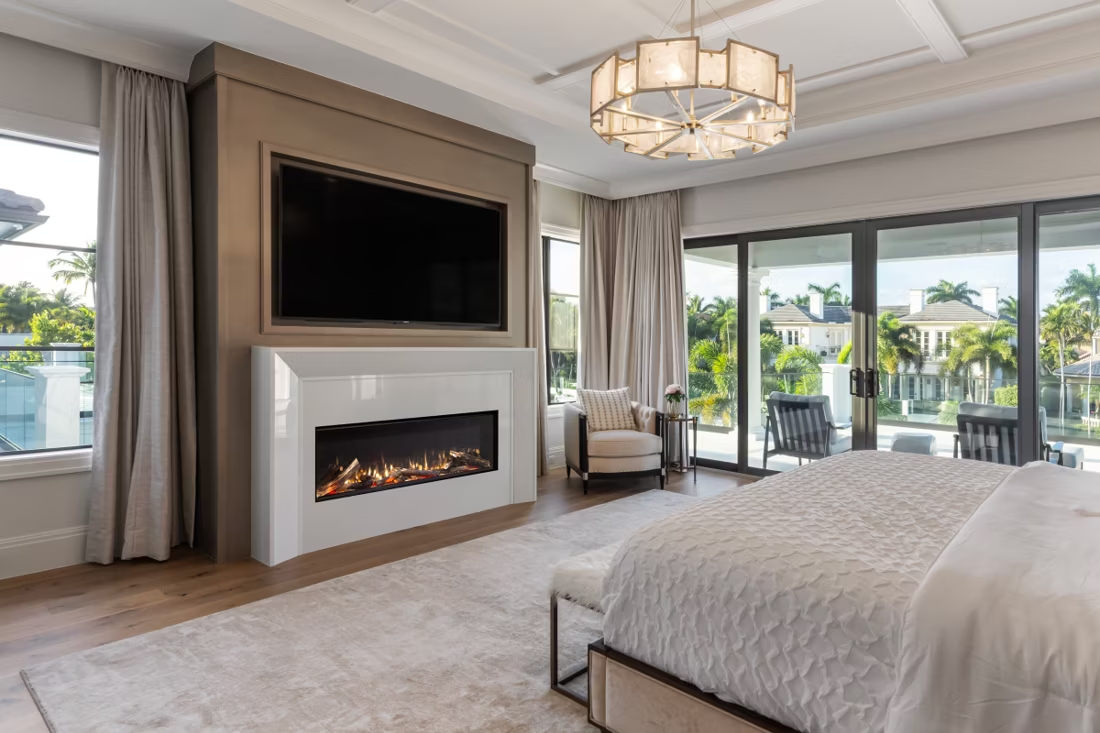
Yes—with an asterisk. Fireplaces are hot and TVs don't like heat. Either put a mantel between them to deflect rising warmth, or choose a fireplace with heat-management technology that creates a cool zone on the wall above—the wall stays around 125 degrees, barely warm, while the room still gets full heat. If you like clean lines and don't want a mantel, heat management is the answer.
Does an electric fireplace need a vent or chimney?
No—that's its superpower. An electric fireplace needs a wall and an outlet, period. No vent pipe, no gas line, no clearances to design around, which is why it works in bedrooms, offices, apartments, and walls where venting a gas or wood unit would be impractical or impossible. Installation is typically the simplest and least expensive of any fireplace type.
Should the dealer who sells my fireplace also install it?
Ideally, yes. A fireplace project involves vent pipe, gas line, electrical, and often tile or stone. Hire three or four separate trades and you own the liability and the game of telephone between them. One company selling and installing means one accountable party, start to finish—ask about factory training, on-time completion records, and what happens if an inspection fails.
How much should I budget for a fireplace?
For an average home—covering the fireplace, the vent pipe, and basic installation—a budget between $3,900 and $5,500 gives you a lot of options across wood, gas, and pellet. By the time you add finish work, gas line, and electrical, the average complete installation lands between $5,000 and $12,000 all-in. In a remodel or new build, a good rule is to put about 2.5% of the total project cost toward the fireplace.
Stove and Fireplace Dealers in Washington County
Listings include WhyFire partner dealers, dealers we have verified as authorized for the brands we recommend, and established local businesses that carry hearth products. Every listing shows which one it is. The ones marked Preferred run on WhyFire's software, so they can show you real pricing and book your appointment right here. No manufacturer pays for placement. How we verify dealers →
Samson Glass And Mirror
Tri-State Stoves
Scenery Hill Hardware
Clear Water Pools LLC
Howell Craft Inc.
Fireplace & Patioplace
All Seasons Fireplace & Home
Tomayko Construction & Alternative Heating Llc.
The Stove Place
A Capital Roofing
Bottled Gas Service
Find your electric fireplace in Washington County.
Tell us a bit about your home and we'll match you with the right electric insert, built-in, or stove—plus a free Project Guide & Parts List and a trusted local dealer to install it.
Find Your Fireplace →