
Add warmth to your Donora home without touching a chimney.
Zone heat for the older rowhouses and mill-town homes along the Mon River—no venting, no masonry work, no gas line. Find the right unit and get matched with a trusted local dealer.
Every Project Starts From One of These Five Situations
Supplemental heat that plugs in and works.
Donora sits along the Monongahela River in Washington County at about 950 feet, with winters averaging 20°F lows and roughly 5,465 heating degree days—cold enough to need real supplemental heat, though nowhere near the extremes of a place like Duluth or Fargo. Much of the housing stock dates back to the borough's mill-town days: narrow rowhouses and older single-family homes, many without existing chimneys or with masonry that was never built for a modern solid-fuel appliance. Donora is also the town that gave the country the 1948 smog disaster and, eventually, the Clean Air Act—today there are no local wood-burning restrictions, but the history is part of why residents here tend to appreciate a heat source with zero smoke and zero flue.
That's where electric fireplaces earn their place. There's no chimney to build, no gas line to run, and no Washington County solid-fuel permit to chase down—most units plug into a standard outlet or tie into a dedicated circuit an electrician can add in an afternoon. Running cost is straightforward to calculate off West Penn Power's residential rate of about 15.45¢ per kWh, and because these units don't burn anything, they're a realistic option for a finished basement, a sunroom addition, or a rowhouse den where a real chimney was never in the cards.
Three steps. No salesperson until you're ready.
Tell us about your project
Your zip code, your situation, and the fuel you're leaning toward—or let the answers point you to one.
See what's actually available
The brands dealers within 100 miles genuinely carry—real options, never a catalog mirage.
Get your dealer & Project Guide
A trusted local dealer, plus the free Project Guide & Parts List that names every component of the job.
Frequently Asked Questions
How much does an electric fireplace installation cost in Donora?
A plug-in electric insert or freestanding unit that fits into an existing mantel opening typically runs $500 to $2,000 installed, including the unit and basic surround work—no electrician needed if it's using an existing outlet. A built-in wall unit or a linear electric fireplace that requires a dedicated 20-amp circuit runs closer to $1,500 to $3,500 once you add an electrician's time for the new circuit and any wall framing. Given how much of Donora's housing stock is older rowhouse construction, a local installer will usually want to check your panel capacity before quoting a built-in unit.
Can an electric fireplace actually heat a room, or is it just for looks?
Most residential electric fireplaces top out around 5,000 BTU (roughly 1,500 watts), which is enough to comfortably heat a single room—a den, bedroom, or finished basement in the 200-400 square foot range—but it won't replace a furnace for a whole Donora home during a January cold snap. Think of it as zone heat: you run it in the room you're actually using and turn down the thermostat elsewhere, which is where most of the savings come from rather than the unit being some kind of primary heat source.
What will it cost to actually run an electric fireplace in Donora?
At West Penn Power's residential rate of about 15.45¢ per kWh, a typical 1,500-watt electric fireplace costs roughly 23 cents an hour to run on high heat, or about $1.85 for an 8-hour evening. Most units let you run the flame effect without the heater engaged, which draws only 30-50 watts—essentially pennies a day if you just want the ambiance without the heat output. Compare that to your furnace's per-hour cost and it's easy to see why electric fireplaces work well as a supplemental, room-by-room heat strategy rather than a whole-house solution.
Do I need a permit to install an electric fireplace in Donora?
Plug-in units that use an existing outlet generally don't require a permit. If you're adding a dedicated circuit for a built-in or wall-mounted unit, that electrical work should go through a licensed electrician and may require a permit from the Washington County or Donora Borough building office depending on the scope. Because there's no venting, gas line, or masonry involved, electric installs are by far the simplest permitting process of any hearth fuel—most local dealers can tell you in one phone call whether your specific project needs a permit.
What's the best type of electric fireplace for an older Donora rowhouse?
For the narrow rowhouses common around Donora's older neighborhoods, a wall-mounted linear electric fireplace or a mantel-package insert tends to work best—both add heat and visual focal point without eating into limited floor space or requiring any structural opening. Homes with an existing but non-functional masonry fireplace are also good candidates for an electric insert that slides into the firebox, since it hides the old opening and doesn't require the chimney to be usable. A local dealer can walk your specific layout before recommending a model.
Will my electric fireplace work if the power goes out?
No—electric fireplaces require power to run the heater, blower, and flame effect, so they shut down the moment your electricity does. This is worth thinking through if you're weighing electric against wood or gas: a wood stove burning oak or hickory keeps working with no power at all, and a gas unit with battery-backup ignition can as well. In Donora, West Penn Power outages are typically weather-related and short-lived, but if backup heat during an outage is a priority for your household, electric shouldn't be your only heat source.
Electric vs. wood—which makes more sense for my Donora home?
Wood—burning local oak, hickory, maple, or cherry—delivers real radiant heat, works without electricity, and can genuinely offset a heating bill if you have access to firewood, but it requires an actual chimney or Class A venting, annual sweeping, and more maintenance. Electric requires none of that: no venting, no ash, no permit hassle, and it can go into rooms a chimney could never reach, but it's supplemental heat only and it's dark the second the power drops. For a lot of Donora's older housing stock without a usable chimney, electric is simply the more realistic option regardless of preference—for homes with an existing working fireplace, it's more of a genuine style-versus-substance choice.
Are there any air quality restrictions on electric fireplaces in Donora?
None—electric units produce no combustion byproducts, so there's nothing to restrict. Donora has no current air quality advisories or burn-ban ordinances affecting any hearth fuel, though the borough's history with the 1948 smog event means many longtime residents are particularly comfortable with a heating option that produces zero emissions at the source.
What's the difference between an electric fireplace, insert, and stove?
An electric fireplace is typically a wall-mounted or built-in unit designed to be the visual focal point of a room, often with a linear or traditional firebox look. An electric insert is sized to slide into an existing masonry or factory-built fireplace opening, letting you keep the surround and mantel you already have while retiring an unused wood-burning firebox. An electric stove is a freestanding cabinet-style unit made to look like a traditional wood stove, which some homeowners in Donora's older homes like for matching a farmhouse or cottage aesthetic. All three plug in or wire the same way—the choice comes down to your existing fireplace opening and the look you're going for.
Can I put a TV above my fireplace?
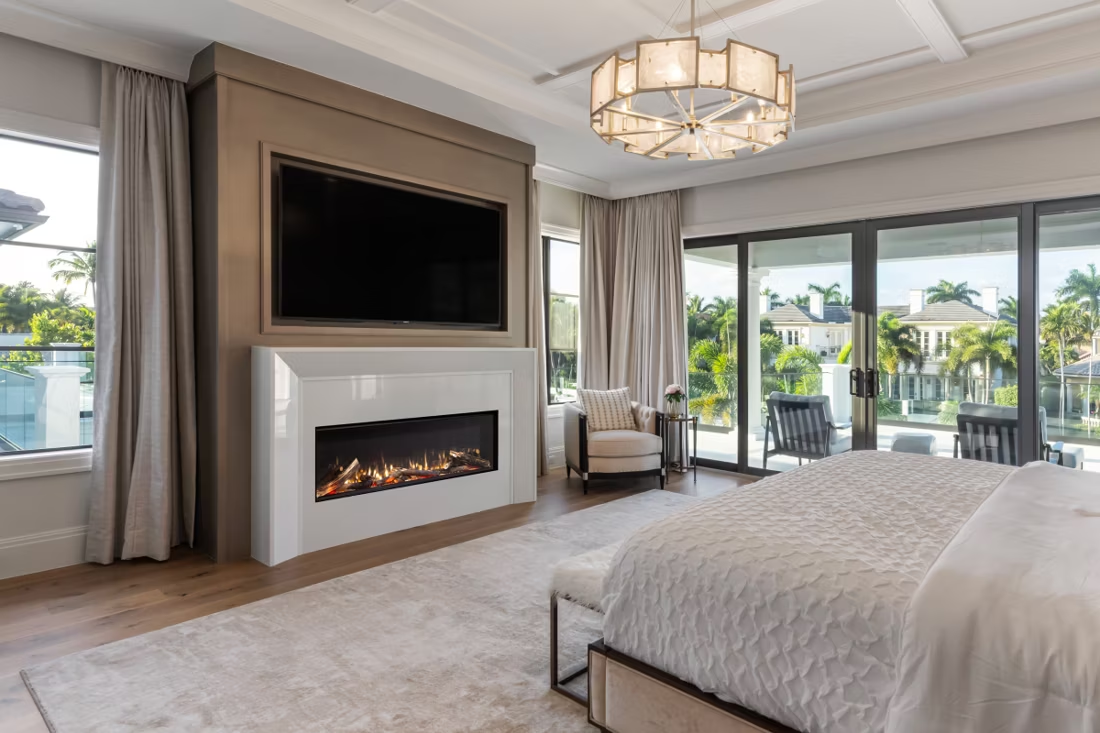
Yes—with an asterisk. Fireplaces are hot and TVs don't like heat. Either put a mantel between them to deflect rising warmth, or choose a fireplace with heat-management technology that creates a cool zone on the wall above—the wall stays around 125 degrees, barely warm, while the room still gets full heat. If you like clean lines and don't want a mantel, heat management is the answer.
How much does an electric fireplace cost to run?
With the heater on, a typical unit draws about 1,500 watts—at average electric rates that's roughly 20 cents an hour. Run the flame effect alone and it costs pennies; the flames are LED-driven and use about as much power as a light bulb. There's no pilot light, no fuel delivery, and essentially no maintenance.
What is an in-home preview and do I need one?
It's a visit where a hearth professional measures your space, confirms the model you picked actually works in your home, and walks the specs—framing, gas line, venting, finish work—before anything is ordered. Some details you just can't know until you see the house. Never make a down payment without one; it's the single most-skipped step that burns buyers.
Can a fireplace actually lower my heating bill?
Yes—by creating a comfort zone. A furnace heats every square foot of the house just to warm the one room you're in; a gas fireplace on low burns roughly a sixth of the gas a typical furnace does. Set the furnace around 55–60 degrees as a baseline, then heat the rooms your family actually uses. Families who heat this way commonly save $20–$60 a month.
Nearby Dealers
Hearth shops serving Donora and the surrounding area. Every listing shows whether it is a WhyFire partner, a dealer we have verified as authorized for the brands we recommend, or a local business carrying hearth products. No manufacturer pays for placement. How we verify dealers →
Clear Water Pools LLC
Howell Craft Inc.
Tomayko Construction & Alternative Heating Llc.
A Capital Roofing
Scenery Hill Hardware
Samson Glass And Mirror
Tri-State Stoves
All Seasons Fireplace & Home
Fireplace & Patioplace
Fireplace And Patio Place
Koval Building Supply-Uniontown
Bottled Gas Service
Bill's Wood Stoves
Electric Service in Donora
An electric fireplace's heater draws about 1,500 watts—pennies per hour at local rates.
West Penn Power Company
Find your electric fireplace in Donora.
Tell us a bit about your home and we'll put together a free Project Guide & Parts List—the right electric fireplace or insert for your space, plus a trusted local dealer to install it.
Find Your Fireplace →