
Keep Your Family Warm and Safe—No Matter What
Warren sits at the edge of the Allegheny National Forest, surrounded by oak, hickory, and cherry—but wood stove installs have become a smaller, more specialized market here. We'll help you find one of the few local dealers who still do it right.
Every Project Starts From One of These Five Situations
A forest town where wood heat became the exception, not the rule.
Warren sits along the Allegheny River at the western edge of the Allegheny National Forest, at 1,185 feet elevation, where winter lows average 18°F and the region logs a long, demanding heating season—cold enough to rival Burlington, Vermont. Oak, hickory, maple, and cherry blanket the surrounding hillsides, and a Forest Service permit to cut your own firewood runs just $20 per cord from May through October. On paper, this is textbook wood-heat country.
In practice, though, wood stove installation has become a smaller, more specialized market here. A lot of the wood stoves already burning in Warren County homes were installed a generation ago, and as those units age out, many homeowners are replacing them with propane or electric appliances rather than sourcing a new wood stove locally—in part because a city of under 10,000 people doesn't support many dealers who focus specifically on new wood-burning installs. If you want it done right—sized correctly, vented to code, installed by someone who's actually done it before—Find My Fireplace can match you with one of the few trusted dealers who still serve Warren County and hand you a free planning packet for the job.
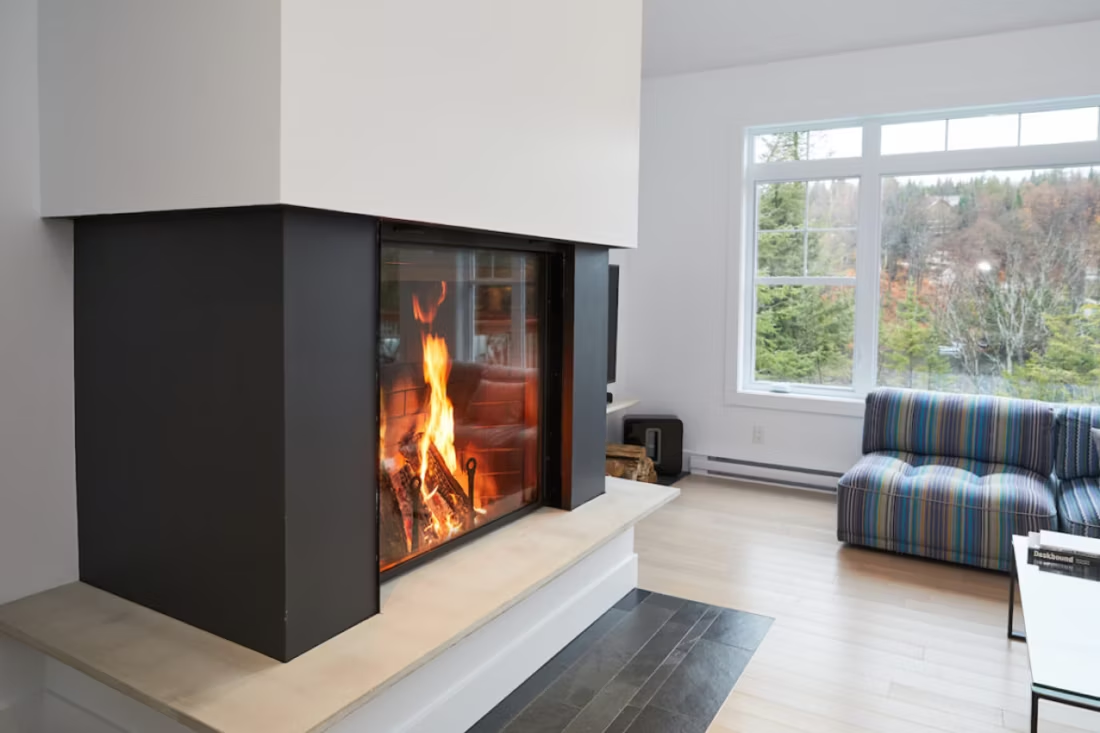
Firewood Cutting Permits Near Warren
Three steps. No salesperson until you're ready.
Tell us about your project
Your zip code, your situation, and the fuel you're leaning toward—or let the answers point you to one.
See what's actually available
The brands dealers within 100 miles genuinely carry—real options, never a catalog mirage.
Get your dealer & Project Guide
A trusted local dealer, plus the free Project Guide & Parts List that names every component of the job.
Frequently Asked Questions
Is wood heat still a realistic option for a home in Warren?
Yes, but it's a smaller market than the surrounding forest and cheap cutting permits might suggest. Warren County has plenty of raw material—oak, hickory, maple, and cherry are all common on the hillsides around the Allegheny National Forest—but the number of dealers actively installing new wood stoves inside Warren itself is limited. Most homeowners who go this route today either work with an installer who travels in from a larger nearby market or plan for a slightly longer lead time to get the job scheduled. It's absolutely doable; it just takes a bit more legwork than in a bigger town.
How much does a wood stove installation cost in Warren?
There isn't a large enough local install market to generate a tight Warren-specific price range, but installations in comparable cold-climate Northeast towns typically run $4,000 to $9,000 depending on the stove, chimney condition, and hearth pad work. In Warren's case, add the possibility of a modest travel charge if your installer is based out of Erie, Bradford, or Jamestown, New York, since fewer certified installers are headquartered in Warren proper. Get a firm quote after an in-home visit rather than relying on a national average.
Where can I cut my own firewood near Warren?
The Allegheny National Forest, which borders Warren County, issues personal-use firewood permits for $20 per cord during the May-through-October cutting season. You'll typically pick up the permit and a forest map from the local ranger district office, which marks approved cutting areas. Oak and hickory are the most sought-after species for heat output, though maple and cherry are also common and season a bit faster if you're cutting for the following winter rather than this one.
What wood species burn best around Warren?
Oak and hickory are the workhorses in Warren County—dense, high-BTU woods that burn long and hot, but they need 12 or more months of seasoning to drop below the 20% moisture content a modern EPA-certified stove wants. Maple splits and seasons a bit faster, in the 6-to-12-month range, and makes a solid everyday burn. Cherry is popular too, mostly for its pleasant smell and easier splitting, though it burns a little faster than oak or hickory. Whatever you're burning, a cheap moisture meter is worth the ten dollars—underseasoned wood is the most common cause of a smoky, inefficient fire.
Are there air quality restrictions on wood burning in Warren?
No—Warren doesn't carry any air quality non-attainment designation or winter burn-curtailment program, unlike valley or basin towns out West that deal with wood smoke inversions. That said, an EPA-certified stove is still the right call: it burns two to three times more efficiently than an old pre-1988 unit, produces far less visible smoke, and uses noticeably less wood per BTU of heat delivered. Local installers can also point you toward current models that qualify for any available efficiency incentives.
Why aren't there more wood stove dealers based in Warren itself?
With a population just under 9,400, Warren doesn't have the customer base to support a large dedicated hearth retail and install market the way a bigger regional hub would. Most of the certified installers who do serve Warren County are based in Erie, Bradford, or across the state line in Jamestown, New York, and they cover Warren as part of a wider rural territory. That's not unusual for small forest towns—it just means finding the right installer takes a bit more searching than a quick local search would suggest, which is exactly the gap Find My Fireplace is built to close.
Wood vs. propane—which fits a Warren home better?
Wood makes sense if you want backup heat that doesn't depend on the grid or a fuel delivery truck, and you're willing to source, season, and haul firewood—something plenty of Warren County residents already do given the Allegheny National Forest right next door. Propane, which is the common alternative fuel in rural Warren County where piped natural gas doesn't reach every outlying area, offers push-button convenience and consistent output without any wood handling, but it depends on tank deliveries and a working gas line. Many local households end up with both: propane or electric for daily convenience, wood as the backup that keeps the house warm if a winter storm knocks out power or delays a delivery.
What permits do I need to install a wood stove in Warren?
Pennsylvania follows the statewide Uniform Construction Code (UCC), and a new wood stove or insert install in Warren County requires a building permit through your local codes enforcement office. Your installer will typically pull this as part of the job. There's no local curtailment ordinance or non-attainment restriction to navigate here, but the stove itself should still meet current EPA emissions standards—most manufacturers only sell EPA-certified units at this point, so this is rarely a separate hurdle.
How do I find a qualified wood stove installer near Warren?
Look for NFI (National Fireplace Institute) or CSIA (Chimney Safety Institute of America) certification—those credentials matter even more in a market like Warren's, where a general contractor without hearth-specific training might be your only obvious local option. Because Warren's own dealer base is thin, the right installer may well be based in Erie, Bradford, or Jamestown, New York, and travel in for the job. That's normal for a town this size; it just means it pays to work with someone who already knows the area rather than gambling on whoever shows up first in a local search.
Why is my open fireplace making my house colder?
Open fireplaces suck—literally. As the fire burns, it consumes air your furnace already paid to heat and pulls it out through the chimney, so the house is actually colder after the fire goes out than before you lit it. An insert fixes this: it seals the chimney, puts fixed glass across the front, and turns that hole in your house into a real heat source.
What's the difference between an insert and a zero-clearance fireplace?
An insert is a fireplace that slides into a pre-existing wood-burning fireplace—if you don't have one, there's nothing to insert it into. A zero-clearance fireplace is built into a framed wall, which makes it the answer for remodels and new construction. Simple test: existing masonry fireplace means insert; blank or framed wall means zero-clearance.
Can I install a fireplace myself?
If you're putting a fire in your house on purpose, it's best to work with an expert. Unless you're genuinely experienced in framing, gas line, vent pipe, and the national code on clearances to combustibles, have a professional do it—and ideally the same company that sells you the fireplace, so warranty, service, and liability all live under one roof.
What is an in-home preview and do I need one?
It's a visit where a hearth professional measures your space, confirms the model you picked actually works in your home, and walks the specs—framing, gas line, venting, finish work—before anything is ordered. Some details you just can't know until you see the house. Never make a down payment without one; it's the single most-skipped step that burns buyers.
Nearby Dealers
Hearth shops serving Warren and the surrounding area. Every listing shows whether it is a WhyFire partner, a dealer we have verified as authorized for the brands we recommend, or a local business carrying hearth products. No manufacturer pays for placement. How we verify dealers →
CJ's Home Decor & Fireplaces
Solstice Heating
Peterson Refrigeration & Ac
Chautauqua Brick
Find your wood fireplace in Warren.
Tell us about your home and we'll match you with one of the few trusted dealers who still install wood stoves and inserts correctly around Warren County, plus a free Project Guide & Parts List with the exact vent kit and parts for your project.
Find Your Fireplace →