
Heat that holds through Warren County's Allegheny winters.
Wood, gas, pellet, and electric fireplace resources for every community in Warren County—from the Warren borough seat to Youngsville, Sheffield, and Tidioute along the Allegheny River. Find the right unit and connect with a trusted local hearth dealer.
Every Project Starts From One of These Five Situations
Hardwood heat traditions across Pennsylvania's Allegheny National Forest region.
Warren County sits on the Allegheny Plateau in northwestern Pennsylvania, wrapped around the Allegheny Reservoir and Kinzua Dam and bordering the bulk of the Allegheny National Forest. Winters run long here—average lows near 18°F and roughly 6,581 heating degree days put Warren in the same cold-climate tier as Buffalo, NY, just up the road. Snow lingers on the plateau well into spring, and the heating season typically stretches from late September through May. The forest itself supplies the fuel tradition: oak, hickory, maple, and the region's prized black cherry (a species the Allegheny National Forest is nationally known for) are the hardwoods most local homeowners split and burn, often gathered under a personal-use permit through the Allegheny National Forest office.
This hub rolls up hearth retailers, service technicians, and fuel suppliers across Warren County—Warren, Youngsville, Sheffield, Tidioute, Clarendon, Russell, and the smaller townships tucked along the river valleys and forest roads. Pick your fuel below to see local dealers, typical installation costs, and the specifics for your project. Whether you're heating a farmhouse near the reservoir or a hunting camp inside the national forest boundary, this is the starting point.
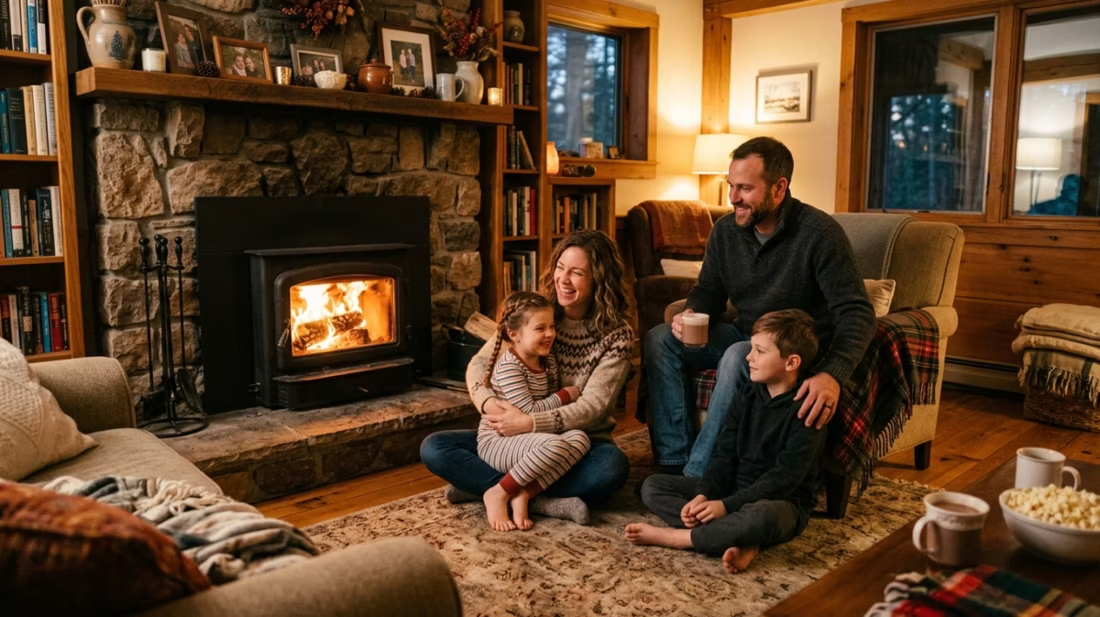
Four fuels. One honest answer for Warren County.
Three steps. No salesperson until you're ready.
Tell us about your project
Your zip code, your situation, and the fuel you're leaning toward—or let the answers point you to one.
See what's actually available
The brands dealers within 100 miles genuinely carry—real options, never a catalog mirage.
Get your dealer & Project Guide
A trusted local dealer, plus the free Project Guide & Parts List that names every component of the job.
Frequently Asked Questions
Which fuel works best for a home in Warren County?
It depends on the house and how remote it sits. Wood remains the backbone fuel in much of rural Warren County—cherry, oak, hickory, and maple are all locally abundant, personal-use cutting permits are available through the Allegheny National Forest office, and a well-fed catalytic or non-cat stove can carry a farmhouse through a stretch of single-digit nights without touching the thermostat. Natural gas service through National Fuel reaches Warren borough and some of the closer-in townships, making gas fireplaces and inserts a strong convenience option there; homes further out on the plateau typically run on propane instead. Pellet stoves are a solid middle path—regional brands like Energex, Hamer Pellet Fuel, and Greene Team Pellet Fuel keep supply local and reliable, without the splitting and stacking that wood demands. Electric units work well as supplemental heat in bedrooms or finished basements but aren't sized to be a primary heat source through a Warren County winter. Many households here end up running two fuels—wood or pellet for the main living space, gas or electric for secondary rooms.
Do I need a permit to install a fireplace or stove in Warren County?
In most cases, yes, though it's handled at the municipal level rather than a single county office—Pennsylvania's Uniform Construction Code (UCC) puts permitting authority with the local borough or township, so a wood stove install in Warren borough goes through a different office than one in a surrounding township. Some smaller townships have opted out of full UCC enforcement, which can mean lighter permitting but still requires meeting state fire and building code minimums, so it's worth a call before you start. New wood-burning appliances should meet current EPA emissions standards regardless of local permitting rules. Gas installs need a separate gas-line permit and a licensed gas fitter for the connection. If you're gathering your own firewood on national forest land, that's a separate personal-use permit through the Allegheny National Forest office and is unrelated to the building permit for the stove itself. Most local hearth dealers handle the building permit paperwork as part of a full installation.
Are there air quality restrictions on wood burning in Warren County?
No—Warren County doesn't carry any non-attainment designation or winter burn-curtailment program the way some western basin and valley communities do, so there's no seasonal 'no-burn day' system to track here. That said, an EPA-certified stove still burns cleaner and more efficiently than an old pre-1988 smoke dragon, which matters given how many heating degree days (over 6,500 a year) a Warren County stove has to work through. A properly sized, well-seasoned load of oak or hickory in a certified stove produces far less creosote and visible smoke than green or wet wood in an older unit—good practice for your chimney and your neighbors even without a regulatory mandate behind it.
Can one local dealer handle wood, gas, pellet, and electric?
Many hearth dealers serving Warren County carry at least three of the four fuel types, and a handful—shops like Kinzua Hearth & Home or Allegheny Stove & Chimney, for example—stock working displays across wood, gas, pellet, and electric so you can compare units side by side before deciding. Smaller shops closer to the forest boundary tend to specialize more heavily in wood and pellet, reflecting what most of their rural customers actually burn, and may only carry a limited electric lineup. If you're not sure which fuel fits your house, a multi-fuel dealer showroom is the fastest way to see the real trade-offs—burn time, install cost, venting requirements—in person rather than guessing from a spec sheet.
How does service and installation work for homes outside Warren borough?
Most technicians and installers are based in or near Warren and travel out along Route 6 and the river valleys to reach Youngsville, Sheffield, Tidioute, and the smaller townships bordering the national forest. Expect a modest trip fee for calls well outside town, and know that scheduling gets tighter once temperatures drop—booking your annual chimney sweep or gas inspection in September or October, before the first hard freeze, is far easier than trying to get someone out during a January cold snap. For camps and seasonal properties tucked inside the forest, planning installation and service around road access (some forest roads aren't reliably plowed) is worth discussing with your installer up front.
What does installation typically cost across the different fuel types in Warren County?
Costs track fairly close to regional norms for a rural northwestern Pennsylvania county. Wood stove or insert: roughly $3,500–$8,000 for a typical retrofit, climbing toward $12,000 for new-construction chimney work. Gas fireplace, insert, or stove: about $4,000–$10,000, with cost driven mainly by how much new gas line or venting has to be run—homes already on National Fuel service in Warren borough tend to land at the lower end. Pellet stove or insert: generally $3,500–$7,000 installed. Electric fireplace: $200–$3,000 for the unit itself, plus $400–$1,200 in labor for anything beyond a plug-and-play wall unit. The county + fuel pages above break these numbers down further against actual local retailer pricing.
Can I install a fireplace myself?
If you're putting a fire in your house on purpose, it's best to work with an expert. Unless you're genuinely experienced in framing, gas line, vent pipe, and the national code on clearances to combustibles, have a professional do it—and ideally the same company that sells you the fireplace, so warranty, service, and liability all live under one roof.
Wood, gas, pellet, or electric—how do I choose?
Match the fuel to your life, not the other way around. Wood: lowest fuel cost and total power-outage independence, but you're hauling and stacking. Gas: press a button, set a thermostat, no maintenance to speak of. Pellet: wood economics with automatic feeding, in exchange for weekly cleaning and a need for electricity. Electric: plugs in anywhere with honest supplemental heat. Nobody regrets the fuel that fits how they actually live.
Can a fireplace actually lower my heating bill?
Yes—by creating a comfort zone. A furnace heats every square foot of the house just to warm the one room you're in; a gas fireplace on low burns roughly a sixth of the gas a typical furnace does. Set the furnace around 55–60 degrees as a baseline, then heat the rooms your family actually uses. Families who heat this way commonly save $20–$60 a month.
Does a fireplace add value to my home?
On average, a fireplace adds back to the home about the same amount you spent installing it. Add the monthly savings from heating the rooms you actually use instead of the whole house—often hundreds of dollars a year—and the value case is strong before you even count what a fire does for how your family uses the room.
Stove and Fireplace Dealers in Warren County
Listings include WhyFire partner dealers, dealers we have verified as authorized for the brands we recommend, and established local businesses that carry hearth products. Every listing shows which one it is. The ones marked Preferred run on WhyFire's software, so they can show you real pricing and book your appointment right here. No manufacturer pays for placement. How we verify dealers →
CJ's Home Decor & Fireplaces
Solstice Heating
Chautauqua Brick
Stone And Outdoor Living Center
Clymer Hardware & Home Center
Peterson Refrigeration & Ac
Start your Warren County fireplace project.
Pick your fuel below and I'll match you with a trusted local Warren County hearth dealer, plus send a free Project Guide & Parts List—the exact parts, vent kit included, and the dealer I'd recommend for your home.
Find Your Fireplace →