
Find your pellet stove in Warren County.
Steady, thermostat-controlled heat for the long Allegheny Plateau winters—with regional pellet supply close at hand. Get matched with a trusted local dealer who can size, permit, and install it right.
Every Project Starts From One of These Five Situations
Consistent heat, without the wood pile.
Warren County sits on the Allegheny Plateau in northwestern Pennsylvania, bordered by the Allegheny National Forest and averaging around 6,581 heating degree days a year—a winter load comparable to Duluth, Minnesota. Winter lows average 18°F, with the kind of extended cold stretches that reward a heating appliance you can load once and walk away from rather than tend all evening. Plenty of Warren County homes already burn oak, hickory, maple, and cherry in a wood stove, but pellet stoves have carved out a real niche here for households that want dependable, thermostat-set heat without splitting and stacking cordwood.
Regional pellet supply is a genuine advantage in this part of Pennsylvania. Energex, Hamer Pellet Fuel, and Greene Team Pellet Fuel all produce or distribute pellets in the broader region, which keeps fuel reasonably accessible for a county of just under 17,000 people spread across small towns like Youngsville, Tidioute, and Sheffield. A properly sized pellet stove or insert gives you automated feed, a lower particulate footprint than an open wood fire, and heat output that holds steady through a January cold snap—all without needing a chimney flue rebuilt to handle it.
Three steps. No salesperson until you're ready.
Tell us about your project
Your zip code, your situation, and the fuel you're leaning toward—or let the answers point you to one.
See what's actually available
The brands dealers within 100 miles genuinely carry—real options, never a catalog mirage.
Get your dealer & Project Guide
A trusted local dealer, plus the free Project Guide & Parts List that names every component of the job.
Frequently Asked Questions
How much does a pellet stove installation cost in Warren County?
Pellet stove and insert installations in this part of Pennsylvania typically run in the $4,500 to $7,500 range, depending on the unit, whether it's a freestanding stove or an insert going into an existing masonry fireplace, and the length and routing of the vent pipe. Pellet venting is simpler than a masonry wood chimney—most installs use a small-diameter PL vent through an exterior wall or existing chase, which keeps labor lower than a full wood-burning install. Homes in more remote parts of the county, such as areas near Tidioute or out toward the national forest boundary, may see a modest travel charge added by the installer.
How much does it cost to run a pellet stove through a Warren County winter?
With roughly 6,581 heating degree days a year, a Warren County home using a pellet stove as a primary or significant supplemental heat source typically burns somewhere between 2 and 4 tons of pellets over a full winter, depending on square footage, insulation, and how much the stove is asked to carry versus a furnace. With regional brands like Energex, Hamer, and Greene Team supplying the area, pellets are generally easier to source locally here than in parts of the country without nearby pellet production, which helps keep both price and availability more predictable through the coldest months.
Where can I find pellets locally in Warren County?
Warren County benefits from being within reach of several regional pellet producers and distributors, including Energex, Hamer Pellet Fuel, and Greene Team Pellet Fuel—all brands that supply Pennsylvania and the surrounding Northeast/Mid-Atlantic region. Hardware stores, farm supply stores, and hearth retailers across the county typically stock one or more of these brands seasonally, and many sell by the pallet (usually 50 forty-pound bags) rather than requiring a full-truckload order. Buying early in the fall, before the first cold snap, is the most reliable way to avoid regional shortages when demand spikes.
What size pellet stove do I need for my home?
Sizing depends on square footage, ceiling height, insulation quality, and whether the stove is meant to be your primary heat or a supplement to an existing furnace. As a general guide for a cold-climate county like Warren—with average winter lows around 18°F and long heating seasons—smaller pellet stoves (rated around 40,000 BTU) suit a single large room or open-concept living area, while larger units (50,000+ BTU) can handle a whole small-to-mid-size home if it's reasonably insulated. Older farmhouses and homes with less insulation, common throughout the rural parts of the county, often need to size up from what square footage alone would suggest. A local dealer can walk through your specific layout during an in-home visit and get this right rather than guessing from a chart.
Do pellet stoves work during a power outage?
Not without a backup power source—this is the honest tradeoff with pellet appliances. Unlike a wood stove, a pellet stove relies on an electric auger to feed fuel and a blower to distribute heat, so a power outage stops the stove entirely. In a county like Warren, where winter storms can knock out power in outlying areas for a stretch, some homeowners pair a pellet stove with a small battery backup or generator specifically to keep it running through an outage. If uninterrupted heat during outages is a top priority, that's worth discussing directly with a local dealer, who can also speak to wood stove alternatives that don't have this limitation.
Do I need a permit to install a pellet stove in Warren County?
Most municipalities in Warren County require a building permit for a new pellet stove or insert installation, since it involves venting through an exterior wall or existing chimney and often a new electrical circuit for the unit. Requirements can vary by township, so it's worth checking with your local municipal office before work begins—though in practice, most local hearth dealers handle the permit application as part of the installation and know exactly which office to file with in their service area.
How often does a pellet stove need to be cleaned and serviced?
Pellet stoves need more frequent light maintenance than a wood stove but far less heavy chimney work. The ash pot typically needs emptying every few days to weekly depending on use, the glass needs periodic wiping, and the burn pot and heat exchanger tubes benefit from a scrape-down every couple of weeks during heavy winter use. A full professional service—checking the auger motor, exhaust blower, gaskets, and venting—is generally recommended once a year, ideally before the heating season starts in the fall. Local hearth shops that sell pellet equipment in Warren County typically offer this annual service directly.
What's the difference between a pellet stove and a pellet insert?
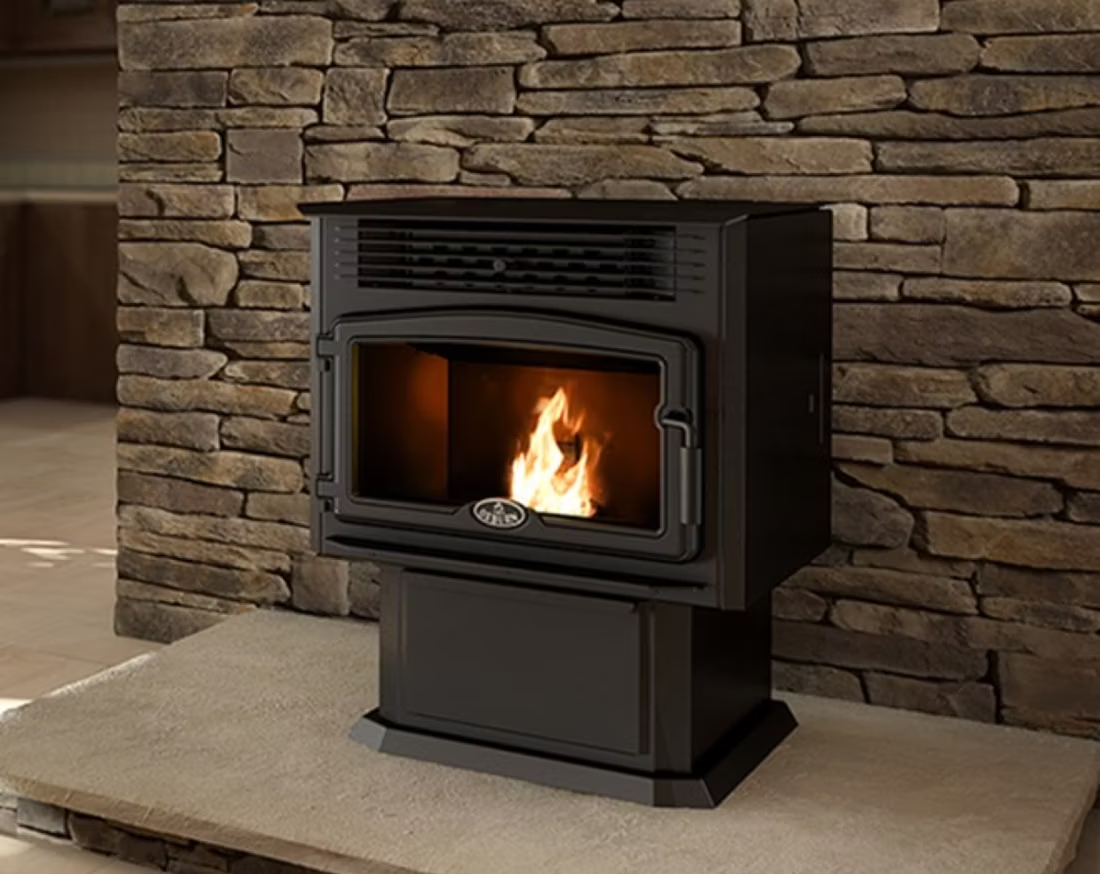
A pellet stove is a freestanding unit that sits on its own hearth pad and vents through a wall or existing chimney chase—it can go almost anywhere in a room with the right clearances. A pellet insert is built to slide into an existing masonry fireplace opening, turning an old wood-burning fireplace into an efficient, thermostat-controlled heat source while reusing the existing chimney for venting. For Warren County homes with an older fireplace that's rarely used because it's inefficient, an insert is often the more natural upgrade; homes without an existing fireplace opening are better suited to a freestanding stove.
Pellet stove vs. wood stove—which is right for my Warren County home?
Wood stoves burn the oak, hickory, maple, and cherry that's plentiful in this part of Pennsylvania—including firewood cut under a $20-per-cord permit through the Allegheny National Forest—and they keep working with zero electricity, which matters during winter outages. Pellet stoves trade that self-sufficiency for convenience: load the hopper, set the thermostat, and get consistent heat without splitting or stacking wood, with fuel sourced locally through regional brands like Energex and Hamer. For a household that values low daily effort and steady output, pellet usually wins. For a household that wants heat regardless of grid status, or that already has an efficient way to source and process firewood, wood stays the better fit. A local dealer can walk through both options side by side.
Why is my open fireplace making my house colder?
Open fireplaces suck—literally. As the fire burns, it consumes air your furnace already paid to heat and pulls it out through the chimney, so the house is actually colder after the fire goes out than before you lit it. An insert fixes this: it seals the chimney, puts fixed glass across the front, and turns that hole in your house into a real heat source.
Can a pellet stove heat a whole house?
It genuinely can. I burned a pellet stove as my only heat source for years after a furnace died, and it kept the entire house warm. Pellets feed automatically from a hopper, so you get wood-heat economics with thermostat-style control. Two honest caveats: it needs weekly cleaning during the season, and most models need electricity to run—ask about battery backup if outages are a concern.
How much should I budget for a fireplace?
For an average home—covering the fireplace, the vent pipe, and basic installation—a budget between $3,900 and $5,500 gives you a lot of options across wood, gas, and pellet. By the time you add finish work, gas line, and electrical, the average complete installation lands between $5,000 and $12,000 all-in. In a remodel or new build, a good rule is to put about 2.5% of the total project cost toward the fireplace.
Does a fireplace add value to my home?
On average, a fireplace adds back to the home about the same amount you spent installing it. Add the monthly savings from heating the rooms you actually use instead of the whole house—often hundreds of dollars a year—and the value case is strong before you even count what a fire does for how your family uses the room.
Stove and Fireplace Dealers in Warren County
Listings include WhyFire partner dealers, dealers we have verified as authorized for the brands we recommend, and established local businesses that carry hearth products. Every listing shows which one it is. The ones marked Preferred run on WhyFire's software, so they can show you real pricing and book your appointment right here. No manufacturer pays for placement. How we verify dealers →
CJ's Home Decor & Fireplaces
Solstice Heating
Chautauqua Brick
Stone And Outdoor Living Center
Clymer Hardware & Home Center
Peterson Refrigeration & Ac
Pellet Brands Stocked Around Warren County
Manufacturers will point you to the nearest stocking dealer.
Get your Warren County pellet Project Guide & Parts List.
Tell us about your home and we'll match you with a trusted local dealer and put together a free Project Guide & Parts List—the exact parts, vent kit included, for your pellet stove or insert project.
Find Your Fireplace →