
Modern heat for Pennsylvania's anthracite coal country.
From Pottsville to Tamaqua, Schuylkill County winters run cold—6,616 heating degree days a year, with lows averaging 18°F on the ridges. Find the right pellet stove and connect with a trusted local dealer.
Every Project Starts From One of These Five Situations
From anthracite stokers to automated pellet heat.
Schuylkill County sits in the heart of Pennsylvania's anthracite coal region, and that history still shows up in a lot of local basements. Older homes in Pottsville, Minersville, and Shenandoah were often built around stoker coal stoves that burned the same anthracite once mined right out of the surrounding ridges—Broad Mountain, Sharp Mountain, the Pottsville anticline. Climate here is no mild proposition either: Zone 5A, roughly 6,616 heating degree days a year, and winter lows averaging 18°F—numbers not far off what you'd see in Buffalo, NY. Homes on the higher ridgelines around Pine Grove or Tamaqua run colder still.
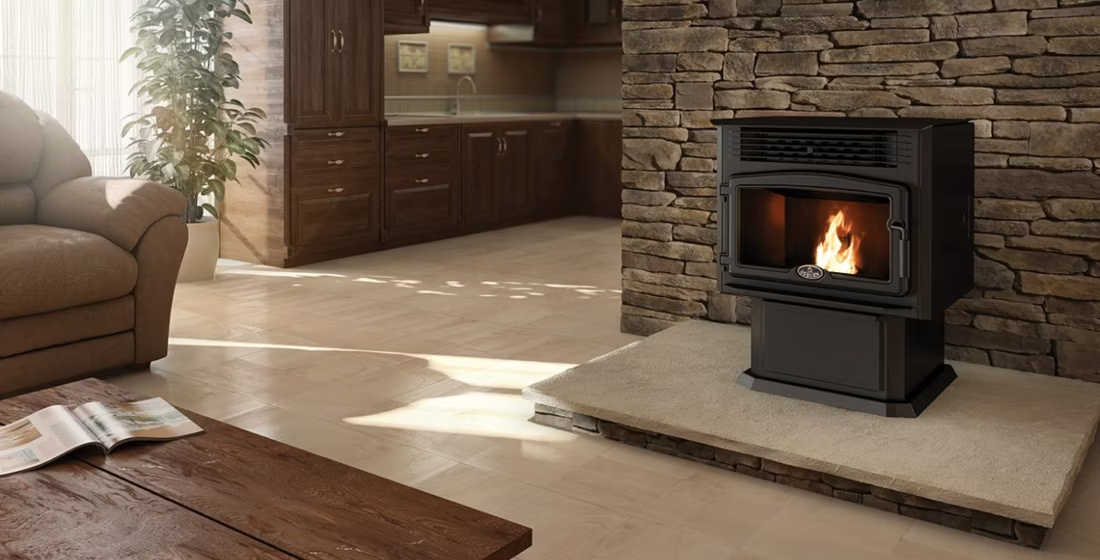
Pellet stoves have caught on across the county as a cleaner, lower-maintenance successor to those old coal stokers—load the hopper, set the thermostat, and let the auger do the work, without the ash and soot of anthracite or the daily tending of a cordwood stove. Schuylkill County has no air quality non-attainment designation, so unlike parts of the West where pellet or wood-burning restrictions drive the decision, the appeal here is purely about convenience and efficiency. Regional pellet suppliers—Energex, Hamer Pellet Fuel, and Greene Team Pellet Fuel—are all readily available through local hearth dealers and farm stores, which keeps fuel sourcing simple even in the more rural parts of the county.
Three steps. No salesperson until you're ready.
Tell us about your project
Your zip code, your situation, and the fuel you're leaning toward—or let the answers point you to one.
See what's actually available
The brands dealers within 100 miles genuinely carry—real options, never a catalog mirage.
Get your dealer & Project Guide
A trusted local dealer, plus the free Project Guide & Parts List that names every component of the job.
Frequently Asked Questions
How much does a pellet stove installation cost in Schuylkill County?
Most pellet stove and insert installations in Schuylkill County run somewhere between $3,000 and $6,500, depending on the unit, whether it's a freestanding stove or an insert going into an existing masonry fireplace, and what venting work is required. A pellet insert dropping into an existing fireplace with a straightforward through-wall vent kit tends to land on the lower end. Replacing an old anthracite stoker setup or installing in a home without an existing chimney or hearth pad—common in some of the older row homes around Shenandoah and Minersville—pushes costs toward the higher end once electrical work for the auger and blower is added in. Local dealers will give you a firm number after seeing the space.
What size pellet stove do I need for my home?
A lot of Schuylkill County's housing stock is older—narrow row homes in the borough centers, farmhouses out toward Pine Grove and Auburn—with less insulation than newer construction, which matters more than square footage alone when sizing a stove. As a rough guide, small units (up to 1,000 sq ft) suit a single large room or a well-sealed addition, mid-size units (1,000–2,000 sq ft) cover most main living areas, and larger units (2,000+ sq ft) can serve as primary heat in a well-insulated home. Homes higher up on Broad Mountain or Sharp Mountain generally need to size up compared to valley homes at the same square footage, given the extra wind exposure and colder overnight lows. Any of the local dealers can size your space correctly during an in-home visit—this is worth getting right, since an undersized stove won't keep up on the coldest January nights.
Do I need a permit to install a pellet stove in Schuylkill County?
Yes. Pennsylvania's Uniform Construction Code (UCC) requires a permit for installing a solid-fuel-burning appliance, including pellet stoves, and in Schuylkill County that permit is issued at the municipal level rather than by the county—through the borough or township where you live, such as Pottsville, Tamaqua, or Schuylkill Haven. The permit process checks clearances, venting, and hearth pad requirements against the manufacturer's listed specifications. Most local hearth dealers pull the permit as part of the installation and coordinate the inspection, so you generally don't have to navigate the municipal office yourself.
Where can I buy pellets in Schuylkill County, and how should I store them?
Regional brands including Energex, Hamer Pellet Fuel, and Greene Team Pellet Fuel are widely stocked at local hearth shops, hardware stores, and farm supply outlets throughout the county. Pellets are sold by the 40-pound bag or by the ton (a ton runs roughly 50 bags), and buying by the ton ahead of the heating season is typically the better value. Storage matters as much as brand—pellets need to stay bone dry, since even minor moisture exposure causes them to swell and break apart. A garage, dry basement, or shed works fine as long as bags are kept off concrete floors and away from any dampness, which is a real consideration during Schuylkill County's humid summers before heating season starts.
How does a pellet stove compare to an old anthracite coal stoker?
For homeowners with an existing anthracite stoker setup—still common in older Schuylkill County homes—a pellet stove is often the most natural upgrade. Both are automated, hopper-fed appliances that a homeowner loads periodically rather than tending fire by hand, so the daily routine feels familiar. Pellet stoves burn cleaner than anthracite, produce a fraction of the ash, and don't require the same coal delivery and storage logistics that stoker owners are used to. They do require reliable electricity to run the auger and combustion blower, which anthracite stokers with older mechanical feed systems sometimes don't. For most homeowners retiring an aging coal stoker, a pellet insert or freestanding unit is a straightforward, lower-maintenance replacement.
Will my pellet stove work during a power outage?
Not without backup power. Unlike a wood stove, a pellet stove depends on electricity to run the auger that feeds fuel and the blower that distributes heat, so a standard outage will shut it down. This matters in Schuylkill County, where winter storms on the ridges around Pine Grove and Tamaqua can knock out power for hours or longer. Homeowners who want pellet heat as a reliable backup source typically pair the stove with a battery backup unit (many manufacturers sell dedicated battery packs sized for their stoves) or a small generator. If uninterrupted heat during outages is the top priority, it's worth discussing wood stove options with your local dealer alongside pellet.
What pellet stove brands are available through local Schuylkill County dealers?
Harman, one of the most established pellet stove manufacturers in the country, is built just up the road in Halifax, PA, and is widely carried by hearth dealers throughout the region—a point of local pride for a lot of Schuylkill County customers. Beyond Harman, dealers in the county typically also carry brands like Lennox, England's Stove Works, and Enviro, each with different hopper capacities, burn-time ranges, and price points. A local dealer can walk you through the tradeoffs—hopper size versus how often you want to refill, auto-ignition versus manual lighting, and which models pair best with the pellet brands sold locally.
How much maintenance does a pellet stove need?
Pellet stoves need more frequent attention than a wood stove, but less than a coal stoker. Plan on emptying the ash pan every few days during regular use, cleaning the burn pot weekly to prevent clinker buildup, and wiping the glass as needed. Most manufacturers also recommend a full internal cleaning of the auger, exhaust fan, and venting once a season, ideally before winter starts in earnest. An annual professional service—checking the igniter, gaskets, and blower motor—runs $100 to $200 through most local dealers and helps avoid mid-winter breakdowns, which matter more in a county where a service call during a January cold snap can mean a wait.
Wood stove or pellet stove—which makes more sense in Schuylkill County?
Schuylkill County's wooded ridges produce plenty of oak, hickory, maple, and cherry, so seasoned firewood is easy to source locally and a wood stove will keep running during a power outage without any backup equipment—a real advantage given how often winter storms hit the higher elevations. A pellet stove trades that off-grid independence for convenience: no splitting or stacking, a longer, steadier burn from a single hopper load, and a cleaner-burning appliance with far less ash than either wood or old anthracite coal. For homeowners in town who want low-maintenance, thermostat-controlled heat, pellet usually wins. For homes on more remote roads outside Pine Grove or up toward the county's northern townships, many owners keep a wood stove as backup even after switching a main living space to pellet.
Why is a fireplace insert so efficient?
An insert does two things: it seals the chimney completely, so you stop losing air you already paid to heat, and it radiates warmth into the room through the firebox and glass. Most add a heat-exchange fan that pulls cool room air underneath, wraps it around the hot firebox, and pushes it back out warm. Your home is more efficient before you've even lit the first fire.
How often does a pellet stove need cleaning?
A clean pellet stove is a happy pellet stove. Plan on cleaning the burn pot about once a week when you're burning regularly—ash and clinkers gum up the air holes just like a pellet barbecue. Most pellet stove problems trace back to skipped cleaning that nobody explained up front. Some designs make it easy with a trapdoor burn pot: pull a lever and the gunk drops into the ash pan.
Can a fireplace actually lower my heating bill?
Yes—by creating a comfort zone. A furnace heats every square foot of the house just to warm the one room you're in; a gas fireplace on low burns roughly a sixth of the gas a typical furnace does. Set the furnace around 55–60 degrees as a baseline, then heat the rooms your family actually uses. Families who heat this way commonly save $20–$60 a month.
Can I install a fireplace myself?
If you're putting a fire in your house on purpose, it's best to work with an expert. Unless you're genuinely experienced in framing, gas line, vent pipe, and the national code on clearances to combustibles, have a professional do it—and ideally the same company that sells you the fireplace, so warranty, service, and liability all live under one roof.
Stove and Fireplace Dealers in Schuylkill County
Listings include WhyFire partner dealers, dealers we have verified as authorized for the brands we recommend, and established local businesses that carry hearth products. Every listing shows which one it is. The ones marked Preferred run on WhyFire's software, so they can show you real pricing and book your appointment right here. No manufacturer pays for placement. How we verify dealers →
Cressona Agway Store
Dewald & Lengle Hardware Inc.
Stolz Stove Sales
Harry's Lawn & Garden Center
Pellet Brands Stocked Around Schuylkill County
Manufacturers will point you to the nearest stocking dealer.
Find your pellet stove in Schuylkill County.
Tell us a bit about your home and we'll match you with the right pellet stove or insert, plus a free Project Guide & Parts List—including the vent kit—and a trusted local dealer to install it.
Find Your Fireplace →