
Warmth and Ambiance Without the Venting Headache.
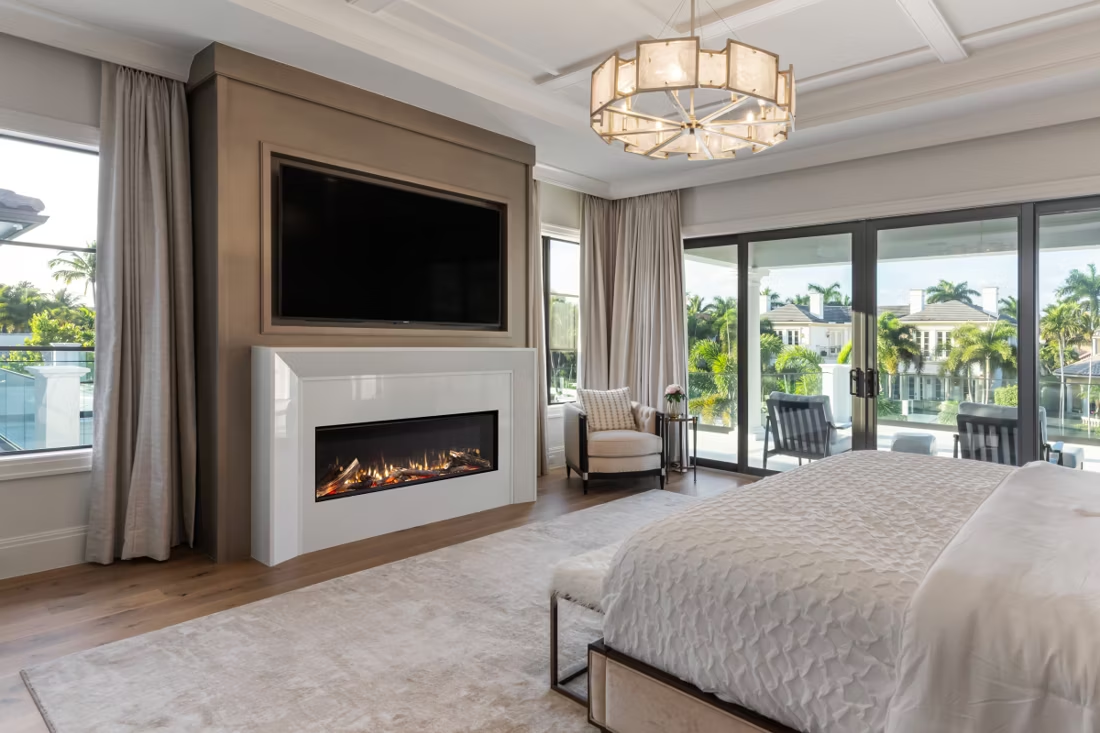
For the brick and stone row homes and older housing stock scattered across Schuylkill County's coal-region boroughs, an electric fireplace or insert delivers real glow and zone heat without touching a chimney. Find the right unit and connect with a trusted local dealer.
Every Project Starts From One of These Five Situations
Instant heat and glow, built for older housing stock.
Schuylkill County sits in climate zone 5A with winter lows averaging around 18°F and a heating season on par with Burlington, Vermont, that runs from October well into April. A lot of the county's housing stock dates to the anthracite coal era, with narrow brick and stone row homes packed into boroughs like Pottsville, Tamaqua, Shenandoah, Minersville, and Frackville. Many of those homes have masonry fireplaces that were bricked up, capped, or left structurally unsound decades ago—which is exactly the situation where an electric fireplace insert earns its keep.
Oak, hickory, maple, and cherry are all common locally, and plenty of Schuylkill County homeowners still burn wood as a standard heat source, especially in the county's more rural townships. But for a rowhouse in downtown Pottsville with a compromised flue, a finished basement, an apartment above an old Shenandoah storefront, or a bedroom that never gets warm from the oil furnace, electric is often the more practical answer. There's no chimney to inspect, no gas line to run, and—depending on the unit—no dedicated electrical circuit required. PPL Electric Utilities serves much of the county, with Met-Ed covering parts of the southern end, and either supports a standard 120V plug-in unit without any special service upgrade.
Three steps. No salesperson until you're ready.
Tell us about your project
Your zip code, your situation, and the fuel you're leaning toward—or let the answers point you to one.
See what's actually available
The brands dealers within 100 miles genuinely carry—real options, never a catalog mirage.
Get your dealer & Project Guide
A trusted local dealer, plus the free Project Guide & Parts List that names every component of the job.
Frequently Asked Questions
How much does an electric fireplace installation cost in Schuylkill County?
A plug-in electric fireplace insert or wall-mount unit typically runs $500 to $1,200 installed, since most just need trim work to fit an existing opening or wall bracket and no electrician visit at all. A larger built-in linear electric fireplace that requires a dedicated 120V or 240V circuit and some carpentry to frame it into a wall runs closer to $1,500 to $2,500 once an electrician is involved. Compare that to the $4,000-plus range typical for a wood or gas installation in Schuylkill County, and it's clear why electric is the go-to for a supplemental room or a rental unit above a Main Street storefront in Tamaqua or Shenandoah.
What size electric fireplace do I need for my home?
Most electric fireplaces put out somewhere between 4,600 and 9,000 BTU of supplemental heat, which is enough to comfortably warm a single room of 400 to 1,000 square feet—a den, a finished basement rec room, a bedroom in one of the county's older rowhomes. They are not built or sized to heat a whole house through a Schuylkill County winter, where the heating season is long and on par with Burlington, Vermont. Think of sizing here less in terms of square footage and more in terms of which room needs the boost—an electric unit is meant to supplement your existing oil or gas furnace, not replace it.
Do I need a permit to install an electric fireplace in Schuylkill County?
In most cases, no. A plug-in electric fireplace or insert that uses a standard household outlet doesn't require a building permit anywhere in Schuylkill County. If you're having a built-in unit wired to a dedicated circuit, that electrical work typically does need a permit—and since Schuylkill County has dozens of independent boroughs (Pottsville, Tamaqua, Shenandoah, Minersville, and others each run their own codes office), you'll want to check with your specific municipality rather than assume county rules apply. A licensed electrician handling the circuit work will usually pull that permit for you.
What's the difference between an electric fireplace insert, a built-in, and a freestanding stove?
An electric insert is designed to drop into an existing fireplace opening—a common fit for Schuylkill County's older masonry fireplaces, including ones with a flue that's no longer safe or code-compliant for wood burning. A built-in electric fireplace is framed into a wall like a piece of custom millwork, often with a linear, modern look, and typically needs a dedicated circuit. A freestanding electric stove looks like a traditional wood stove but plugs into any outlet and can be placed almost anywhere, which makes it a popular option for apartments and rentals throughout the county's borough downtowns.
Can an electric fireplace actually heat a room in a Schuylkill County winter?
For a single room, yes—a 5,000 to 9,000 BTU electric unit will noticeably warm a bedroom, den, or basement space even when outdoor temperatures sit in the teens, which is close to the county's average winter low of 18°F. What it won't do is replace your home's primary heating system across a full 6,600-degree-day heating season. Most Schuylkill County homeowners use electric fireplaces as targeted, room-by-room heat—turning down the thermostat and letting the fireplace carry a specific space—rather than as the sole heat source for an entire home.
Electric fireplace vs. wood-burning—which fits my Schuylkill County home?
Wood remains a standard, well-supported heat source in Schuylkill County, and local oak, hickory, maple, and cherry all burn well in a properly installed stove or insert. But wood requires a sound chimney, clearances, and ongoing maintenance—a real obstacle in a lot of the county's century-old rowhomes where flues were capped or removed long ago. Electric skips all of that: no chimney inspection, no creosote, no wood storage in a tight urban lot in Pottsville or Shenandoah. If your home already has a working chimney and you want real heat output plus backup capability during a power outage, wood is worth a look. If your fireplace opening is decorative, blocked, or nonexistent, electric is the simpler path.
How much does it cost to run an electric fireplace in Schuylkill County?
Running an average 1,500-watt electric fireplace on high for a few hours a night costs roughly $0.20 to $0.35 per hour at typical PPL Electric Utilities or Met-Ed residential rates, which works out to something like $15 to $30 a month for regular evening use in a supplemental room. Most units also have a heat-off mode that runs the flame effect on just a few watts, so you can keep the ambiance going without the heating cost if the room's already warm enough.
Can I install an electric fireplace in a rental or apartment in Schuylkill County?
Yes, and this is one of the more common uses for electric fireplaces across the county's borough downtowns, where a lot of housing sits above old storefronts in Pottsville, Tamaqua, and Shenandoah. A plug-in insert or freestanding stove requires no permanent modification, no permit, and no landlord sign-off in most cases—you plug it in, and it comes with you when you move. It's often the only realistic fireplace option for a renter, since wood and gas installations both require permanent structural and venting work that a landlord would need to approve.
Can I put an electric insert into my old masonry fireplace that's no longer safe to use?
Yes, and it's a common fix in Schuylkill County's older housing stock, where decades-old masonry chimneys often have deteriorated flue liners, cracked crowns, or damage that makes wood burning unsafe without expensive chimney repair. An electric insert sits inside the existing firebox opening, plugs into a nearby outlet or a new dedicated circuit, and gives you back the look and glow of a working fireplace without touching the chimney at all. It's one of the most cost-effective ways to bring a dead fireplace back to life in a Pottsville, Minersville, or Frackville rowhome.
Can I put a TV above my fireplace?
Yes—with an asterisk. Fireplaces are hot and TVs don't like heat. Either put a mantel between them to deflect rising warmth, or choose a fireplace with heat-management technology that creates a cool zone on the wall above—the wall stays around 125 degrees, barely warm, while the room still gets full heat. If you like clean lines and don't want a mantel, heat management is the answer.
Does an electric fireplace need a vent or chimney?
No—that's its superpower. An electric fireplace needs a wall and an outlet, period. No vent pipe, no gas line, no clearances to design around, which is why it works in bedrooms, offices, apartments, and walls where venting a gas or wood unit would be impractical or impossible. Installation is typically the simplest and least expensive of any fireplace type.
Can I install a fireplace myself?
If you're putting a fire in your house on purpose, it's best to work with an expert. Unless you're genuinely experienced in framing, gas line, vent pipe, and the national code on clearances to combustibles, have a professional do it—and ideally the same company that sells you the fireplace, so warranty, service, and liability all live under one roof.
Does a fireplace add value to my home?
On average, a fireplace adds back to the home about the same amount you spent installing it. Add the monthly savings from heating the rooms you actually use instead of the whole house—often hundreds of dollars a year—and the value case is strong before you even count what a fire does for how your family uses the room.
Stove and Fireplace Dealers in Schuylkill County
Listings include WhyFire partner dealers, dealers we have verified as authorized for the brands we recommend, and established local businesses that carry hearth products. Every listing shows which one it is. The ones marked Preferred run on WhyFire's software, so they can show you real pricing and book your appointment right here. No manufacturer pays for placement. How we verify dealers →
Cressona Agway Store
Dewald & Lengle Hardware Inc.
Stolz Stove Sales
Harry's Lawn & Garden Center
Find your electric fireplace in Schuylkill County.
Tell us a bit about your home and we'll put together a free Project Guide & Parts List—the right electric fireplace or insert for your space, the exact parts involved, and a trusted local Schuylkill County dealer to install it.
Find Your Fireplace →