
Instant Heat for Tamaqua's Coal Region Winters.
No chimney, no gas line, no venting—just warmth that fits the rowhomes and older housing stock lining Tamaqua's streets. Find the right unit and connect with a trusted local dealer.
Every Project Starts From One of These Five Situations
Warmth that fits a rowhome footprint.
Tamaqua sits in the Schuylkill County anthracite coal region at 1,171 feet, where winter lows average 18°F and the borough has a cold, long heating season on par with Burlington, Vermont. Much of the town's housing stock dates to the 19th century: brick rowhomes and twin houses built shoulder-to-shoulder along narrow lots, many without a masonry chimney suited to wood or gas venting. That's exactly where electric fireplaces earn their place. There's nothing to vent through a shared wall, no clearance-to-combustible puzzle in a home with 8-foot ceilings, and no gas line to run down a block that was platted before natural gas service existed.
PPL Electric Utilities serves Tamaqua at a residential rate of $0.1234 per kWh, a moderate figure that keeps supplemental zone heating affordable and predictable. Wood still runs deep in Schuylkill County's heating culture—oak, hickory, maple, and cherry all get split and stacked locally—but electric units solve a different problem: ambiance and backup warmth in a rental unit, heat for a finished attic bedroom or basement that the furnace doesn't reach well, or a clean upgrade for homeowners who'd rather not maintain another flue.
Three steps. No salesperson until you're ready.
Tell us about your project
Your zip code, your situation, and the fuel you're leaning toward—or let the answers point you to one.
See what's actually available
The brands dealers within 100 miles genuinely carry—real options, never a catalog mirage.
Get your dealer & Project Guide
A trusted local dealer, plus the free Project Guide & Parts List that names every component of the job.
Frequently Asked Questions
How much does it cost to install an electric fireplace in Tamaqua?
A plug-in freestanding or wall-mount electric fireplace typically runs $300 to $900 installed, since most models simply plug into an existing outlet with no electrician required. A built-in electric insert or a unit that needs a dedicated 20-amp circuit—common when adding one to a finished basement or an upper-floor room in one of Tamaqua's older rowhomes—usually runs $800 to $2,500 once you factor in an electrician's time to run new wiring and, in some cases, upgrade an older panel. Homes with knob-and-tube or aging electrical service, which still shows up in parts of the borough's 19th-century housing stock, tend to land on the higher end.
How much does an electric fireplace cost to run each month?
At PPL Electric's residential rate of $0.1234 per kWh, a typical 1,500-watt electric fireplace costs roughly 18.5 cents per hour to run on heat mode. Used for about 4 to 6 hours a day during Tamaqua's coldest stretches—when overnight lows sit around 18°F—that works out to roughly $22 to $33 a month. Running it on flame-only mode without the heater draws a fraction of that, often under 100 watts, which is common for homeowners who want the ambiance without the added heat load in a shoulder-season month.
What's the best type of electric fireplace for a Tamaqua rowhome?
For the tight footprints common in Tamaqua's brick rowhomes and twin houses, a wall-mount unit or a slim built-in insert usually makes more sense than a bulky freestanding cabinet. Wall-mounts hang like a flat-screen TV and draw almost no floor space, which matters in living rooms that are often 12 to 14 feet wide. If you have an existing but unused masonry fireplace opening—not uncommon in the borough's older housing—an electric insert can slide into that opening and give you usable heat and flame effect without any chimney work at all.
Do I need a permit to install an electric fireplace in Tamaqua?
A plug-in electric fireplace that runs off an existing outlet doesn't require a permit. If your installation calls for a new dedicated circuit—which most licensed electricians recommend for a full-size 1,500-watt unit used regularly—that electrical work typically needs a permit through Tamaqua Borough's code enforcement office. A licensed electrician pulling the permit as part of the job is standard practice and keeps the work inspected and up to code, particularly in older homes where the panel may already be near capacity.
Can an electric fireplace actually heat a room in a Tamaqua winter?
Most electric fireplaces top out around 5,000 to 9,000 BTU (roughly 1,500 watts), which is enough to comfortably warm a single room of 300 to 400 square feet under normal conditions. Given Tamaqua's cold, long heating season and winter lows around 18°F, an electric unit works well as supplemental or zone heat—taking the chill off a home office, finished basement, or bedroom so the furnace can run less—but it isn't a realistic replacement for a home's primary heating system in this climate.
What happens to my electric fireplace during a power outage?
It stops working entirely—electric fireplaces have no battery backup or standalone ignition, so a PPL Electric outage means no heat and no flame effect until power is restored. This is worth thinking through in Schuylkill County, where winter ice storms occasionally knock out power for hours at a time. Homeowners who want backup heat during outages typically pair an electric fireplace for everyday convenience with a wood stove or vented gas unit elsewhere in the house for the nights when the grid goes down.
Electric fireplace vs. gas insert—which is right for my home?
Electric fireplaces cost far less to install since there's no venting or gas line to run, and they're the practical choice for Tamaqua homes without an existing chimney or gas service to the block. Gas inserts cost more upfront but deliver more real heat output and, with the right ignition system, can keep running during a power outage. For a rowhome without a masonry flue, electric is usually the simpler and more affordable path. For a home with an existing fireplace opening and gas service already run to the house, a gas insert is worth comparing before defaulting to electric.
Are electric fireplaces safe around kids and pets?
Yes—this is one of the strongest arguments for electric over a wood or gas unit in a family home. The glass front on most electric fireplaces stays cool to the touch since there's no real flame or combustion involved, and there's no ash, soot, glowing embers, or carbon monoxide risk to manage. Many models include a physical switch to run the flame effect without any heat at all, which some Tamaqua homeowners with young children use year-round for ambiance.
What's the difference between an electric fireplace, insert, and stove?
A freestanding electric fireplace looks like a cabinet or media console and can sit anywhere near an outlet. An electric insert is built to slide into an existing masonry fireplace opening, replacing a cold, unused hearth with usable heat. An electric stove mimics the shape of a traditional wood stove—a compact freestanding box, often with a faux flue pipe for looks—and works well in a corner or against a wall where a full-size unit wouldn't fit. For Tamaqua's older housing stock, homes with an existing but unused fireplace opening are usually best served by an insert; homes without one typically go with a wall-mount or stove-style unit instead.
Can I put a TV above my fireplace?
Yes—with an asterisk. Fireplaces are hot and TVs don't like heat. Either put a mantel between them to deflect rising warmth, or choose a fireplace with heat-management technology that creates a cool zone on the wall above—the wall stays around 125 degrees, barely warm, while the room still gets full heat. If you like clean lines and don't want a mantel, heat management is the answer.
Does an electric fireplace need a vent or chimney?
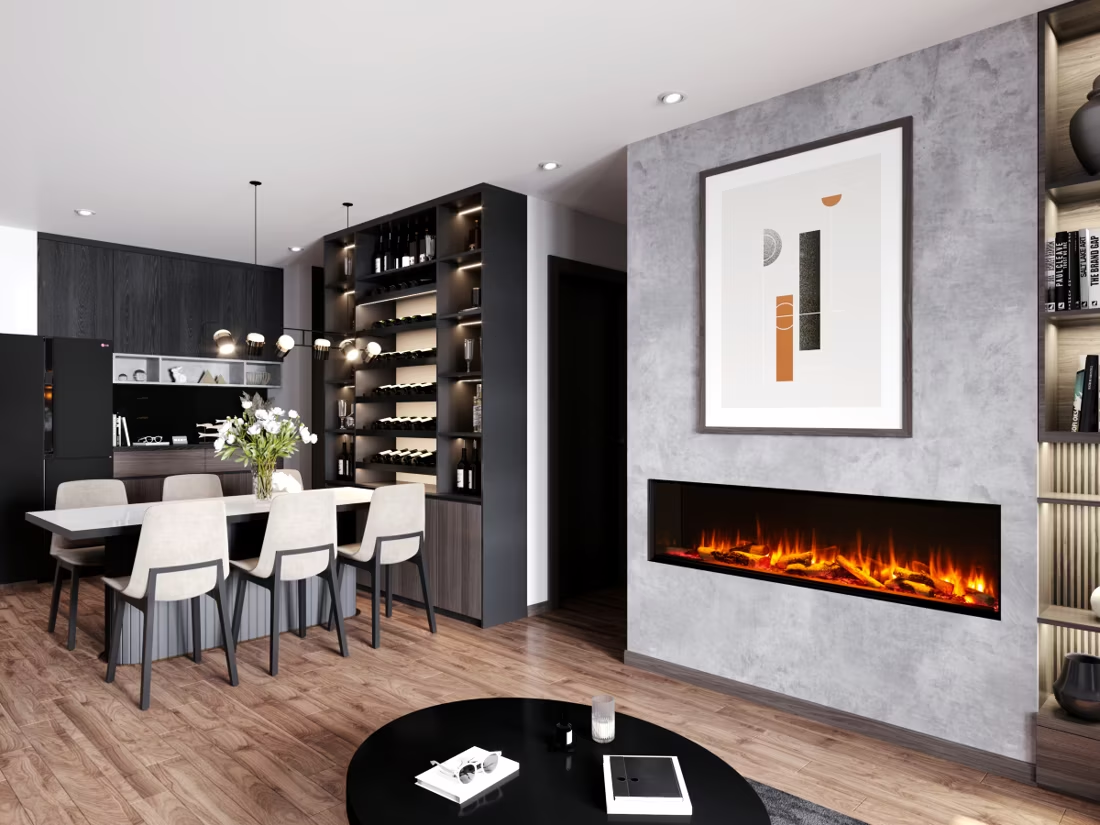
No—that's its superpower. An electric fireplace needs a wall and an outlet, period. No vent pipe, no gas line, no clearances to design around, which is why it works in bedrooms, offices, apartments, and walls where venting a gas or wood unit would be impractical or impossible. Installation is typically the simplest and least expensive of any fireplace type.
How much should I budget for a fireplace?
For an average home—covering the fireplace, the vent pipe, and basic installation—a budget between $3,900 and $5,500 gives you a lot of options across wood, gas, and pellet. By the time you add finish work, gas line, and electrical, the average complete installation lands between $5,000 and $12,000 all-in. In a remodel or new build, a good rule is to put about 2.5% of the total project cost toward the fireplace.
What is an in-home preview and do I need one?
It's a visit where a hearth professional measures your space, confirms the model you picked actually works in your home, and walks the specs—framing, gas line, venting, finish work—before anything is ordered. Some details you just can't know until you see the house. Never make a down payment without one; it's the single most-skipped step that burns buyers.
Nearby Dealers
Hearth shops serving Tamaqua and the surrounding area. Every listing shows whether it is a WhyFire partner, a dealer we have verified as authorized for the brands we recommend, or a local business carrying hearth products. No manufacturer pays for placement. How we verify dealers →
Liberty Oil & Propane
Harry's Lawn & Garden Center
Cressona Agway Store
Forest Inn Masonry Supply
Krings Hearth & Home - Schnecksville
Kozy By The Fire
Penn Hearth Llc.
Scandia Stoves Of Pa Inc.
Dewald & Lengle Hardware Inc.
Abe Fence / Landscape Supply
Keller Enterprises
Electric Service in Tamaqua
An electric fireplace's heater draws about 1,500 watts—pennies per hour at local rates.
Ppl Electric Utilities Corp
Find your electric fireplace in Tamaqua.
Tell us a bit about your home and we'll put together a free Project Guide & Parts List for your Tamaqua electric fireplace project—the right unit, the exact parts, and a trusted local dealer to install it.
Find Your Fireplace →