
Add real warmth to your Pocono Woodland Lakes cabin—no chimney required.
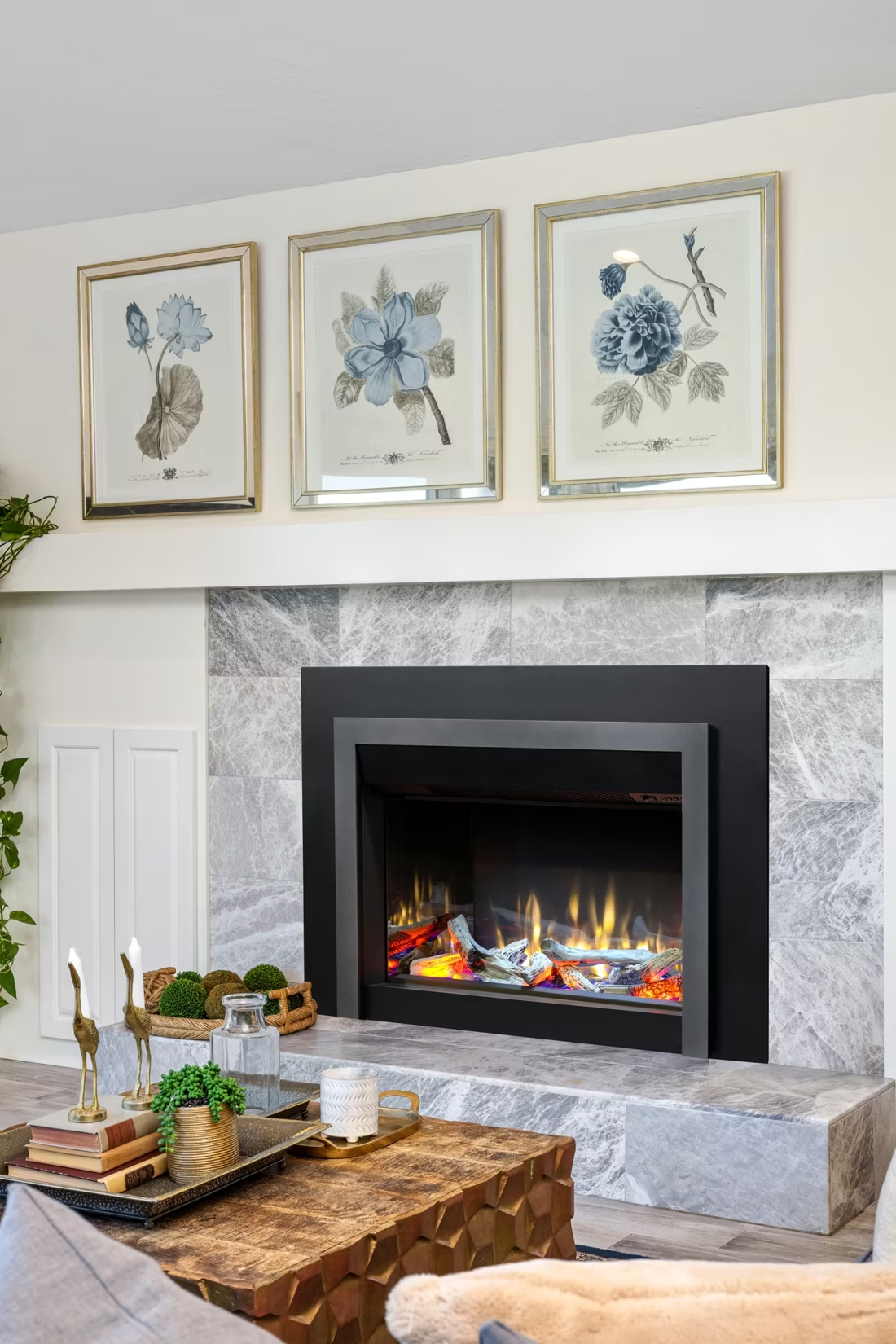
Zone heat for lake houses, camps, and cabins across Pike County—plug it in, mount it, and it works. Find the right electric fireplace and connect with a trusted local dealer.
Every Project Starts From One of These Five Situations
The easiest heat source for a community built on lake houses and weekend cabins.
Pocono Woodland Lakes sits at about 1,200 feet in Pike County, where winter lows average 16°F and the region has a winter heating season about as demanding as Buffalo, NY—a cold-climate comparison. Most of the homes here are seasonal lake cottages, weekend retreats, and smaller cabins built around the community's lakes, many without an existing chimney, a gas line, or the year-round occupancy that would justify a full wood-burning setup.
That's exactly the gap electric fireplaces fill. There's no venting to run, no firewood to season from the oak, hickory, maple, and cherry stands common to this part of the Poconos, and no propane tank to keep filled for a house that might sit empty for weeks at a stretch. Power comes from Metropolitan Edison or Pike County Light & Power depending on your parcel, and at the local residential rate of about $0.1866 per kWh, a typical 1,500-watt unit costs roughly 25 to 30 cents an hour to run on high—cheap zone heat for the room you're actually using, whether that's a lakeside den or a bunk room that only gets used on weekends.
Three steps. No salesperson until you're ready.
Tell us about your project
Your zip code, your situation, and the fuel you're leaning toward—or let the answers point you to one.
See what's actually available
The brands dealers within 100 miles genuinely carry—real options, never a catalog mirage.
Get your dealer & Project Guide
A trusted local dealer, plus the free Project Guide & Parts List that names every component of the job.
Frequently Asked Questions
How much does it cost to install an electric fireplace in Pocono Woodland Lakes?
Plug-in electric inserts and freestanding stoves that use a standard 120V outlet typically run $300 to $1,500 installed, since there's no wiring work involved beyond finding a place to set the unit. Built-in wall units and larger mantel packages that need a dedicated 20-amp circuit run higher, usually $1,500 to $3,500, once a licensed electrician runs the new line—common in Pocono Woodland Lakes cabins with older panels that weren't built for a 1,500-watt draw on an existing circuit. Because most units don't require venting or a chimney, electric installs are consistently the least expensive fireplace option available in this area.
Can an electric fireplace actually heat a Pocono Woodland Lakes cabin?
It depends on what you're asking it to do. Most electric fireplaces put out 5,000 to 9,000 BTU (roughly 1,500 watts) and are built to warm a single room—400 to 1,000 square feet depending on ceiling height and insulation. With winter lows here averaging 16°F and a heating season about as demanding as Buffalo, NY, an electric unit isn't going to carry a whole cabin through a January cold snap on its own. It works well as zone heat for a den, bedroom, or lake-facing room while a furnace, heat pump, or wood stove handles the rest of the house—or as the sole heat source for a small, well-insulated seasonal cabin.
Electric vs. wood—which makes more sense for my property here?
Wood is the traditional choice in this part of Pike County, where oak, hickory, maple, and cherry are all common locally and burn well. But wood means seasoning firewood, sweeping a chimney, and being present to feed a fire—a real commitment for a place that might sit closed up for weeks between visits. Electric skips all of that: no fuel storage, no ash, no annual inspection, and no risk of creosote building up in a chimney nobody's checked since spring. For full-time residents who want the smell and radiant heat of a real fire, wood still wins. For weekend and seasonal owners around the lakes, electric is usually the lower-maintenance call.
Is propane or gas a better option than electric out here?
There's no piped natural gas serving Pocono Woodland Lakes, so any gas fireplace here runs on propane, which means a tank, a delivery contract, and a line run by a licensed gas-fitter—real costs and real logistics for a property you're not living in full-time. Electric sidesteps all of that. You plug it in or have an electrician add a circuit, and you're done—no tank to keep topped off over the winter, no delivery truck making it up your road after a snowstorm.
Do I need a permit to install an electric fireplace?
Most plug-in electric fireplaces and inserts don't require a permit at all—they're treated like any other appliance you plug into a wall outlet. If your installer needs to add a new dedicated circuit for a built-in unit, that electrical work does require a permit pulled by a licensed electrician through your local Pike County municipality, and it should be inspected before the wall is closed up. Ask any electrician quoting the job whether your existing panel has room for the new circuit before you commit to a built-in model.
Will my electric fireplace work if the power goes out?
No—and this matters more here than in most places. Winter storms in the Poconos regularly knock out power for hours or days at a time, and an electric fireplace, unlike a wood stove, has no function without electricity. If you're in Pocono Woodland Lakes primarily for weekend use and want heat that survives an outage, a wood stove or a propane unit with battery-backup ignition is worth considering alongside an electric unit rather than instead of it. Many owners here end up with electric for everyday convenience and a wood stove as backup.
How much does it cost to run an electric fireplace at Pike County electric rates?
At the local residential rate of roughly $0.1866 per kWh—whether you're served by Metropolitan Edison or Pike County Light & Power—a typical 1,500-watt electric fireplace running on high costs about 28 cents an hour, or a little over $2 for an 8-hour evening. Most units let you run the flame effect without the heater engaged, which draws only a few watts and costs pennies a day—a nice option if you want ambiance in a lake house you're not trying to actively heat.
What kind of electric fireplace works best for a seasonal lake house?
Look for a unit with a built-in thermostat and remote or app control, so you can set a low-temperature floor remotely before you arrive, or run the flame effect alone when you just want the look without the heat. Wall-mounted and recessed units save floor space in smaller cabin layouts common around the lakes, while freestanding stove-style units are easier to move if you rearrange a room seasonally. Because there's no chimney or gas line to worry about, electric is also one of the simplest fireplace options to add to a rental cabin without complicating your insurance or liability exposure to tenants.
Electric vs. pellet stove—which is the better supplemental heat source here?
Pellet stoves burn bagged pellets—regional brands like Energex, Hamer, and Greene Team are all sold within reach of Pike County—and put out significantly more heat than an electric unit, making them a stronger choice for a cabin you want to actually heat through a cold snap. But pellet stoves need venting, a hopper to refill, ash to clean out, and electricity to run the auger and blower, so they're not maintenance-free either. Electric units need none of that upkeep but also can't match a pellet stove's heat output. For light supplemental warmth and ambiance in a room, electric is simpler; for a cabin that needs real backup heat through Pocono winters, pellet is worth a look.
Can I put a TV above my fireplace?
Yes—with an asterisk. Fireplaces are hot and TVs don't like heat. Either put a mantel between them to deflect rising warmth, or choose a fireplace with heat-management technology that creates a cool zone on the wall above—the wall stays around 125 degrees, barely warm, while the room still gets full heat. If you like clean lines and don't want a mantel, heat management is the answer.
Do electric fireplaces actually produce heat?
Yes—most put out around 4,800–5,000 BTUs from a standard outlet, which comfortably warms a bedroom, office, or den as a comfort-zone heater. What they won't do is carry a whole house the way wood, gas, or pellet can. Think of electric as ambiance-first with honest supplemental heat: flames on with no heat in July, flames plus warmth in January.
Does a fireplace add value to my home?
On average, a fireplace adds back to the home about the same amount you spent installing it. Add the monthly savings from heating the rooms you actually use instead of the whole house—often hundreds of dollars a year—and the value case is strong before you even count what a fire does for how your family uses the room.
How much should I budget for a fireplace?
For an average home—covering the fireplace, the vent pipe, and basic installation—a budget between $3,900 and $5,500 gives you a lot of options across wood, gas, and pellet. By the time you add finish work, gas line, and electrical, the average complete installation lands between $5,000 and $12,000 all-in. In a remodel or new build, a good rule is to put about 2.5% of the total project cost toward the fireplace.
Nearby Dealers
Hearth shops serving Pocono Woodland Lakes and the surrounding area. Every listing shows whether it is a WhyFire partner, a dealer we have verified as authorized for the brands we recommend, or a local business carrying hearth products. No manufacturer pays for placement. How we verify dealers →
Jim Creegan - Certified Chimney Sweep
Gardens To Grow, Llc
Highland Chimney Sweep
Firefox Energy Concepts
Paradise Pool & Spa Inc.
Valley Mason Supply
Electric Service in Pocono Woodland Lakes
An electric fireplace's heater draws about 1,500 watts—pennies per hour at local rates.
Metropolitan Edison Co
Pike County Light & Power Co
Find your electric fireplace in Pocono Woodland Lakes.
Tell us about your cabin or lake house and we'll match you with a trusted local dealer and a free Project Guide & Parts List—the exact parts and plan for your electric fireplace project, no big-box guesswork.
Find Your Fireplace →