
Add real warmth to your Pike County home—no chimney required.
From Milford to the lake communities around Lake Wallenpaupack, electric fireplaces bring instant ambiance and zone heat to Pocono Mountain homes and cabins without gas lines, masonry, or venting. Find the right unit and connect with a trusted local dealer.
Every Project Starts From One of These Five Situations
The simplest way to add heat and ambiance in the Poconos.
Pike County sits in the Pocono Mountains along the Delaware River, with roughly 5,953 heating degree days a year and average winter lows around 19°F—a season on par with parts of upstate New York or Vermont. With just over 28,000 year-round residents spread across a county full of seasonal cabins, lakefront cottages, and second homes clustered around communities like Blooming Grove, Birchwood Lakes, Conashaugh Lakes, and the shores of Lake Wallenpaupack, a huge share of the county's housing stock sees intermittent, weekend, or vacation use rather than daily occupancy.
Natural gas infrastructure is limited across most of rural Pike County, and many older cabins were never built with a chimney or a masonry hearth. That combination—thin gas access, seasonal occupancy, and plenty of homes without existing flues—is exactly where electric fireplaces earn their place. A plug-in insert or a 240-volt built-in wall unit adds real, adjustable heat to a bedroom, den, or finished basement with no venting, no gas line, and no wood storage. It's also the easiest option for lake association properties with deed restrictions on open burning, and for owners who want a rental cabin ready to switch on the moment guests walk in.
Three steps. No salesperson until you're ready.
Tell us about your project
Your zip code, your situation, and the fuel you're leaning toward—or let the answers point you to one.
See what's actually available
The brands dealers within 100 miles genuinely carry—real options, never a catalog mirage.
Get your dealer & Project Guide
A trusted local dealer, plus the free Project Guide & Parts List that names every component of the job.
Frequently Asked Questions
How much does an electric fireplace installation cost in Pike County?
A plug-in electric insert or freestanding unit that runs on a standard 120-volt outlet typically costs $200 to $900 installed, since there's usually no wiring work involved beyond mounting. A built-in wall unit or larger insert that requires a dedicated 240-volt circuit runs higher—commonly $1,500 to $4,000 once you factor in an electrician to run a new circuit, especially in older cabins around Blooming Grove or Shohola that weren't wired for it originally. Costs run slightly higher in the more remote parts of the county where an electrician's travel time gets added to the bill.
Do I need a permit to install an electric fireplace in Pike County?
Most plug-in electric fireplaces don't require a permit since there's no gas line, venting, or structural work involved. If your installation requires a new dedicated circuit or panel work—common with larger built-in wall units—an electrical permit is typically required through your local township office (Dingman, Delaware, Milford, Lehman, Blooming Grove, Greene, Palmyra, Porter, Shohola, and Westfall townships each handle their own permitting). If you're in a lake community like Wallenpaupack or Birchwood Lakes, it's also worth checking your HOA or association rules—some restrict exterior modifications even for interior electrical work.
Will an electric fireplace actually heat my home during Pike County winters?
Most electric fireplaces are rated around 1,500 watts and 4,600–5,000 BTU, which is enough to comfortably heat a single room of 200 to 400 square feet—not a whole house through a Pike County winter that averages 19°F lows and nearly 6,000 heating degree days. Think of electric as targeted zone heat: warming the room you're actually in while your propane furnace, heat pump, or wood stove handles the rest of the house. For seasonal cabins that only need to take the chill off a living room on a weekend visit, an electric unit can be the primary heat source; for full-time homes, it's almost always supplemental.
Why are electric fireplaces popular in Pike County's lake communities?
A large share of Pike County's housing is seasonal or vacation property inside private lake associations—Lake Wallenpaupack, Blooming Grove, Conashaugh Lakes, Birchwood Lakes, and others—many of which restrict or closely regulate open-flame burning and require chimney inspections for wood-burning units before resale. An electric fireplace sidesteps all of that: no ash, no wood storage, no chimney to inspect, and no open flame to worry about when a rental guest is unfamiliar with the property. Owners who cycle short-term renters through a cabin also appreciate that a unit can be set on a timer or thermostat and left running safely while unattended.
What's the difference between an electric fireplace, insert, and wall-mount unit?
An electric insert is built to slide into an existing masonry fireplace opening, giving an old, unused wood fireplace new life without touching the chimney. A freestanding electric fireplace is a self-contained cabinet unit that plugs in and can be placed almost anywhere, which works well in cabins that never had a fireplace to begin with. A wall-mount or built-in unit is recessed into a framed wall, similar to mounting a flat-screen TV, and typically needs a dedicated circuit. For Pike County homes with an old masonry fireplace that's gone cold, an insert is usually the simplest upgrade; for new construction or rooms without an existing hearth, a wall unit is the more common choice.
Will my electric fireplace work during a power outage?
No—and this is worth being direct about. Electric fireplaces require power to run the heater and flame effect, so during winter outages from ice storms or nor'easters, which do occur in rural parts of Pike County, an electric unit goes dark along with everything else. If backup heat during outages matters to you, pair an electric fireplace (for everyday convenience and ambiance) with a wood stove or a propane heater that can run independent of the grid, or plan around a generator. Electric is best understood as a convenience and zone-heat solution, not an emergency heat source.
How much does it cost to run an electric fireplace?
A typical 1,500-watt electric fireplace costs roughly 15 to 25 cents per hour to run on PPL Electric Utilities' residential rates, which serve most of Pike County—meaning a few hours of evening use most nights adds somewhere around $10 to $25 a month to a utility bill, depending on how often it's used and local rate changes. That's considerably cheaper than running a whole-home furnace to warm just the room you're sitting in, which is part of why electric units are popular as supplemental heat in living rooms and dens across the county.
Electric vs. wood—which makes more sense for my Pike County property?
Pike County has a strong wood-burning tradition, with oak, hickory, maple, and cherry all common in local forests and readily available for cutting or purchase. Wood stoves deliver real radiant heat and keep working through a power outage, which matters in a county where storm-related outages happen most winters. Electric fireplaces can't match that off-grid resilience, but they're far simpler for seasonal cabins, lake-community properties with burning restrictions, condos, or any home where running a chimney and stacking firewood isn't practical. Many full-time Pike County residents keep both: wood for backup heat and daily use in colder months, electric for a bedroom, den, or finished basement where convenience matters more than raw output.
What brands of electric fireplaces do local dealers carry?
Local hearth dealers serving Pike County typically carry established electric fireplace lines such as Dimplex and Napoleon, both of which offer everything from compact plug-in inserts to larger built-in wall units with realistic flame effects. Exact selection varies by dealer and by what fits your specific opening or wall cavity, which is why an in-home or in-showroom consultation matters more than browsing online—a local dealer can confirm what will actually fit your fireplace opening or framing before you buy.
Can I put a TV above my fireplace?
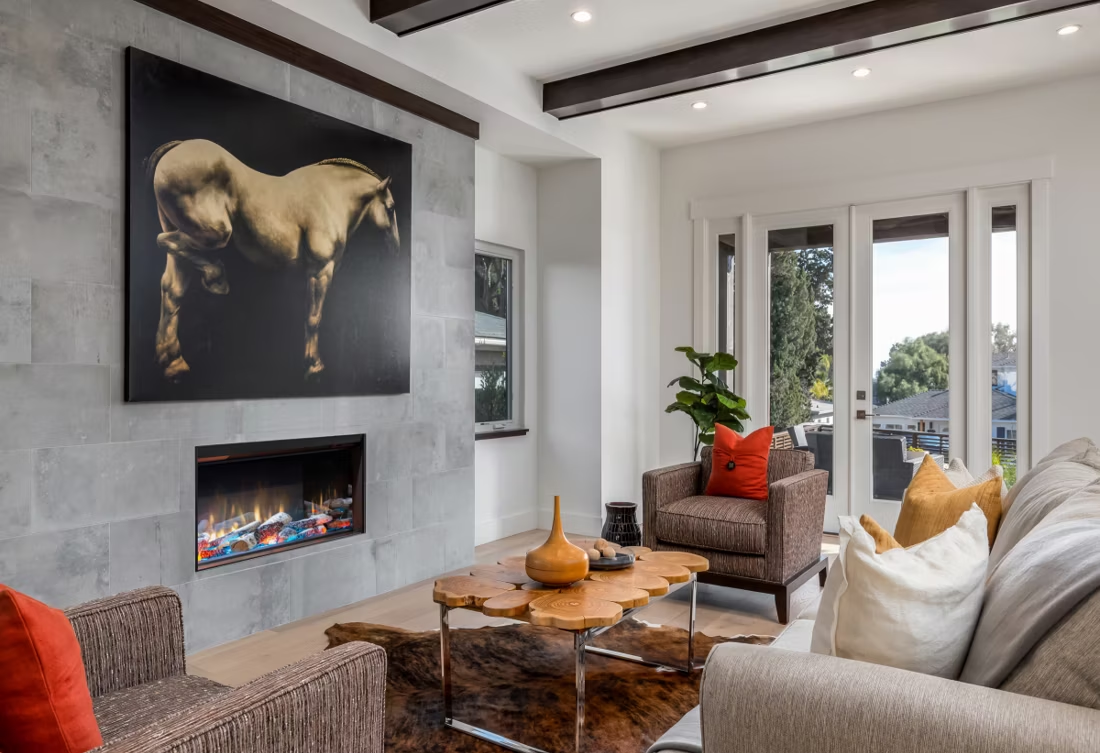
Yes—with an asterisk. Fireplaces are hot and TVs don't like heat. Either put a mantel between them to deflect rising warmth, or choose a fireplace with heat-management technology that creates a cool zone on the wall above—the wall stays around 125 degrees, barely warm, while the room still gets full heat. If you like clean lines and don't want a mantel, heat management is the answer.
Does an electric fireplace need a vent or chimney?
No—that's its superpower. An electric fireplace needs a wall and an outlet, period. No vent pipe, no gas line, no clearances to design around, which is why it works in bedrooms, offices, apartments, and walls where venting a gas or wood unit would be impractical or impossible. Installation is typically the simplest and least expensive of any fireplace type.
Can a fireplace actually lower my heating bill?
Yes—by creating a comfort zone. A furnace heats every square foot of the house just to warm the one room you're in; a gas fireplace on low burns roughly a sixth of the gas a typical furnace does. Set the furnace around 55–60 degrees as a baseline, then heat the rooms your family actually uses. Families who heat this way commonly save $20–$60 a month.
Does a fireplace add value to my home?
On average, a fireplace adds back to the home about the same amount you spent installing it. Add the monthly savings from heating the rooms you actually use instead of the whole house—often hundreds of dollars a year—and the value case is strong before you even count what a fire does for how your family uses the room.
Stove and Fireplace Dealers in Pike County
Listings include WhyFire partner dealers, dealers we have verified as authorized for the brands we recommend, and established local businesses that carry hearth products. Every listing shows which one it is. The ones marked Preferred run on WhyFire's software, so they can show you real pricing and book your appointment right here. No manufacturer pays for placement. How we verify dealers →
Gardens To Grow, Llc
Jim Creegan - Certified Chimney Sweep
Highland Chimney Sweep
Firefox Energy Concepts
Paradise Pool & Spa Inc.
Valley Mason Supply
Find your electric fireplace in Pike County.
Tell us a bit about your home—cabin, lake house, or full-time residence—and we'll match you with a trusted local dealer and send over a free Project Guide & Parts List for your Pike County electric fireplace project.
Find Your Fireplace →