
Stay warm through the long Pocono winters.
Wood, gas, pellet, and electric fireplace resources for every township and borough in Pike County—from Milford and Matamoras to the lake communities near Dingmans Ferry and Shohola. Get matched with a trusted local hearth dealer and a free planning packet for your project.
Every Project Starts From One of These Five Situations
Wood heat runs deep in Pike County's Pocono hills.
Pike County sits in Pennsylvania's northeastern corner, bordered by the Delaware River and tucked into the Pocono Mountains. Winter lows average around 19°F and the county sees a winter heating load in the same range as Burlington, Vermont. Oak, hickory, maple, and cherry are the wood species people are actually burning here, all dense hardwoods that hold coals overnight and produce clean, hot fires. With no local air quality non-attainment designation and no winter burn restrictions, wood heat is a straightforward, unrestricted option for full-time and weekend use alike.
A large share of Pike County's housing stock is seasonal—cabins and lake homes near Lake Wallenpaupack, the Delaware River corridor, and the Bushkill and Shohola areas that sit empty for stretches of the year. That shapes fuel choice: pellet stoves and propane appliances are popular for their set-and-forget reliability between visits, piped natural gas is limited outside the Milford–Matamoras corridor so propane fills the gap, and PPL Electric serves most of the grid for supplemental electric units. This hub rolls up retailers, technicians, and fuel suppliers across all ten townships and both boroughs—pick your fuel below for local dealers, install costs, and next steps.
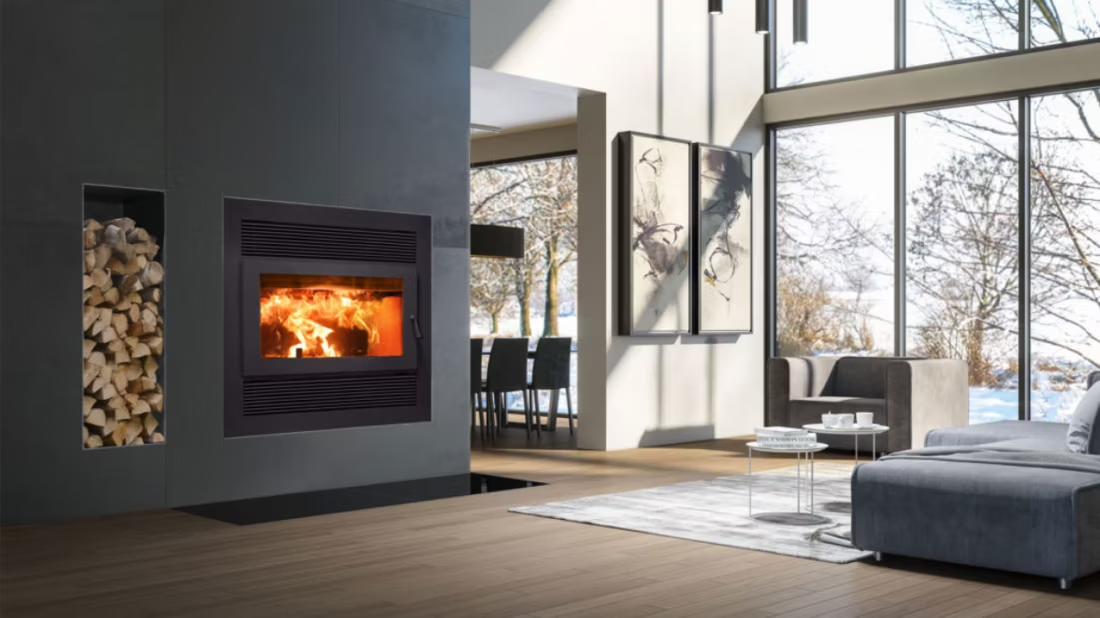
Four fuels. One honest answer for Pike County.
Three steps. No salesperson until you're ready.
Tell us about your project
Your zip code, your situation, and the fuel you're leaning toward—or let the answers point you to one.
See what's actually available
The brands dealers within 100 miles genuinely carry—real options, never a catalog mirage.
Get your dealer & Project Guide
A trusted local dealer, plus the free Project Guide & Parts List that names every component of the job.
Frequently Asked Questions
Which fuel works best in Pike County?
It depends on how the home is used. Wood is a natural fit for full-time residences here—oak, hickory, maple, and cherry are all locally abundant, burn hot and clean, and there's no local air quality restriction limiting wood-burning like there is in some Western counties. Gas is popular for convenience, but since piped natural gas mostly runs through the Milford–Matamoras corridor, most rural and lake-area homes rely on propane instead—tanks refilled seasonally work well for weekend and vacation properties. Pellet is a strong option for seasonal cabins near Lake Wallenpaupack or along the Delaware, since a hopper-fed stove can run unattended between visits; Energex, Hamer Pellet Fuel, and Greene Team Pellet Fuel are all stocked regionally. Electric is mostly supplemental—good for a rental unit, a bedroom, or a second living space—served by PPL Electric across most of the county's grid.
Do I need a permit to install a fireplace in Pike County?
Generally, yes. Pennsylvania's Uniform Construction Code (UCC) governs new wood stoves, inserts, gas appliances, and pellet stoves, and it's enforced at the local level—the boroughs of Milford and Matamoras issue permits directly, while Pike County's ten townships each handle UCC enforcement through their own building or zoning office. New wood-burning appliances need to meet current EPA 2020 NSPS emissions standards. Gas installations, whether tied to a propane tank or the limited piped-gas service near Milford, require a licensed gas contractor for the line work in addition to the building permit. Electric fireplaces usually don't need a permit unless the installation involves new wiring or a built-in unit. Most local hearth retailers handle the permit paperwork as part of the install, so it's rarely something the homeowner has to file solo.
Are there air quality restrictions on wood burning in Pike County?
No—Pike County has no non-attainment designation and no mandatory or voluntary wood-burning curtailment program, unlike some Western basin counties that deal with winter inversions. The Delaware Water Gap National Recreation Area, which borders the county, does have federal air monitoring, but that doesn't translate into local burn restrictions on residential appliances. New installations still need to meet EPA 2020 NSPS emissions standards, which is a baseline requirement nationwide, not a Pike County-specific rule. In practice, this means wood heat here is about as unrestricted as it gets in the Northeast.
Can one local hearth retailer handle all four fuel types?
Many hearth retailers serving Pike County carry at least three of the four fuel types, and because the county's population is spread across a large, mostly rural area, some of the dealers who service Pike County homes are actually based just across the county line in Monroe or Wayne County—that's normal here given the geography. If you're near Milford or Matamoras, you'll generally find dealers within a short drive; if you're farther out toward Shohola, Lackawaxen, or the lake communities, expect the retailer to travel to you for installation and service rather than the other way around. If you're cross-shopping fuels, ask a dealer directly which types they stock working displays of before you drive out.
How does service work in the more remote parts of Pike County?
Technicians serving Pike County typically travel out from Milford, Matamoras, or nearby Monroe County hubs to reach the more spread-out townships—Shohola, Lackawaxen, Greene, and the lake-area communities near Wallenpaupack. Expect a modest travel fee for calls further from the main corridor. Because a meaningful share of homes here are seasonal, scheduling matters: booking chimney sweeps, gas inspections, or pellet stove cleanings in late summer or early fall—ahead of the rush when owners open up cabins for the season—is far easier than trying to get someone out during a cold-weather emergency.
What's the typical cost range for fireplace installation across all fuel types in Pike County?
Wood stove or insert installation: typically $4,000–$8,500, more for new masonry chimney work in older Pike County farmhouses. Gas fireplace, insert, or stove: $4,500–$10,500, with propane tank setup or line work on the higher end and straightforward inserts on the lower end. Pellet stove or insert: $4,000–$7,000 for a typical install, which covers most seasonal-cabin installations. Electric fireplace: $200–$3,000 for the unit itself, plus $400–$1,200 in labor for anything beyond a plug-and-play placement, such as a built-in or wall-mount unit. Exact pricing depends on the dealer and the specifics of the home—see the county + fuel pages above for more detail.
Wood, gas, pellet, or electric—how do I choose?
Match the fuel to your life, not the other way around. Wood: lowest fuel cost and total power-outage independence, but you're hauling and stacking. Gas: press a button, set a thermostat, no maintenance to speak of. Pellet: wood economics with automatic feeding, in exchange for weekly cleaning and a need for electricity. Electric: plugs in anywhere with honest supplemental heat. Nobody regrets the fuel that fits how they actually live.
How much should I budget for a fireplace?
For an average home—covering the fireplace, the vent pipe, and basic installation—a budget between $3,900 and $5,500 gives you a lot of options across wood, gas, and pellet. By the time you add finish work, gas line, and electrical, the average complete installation lands between $5,000 and $12,000 all-in. In a remodel or new build, a good rule is to put about 2.5% of the total project cost toward the fireplace.
Can a fireplace actually lower my heating bill?
Yes—by creating a comfort zone. A furnace heats every square foot of the house just to warm the one room you're in; a gas fireplace on low burns roughly a sixth of the gas a typical furnace does. Set the furnace around 55–60 degrees as a baseline, then heat the rooms your family actually uses. Families who heat this way commonly save $20–$60 a month.
What is an in-home preview and do I need one?
It's a visit where a hearth professional measures your space, confirms the model you picked actually works in your home, and walks the specs—framing, gas line, venting, finish work—before anything is ordered. Some details you just can't know until you see the house. Never make a down payment without one; it's the single most-skipped step that burns buyers.
Stove and Fireplace Dealers in Pike County
Listings include WhyFire partner dealers, dealers we have verified as authorized for the brands we recommend, and established local businesses that carry hearth products. Every listing shows which one it is. The ones marked Preferred run on WhyFire's software, so they can show you real pricing and book your appointment right here. No manufacturer pays for placement. How we verify dealers →
Gardens To Grow, Llc
Jim Creegan - Certified Chimney Sweep
Highland Chimney Sweep
Firefox Energy Concepts
Paradise Pool & Spa Inc.
Valley Mason Supply
Get matched with a Pike County hearth dealer.
Pick your fuel below and we'll match you with a trusted local dealer serving Milford, Matamoras, Dingmans Ferry, and the rest of Pike County—plus a free Project Guide & Parts List for your specific home.
Find Your Fireplace →