
Real fireplace ambiance, no chimney required.
From the rowhomes of Shamokin and Mount Carmel to the farmhouses outside Milton, electric fireplaces bring flame-effect warmth to Northumberland County homes without venting, a gas line, or masonry work. Find the right unit and get matched with a trusted local dealer.
Every Project Starts From One of These Five Situations
The easiest fireplace to add to an old coal-region home.
Northumberland County's housing stock is shaped by its anthracite coal heritage—tight rowhomes in Shamokin and Mount Carmel, Victorian and Colonial homes along the Susquehanna in Sunbury, and farmhouses scattered through the townships toward Milton and Watsontown. A lot of that stock either never had a fireplace to begin with or has a chimney that's long past code for burning anything in it. In a Zone 5A climate with a long, demanding heating season and winter lows averaging 19°F, homeowners still want the warmth and glow of a fireplace in the main living room—they just can't always get a flue there.
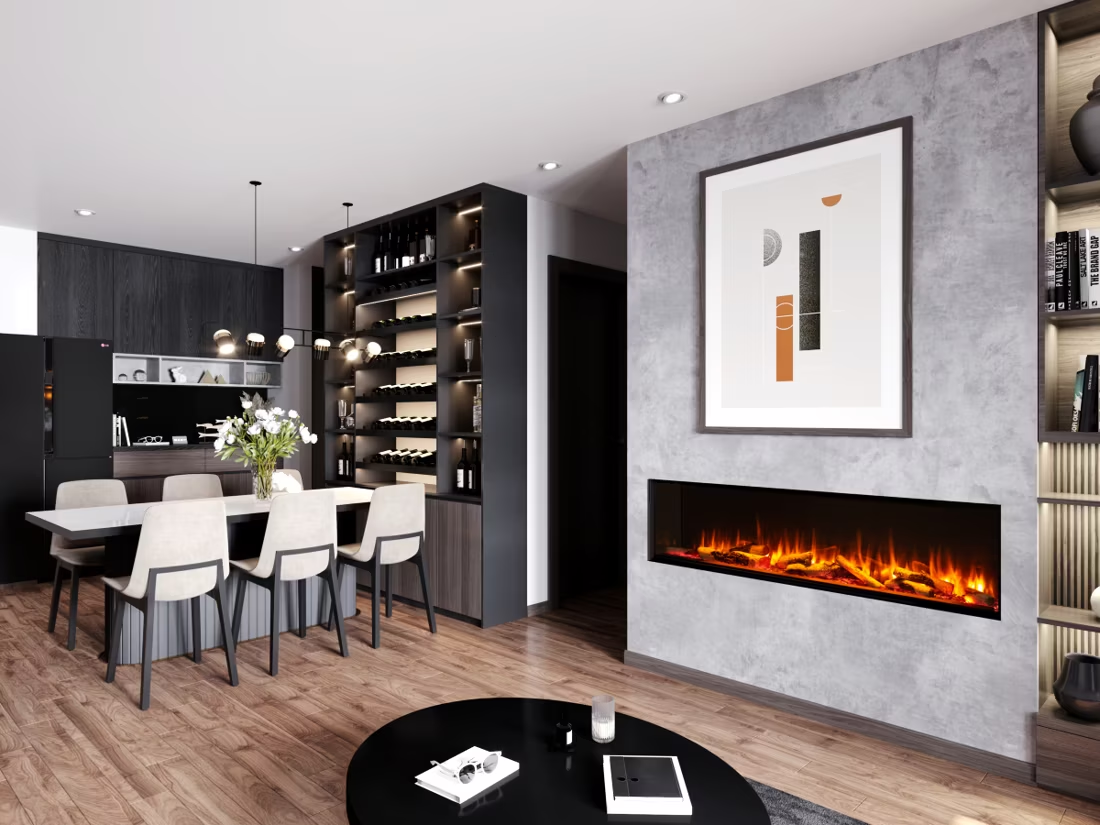
That's where electric fireplaces do their best work. A plug-in unit needs nothing more than a nearby outlet; a built-in or insert needs a dedicated circuit, not a chimney. No combustion means no gas line, no sweep, no venting through an old brick chimney that was never rated for it. It's also the option that makes sense in rental rowhomes across Coal Township and Shamokin, in finished basements, and in additions where running venting would mean tearing into walls. Just don't expect it to replace a furnace on the coldest nights of a Northumberland County winter—electric fireplaces here work best as zone heat and ambiance, not a home's primary heat source.
Three steps. No salesperson until you're ready.
Tell us about your project
Your zip code, your situation, and the fuel you're leaning toward—or let the answers point you to one.
See what's actually available
The brands dealers within 100 miles genuinely carry—real options, never a catalog mirage.
Get your dealer & Project Guide
A trusted local dealer, plus the free Project Guide & Parts List that names every component of the job.
Frequently Asked Questions
How much does an electric fireplace installation cost in Northumberland County?
A freestanding or mantel-style plug-in unit typically runs $300 to $1,500 installed, since it only needs a standard outlet—no permit, no electrician required in most cases. A built-in wall unit or an insert that replaces the guts of an old masonry fireplace usually runs $1,500 to $4,500 once you factor in a dedicated 20-amp circuit and any trim or surround work. Larger linear units built into a custom media wall or fireplace surround can reach $3,000 to $7,000 with finish carpentry included. Local dealers will quote a firm price after seeing your room and your existing electrical panel capacity.
Do electric fireplaces actually put out heat, or is it just the flame effect?
Most electric fireplaces do produce real heat—typically 5,000 to 9,000 BTU (roughly 1,500 watts on high)—enough to comfortably warm a single room in the 400 to 1,000 square foot range. In a climate with lows averaging 19°F and a long, demanding heating season, that's genuinely useful as supplemental or zone heat in a living room or bedroom, but it won't replace your furnace during a Northumberland County cold snap. Nearly every model also lets you run the flame effect with the heater off, which is popular for warmer months when you still want the look without added warmth.
Can I install an electric fireplace in a home that doesn't have a chimney?
Yes—that's the main reason electric fireplaces are popular across Northumberland County. A freestanding or wall-mounted unit needs only a nearby outlet or a dedicated circuit for higher-wattage built-ins; there's no chimney, no gas line, and no outside air intake required. That makes it a straightforward fit for the many rowhomes in Shamokin, Mount Carmel, and Coal Township that were never built with a fireplace, plus basement rec rooms and additions in the newer construction around Milton and Watsontown.
Do I need a permit for an electric fireplace in Northumberland County?
A plug-in electric fireplace generally doesn't require any permit—it's treated like any other appliance you plug into a wall outlet. A built-in unit that requires a new dedicated circuit may need an electrical permit, but Northumberland County doesn't run a single unified building department; permitting is handled at the municipal level, so you'd check with the borough office in Sunbury, Shamokin, or Mount Carmel, or your township office if you're in a rural area. Either way, there's no gas permit, no mechanical inspection, and no chimney sign-off—electric is the simplest fuel type from a paperwork standpoint.
Can I convert my old wood-burning fireplace to electric?
Yes, and it's a common project in Sunbury's older Victorian homes along Market and Arch Streets, as well as in coal-town rowhomes with chimneys that are no longer safe to burn in. An electric insert slides into the existing firebox opening and plugs into a nearby outlet or a newly run circuit—no liner, no venting, no chimney inspection needed. Insert units typically run $500 to $2,500 before installation, and the conversion preserves the look of the original fireplace surround while eliminating the maintenance and safety concerns of an aging masonry flue.
How much does it cost to run an electric fireplace in Northumberland County?
Electricity in the region runs close to the Pennsylvania statewide average of around 15 to 17 cents per kWh through PPL Electric Utilities. A typical 1,500-watt unit run for a few hours an evening as supplemental heat costs roughly $10 to $20 a month—considerably less than running a propane heater or supplementing an oil furnace, which matters in the rural parts of the county where propane and fuel oil are still the primary heat source rather than natural gas.
Electric vs. gas—which fireplace makes more sense for my home?
Natural gas service through UGI reaches parts of Sunbury and the more built-up boroughs, but a lot of Northumberland County's rural townships rely on propane or fuel oil instead, which means adding a gas fireplace can mean a new propane tank and gas line. Electric sidesteps all of that—no fuel delivery, no gas line, no venting—at the cost of lower heat output and a less intense flame. Gas is the better call if you want real BTU output and already have gas or propane service nearby; electric wins on flexibility, upfront cost, and simplicity, especially in homes outside the gas service footprint.
Electric vs. wood—which is right for my home?
Northumberland County has long relied on local oak, hickory, maple, and cherry cordwood for wood heat, and a wood stove or fireplace still delivers the highest heat output and works without power during an outage—a real consideration given the county's winter storm history. Electric can't do either of those things; if the power's out, so is your fireplace. What electric offers instead is push-button convenience, zero ash or creosote, safe operation in older wiring and rental rowhomes, and the ability to relocate the unit if you move rooms or move house. For most homeowners it comes down to whether you want authentic heat output and backup capability (wood) or convenience and easy installation (electric).
What features should I look for in an electric fireplace?
Look for a unit with an independent flame and heat setting, so you can run the visual effect without the heater in warmer months. Multi-color or adjustable-brightness LED flame technology from brands like Dimplex, Napoleon, and Touchstone tends to look more realistic than older single-color models. Make sure the unit is UL-listed, has a built-in thermostat rather than a simple on/off heater, and check the amperage draw against your circuit if you're planning a built-in installation. A local dealer can walk you through which models actually look good in person versus in a showroom photo—worth doing before you buy.
Can I put a TV above my fireplace?
Yes—with an asterisk. Fireplaces are hot and TVs don't like heat. Either put a mantel between them to deflect rising warmth, or choose a fireplace with heat-management technology that creates a cool zone on the wall above—the wall stays around 125 degrees, barely warm, while the room still gets full heat. If you like clean lines and don't want a mantel, heat management is the answer.
Does an electric fireplace need a vent or chimney?
No—that's its superpower. An electric fireplace needs a wall and an outlet, period. No vent pipe, no gas line, no clearances to design around, which is why it works in bedrooms, offices, apartments, and walls where venting a gas or wood unit would be impractical or impossible. Installation is typically the simplest and least expensive of any fireplace type.
Can a fireplace actually lower my heating bill?
Yes—by creating a comfort zone. A furnace heats every square foot of the house just to warm the one room you're in; a gas fireplace on low burns roughly a sixth of the gas a typical furnace does. Set the furnace around 55–60 degrees as a baseline, then heat the rooms your family actually uses. Families who heat this way commonly save $20–$60 a month.
Does a fireplace add value to my home?
On average, a fireplace adds back to the home about the same amount you spent installing it. Add the monthly savings from heating the rooms you actually use instead of the whole house—often hundreds of dollars a year—and the value case is strong before you even count what a fire does for how your family uses the room.
Stove and Fireplace Dealers in Northumberland County
Listings include WhyFire partner dealers, dealers we have verified as authorized for the brands we recommend, and established local businesses that carry hearth products. Every listing shows which one it is. The ones marked Preferred run on WhyFire's software, so they can show you real pricing and book your appointment right here. No manufacturer pays for placement. How we verify dealers →
Glick Inc.
Stolz Stove Sales
Fired Up Fireplaces
Passonetti's Mechanical
Sensenig Gas Appliance
Find your electric fireplace in Northumberland County.
Tell us a bit about your home and we'll match you with the right electric fireplace or insert—and hand you a free Project Guide & Parts List with your recommended local dealer.
Find Your Fireplace →