
Real warmth, zero venting, for Northumberland homes.
An easy way to add heat to a Susquehanna riverfront home without a chimney, a gas line, or a masonry rebuild. Find the right unit and connect with a trusted local dealer.
Every Project Starts From One of These Five Situations
Heat that works in a 250-year-old house.
Northumberland sits at the confluence of the North and West Branch Susquehanna River, and a lot of its housing stock is nearly as old as the borough itself, chartered back in 1772. Brick Federal-era rowhomes and farmhouses line the streets near the water, many with original masonry fireboxes that were never built for a modern gas line or a new stainless liner. At 640 feet elevation with winter lows averaging 19°F and a long, cold winter heating season on par with Madison, Wisconsin—these older homes need real supplemental heat, but retrofitting a 200-year-old chimney for wood or gas can mean expensive masonry work most owners would rather avoid.
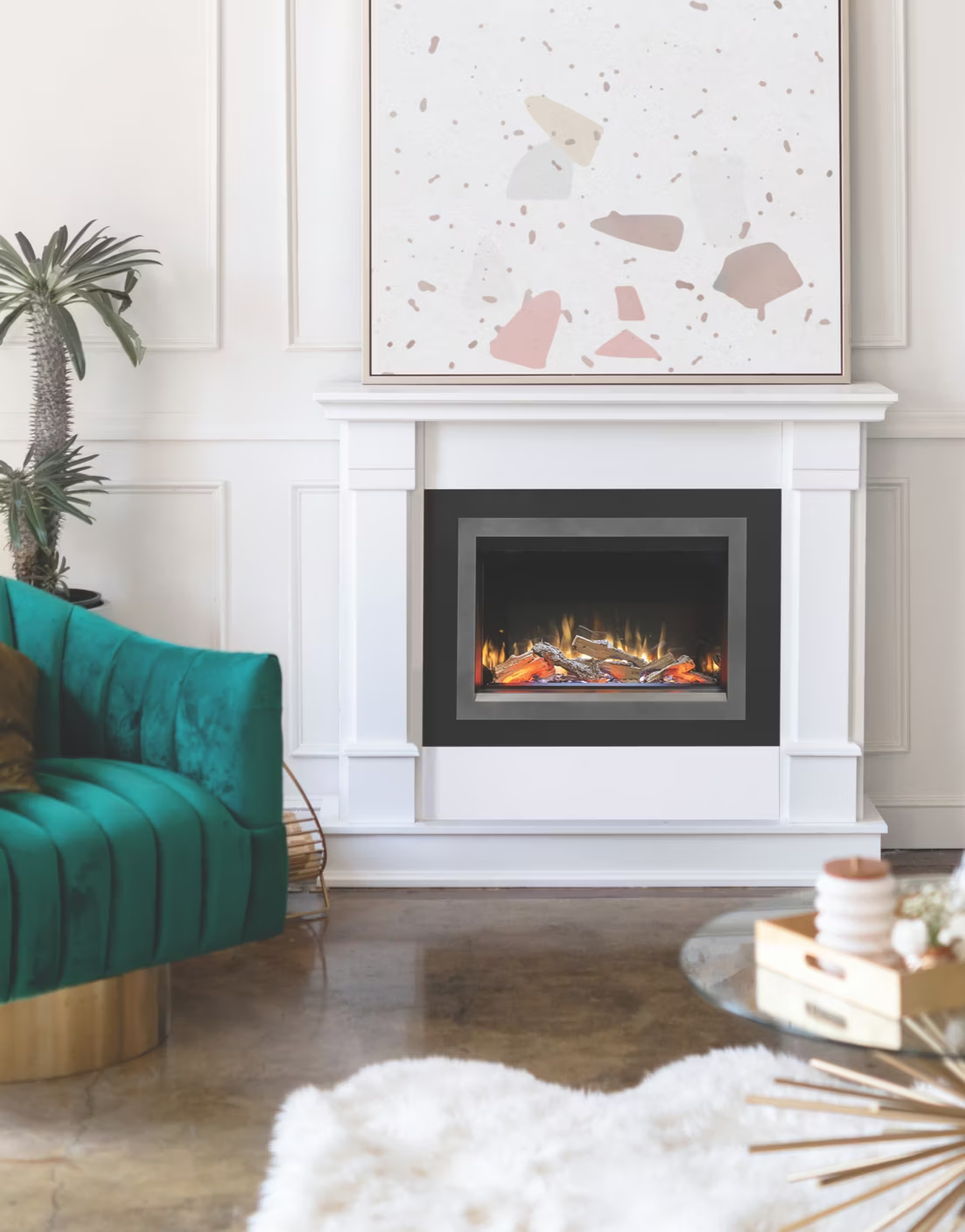
That's where electric makes sense. An electric insert slides into an existing firebox opening with no venting, no combustion byproducts, and no chimney inspection required. PPL Electric Utilities serves Northumberland at a residential rate of about $0.1234 per kWh—reasonable enough that running a 1,500-watt unit for a few hours on a cold evening costs well under a dollar. For a borough with more historic charm than modern HVAC ductwork, electric heat lets you warm the room you actually live in without touching the chimney at all.
Three steps. No salesperson until you're ready.
Tell us about your project
Your zip code, your situation, and the fuel you're leaning toward—or let the answers point you to one.
See what's actually available
The brands dealers within 100 miles genuinely carry—real options, never a catalog mirage.
Get your dealer & Project Guide
A trusted local dealer, plus the free Project Guide & Parts List that names every component of the job.
Frequently Asked Questions
How much does an electric fireplace installation cost in Northumberland?
Most electric fireplace projects in Northumberland run $400 to $2,500. A basic plug-in insert or log set that slides into an existing masonry firebox opening sits at the lower end—often just the cost of the unit and a few minutes of an electrician's time to confirm the outlet. Larger built-in units, wall-mounted linear fireplaces, or anything requiring a new dedicated 240-volt circuit and custom surround or mantel work land at the higher end. Because so many homes here have original Federal-era fireboxes, a lot of the labor cost is trim carpentry to make the insert fit the existing opening cleanly, not mechanical work.
Will an electric fireplace actually heat a room in a Northumberland winter?
Most standard electric fireplaces put out around 4,600 to 5,000 BTU from a 1,500-watt heater—enough to comfortably warm a single room of roughly 400 to 1,000 square feet, depending on insulation and ceiling height. With Northumberland's winter lows averaging 19°F and a long, demanding winter heating season, an electric unit works best as zone heat for a living room, sunroom, or bedroom rather than a whole-home solution. Homeowners here typically use one to take the edge off a chilly room while running central heat lower elsewhere in the house.
Do I need a permit for an electric fireplace in Northumberland Borough?
A simple plug-in electric fireplace or insert that runs on a standard 15-amp household outlet generally doesn't require a permit. If you're adding a dedicated 240-volt circuit for a larger built-in unit, that electrical work needs to be pulled through Northumberland Borough and inspected—most licensed electricians handle this as part of the installation. Because many homes in the borough's historic district have older wiring, it's worth having an electrician confirm your panel has capacity before committing to a larger unit.
Can I install an electric insert into my home's original fireplace?
Yes, and it's one of the most common projects for older Northumberland homes. Many of the borough's brick Federal and Colonial-era houses have masonry fireboxes that were never lined for modern gas or wood-burning appliances, and relining them can run into thousands of dollars. An electric insert sidesteps that entirely—it sits in the existing opening, plugs into an outlet (or a new dedicated circuit for larger units), and requires no chimney work, no liner, and no annual sweep. You keep the original mantel and surround while gaining real, usable heat.
What's the difference between an electric insert, an electric stove, and a wall-mount unit?
An electric insert is built to slide into an existing fireplace opening, which makes it the natural fit for Northumberland's older homes with original fireboxes. An electric stove is a freestanding cabinet-style unit that mimics a wood stove and can go almost anywhere with an outlet nearby—a good option for a home without an existing fireplace. A wall-mount or linear unit hangs flush on a wall like a piece of art, popular in additions, sunrooms, or newer construction where there's no masonry opening to work with. All three plug into standard household power in most sizes, though larger models may call for a dedicated circuit.
How much will an electric fireplace add to my PPL Electric bill?
At PPL Electric Utilities' residential rate of about $0.1234 per kWh, a typical 1,500-watt electric fireplace costs roughly 19 cents an hour to run on high heat. Used for four to five hours a night during the coldest months, that works out to about $18 to $23 a month—noticeably less than heating an entire room with baseboard or running central heat higher to compensate for a chilly corner of the house. Most units also let you run the flame effect without heat, which draws only a fraction of that power.
Electric vs. wood vs. gas vs. pellet—which makes sense for my home?
Northumberland County has plenty of oak, hickory, maple, and cherry available for a wood stove, and pellet brands like Energex, Hamer, and Greene Team are sold regionally, but both require chimney or vent work and ongoing fuel handling. Gas is an option, but without widespread natural gas service through the borough, most gas installations here run on propane, which means a tank and delivery contract. Electric skips all of that—no fuel storage, no venting, no annual sweep—at the tradeoff of higher per-hour operating cost and no heat during a power outage. For a historic home where preserving the original firebox and keeping installation simple matters most, electric is often the easiest path.
What's the best electric fireplace for a Northumberland home?
For zone heating in an older Northumberland house, look at insert models from brands like Dimplex, Napoleon, or Touchstone—all offer realistic flame technology and a heater rated around 1,500 watts, which is the practical ceiling for a standard household circuit. If you're fitting one into an original masonry opening, measure the firebox carefully first; many older Federal-era fireboxes are narrower and shallower than modern insert cutouts, so a local dealer can confirm fit before you buy rather than after.
Will my electric fireplace still work if the power goes out?
No—and this is worth being upfront about. Electric fireplaces run entirely on household current, so a PPL outage means no heat and no flame effect, unlike a wood stove that keeps working with no power at all. Ice storms and downed lines aren't rare along the Susquehanna in winter, so if backup heat during an outage is a real concern for your household, it's worth pairing an electric unit with a wood stove or generator rather than relying on electric as your only heat source.
Can I put a TV above my fireplace?
Yes—with an asterisk. Fireplaces are hot and TVs don't like heat. Either put a mantel between them to deflect rising warmth, or choose a fireplace with heat-management technology that creates a cool zone on the wall above—the wall stays around 125 degrees, barely warm, while the room still gets full heat. If you like clean lines and don't want a mantel, heat management is the answer.
What fireplace styles should I know before shopping?
Four cover most of the market: screen-front traditional (mesh front, open feel, fits craftsman homes), traditional door set (the classic look you grew up with), modern linear (wide, low, the statement piece for entertaining), and clean face contemporary (no trim—your tile or stone runs right to the fire's edge). Walk in knowing those four terms and you're ahead of most buyers.
Can a fireplace actually lower my heating bill?
Yes—by creating a comfort zone. A furnace heats every square foot of the house just to warm the one room you're in; a gas fireplace on low burns roughly a sixth of the gas a typical furnace does. Set the furnace around 55–60 degrees as a baseline, then heat the rooms your family actually uses. Families who heat this way commonly save $20–$60 a month.
Can I install a fireplace myself?
If you're putting a fire in your house on purpose, it's best to work with an expert. Unless you're genuinely experienced in framing, gas line, vent pipe, and the national code on clearances to combustibles, have a professional do it—and ideally the same company that sells you the fireplace, so warranty, service, and liability all live under one roof.
Nearby Dealers
Hearth shops serving Northumberland and the surrounding area. Every listing shows whether it is a WhyFire partner, a dealer we have verified as authorized for the brands we recommend, or a local business carrying hearth products. No manufacturer pays for placement. How we verify dealers →
Glick Inc.
Fired Up Fireplaces
Passonetti's Mechanical
Sensenig Gas Appliance
Stolz Stove Sales
Electric Service in Northumberland
An electric fireplace's heater draws about 1,500 watts—pennies per hour at local rates.
Ppl Electric Utilities Corp
Find your electric fireplace in Northumberland.
Tell us about your home and your existing firebox or wall space, and we'll match you with the right electric insert or unit—plus a free Project Guide & Parts List and a trusted local dealer to install it.
Find Your Fireplace →