
Real Warmth, No Chimney Required in Shamokin.
Zone heat that plugs into the row homes and coal-era housing stock of Shamokin without new venting or masonry work. Find the right unit and connect with a trusted local dealer.
Every Project Starts From One of These Five Situations
Simple heat for a coal-town housing stock built long before central air.
Shamokin sits at about 800 feet in the Susquehanna Valley's anthracite coal region, where winters average a low around 19°F and the area logs nearly 5,922 heating degree days a season—not as brutal as Buffalo, NY, but firmly in the same cold-climate family. Much of the housing stock here was built in the early 1900s during the coal boom: narrow brick rowhomes, plaster walls, and additions carved out of attics and porches that were never designed for a modern flue or a masonry chimney.
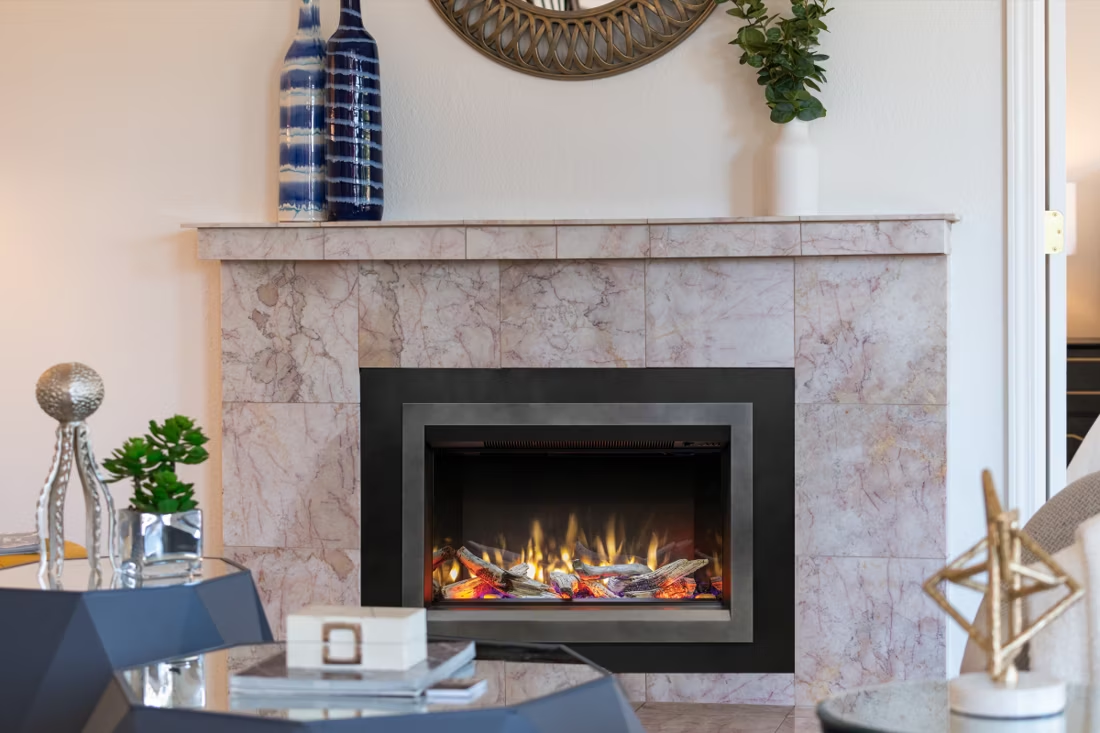
That's exactly where electric fireplaces fit. PPL Electric Utilities serves Shamokin at a residential rate around $0.1234 per kWh, and a plug-in electric unit or a wall-mounted insert needs nothing more than an outlet—no gas line, no chimney liner, no cutting a hole in a 100-year-old roof. For a converted attic apartment, a finished basement, or a living room where a boiler already handles the whole-house load, electric heat adds real supplemental warmth to one room without touching the rest of the house.
Three steps. No salesperson until you're ready.
Tell us about your project
Your zip code, your situation, and the fuel you're leaning toward—or let the answers point you to one.
See what's actually available
The brands dealers within 100 miles genuinely carry—real options, never a catalog mirage.
Get your dealer & Project Guide
A trusted local dealer, plus the free Project Guide & Parts List that names every component of the job.
Frequently Asked Questions
How much does an electric fireplace installation cost in Shamokin?
Costs vary a lot by type. A plug-in electric insert or freestanding stove that runs on a standard 120V outlet can run as little as $300 to $800 installed, since there's no dedicated wiring involved. A built-in wall unit or a linear electric fireplace set into a mantel surround, which usually needs a dedicated 20-amp or 240V circuit run by a licensed electrician, typically lands between $1,200 and $2,500 once framing and finish work are included. Most of Shamokin's older rowhomes fall into the lower-cost category since the units are sized to supplement, not replace, existing heat.
Do electric fireplaces actually produce real heat, or are they just for looks?
Most modern electric fireplaces use a 1,500-watt resistance or infrared heating element rated around 5,000 BTU, enough to comfortably warm a single room in the 300-to-400-square-foot range—which covers most living rooms and bedrooms in Shamokin's rowhome floor plans. They won't heat a whole house on their own, but as a zone heater for a room where you spend most of your time, they put out genuine, noticeable warmth, not just a flickering visual.
Can an electric fireplace be my primary heat source in Shamokin winters?
Not realistically on its own. With nearly 5,922 heating degree days and average winter lows around 19°F, running electric resistance heat continuously through a Shamokin winter would get expensive fast at $0.1234 per kWh across an entire house. Where electric fireplaces shine here is as zone heat—supplementing an oil or gas furnace so you can turn the thermostat down a few degrees while keeping the room you're actually using warm.
What's the difference between an electric insert, a wall-mount unit, and a freestanding electric stove?
An electric insert is built to slide into an existing masonry fireplace opening, which is common in Shamokin's older homes that still have an original brick firebox that no longer sees wood fires. A wall-mount linear unit hangs flush on the wall like a flat-screen TV and suits newer remodels or additions without a hearth. A freestanding electric stove sits on the floor and mimics the look of a wood stove—a good option for rowhome living rooms that never had a fireplace to begin with. All three plug in or wire the same way; the choice mostly comes down to what your room already has.
Do I need a permit to install an electric fireplace in Shamokin?
A plug-in unit that runs off an existing outlet generally doesn't require a permit. If you're installing a built-in unit that needs a new dedicated circuit, that electrical work typically requires a permit through Northumberland County or the local codes enforcement office, and it should be pulled by a licensed electrician—especially in older Shamokin homes where the electrical panel may not have been upgraded since the mid-20th century.
How much does it cost to run an electric fireplace on PPL Electric rates?
At Shamokin's residential rate of about $0.1234 per kWh, a typical 1,500-watt electric fireplace costs roughly $0.19 an hour to run on high. Used for about five hours an evening through the coldest months, that's under a dollar a day, or somewhere around $25 to $30 a month—a modest add-on compared to heating an entire house with electric resistance heat.
Would wood or pellet heat make more sense than electric for my Shamokin home?
It depends on the room and the house. Northumberland County's hills produce plenty of oak, hickory, maple, and cherry for wood burners, and regional pellet brands like Energex, Hamer Pellet Fuel, and Greene Team Pellet Fuel are all manufactured within the state. Wood and pellet appliances put out more heat and keep working during a power outage, which electric units can't do. But they also require a chimney or a hopper and venting, which many of Shamokin's converted attic and basement spaces simply don't have. If the room lacks a flue and you just need supplemental warmth, electric is usually the simpler answer.
Are electric fireplaces safe to install in older Shamokin homes with older wiring?
Plug-in units on a healthy, code-compliant outlet are generally fine even in a century-old rowhome. The concern comes with built-in units that need a dedicated circuit—some of Shamokin's coal-era housing stock still runs on original or undersized electrical service that hasn't been upgraded. A licensed electrician should check panel capacity before adding a new circuit, and in some cases a panel upgrade is worth budgeting for alongside the fireplace itself.
Is an electric fireplace a good option if I'm renting in Shamokin?
Yes—this is one of the more common reasons homeowners and landlords choose electric here. A plug-in insert or freestanding electric stove requires no permanent alteration to the property, no chimney work, and no gas line, which makes it well suited to Shamokin's rental rowhomes and apartments carved out of older buildings. It can be unplugged and taken along at move-out, which isn't an option with a wood insert or a gas line installation.
Does an electric fireplace need a vent or chimney?
No—that's its superpower. An electric fireplace needs a wall and an outlet, period. No vent pipe, no gas line, no clearances to design around, which is why it works in bedrooms, offices, apartments, and walls where venting a gas or wood unit would be impractical or impossible. Installation is typically the simplest and least expensive of any fireplace type.
Do electric fireplaces actually produce heat?
Yes—most put out around 4,800–5,000 BTUs from a standard outlet, which comfortably warms a bedroom, office, or den as a comfort-zone heater. What they won't do is carry a whole house the way wood, gas, or pellet can. Think of electric as ambiance-first with honest supplemental heat: flames on with no heat in July, flames plus warmth in January.
What is an in-home preview and do I need one?
It's a visit where a hearth professional measures your space, confirms the model you picked actually works in your home, and walks the specs—framing, gas line, venting, finish work—before anything is ordered. Some details you just can't know until you see the house. Never make a down payment without one; it's the single most-skipped step that burns buyers.
Can a fireplace actually lower my heating bill?
Yes—by creating a comfort zone. A furnace heats every square foot of the house just to warm the one room you're in; a gas fireplace on low burns roughly a sixth of the gas a typical furnace does. Set the furnace around 55–60 degrees as a baseline, then heat the rooms your family actually uses. Families who heat this way commonly save $20–$60 a month.
Nearby Dealers
Hearth shops serving Shamokin and the surrounding area. Every listing shows whether it is a WhyFire partner, a dealer we have verified as authorized for the brands we recommend, or a local business carrying hearth products. No manufacturer pays for placement. How we verify dealers →
Glick Inc.
Stolz Stove Sales
Sensenig Gas Appliance
Dewald & Lengle Hardware Inc.
Cressona Agway Store
Fired Up Fireplaces
Passonetti's Mechanical
Electric Service in Shamokin
An electric fireplace's heater draws about 1,500 watts—pennies per hour at local rates.
Ppl Electric Utilities Corp
Find your electric fireplace in Shamokin.
Tell us a bit about your home and we'll put together a free Project Guide & Parts List for your Shamokin electric fireplace project, plus a match with a trusted local dealer who can install it right.
Find Your Fireplace →