
Real Warmth, No Chimney, No Gas Line, No Wait.
An easy way to add zone heat and real ambiance to a Slate Belt home—no masonry, no venting, no gas line required. Find the right unit and a trusted local dealer.
Every Project Starts From One of These Five Situations
The simplest way to add heat to an older borough home.
Pen Argyl sits at just under 800 feet in Northampton County's Slate Belt, a small former quarry borough of about 3,500 people. Winters here are genuinely cold—average lows around 18°F and a heating season about as demanding as a Buffalo, NY winter. A lot of Pen Argyl's housing stock is older twins and rowhomes built along streets laid out for the slate industry, many without an existing masonry chimney and without a gas line already run to the room where a homeowner wants heat.
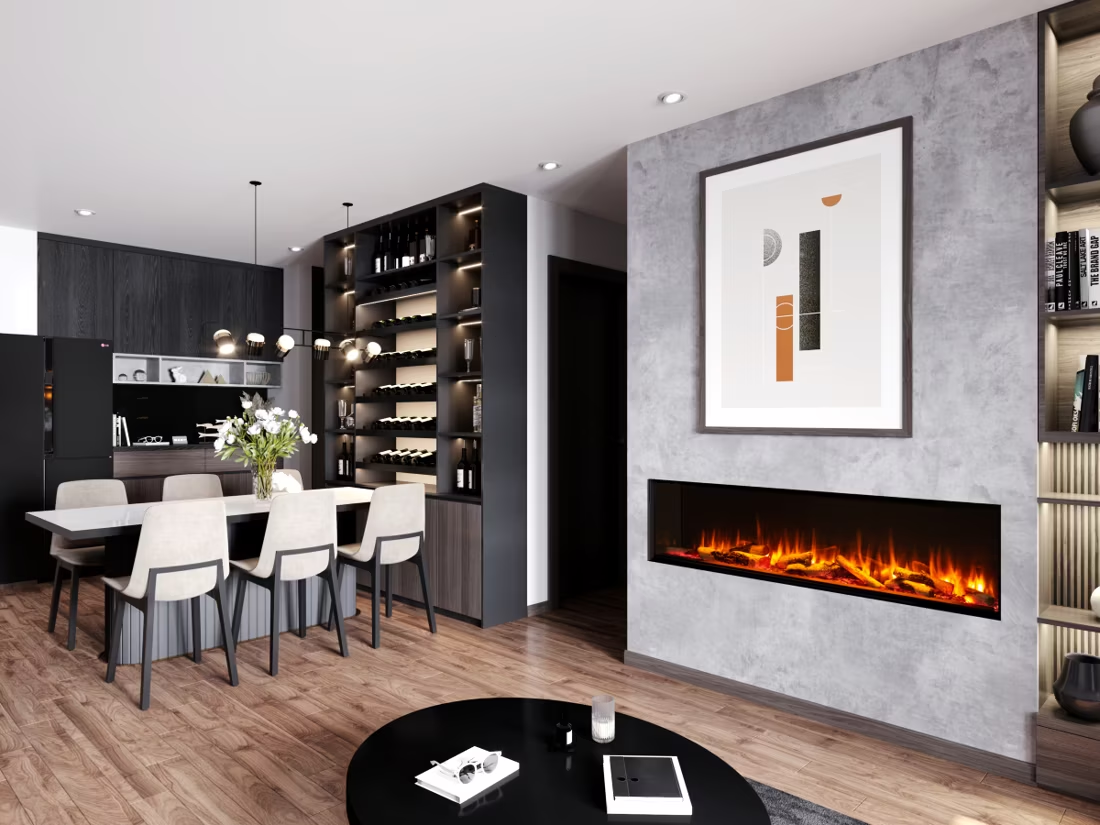
That's where electric fireplaces do their best work. There's no venting to size, no chimney to inspect, and in most cases no gas permit to pull—a recessed wall unit or mantel-style electric fireplace plugs into a standard outlet or, for larger built-ins, gets hardwired by an electrician in an afternoon. Metropolitan Edison serves the borough's electric accounts at roughly $0.1545 per kWh, which makes an electric fireplace an efficient choice for zone heating a single room, though it's worth being upfront: given how cold and long Pen Argyl's winters run, an electric fireplace supplements a furnace or heat pump—it isn't a realistic whole-home replacement for one.
Three steps. No salesperson until you're ready.
Tell us about your project
Your zip code, your situation, and the fuel you're leaning toward—or let the answers point you to one.
See what's actually available
The brands dealers within 100 miles genuinely carry—real options, never a catalog mirage.
Get your dealer & Project Guide
A trusted local dealer, plus the free Project Guide & Parts List that names every component of the job.
Frequently Asked Questions
How much does an electric fireplace installation cost in Pen Argyl?
Most electric fireplace installations in Pen Argyl fall between $300 and $2,500 depending on the unit. A plug-in mantel-style or freestanding electric fireplace on the low end requires no electrician at all—just a standard 120-volt outlet. A recessed wall unit or a linear built-in flush-mounted into a wall, which is common in the borough's older twins and rowhomes during a remodel, runs higher once framing, a dedicated circuit, and finish carpentry are factored in. A local dealer will give you a firm number after seeing the room and the wall construction.
Is an electric fireplace enough to heat a room in a cold Pen Argyl winter?
For a single room, yes—most electric fireplaces put out around 5,000 BTU (roughly 1,500 watts) of supplemental heat, enough to noticeably warm a bedroom, den, or living room on a cold night. But with Pen Argyl averaging 18°F lows and winters comparable to Buffalo, NY, an electric fireplace is best thought of as zone heat that takes the load off your furnace in the room you use most—not a replacement for whole-home heating. Homeowners here typically pair one with existing forced-air or baseboard heat rather than relying on it alone.
Do I need a permit to install an electric fireplace in Pen Argyl?
In most cases, no. Because electric fireplaces don't involve combustion, gas lines, or venting, they typically fall outside the building permit requirements that apply to wood or gas installations. The exception is a larger built-in unit that requires a new dedicated circuit—that electrical work should be done by a licensed electrician, and depending on scope, Northampton County or Pen Argyl Borough may want it inspected. A local dealer can tell you whether your specific unit needs an electrician before you buy.
What will it cost to run an electric fireplace with Met-Ed rates?
Metropolitan Edison's residential rate in the Pen Argyl area runs around $0.1545 per kWh. A typical 1,500-watt electric fireplace running on full heat costs roughly 23 cents an hour to operate—call it $2 to $3 for an evening of use, or a few dollars a day if run for extended heating in a single room. That's a fraction of what it costs to run central heat for the whole house, which is exactly why electric fireplaces work well as targeted, supplemental heat in the room you spend the most time in.
Will my electric fireplace still work if the power goes out?
No—and this is worth knowing upfront. Because electric fireplaces run entirely on household current, they shut off along with everything else during an outage. If you're looking for backup heat that keeps working when the Slate Belt loses power in a winter storm, a wood stove or a gas unit with battery-backup ignition is a better fit. Electric fireplaces are best suited to everyday ambiance and zone heating rather than emergency heat.
What's the difference between a mantel-style, wall-mount, and built-in electric fireplace?
A mantel-style electric fireplace is freestanding furniture—it plugs in and can be moved, no installation required. A wall-mount unit hangs on the wall like a large TV and plugs into a nearby outlet, giving a sleeker look without any construction. A built-in or recessed unit is framed into the wall itself, flush with the surface, and usually needs a dedicated electrical circuit run by an electrician. For Pen Argyl's older twins and rowhomes, mantel and wall-mount units are the easiest retrofit since they avoid opening up plaster or lath walls; built-ins are more common during a full remodel.
Electric vs. gas fireplace—which makes more sense for my Pen Argyl home?
Gas is the stronger choice if you want real heat output that can carry a room through a cold snap, and it can be configured to keep working during a power outage with battery-backup ignition—a real consideration given how cold Pen Argyl winters get. But gas requires a gas line (or a propane tank if you're not on natural gas service) and venting work, which adds cost and complexity, especially in an older home without existing gas infrastructure. Electric skips all of that: no venting, no gas line, often no permit. If your home already has gas service and you want serious heat, gas usually wins. If you want a fast, low-cost upgrade to a room without any gas infrastructure, electric is the practical answer.
Are electric fireplaces a good fit for a Pen Argyl rental or older twin home?
Yes—this is one of the more common uses locally. Many of Pen Argyl's twins and rowhomes were built without central air conditioning and, in some units, without a chimney at all, so adding wood or gas heat means real construction. A plug-in or wall-mount electric fireplace sidesteps that entirely, which makes it a popular option for landlords upgrading a rental unit or homeowners in a house that was never built with a hearth. It's also easy to remove or relocate if a tenant or homeowner's needs change.
What electric fireplace features actually matter, versus marketing extras?
The two features that matter most are heat output (measured in watts or BTU, aim for at least 4,600 BTU/1,500W if you want the unit to actually warm a room) and whether the heater can be run independently of the flame effect—useful in Pen Argyl for running the visual flame without heat on milder shoulder-season days. Beyond that, realistic flame technology and remote or app control are nice-to-haves rather than necessities. A local dealer can walk you through which models hold up best for daily use versus which are closer to decorative accent pieces.
Can I put a TV above my fireplace?
Yes—with an asterisk. Fireplaces are hot and TVs don't like heat. Either put a mantel between them to deflect rising warmth, or choose a fireplace with heat-management technology that creates a cool zone on the wall above—the wall stays around 125 degrees, barely warm, while the room still gets full heat. If you like clean lines and don't want a mantel, heat management is the answer.
Do electric fireplaces actually produce heat?
Yes—most put out around 4,800–5,000 BTUs from a standard outlet, which comfortably warms a bedroom, office, or den as a comfort-zone heater. What they won't do is carry a whole house the way wood, gas, or pellet can. Think of electric as ambiance-first with honest supplemental heat: flames on with no heat in July, flames plus warmth in January.
Can I install a fireplace myself?
If you're putting a fire in your house on purpose, it's best to work with an expert. Unless you're genuinely experienced in framing, gas line, vent pipe, and the national code on clearances to combustibles, have a professional do it—and ideally the same company that sells you the fireplace, so warranty, service, and liability all live under one roof.
Can a fireplace actually lower my heating bill?
Yes—by creating a comfort zone. A furnace heats every square foot of the house just to warm the one room you're in; a gas fireplace on low burns roughly a sixth of the gas a typical furnace does. Set the furnace around 55–60 degrees as a baseline, then heat the rooms your family actually uses. Families who heat this way commonly save $20–$60 a month.
Nearby Dealers
Hearth shops serving Pen Argyl and the surrounding area. Every listing shows whether it is a WhyFire partner, a dealer we have verified as authorized for the brands we recommend, or a local business carrying hearth products. No manufacturer pays for placement. How we verify dealers →
Hinton & Sons Inc.
East Lawn Supply Co., Inc.
Glen-Gery Brick
Kozy By The Fire
Forest Inn Masonry Supply
Keller Enterprises
Abe Fence / Landscape Supply
S.o.s Wood Stoves, Inc
Penn Hearth Llc.
Krings Hearth & Home - Schnecksville
S & T Coombe
Liberty Oil & Propane
Electric Service in Pen Argyl
An electric fireplace's heater draws about 1,500 watts—pennies per hour at local rates.
Metropolitan Edison Co
Find your electric fireplace in Pen Argyl.
Tell us a bit about your home and we'll match you with the right electric fireplace or insert, plus a free Project Guide & Parts List with your recommended local dealer.
Find Your Fireplace →