
Consistent heat for Mifflin County's long Appalachian winters.
With a heating season running from late October into April and winter lows averaging 21°F, Mifflin County homes need heat that holds steady for months, not just a cozy accent. Find the right pellet stove or insert and get matched with a trusted local dealer who can size, permit, and install it correctly.
Every Project Starts From One of These Five Situations
Load the hopper, set it, and let it run.
Mifflin County sits in the Ridge-and-Valley section of the central Pennsylvania Appalachians, with Lewistown anchoring the county seat and the Kishacoquillas Valley—known locally as Big Valley—running through one of the largest Amish and Mennonite settlements in the state. Winters here are long and consistently cold rather than extreme, closer in feel to Burlington, VT than to the Great Lakes snowbelt, but the winter climate still adds up to a real, sustained heating season from late October into April.
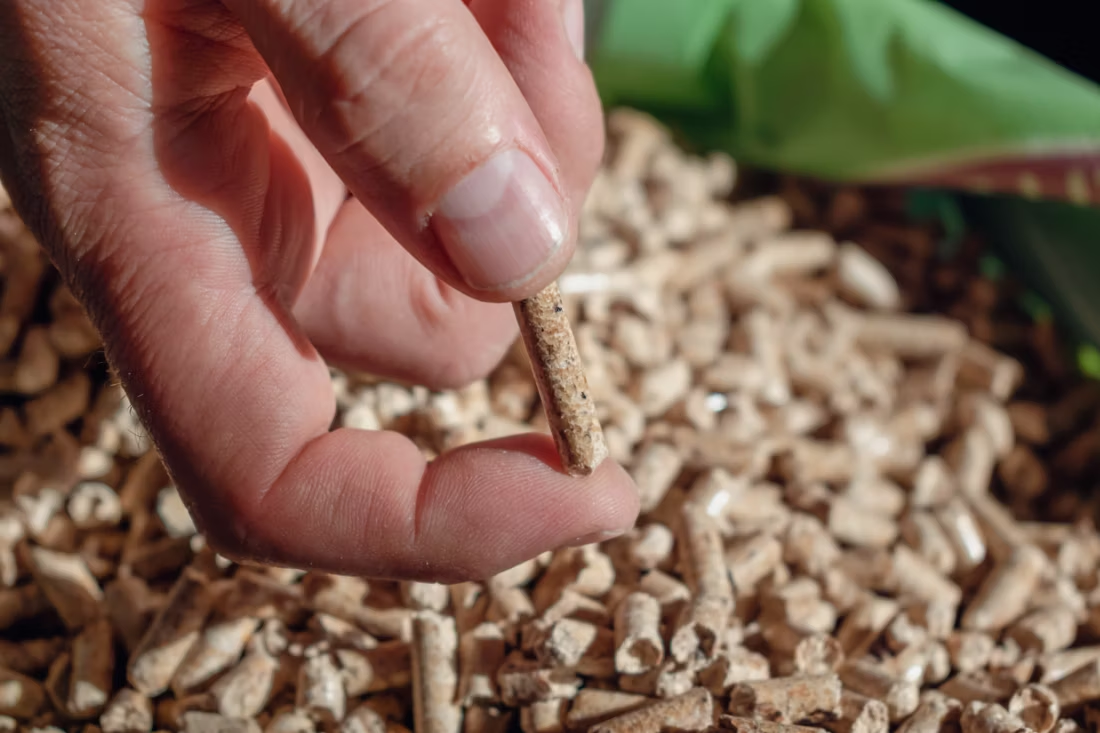
The county's hardwood forests run heavy to oak, hickory, maple, and cherry—the same dense species that make good pellet feedstock, and regional producers like Energex, Hamer Pellet Fuel, and Greene Team Pellet Fuel supply the central Pennsylvania market with bagged fuel that's easy to find without long drives or bulk hauling. Mifflin County has no air quality non-attainment designations and no winter burn restrictions, so a pellet stove here isn't competing with curtailment rules the way it might in a smoky western valley—it's simply a clean, automated way to heat a home through a season that runs long enough to matter.
Three steps. No salesperson until you're ready.
Tell us about your project
Your zip code, your situation, and the fuel you're leaning toward—or let the answers point you to one.
See what's actually available
The brands dealers within 100 miles genuinely carry—real options, never a catalog mirage.
Get your dealer & Project Guide
A trusted local dealer, plus the free Project Guide & Parts List that names every component of the job.
Frequently Asked Questions
How much does a pellet stove installation cost in Mifflin County?
Pellet stove and insert installations typically run in the $3,000 to $6,500 range in central Pennsylvania, depending on the unit, whether it's a freestanding stove or an insert going into an existing masonry fireplace, and how much venting work is required. A pellet insert into an existing fireplace with a straightforward liner run tends to land on the lower end. New construction or homes without an existing chimney—common in parts of Lewistown and Burnham's older housing stock as well as newer builds outside town—run higher once wall penetration and venting are factored in. A local dealer can give you a firm number after seeing your chimney or wall configuration in person.
How much pellet fuel does a Mifflin County home actually use in a winter?
For a home using a pellet stove as primary heat through Mifflin County's long, steady heating season, expect to burn somewhere between 2 and 4 tons of pellets, depending on square footage, insulation, and how much the stove is asked to carry the load versus supplementing a furnace. Homes using pellet heat as a secondary source in one or two rooms burn considerably less. Regional brands like Energex, Hamer Pellet Fuel, and Greene Team Pellet Fuel are sold through hearth dealers and farm supply stores across the county, so restocking mid-winter isn't usually a problem—though buying early in the fall, before the coldest stretch hits, is worth doing.
Will a pellet stove work for homes without reliable electricity, including in Big Valley?
This is worth addressing directly given Mifflin County's significant Amish and Mennonite population in the Kishacoquillas Valley: pellet stoves depend on electricity to run the auger that feeds fuel and the fan that distributes heat, so they aren't a fit for homes without electrical service. For off-grid households in Big Valley, a wood stove—which needs no electricity to operate—is generally the more appropriate choice, and a local dealer can walk through that comparison honestly rather than pushing pellet where it doesn't fit the home.
Pellet stove or wood stove—which makes more sense for my home?
Wood stoves burn cordwood cut from the county's abundant oak, hickory, maple, and cherry, need no electricity, and provide backup heat during a power outage—a real consideration given how many rural Mifflin County properties lose power during winter storms. Pellet stoves trade that self-sufficiency for convenience: load the hopper, set a thermostat, and the stove modulates itself with far less ash and no splitting or stacking. For homes in Lewistown or Burnham with reliable grid power and a preference for hands-off operation, pellet is usually the better fit. For rural or off-grid properties, especially in the valley, wood remains the more dependable choice.
Do I need a permit to install a pellet stove in Mifflin County?
Most pellet stove installations require a building permit under Pennsylvania's Uniform Construction Code (UCC), administered locally through your borough or township rather than a single countywide office—Lewistown, Burnham, and the surrounding townships each handle permitting separately. Because pellet stoves vent horizontally through a wall in most installations rather than requiring a full masonry chimney, the permitting and inspection process is generally more straightforward than a wood stove install. Most local hearth dealers pull the permit as part of the installation, so homeowners typically don't have to navigate it themselves.
How often does a pellet stove need to be cleaned and serviced?
Pellet stoves need more frequent attention than gas but less than wood: the burn pot and ash pan should be cleaned weekly during heavy use, and a full professional service—checking the auger, exhaust fan, gaskets, and venting—is recommended once a year, typically before the season starts in early fall. Pellet exhaust venting doesn't build creosote the way a wood chimney does, but it does accumulate fine ash that can restrict airflow if ignored. Local hearth dealers who sell pellet stoves in the county generally offer this service directly.
What size pellet stove do I need for a Mifflin County home?
Sizing depends on square footage, ceiling height, and insulation quality, but as a rough guide for the county's cold, sustained winters: smaller units (under 1,000 sq ft rated) suit a single room or an older Lewistown-area home used for supplemental heat, while mid-size units (1,000–2,000 sq ft rated) handle most main living areas as a primary heat source. Homes with open floor plans or higher ceilings—more common in newer construction outside town—often need to size up beyond the square footage guide alone. A local dealer will size the unit based on an in-home look rather than square footage alone.
What's the best pellet stove for Mifflin County's climate?
With winter lows averaging around 21°F and a heating season that runs from late fall into April, look for units with a strong continuous BTU output and a hopper large enough to avoid constant refilling—40-pound hoppers that burn 24+ hours on a load are common among mid-size pellet stoves and hold up well through the county's longer stretches of steady cold. Ask a local dealer about models compatible with regional fuel from Energex, Hamer Pellet Fuel, or Greene Team Pellet Fuel, since pellet quality and hardness can affect burn consistency and ash output.
Where can I buy pellet fuel locally in Mifflin County?
Regional producers including Energex, Hamer Pellet Fuel, and Greene Team Pellet Fuel supply much of central Pennsylvania, and their bags are typically available through hearth retailers, farm supply stores, and hardware stores serving the Lewistown and Burnham areas. Buying early in the fall—before the first cold snap drives demand up—is the most reliable way to avoid mid-winter shortages. A local hearth dealer can usually point you to the closest steady supplier when you're matched for installation.
What's the difference between an insert and a zero-clearance fireplace?
An insert is a fireplace that slides into a pre-existing wood-burning fireplace—if you don't have one, there's nothing to insert it into. A zero-clearance fireplace is built into a framed wall, which makes it the answer for remodels and new construction. Simple test: existing masonry fireplace means insert; blank or framed wall means zero-clearance.
What does it take to replace an existing fireplace?
Fireplaces are like icebergs—bigger behind the wall than in front of it. Replacement means removing the surrounding tile or stone (the finish material laps onto the fireplace face), pulling the old unit, setting the new one in the same enclosure, and re-finishing the wall. A hearth professional can determine what's behind your wall without demolition during an in-home preview.
How much should I budget for a fireplace?
For an average home—covering the fireplace, the vent pipe, and basic installation—a budget between $3,900 and $5,500 gives you a lot of options across wood, gas, and pellet. By the time you add finish work, gas line, and electrical, the average complete installation lands between $5,000 and $12,000 all-in. In a remodel or new build, a good rule is to put about 2.5% of the total project cost toward the fireplace.
Does a fireplace add value to my home?
On average, a fireplace adds back to the home about the same amount you spent installing it. Add the monthly savings from heating the rooms you actually use instead of the whole house—often hundreds of dollars a year—and the value case is strong before you even count what a fire does for how your family uses the room.
Stove and Fireplace Dealers in Mifflin County
Pellet Brands Stocked Around Mifflin County
Manufacturers will point you to the nearest stocking dealer.
Find your pellet stove in Mifflin County.
Tell us about your home and heating goals, and we'll match you with a trusted local Mifflin County dealer and send over a free Project Guide & Parts List—the exact equipment, venting, and installation plan for a pellet stove or insert sized right for your house.
Find Your Fireplace →