
Instant warmth for Juniata Valley homes, without the venting.
Electric fireplace inserts, mantels, and built-ins for Lewistown, Burnham, Milroy, Belleville, and the farm communities of Big Valley—zone heat and real ambiance with no chimney and no gas line required. We'll connect you with a local dealer who can show you what actually fits your home.
Every Project Starts From One of These Five Situations
The easiest upgrade for a cold Juniata Valley winter.
Mifflin County sits in the Juniata River valley of central Pennsylvania, boxed in by Jacks Mountain to the north and the Seven Mountains to the south, with the Kishacoquillas Valley—locally known as Big Valley—running through its agricultural heart. Winters here are solidly cold-climate: Climate Zone 5A, average winter lows around 21°F, and roughly 5,570 heating degree days a year, in the same range as parts of southern Wisconsin. Lewistown, Burnham, Milroy, and the farm communities scattered through Big Valley mostly rely on wood, propane, or oil as primary heat, with hearths burning the oak, hickory, maple, and cherry that come off local woodlots. Electric fireplaces don't replace that primary heat load, but they've become one of the most common secondary upgrades in the county—for finished basements, added living rooms, apartments above Lewistown's storefronts, and manufactured homes throughout the valley where venting a wood or gas unit isn't practical.
Because electric units plug into a standard outlet or a dedicated circuit rather than a chimney, they sidestep the permitting and venting questions that come with wood and gas—which matters in a county where building permits are handled separately by Lewistown Borough, Burnham Borough, and individual townships rather than a single county office. West Penn Power serves most of Mifflin County's electric accounts, and running costs for a typical 1,500-watt insert are modest enough that homeowners often install one in every room where they want quick, controllable heat without opening a wall or running a flue. The tradeoff is worth saying plainly: an electric fireplace won't keep a Big Valley farmhouse warm during a February ice storm that knocks out the grid. It's a zone-heat and ambiance tool, not backup heat.
Three steps. No salesperson until you're ready.
Tell us about your project
Your zip code, your situation, and the fuel you're leaning toward—or let the answers point you to one.
See what's actually available
The brands dealers within 100 miles genuinely carry—real options, never a catalog mirage.
Get your dealer & Project Guide
A trusted local dealer, plus the free Project Guide & Parts List that names every component of the job.
Frequently Asked Questions
How much does an electric fireplace installation cost in Mifflin County?
Electric fireplace installation in Mifflin County ranges from about $150 for a plug-in insert or mantel unit up to $2,500–$4,000 for a built-in wall unit that requires a dedicated 240-volt circuit and finish carpentry. Converting an existing masonry fireplace to an electric insert—a common project in Lewistown's older homes near the Juniata River—usually falls in the $800–$1,800 range, since no chimney work or liner is needed, just the insert and a surround. The biggest cost driver isn't the unit itself; it's whether an electrician needs to run new wiring, which a local installer can quote after seeing your panel.
Do I need a permit to install an electric fireplace in Mifflin County?
Most freestanding or plug-in electric fireplaces need no permit at all—they're treated like any other appliance. Built-in units wired to a dedicated circuit are different: that electrical work requires a permit and inspection, and the jurisdiction depends on where you live. Inside Lewistown or Burnham Borough, permits go through the borough office; in the townships that make up most of rural Mifflin County, including the Kishacoquillas Valley communities, permits are typically handled at the township level. A licensed electrician pulling the permit as part of the install is standard and saves you the paperwork.
What's the best electric fireplace option for an older farmhouse without a working chimney?
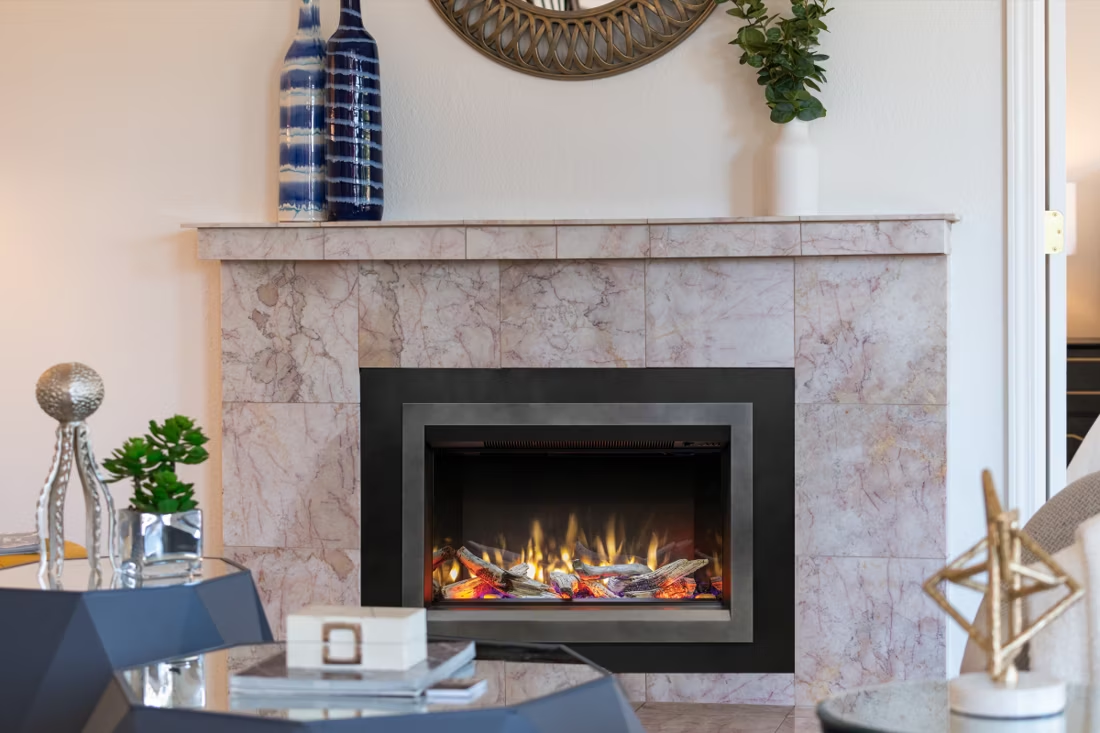
Big Valley farmhouses and older homes around Lewistown often have a masonry fireplace that's been closed off or is too deteriorated to safely burn wood or vent gas. An electric insert is usually the simplest fix: it slides into the existing opening, plugs into a nearby outlet or a new circuit, and gives you flame-effect heat without touching the chimney. For homes with no fireplace opening at all—common in the manufactured and modular homes scattered through the valley—a zero-clearance electric fireplace or wall-mount unit works just as well and can go in almost any room.
Can an electric fireplace actually heat a room through a Mifflin County winter?
Realistically, it heats a room, not a house. Most electric fireplaces top out around 5,000–5,200 BTUs, enough to noticeably warm 300 to 400 square feet, but not enough to carry a whole home through a winter with 5,570 heating degree days and lows regularly in the teens. Think of it as targeted comfort—heating the room you're actually sitting in, taking the edge off a chilly basement, or supplementing a heat pump that struggles below freezing. For whole-home backup heat, wood or propane appliances remain the more practical choice in this climate.
Electric vs. wood vs. pellet—which is right for my Mifflin County home?
Wood stoves burning local oak, hickory, or cherry, and pellet stoves running Energex, Hamer Pellet Fuel, or Greene Team pellets, both put out real heat—enough to serve as primary or near-primary heat through a Mifflin County winter—but both need venting, fuel storage, and regular maintenance. Electric fireplaces need none of that: no chimney, no ash, no pellet bags to stack in the garage. What you give up is heat output and, importantly, function during a power outage, since pellet stoves also need electricity to run their auger and blower. If wood or pellet heat is already handling your cold months, an electric unit in a second living space or bedroom is an easy, low-maintenance add.
How much does it cost to run an electric fireplace with West Penn Power rates?
West Penn Power serves most of Mifflin County, and a typical electric fireplace insert running around 1,500 watts on the heat setting costs roughly 15 to 20 cents an hour at current residential rates—a few dollars for an evening of use. Running one as occasional supplemental heat in a living room or finished basement is inexpensive. Running one as a primary heat source for a whole room, all day, adds up faster than propane or wood in most cost comparisons. A local dealer can walk through expected wattage and hours of use for your specific room before you buy.
What electric fireplace brands and styles are actually available near Mifflin County?
Local dealers in the Lewistown and Juniata Valley area typically carry insert-style units from Dimplex and Napoleon, along with mantel packages that pair a surround with a plug-in firebox—a popular choice for renters and homeowners who don't want to commit to a built-in. For a cleaner, built-in look, wall-mount and linear models can be recessed into a stud wall with proper electrical rough-in. A local dealer can show you what's actually stocked and installable in your specific home, rather than what's simply available to order online.
Will an electric fireplace work in a manufactured or modular home?
Yes—electric fireplaces are one of the few hearth options that install cleanly in manufactured and modular homes, which are common throughout the Kishacoquillas Valley and along the Route 322 corridor. Because there's no venting or gas line, there's no concern about compromising the home's certified construction or required clearances the way a wood stove installation can raise. Most units just need a nearby outlet or a properly sized circuit, which a local electrician can confirm against your home's panel.
Will my electric fireplace still work during a power outage?
No—and this is worth knowing before relying on one as a backup plan. Electric fireplaces need grid power to run their heater, blower, and flame effect, so during a winter outage—which happens periodically across rural Mifflin County during ice storms—they shut down along with everything else on the circuit. Homes that need heat during outages typically keep a wood stove, a propane heater, or a generator on hand alongside an electric fireplace used for everyday ambiance and zone heat.
Can I put a TV above my fireplace?
Yes—with an asterisk. Fireplaces are hot and TVs don't like heat. Either put a mantel between them to deflect rising warmth, or choose a fireplace with heat-management technology that creates a cool zone on the wall above—the wall stays around 125 degrees, barely warm, while the room still gets full heat. If you like clean lines and don't want a mantel, heat management is the answer.
Do electric fireplaces actually produce heat?
Yes—most put out around 4,800–5,000 BTUs from a standard outlet, which comfortably warms a bedroom, office, or den as a comfort-zone heater. What they won't do is carry a whole house the way wood, gas, or pellet can. Think of electric as ambiance-first with honest supplemental heat: flames on with no heat in July, flames plus warmth in January.
Does a fireplace add value to my home?
On average, a fireplace adds back to the home about the same amount you spent installing it. Add the monthly savings from heating the rooms you actually use instead of the whole house—often hundreds of dollars a year—and the value case is strong before you even count what a fire does for how your family uses the room.
Can I install a fireplace myself?
If you're putting a fire in your house on purpose, it's best to work with an expert. Unless you're genuinely experienced in framing, gas line, vent pipe, and the national code on clearances to combustibles, have a professional do it—and ideally the same company that sells you the fireplace, so warranty, service, and liability all live under one roof.
Stove and Fireplace Dealers in Mifflin County
Find your electric fireplace in Mifflin County.
Tell us a bit about your home and we'll match you with a trusted local dealer serving Mifflin County—plus a free Project Guide & Parts List with the exact electric fireplace, insert, or wall unit recommended for your space.
Find Your Fireplace →