
Pellet heat is rare in Lionville—but not impossible.
Most Lionville homes heat with natural gas or electric heat pumps through PECO. A small number of homeowners still choose a pellet stove for supplemental warmth or a specific room—here's what that actually looks like here.
Every Project Starts From One of These Five Situations
A natural-gas suburb with a mild heating load.
Lionville sits in Uwchlan Township, Chester County, in the Philadelphia suburbs at about 483 feet of elevation. Winters are real but moderate for a Zone 4A climate—average lows around 20°F and a moderate winter heating season, nowhere near the severity of places like Burlington, VT or Duluth, MN, where solid-fuel backup heat is a household necessity. Most homes here are already connected to natural gas or run electric heat pumps off PECO Energy, and that infrastructure covers the vast majority of heating needs without anyone needing to store fuel in a garage.
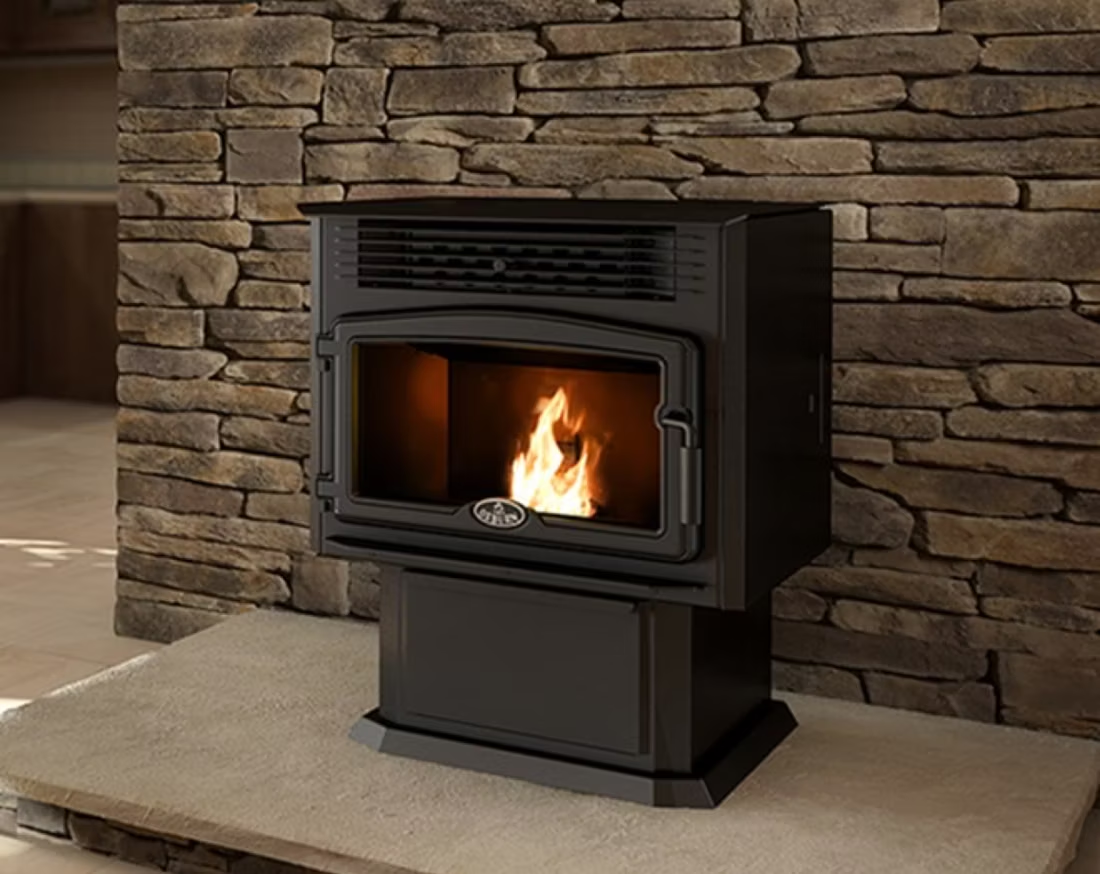
That's the main reason pellet stoves haven't caught on locally the way they have in more rural parts of Pennsylvania. Pellet appliances also require continuous electricity to run the auger and combustion blower—unlike a wood stove, they go cold the moment the power does, which limits their appeal as emergency backup in a well-served PECO territory. Still, regional pellet brands like Energex, Hamer Pellet Fuel, and Greene Team Pellet Fuel are readily available across Pennsylvania, and homeowners here do occasionally install a pellet stove or insert for a den, a converted garage, or a secondary living space where running a gas line isn't practical.
Three steps. No salesperson until you're ready.
Tell us about your project
Your zip code, your situation, and the fuel you're leaning toward—or let the answers point you to one.
See what's actually available
The brands dealers within 100 miles genuinely carry—real options, never a catalog mirage.
Get your dealer & Project Guide
A trusted local dealer, plus the free Project Guide & Parts List that names every component of the job.
Frequently Asked Questions
How much does a pellet stove installation cost in Lionville?
Because pellet installs are uncommon in Lionville, there isn't deep local pricing data to draw from, but a typical freestanding pellet stove installation in the broader Chester County area runs roughly $3,500 to $6,500, including the unit, PL venting through an exterior wall, and electrical work for a dedicated outlet. Pellet inserts placed into an existing masonry fireplace usually land in a similar range, sometimes higher if a liner or hearth modification is needed. A local hearth dealer familiar with Uwchlan Township permitting can give you a firm number after seeing the room.
Why don't more homes in Lionville have pellet stoves?
Mainly because they don't need to. Natural gas service reaches most of Lionville, and gas fireplaces and furnaces deliver instant, thermostat-controlled heat without fuel storage or hopper refills. Pellet stoves tend to be popular in colder, more rural parts of Pennsylvania where propane costs are high or gas isn't available. In a suburban Chester County setting with reliable PECO electric and widespread gas access, pellet heat is more of a niche or supplemental choice than a primary heating strategy.
Will a pellet stove keep working during a power outage?
No—and this is the detail people are most often surprised by. Pellet stoves rely on an electric auger to feed fuel and a blower to distribute heat and exhaust combustion gases, so when PECO service drops, the stove shuts down along with everything else. If backup heat during outages is your main goal, a wood stove or a battery-backed direct-vent gas fireplace is a better fit than pellet. Some homeowners pair a pellet stove with a small generator specifically to keep it running through a storm.
What size pellet stove do I need for a Lionville home?
Given the region's relatively mild winter heating needs, most Lionville installs are used for supplemental heat in a single room or open living area rather than whole-house heating. A small unit rated for 1,000-1,500 square feet is usually plenty for a den or great room, while larger, well-insulated open floor plans might call for a mid-size unit rated to 2,000 square feet. A local dealer will size it based on your room's square footage, ceiling height, and how it connects to adjoining spaces.
Where can I buy wood pellets near Lionville?
Regional brands including Energex, Hamer Pellet Fuel, and Greene Team Pellet Fuel are distributed through Pennsylvania hearth dealers, hardware stores, and farm supply outlets, and most will special-order by the pallet if a specific brand isn't in stock. Pricing across the region typically runs in the $250 to $320 per ton range, sold in 40-pound bags, usually by the ton (50 bags) for the best price. Because pellet demand is lower here than in more rural counties, it's worth calling ahead in early fall before cold weather drives up local demand.
Do I need a permit to install a pellet stove in Lionville?
Yes—a building permit through Uwchlan Township is required for a new pellet stove or insert installation, covering the appliance clearance, hearth pad, and PL vent penetration through the wall or roof. Most hearth dealers who install pellet equipment in Chester County handle the permit application as part of the job. Because pellet installs are less frequent here than gas or electric work, it's worth confirming your installer has pulled permits for solid-fuel or pellet appliances specifically, not just gas fireplaces.
Pellet stove or gas fireplace—which makes more sense in Lionville?
For most Lionville homes, gas wins on convenience: instant on-off operation, no fuel storage, and a wide network of licensed gas fitters and hearth dealers already serving Chester County. A pellet stove makes more sense in specific situations—a room where running a gas line is impractical, a homeowner who prefers heating with a renewable, domestically produced fuel, or someone who simply likes the look and lower ash output of pellet fire over a purely decorative gas unit. If reliable, low-maintenance heat is the priority, gas is the more natural fit here; if you want a wood-fire look with easier loading and cleaner burn than cordwood, pellet is worth a look.
Pellet stove or electric fireplace—which is the better supplemental heat option?
An electric fireplace or heater plugs in and produces heat instantly with zero venting or fuel storage, and at PECO's residential rate of about $0.1474 per kWh, running one for supplemental warmth in a single room is straightforward and low-hassle. A pellet stove costs more upfront and requires venting, a fuel supply, and periodic ash cleanout, but it produces real, radiant combustion heat and can meaningfully offset a gas or electric bill in a room that's used often. For occasional ambiance or light supplemental heat, electric is simpler. For homeowners who want a genuine fire and plan to use it regularly through the winter, pellet delivers more heat for the investment.
Is a pellet stove a good emergency backup heat source in Lionville?
Not on its own, since it needs continuous electricity to operate the auger and blower—if PECO power goes out, so does the stove. If backup heat during outages is the goal, a wood stove burning local oak, hickory, or maple is the more resilient choice, or a gas fireplace with battery-backed ignition that can run without house power. Some Lionville homeowners who still want pellet's convenience pair the stove with a small backup generator sized to keep the auger and blower running through a multi-day outage.
Why is my open fireplace making my house colder?
Open fireplaces suck—literally. As the fire burns, it consumes air your furnace already paid to heat and pulls it out through the chimney, so the house is actually colder after the fire goes out than before you lit it. An insert fixes this: it seals the chimney, puts fixed glass across the front, and turns that hole in your house into a real heat source.
Why is a fireplace insert so efficient?
An insert does two things: it seals the chimney completely, so you stop losing air you already paid to heat, and it radiates warmth into the room through the firebox and glass. Most add a heat-exchange fan that pulls cool room air underneath, wraps it around the hot firebox, and pushes it back out warm. Your home is more efficient before you've even lit the first fire.
How much should I budget for a fireplace?
For an average home—covering the fireplace, the vent pipe, and basic installation—a budget between $3,900 and $5,500 gives you a lot of options across wood, gas, and pellet. By the time you add finish work, gas line, and electrical, the average complete installation lands between $5,000 and $12,000 all-in. In a remodel or new build, a good rule is to put about 2.5% of the total project cost toward the fireplace.
What is an in-home preview and do I need one?
It's a visit where a hearth professional measures your space, confirms the model you picked actually works in your home, and walks the specs—framing, gas line, venting, finish work—before anything is ordered. Some details you just can't know until you see the house. Never make a down payment without one; it's the single most-skipped step that burns buyers.
Nearby Dealers
Hearth shops serving Lionville and the surrounding area. Every listing shows whether it is a WhyFire partner, a dealer we have verified as authorized for the brands we recommend, or a local business carrying hearth products. No manufacturer pays for placement. How we verify dealers →
Halligan's Hearth And Home
Halco Grills And Fireplaces
Comfort Home & Hearth
Norristown Chimney
Krings Hearth & Home - Bechtelsville
A Chimney King
Keystone Custom Decks
Ah Angersterin Inc
Athenia Mason Supply Wilmington LLC
Independence Propane
Sauder's Hardscape Supply
Delaware Brick
Wertz & Co,Inc
First State Hearth Services
Ambler Fireplace And Patio
Pellet Brands Stocked Around Lionville
Manufacturers will point you to the nearest stocking dealer.
Find your pellet stove in Lionville.
Tell us about your home and how you'd use a pellet stove, and we'll match you with a trusted local dealer and send over a free Project Guide & Parts List—the exact equipment, venting, and installation plan for your space in Lionville.
Find Your Fireplace →