
Instant, no-vent heat for Lionville's suburban homes.
With 5,478 heating degree days and winter lows near 20°F, Chester County homes need real supplemental warmth—without the chimney or gas line most newer Lionville houses were never built with. I'll match you with a trusted local dealer who knows what actually fits your space.
Every Project Starts From One of These Five Situations
Zone heat without a chimney or gas line.
Lionville sits inside Uwchlan Township in Chester County, tucked along the Route 100/113 corridor between Downingtown and Exton. At 483 feet in climate zone 4A, winters here aren't the extended deep-freeze you'd get in Duluth or Burlington, but 5,478 heating degree days and average lows around 20°F still add up to a solid five-month heating season. What really shapes the local market, though, is the housing stock: much of Lionville was built from the 1970s onward, including the townhomes and colonials around Eagleview, and a lot of that construction never included a masonry fireplace or chimney chase to retrofit a wood or gas appliance into.
That's where electric wins locally. PECO Energy Co serves Lionville at roughly $0.1474 per kWh, and a plug-in electric fireplace or insert needs nothing more than an existing outlet—no venting, no gas permit, no fuel storage. Built-in wall or linear units do need a dedicated circuit and, if you're adding one, a straightforward electrical permit through Uwchlan Township. Either way, electric gives Chester County homeowners real zone heat for a family room or finished basement without the construction project a vented wood stove or gas insert would require in a home that was never built to house one.
Three steps. No salesperson until you're ready.
Tell us about your project
Your zip code, your situation, and the fuel you're leaning toward—or let the answers point you to one.
See what's actually available
The brands dealers within 100 miles genuinely carry—real options, never a catalog mirage.
Get your dealer & Project Guide
A trusted local dealer, plus the free Project Guide & Parts List that names every component of the job.
Frequently Asked Questions
How much does an electric fireplace installation cost in Lionville?
Plug-in freestanding or mantel units that just need an existing 120V outlet typically run $300 to $1,200 including the unit and any surround. Built-in wall or linear units set into a framed niche—a popular upgrade in newer great rooms around Eagleview—run $1,500 to $4,000 once you add a dedicated 20-amp circuit, an electrician, and custom trim or a stone surround. Since there's no venting or gas line to run, labor costs a fraction of what a wood or gas project requires.
Will an electric fireplace lower my PECO bill or make winters more affordable?
An electric fireplace won't replace your furnace, but at PECO's residential rate of about 14.74 cents per kWh, a typical 1,500-watt unit costs roughly 22 cents an hour on the heat setting. Used as zone heat—closing off the room you're actually in and turning the thermostat down elsewhere in the house—a fair number of Lionville homeowners see a modest but real dip in their winter PECO bill, since resistance heat is cheap for the limited square footage it's offsetting.
Do I need a permit to install an electric fireplace in Lionville?
It depends on the unit. A plug-in electric fireplace or insert that runs off a standard outlet needs no permit at all—it's treated like any other appliance. A built-in unit that requires a new dedicated circuit typically needs an electrical permit through Uwchlan Township's building and zoning office, which is the governing jurisdiction for Lionville addresses. Most licensed electricians handle that paperwork as part of the installation.
How does an electric fireplace compare to a gas fireplace for a Lionville home?
Gas is also standard here and puts out more usable heat for homes wanting a stronger secondary source through Chester County's 5,478-degree-day season, but it means venting, gas line work, and installation costs that typically start around $4,000. Electric skips all of that—no venting, no gas permit, a fraction of the cost—at the tradeoff of lower heat output per hour. A lot of Lionville homeowners in newer construction without an existing chimney lean electric specifically because it avoids the structural work a vented system demands.
What's the best electric fireplace for a townhome or condo in Lionville?
Many of the townhomes near Eagleview and along Bodine Road have limited wall space and shared walls, which makes a slim wall-mounted linear unit or a media-console-style electric fireplace the practical choice—both plug into a standard outlet with no structural changes, which matters if an HOA restricts exterior venting or masonry work. Homeowners in single-family colonials with more room to frame a niche more often step up to a built-in unit with a custom surround.
Does an electric fireplace actually produce useful heat during a Chester County cold snap?
Most residential electric fireplaces top out around 5,000 BTU, roughly the output of a 1,500-watt space heater—enough to comfortably carry a single room through Lionville's average 20°F winter lows, but not enough to heat a whole house through a hard freeze the way a wood stove or furnace does in places further north like Bozeman or Buffalo. Treat it as strong supplemental heat for the room you use most, paired with your existing furnace for the rest of the house.
How much maintenance does an electric fireplace need?
Very little compared to wood or gas. There's no chimney to sweep, no gas line to inspect, and no combustion byproducts to manage. Occasional dusting of the heating element and vent grille, plus making sure the fan isn't blocked, covers most of it. Units typically carry a 1-3 year warranty on electrical components, and a local dealer can advise on replacement LED elements for models with a flame-effect display.
Are there rebates for adding electric heat in Lionville?
PECO runs energy-efficiency incentive programs for Chester County customers from time to time, but these tend to target heat pumps, insulation, and smart thermostats rather than decorative electric fireplaces, since a fireplace is supplemental rather than primary heat. It's worth checking PECO's current Smart Ideas offerings before you buy and asking your installer whether a built-in unit with a new dedicated circuit qualifies for anything currently available.
Why is electric more common than wood or pellet in Lionville?
A lot of it comes down to housing stock. Lionville's growth largely came after the 1970s, and most homes in and around Uwchlan Township—including the developments near Eagleview—were built without a masonry chimney to retrofit a wood stove or pellet appliance into. Adding one now means a full Class A chimney system, a significant construction project for a townhome or a colonial with no existing masonry. Electric sidesteps that entirely, needing only an outlet or a simple circuit, which is why it and vented gas dominate the local market while wood and pellet stoves stay rare.
Can I put a TV above my fireplace?
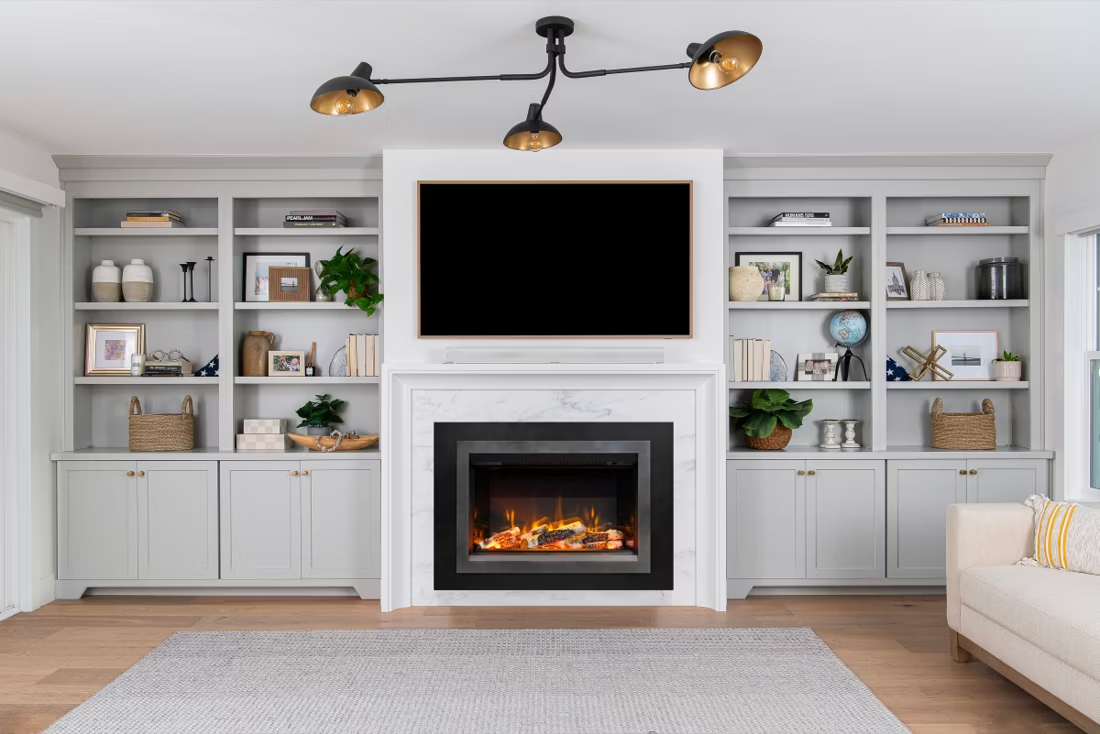
Yes—with an asterisk. Fireplaces are hot and TVs don't like heat. Either put a mantel between them to deflect rising warmth, or choose a fireplace with heat-management technology that creates a cool zone on the wall above—the wall stays around 125 degrees, barely warm, while the room still gets full heat. If you like clean lines and don't want a mantel, heat management is the answer.
Do electric fireplaces actually produce heat?
Yes—most put out around 4,800–5,000 BTUs from a standard outlet, which comfortably warms a bedroom, office, or den as a comfort-zone heater. What they won't do is carry a whole house the way wood, gas, or pellet can. Think of electric as ambiance-first with honest supplemental heat: flames on with no heat in July, flames plus warmth in January.
Can a fireplace actually lower my heating bill?
Yes—by creating a comfort zone. A furnace heats every square foot of the house just to warm the one room you're in; a gas fireplace on low burns roughly a sixth of the gas a typical furnace does. Set the furnace around 55–60 degrees as a baseline, then heat the rooms your family actually uses. Families who heat this way commonly save $20–$60 a month.
Should the dealer who sells my fireplace also install it?
Ideally, yes. A fireplace project involves vent pipe, gas line, electrical, and often tile or stone. Hire three or four separate trades and you own the liability and the game of telephone between them. One company selling and installing means one accountable party, start to finish—ask about factory training, on-time completion records, and what happens if an inspection fails.
Nearby Dealers
Hearth shops serving Lionville and the surrounding area. Every listing shows whether it is a WhyFire partner, a dealer we have verified as authorized for the brands we recommend, or a local business carrying hearth products. No manufacturer pays for placement. How we verify dealers →
Halligan's Hearth And Home
Halco Grills And Fireplaces
Comfort Home & Hearth
Norristown Chimney
Krings Hearth & Home - Bechtelsville
A Chimney King
Keystone Custom Decks
Ah Angersterin Inc
Athenia Mason Supply Wilmington LLC
Independence Propane
Sauder's Hardscape Supply
Delaware Brick
Wertz & Co,Inc
First State Hearth Services
Ambler Fireplace And Patio
Electric Service in Lionville
An electric fireplace's heater draws about 1,500 watts—pennies per hour at local rates.
Peco Energy Co
Get your free Project Guide & Parts List for an electric fireplace in Lionville.
Tell me about your home and where you want the heat, and I'll match you with a trusted local dealer and send a free Project Guide & Parts List—sized to your room and PECO's rates, with the exact parts your project needs.
Find Your Fireplace →