
Find the right electric fireplace for your Lehigh County home.
From Allentown apartments to Bethlehem rowhomes and Emmaus farmhouses, electric fireplaces add zone heat and ambiance without a chimney or gas line. Get matched with a local dealer who knows what actually installs cleanly in your walls.
Every Project Starts From One of These Five Situations
No venting, no chimney—heat where you actually live.
Lehigh County sits in climate zone 5A with winter lows that average around 22°F—a real but manageable cold, closer to Madison, WI than to the deep-freeze extremes of the northern Plains. That climate profile means most homes here need dependable supplemental heat for a solid five to six months, but rarely the kind of sustained sub-zero survival heat that pushes homeowners toward wood as a primary backup. Electric fireplaces fit a lot of Lehigh Valley housing stock well: the rowhomes and twins of Bethlehem and Allentown, condos and townhomes throughout the county, and finished basements in places like Emmaus, Macungie, and Coplay where running a flue simply isn't practical.
Because electric units need no chimney, no gas line, and no combustion venting, they're often the fastest and least invasive project category we match homeowners into across Lehigh County—installation can be as simple as a dedicated circuit and a wall opening, or as involved as a built-in linear unit framed into new construction. They won't replace a furnace on the coldest January night, but for zone heating a living room, converting a defunct wood-burning fireplace into something usable again, or adding ambiance to a room addition, they're a straightforward, code-simple option. A trusted local dealer will size the unit and electrical to your actual room, not a generic chart.
Three steps. No salesperson until you're ready.
Tell us about your project
Your zip code, your situation, and the fuel you're leaning toward—or let the answers point you to one.
See what's actually available
The brands dealers within 100 miles genuinely carry—real options, never a catalog mirage.
Get your dealer & Project Guide
A trusted local dealer, plus the free Project Guide & Parts List that names every component of the job.
Frequently Asked Questions
How much does an electric fireplace installation cost in Lehigh County?
Most electric fireplace and insert installations in Lehigh County run between $400 and $1,200, which is a fraction of what a wood or gas project typically costs. A plug-in insert dropped into an existing masonry fireplace opening sits at the low end—often just the cost of the unit plus minor trim work. A built-in linear electric fireplace that requires a dedicated 20-amp circuit, drywall or millwork framing, and an electrician to run new wiring lands toward the higher end, especially in older Bethlehem or Allentown homes where panel capacity may need review first. A local dealer can tell you within a few minutes which category your project falls into.
Do I need a permit to install an electric fireplace in Lehigh County?
It depends on the scope. A plug-in insert or a freestanding electric stove that uses an existing outlet typically doesn't trigger a permit. A built-in electric fireplace that requires new electrical wiring or a dedicated circuit usually does require an electrical permit through your local municipality's building department—Allentown, Bethlehem, and Lehigh County's other municipalities each handle their own permitting rather than routing through a single county office. Most licensed electricians and hearth dealers handling a built-in install will pull the permit as part of the job, so you're not left figuring out which office to call.
Will an electric fireplace actually heat my room, or is it just for looks?
Most electric fireplaces sold for real heating output in Lehigh County are rated around 4,600 to 5,000 BTU (roughly 1,500 watts), which is enough to noticeably warm a single room of 400 to 600 square feet—a living room, bedroom, or finished basement space. They won't heat an entire drafty older home the way a wood stove might, and with our winter lows averaging around 22°F, an electric unit is best planned as supplemental zone heat rather than a whole-house solution. If you're trying to take the chill off a specific room without running the furnace harder, an electric fireplace does that well. If you're trying to survive a multi-day outage, it isn't the right tool—it needs grid power to run.
Can an electric fireplace run during a power outage?
No—electric fireplaces require utility power to run the heating element, fan, and flame-effect display, so they shut down the moment the grid goes down. This is worth factoring into your decision if outage resilience matters to you. Lehigh County doesn't see the extended multi-day outages that hit more storm-battered regions, but ice and wind events do knock out power here occasionally. Homeowners who want a heat source that works when the power doesn't typically pair an electric fireplace for everyday zone heat with a separate wood or vented gas appliance elsewhere in the house for backup.
What's the difference between an electric insert, a built-in, and a freestanding electric stove?
An electric insert is sized to slide into an existing masonry fireplace opening, giving old wood-burning fireplaces in Bethlehem's and Allentown's older housing stock a second life without any venting work. A built-in (linear) electric fireplace is framed into a wall like a TV recess, popular in new construction and renovations throughout the county. A freestanding electric stove looks like a traditional cast-iron wood stove but plugs into a standard outlet, which makes it a popular low-commitment option for a bedroom, sunroom, or basement. All three produce comparable heat; the choice mostly comes down to the look you want and whether you're retrofitting an existing opening or building new.
Is it worth converting my wood fireplace to electric in an older Lehigh County home?
It's one of the more common projects we match homeowners into, especially in the older brick and stone homes scattered through Bethlehem, Allentown, and Emmaus where a masonry fireplace sits unused because the chimney needs expensive repair or relining. An electric insert eliminates that problem entirely—no chimney, no flue, no creosote—while restoring a working fireplace look and real supplemental heat to the room. It's a lower-cost path than a full masonry restoration and a common alternative for homeowners who liked having a fireplace but don't want to manage cordwood, deal with the local oak and hickory supply, or maintain a flue liner.
How much does it cost to run an electric fireplace compared to a furnace?
A typical 1,500-watt electric fireplace costs roughly 15 to 20 cents per hour to run at full heat, depending on your electric rate through PPL Electric Utilities, the primary provider across most of Lehigh County. Run for a few hours an evening to take the edge off a chilly room, that's a modest add to a monthly bill—often cheaper than raising the thermostat on the whole-house furnace to warm just one room. Over a full heating season here, which runs a solid five to six months, though, an electric fireplace used as a home's main heat source would run considerably more than natural gas or propane central heat, which is why it's best positioned as supplemental, targeted heat rather than a primary furnace replacement.
Does an electric fireplace need a dedicated electrical circuit?
Small plug-in inserts and freestanding stoves typically run fine on a standard household circuit, as long as you're not overloading it with other high-draw appliances. Larger built-in linear units, especially ones rated near 1,500 watts, are often required by code and manufacturer specs to have a dedicated 20-amp circuit—particularly in older Lehigh County homes with older electrical panels that weren't sized for modern appliance loads. A licensed electrician can check panel capacity during a home consultation; this is exactly the kind of detail a local dealer flags before you buy a unit that your panel can't actually support.
Electric vs. gas fireplace—which is right for my Lehigh County home?
Gas fireplaces produce more real heat output, don't rely on the grid to run (with the right ignition system), and suit homes throughout Lehigh County where natural gas or propane service is already in place. Electric fireplaces install faster, cost far less upfront, need no venting or gas line, and work in any room with an outlet—which makes them the practical choice for condos, rentals, upper-floor rooms, and homes without easy gas access. If you want dependable heat during an outage or a primary supplemental heat source for a large room, gas usually wins. If you want an easy, low-cost ambiance upgrade or zone heat for a specific room without construction, electric is usually the better fit. A local dealer can walk through both against your specific room and budget.
Does an electric fireplace need a vent or chimney?
No—that's its superpower. An electric fireplace needs a wall and an outlet, period. No vent pipe, no gas line, no clearances to design around, which is why it works in bedrooms, offices, apartments, and walls where venting a gas or wood unit would be impractical or impossible. Installation is typically the simplest and least expensive of any fireplace type.
Can I put a TV above my fireplace?
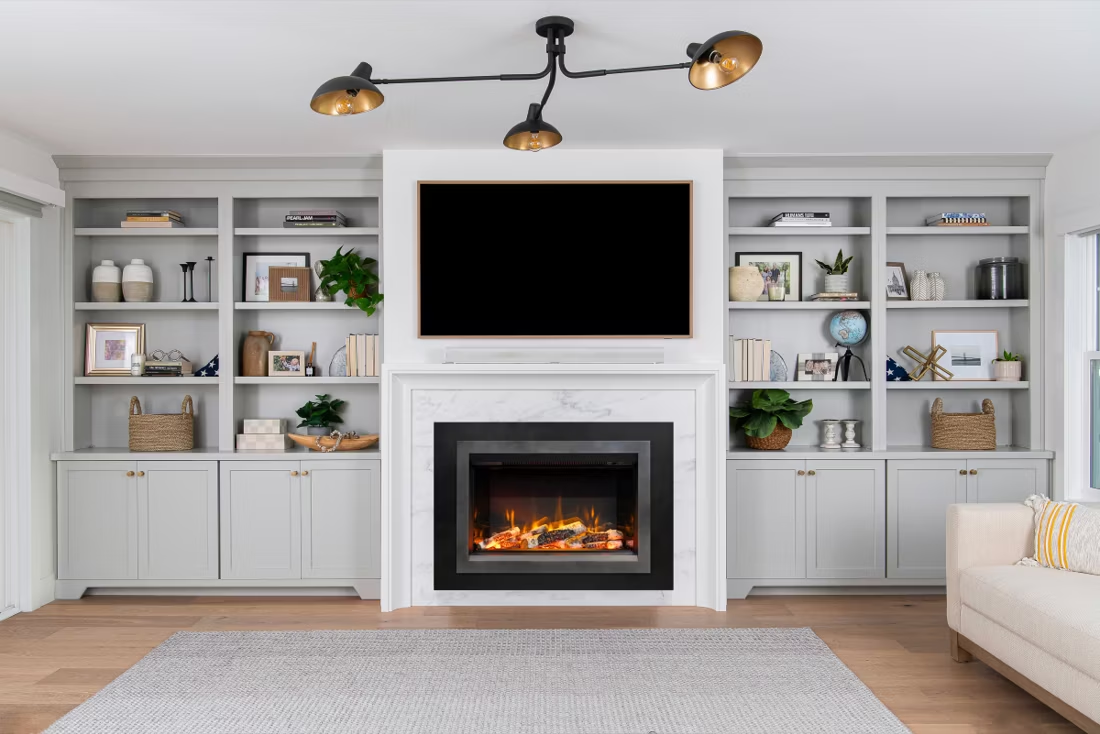
Yes—with an asterisk. Fireplaces are hot and TVs don't like heat. Either put a mantel between them to deflect rising warmth, or choose a fireplace with heat-management technology that creates a cool zone on the wall above—the wall stays around 125 degrees, barely warm, while the room still gets full heat. If you like clean lines and don't want a mantel, heat management is the answer.
Does a fireplace add value to my home?
On average, a fireplace adds back to the home about the same amount you spent installing it. Add the monthly savings from heating the rooms you actually use instead of the whole house—often hundreds of dollars a year—and the value case is strong before you even count what a fire does for how your family uses the room.
Can a fireplace actually lower my heating bill?
Yes—by creating a comfort zone. A furnace heats every square foot of the house just to warm the one room you're in; a gas fireplace on low burns roughly a sixth of the gas a typical furnace does. Set the furnace around 55–60 degrees as a baseline, then heat the rooms your family actually uses. Families who heat this way commonly save $20–$60 a month.
Stove and Fireplace Dealers in Lehigh County
Listings include WhyFire partner dealers, dealers we have verified as authorized for the brands we recommend, and established local businesses that carry hearth products. Every listing shows which one it is. The ones marked Preferred run on WhyFire's software, so they can show you real pricing and book your appointment right here. No manufacturer pays for placement. How we verify dealers →
Stoves N Stuff Ltd
Abe Fence / Landscape Supply
Penn Hearth Llc.
Keller Enterprises
Glen-Gery Brick
Krings Hearth & Home - Schnecksville
Progressive Propane
Atlantic Building Prodcuts Inc
Scandia Stoves Of Pa Inc.
Pennsburg Ace Hardware
East Lawn Supply Co., Inc.
Forest Inn Masonry Supply
Liberty Oil & Propane
Kozy By The Fire
Independence Propane
Krings Hearth & Home - Bechtelsville
Hinton & Sons Inc.
Sequoia Supply Hatfield Showroom
Get matched with an electric fireplace dealer in Lehigh County.
Tell us about your home and we'll put together a free Project Guide & Parts List—the exact parts for your electric fireplace project, including any electrical work needed, and our recommended local dealer.
Find Your Fireplace →