
Add real warmth to your Catasauqua home without a chimney or gas line.
Zone heat and ambiance for Catasauqua's older row homes and additions, powered through PPL Electric—no venting, no flue, no combustion. Get matched with a trusted local dealer.
Every Project Starts From One of These Five Situations
Zone heat that fits a borough of tight lots and older row homes.
Catasauqua is a small Lehigh River mill town with a housing stock to match—narrow lots, brick row homes and twins built in the 1800s and early 1900s, many with additions, finished basements, and attic conversions that were never designed around a masonry chimney. At 285 feet elevation with roughly 5,293 heating degree days and winter lows averaging 22°F, the borough sees a real heating season, but not one that demands a whole-home wood or pellet setup—which is part of why wood and pellet appliances see little demand here while electric units are a practical, increasingly common fit.
Because electric fireplaces and inserts plug into existing wiring or run off a dedicated 120V or 240V circuit, they drop into a Catasauqua row home addition, sunroom, or finished basement without cutting through a roofline or adding a flue—a real advantage in a borough with narrow shared-wall construction. PPL Electric Utilities serves the borough at a residential rate around 12.3 cents per kWh, which is below the national average and keeps zone heating costs reasonable for supplementing an existing gas or oil furnace in the rooms that need it most.
Three steps. No salesperson until you're ready.
Tell us about your project
Your zip code, your situation, and the fuel you're leaning toward—or let the answers point you to one.
See what's actually available
The brands dealers within 100 miles genuinely carry—real options, never a catalog mirage.
Get your dealer & Project Guide
A trusted local dealer, plus the free Project Guide & Parts List that names every component of the job.
Frequently Asked Questions
How much does an electric fireplace installation cost in Catasauqua?
A plug-in electric insert or wall-mount unit that uses an existing outlet typically runs $300 to $1,500 installed, including the unit and basic mounting or surround work. A built-in linear electric fireplace that requires a dedicated 240V circuit, in-wall recessing, or custom millwork in a Catasauqua row home addition or finished basement runs closer to $1,200 to $3,500, with electrician labor for the new circuit making up a meaningful share of that cost. Because there's no venting or gas line to run, electric installs are consistently the least expensive fireplace project a local dealer will quote.
Do I need a permit to install an electric fireplace in Catasauqua?
A simple plug-in unit generally doesn't require a permit since it's treated like any other appliance. If your installer is adding a new dedicated circuit or doing any wiring modification—common with built-in linear units—that electrical work needs to be pulled through the Borough of Catasauqua and inspected, since electrical permits apply regardless of the appliance type. Most local dealers coordinate this directly with a licensed electrician as part of the install so you're not managing the paperwork yourself.
Will an electric fireplace actually heat a room, or is it just for looks?
Most residential electric fireplaces put out 4,600 to 9,000 BTUs from a built-in heater fan, which is enough to noticeably warm a 300 to 1,000 square foot space depending on ceiling height and insulation—a good match for a Catasauqua addition, converted attic bedroom, or finished basement rec room. They're not designed to replace a central furnace in a whole 5A-climate house, but as supplemental zone heat for the room you actually spend time in, they do real work, not just visual flicker.
How much does it cost to run an electric fireplace with PPL Electric rates?
At PPL Electric's residential rate of roughly 12.3 cents per kWh, a typical 1,500-watt electric fireplace running on high heat costs about 18 cents per hour, or roughly $1.50 for an 8-hour evening of use. Most owners run the heater setting only when they're in the room and leave the flame effect on standby the rest of the time, which keeps the electric bill increase modest even through a full Lehigh Valley heating season.
Should I get an electric fireplace or a gas fireplace for my Catasauqua home?
Gas fireplaces remain a common, well-supported choice in Catasauqua and put out considerably more heat, but they require a gas line, venting, and a higher installation budget. Electric units skip all of that—no gas connection, no clearance-to-combustibles chimney work—which makes them the faster, lower-cost option for a room that needs supplemental warmth rather than a primary heat source. Many borough homeowners choose gas for a main living room insert and electric for a secondary space like a basement or bedroom addition where running new gas line isn't practical.
What's the best type of electric fireplace for an older Catasauqua row home?
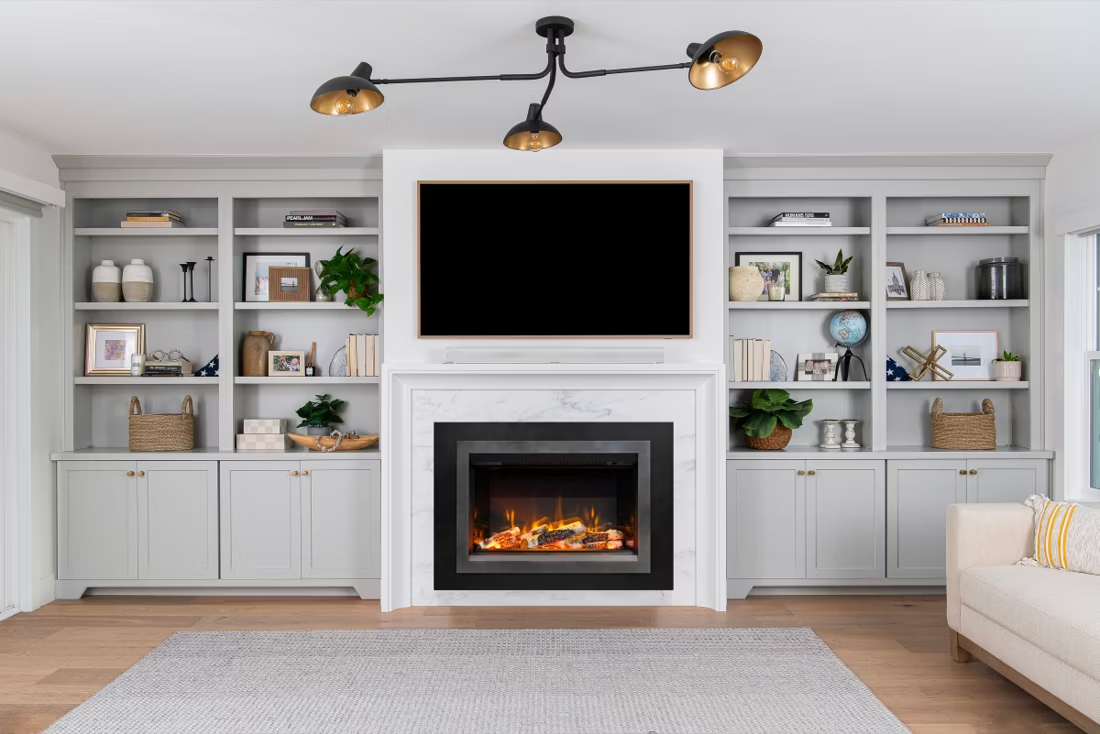
For row homes with narrow floor plans and shared walls, a wall-mounted linear electric fireplace is popular because it adds heat and visual impact without eating into floor space. If your home still has an old, unused masonry fireplace—not uncommon in Catasauqua's 19th-century housing stock, some of it within the borough's historic district—an electric insert can slide into that existing firebox opening, preserving the original mantel and surround while giving you usable heat without touching the chimney at all. A local dealer can measure your existing opening and recommend the right fit.
Will my electric fireplace still work during a power outage?
No—unlike a wood stove or a gas fireplace with battery-backup ignition, an electric fireplace needs grid power to run, so it will shut off during a PPL outage along with the rest of your home's electrical system. For most Catasauqua homeowners this is an acceptable tradeoff given how rarely extended outages happen locally, but if backup heat during a winter storm is a priority, that's worth discussing with a local dealer alongside your electric fireplace plans.
How much maintenance does an electric fireplace need?
Very little. There's no chimney to sweep, no ash to remove, and no annual gas line inspection required. Maintenance is limited to occasionally dusting the heater vents and cleaning the front glass or lens, and replacing the LED light strip roughly every 8 to 10 years of regular use. This low-maintenance profile is one of the main reasons electric units work well in Catasauqua's secondary living spaces where nobody wants to manage a burn schedule.
What size electric fireplace do I need for my room?
Match the unit's heater output to the room, not just the wall space. A 26-to-40-inch wall-mount or insert with a 4,600 to 5,000 BTU heater is generally enough for a bedroom or home office in the 200-to-400-square-foot range typical of a Catasauqua row home addition. Larger open basement or living areas closer to 600-1,000 square feet do better with a 50-to-60-inch linear unit rated near 9,000 BTUs. A local dealer will measure your space and framing before recommending a specific model and mounting approach.
Does an electric fireplace need a vent or chimney?
No—that's its superpower. An electric fireplace needs a wall and an outlet, period. No vent pipe, no gas line, no clearances to design around, which is why it works in bedrooms, offices, apartments, and walls where venting a gas or wood unit would be impractical or impossible. Installation is typically the simplest and least expensive of any fireplace type.
Can I put a TV above my fireplace?
Yes—with an asterisk. Fireplaces are hot and TVs don't like heat. Either put a mantel between them to deflect rising warmth, or choose a fireplace with heat-management technology that creates a cool zone on the wall above—the wall stays around 125 degrees, barely warm, while the room still gets full heat. If you like clean lines and don't want a mantel, heat management is the answer.
Can a fireplace actually lower my heating bill?
Yes—by creating a comfort zone. A furnace heats every square foot of the house just to warm the one room you're in; a gas fireplace on low burns roughly a sixth of the gas a typical furnace does. Set the furnace around 55–60 degrees as a baseline, then heat the rooms your family actually uses. Families who heat this way commonly save $20–$60 a month.
How much should I budget for a fireplace?
For an average home—covering the fireplace, the vent pipe, and basic installation—a budget between $3,900 and $5,500 gives you a lot of options across wood, gas, and pellet. By the time you add finish work, gas line, and electrical, the average complete installation lands between $5,000 and $12,000 all-in. In a remodel or new build, a good rule is to put about 2.5% of the total project cost toward the fireplace.
Nearby Dealers
Hearth shops serving Catasauqua and the surrounding area. Every listing shows whether it is a WhyFire partner, a dealer we have verified as authorized for the brands we recommend, or a local business carrying hearth products. No manufacturer pays for placement. How we verify dealers →
Glen-Gery Brick
Keller Enterprises
Abe Fence / Landscape Supply
Penn Hearth Llc.
Stoves N Stuff Ltd
Krings Hearth & Home - Schnecksville
East Lawn Supply Co., Inc.
Progressive Propane
Atlantic Building Prodcuts Inc
Hinton & Sons Inc.
Forest Inn Masonry Supply
Kozy By The Fire
Liberty Oil & Propane
Pennsburg Ace Hardware
Scandia Stoves Of Pa Inc.
Independence Propane
Krings Hearth & Home - Bechtelsville
Electric Service in Catasauqua
An electric fireplace's heater draws about 1,500 watts—pennies per hour at local rates.
Ppl Electric Utilities Corp
Find your electric fireplace in Catasauqua.
Tell us about your space and we'll match you with a trusted local dealer and send over a free Project Guide & Parts List for your electric fireplace project in Catasauqua.
Find Your Fireplace →