
Find your pellet stove in Juniata County.
Consistent, low-maintenance heat for the Tuscarora Valley's cold winters—from Mifflintown to Thompsontown and the farms in between. Get matched with a trusted local dealer who can size and install it right.
Every Project Starts From One of These Five Situations
Steady heat with less wood-splitting.
Juniata County sits in the ridge-and-valley country of central Pennsylvania, tucked between the Tuscarora and Shade Mountains along the Juniana River corridor. Winters here run cold enough that a supplemental heat source matters—comparable in demand to what homeowners in Madison, WI deal with, though without the same severity. With no listed air quality restrictions in the county, pellet stoves burn without the curtailment worries that come up in more densely populated non-attainment areas, which makes them a straightforward option for both full-time residents and the county's many rural, wood-lot-owning households.
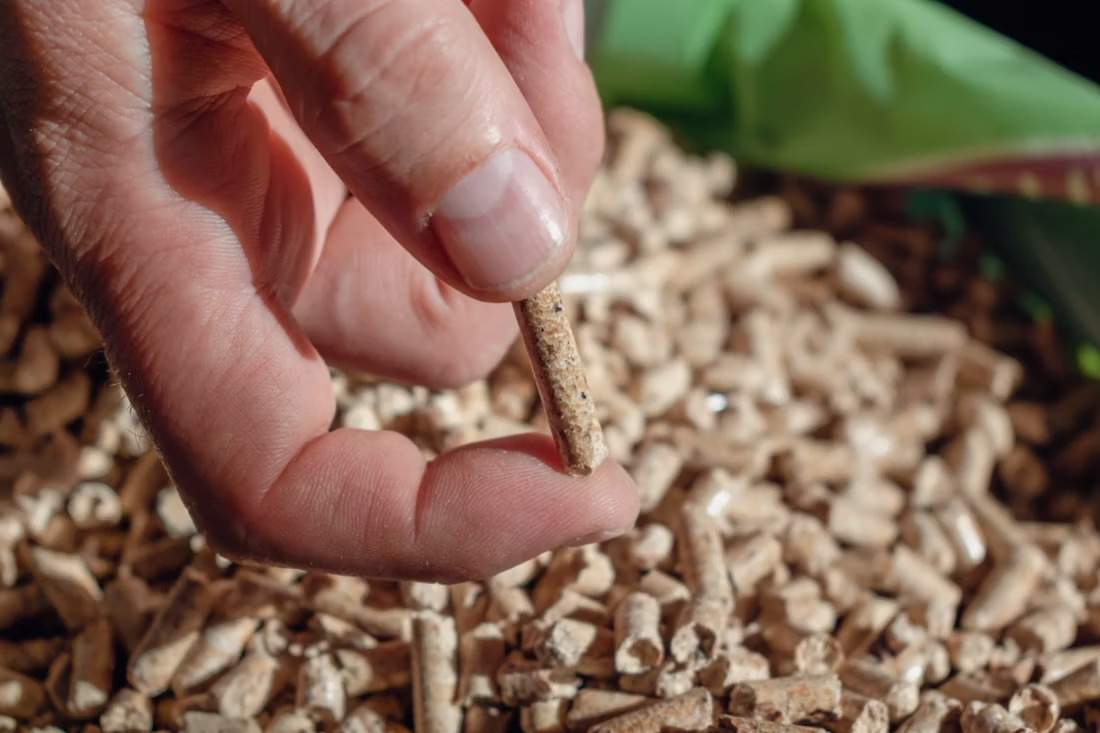
Juniata County is heavily agricultural and rural, with a population under 5,000 spread across small boroughs like Mifflintown, Port Royal, and Thompsontown plus a lot of open township land. That setting favors pellet stoves for a specific reason: bagged fuel from regional suppliers like Energex, Hamer Pellet Fuel, and Greene Team Pellet Fuel is easy to store in a barn or garage without the seasoning, splitting, and stacking that cordwood requires—a real advantage for households already managing a farm or a long commute to work. A pellet stove or insert gives you steady, thermostat-controlled heat without tending a firebox every few hours, while still qualifying for the same kind of backup warmth wood-burning households rely on when winter storms roll through the valley.
Three steps. No salesperson until you're ready.
Tell us about your project
Your zip code, your situation, and the fuel you're leaning toward—or let the answers point you to one.
See what's actually available
The brands dealers within 100 miles genuinely carry—real options, never a catalog mirage.
Get your dealer & Project Guide
A trusted local dealer, plus the free Project Guide & Parts List that names every component of the job.
Frequently Asked Questions
How much does a pellet stove installation cost in Juniata County?
A typical pellet stove or insert installation in Juniata County runs $4,500 to $7,500, depending on the unit, whether it's a freestanding stove or an insert going into an existing fireplace, and how much venting work is required. Pellet stoves vent through a smaller-diameter pipe than wood stoves, which usually keeps labor costs down, especially for straightforward through-wall installations common in the county's older farmhouses and ranch-style homes. Homes without an existing fireplace or chimney will land closer to the higher end once wall penetration and exterior vent termination are factored in.
Where can I buy pellet fuel near me in Juniata County?
Regional brands like Energex, Hamer Pellet Fuel, and Greene Team Pellet Fuel are commonly stocked by hearth dealers and farm supply stores serving the county, and many households buy pellets by the ton (usually 50 to 60 bags) ahead of the season to avoid running short during a cold stretch. Because Juniata County is rural with a lot of storage space—barns, garages, outbuildings—most residents buy in bulk rather than case by case, which typically brings the per-bag cost down. A local dealer can point you toward the closest supplier and give you a realistic sense of how many tons a season actually takes for your home's size.
How does a pellet stove compare to the wood stoves common in this area?
Juniata County has plenty of oak, hickory, maple, and cherry available for wood burning, and many households already have a woodlot or a source for cordwood. Wood stoves work without electricity, which matters during the ice storms that occasionally take down power lines in the valley. Pellet stoves need electricity to run the auger and blower, so a battery backup or generator is worth considering if you're relying on one as backup heat during an outage. In exchange, pellet stoves offer longer unattended burn times, more consistent heat output, and none of the splitting, stacking, and seasoning that cordwood requires—a real convenience for households balancing farm work or long commutes with heating a home.
Do I need a permit to install a pellet stove in Juniata County?
Most new pellet stove installations require a building permit through the local municipality—Juniata County includes several boroughs (Mifflintown, Port Royal, Thompsontown, Mifflin) and a number of townships, each of which handles permitting for structures and mechanical work within its own boundaries. A local installer will typically know which office to file with for your address and will usually handle the paperwork as part of the installation, so you don't have to track down the right jurisdiction yourself.
What size pellet stove do I need for my home?
Sizing depends on square footage, insulation quality, and whether the stove is meant to be a primary or supplemental heat source. As a general guide for Juniata County's older farmhouse stock and newer construction alike: smaller units (under 1,000 sq ft) suit a single large room or a well-insulated cabin, mid-size units (1,000 to 2,000 sq ft) cover most main living areas, and larger units (2,000+ sq ft) can handle a full, well-insulated home. Drafty older farmhouses common throughout the county—with high ceilings and less insulation than newer builds—often need to size up from the square-footage chart alone. A local dealer will size your space during an in-home visit rather than guessing off a general rule of thumb.
Can I convert my wood-burning fireplace to a pellet insert?
Yes—this is a common project for Juniata County homes with an older masonry fireplace that's inefficient or rarely used. A pellet insert slides into the existing firebox and vents through the chimney with a liner, or in some cases through a direct wall vent, converting a drafty opening into a heat source that actually warms the room efficiently. Cost typically falls within the same $4,500 to $7,500 range as a standalone install, with the final number depending on chimney condition and whether a full liner replacement is needed.
How often does a pellet stove need to be cleaned and serviced?
Pellet stoves need more frequent attention than wood stoves, but the work is lighter. Plan on emptying the ash pan every few days during regular use, a deeper cleaning of the burn pot and heat exchanger tubes every couple of weeks, and a full annual service—including the auger, motors, and venting—ideally before the start of the season. For a household relying on the stove through a full Juniata County winter, staying on top of the burn pot in particular prevents poor combustion and reduced heat output. A local dealer or hearth technician can walk you through the maintenance schedule specific to your model.
Will my pellet stove work during a power outage?
Not without a backup power source. Pellet stoves rely on electricity to run the auger that feeds fuel and the blower that distributes heat, so a standard outage will shut the unit down even with a full hopper. For Juniata County homes in outlying township areas where outages can run longer after ice storms or heavy snow, many owners pair a pellet stove with a small battery backup or a generator sized for the stove's low wattage draw. If uninterrupted heat during outages is the priority, a wood stove or a gas unit with battery-backup ignition is worth comparing against pellet.
Pellet vs. wood—which is right for my home in Juniata County?
Wood offers heat during power outages, lower fuel cost if you have access to your own woodlot or can source cordwood locally, and the traditional experience many county residents grew up with. Pellet offers steady, thermostat-like heat, far less physical labor—no splitting or stacking—and easier fuel storage in bags rather than a full woodpile, which suits smaller properties or households without the time for wood processing. Given the county's rural character and easy access to both cordwood and bagged pellets from regional suppliers, either fuel works well here; the decision usually comes down to how much hands-on work you want from your heating system and whether backup power is already part of your setup.
How often does a pellet stove need cleaning?
A clean pellet stove is a happy pellet stove. Plan on cleaning the burn pot about once a week when you're burning regularly—ash and clinkers gum up the air holes just like a pellet barbecue. Most pellet stove problems trace back to skipped cleaning that nobody explained up front. Some designs make it easy with a trapdoor burn pot: pull a lever and the gunk drops into the ash pan.
What's the difference between an insert and a zero-clearance fireplace?
An insert is a fireplace that slides into a pre-existing wood-burning fireplace—if you don't have one, there's nothing to insert it into. A zero-clearance fireplace is built into a framed wall, which makes it the answer for remodels and new construction. Simple test: existing masonry fireplace means insert; blank or framed wall means zero-clearance.
What is an in-home preview and do I need one?
It's a visit where a hearth professional measures your space, confirms the model you picked actually works in your home, and walks the specs—framing, gas line, venting, finish work—before anything is ordered. Some details you just can't know until you see the house. Never make a down payment without one; it's the single most-skipped step that burns buyers.
Can a fireplace actually lower my heating bill?
Yes—by creating a comfort zone. A furnace heats every square foot of the house just to warm the one room you're in; a gas fireplace on low burns roughly a sixth of the gas a typical furnace does. Set the furnace around 55–60 degrees as a baseline, then heat the rooms your family actually uses. Families who heat this way commonly save $20–$60 a month.
Pellet Brands Stocked Around Juniata County
Manufacturers will point you to the nearest stocking dealer.
Get your Project Guide & Parts List for pellet heat in Juniata County.
Tell us a bit about your home and we'll match you with a trusted local dealer, plus a free Project Guide & Parts List with the exact vent kit and parts your pellet stove or insert install needs.
Find Your Fireplace →