
Pellet stoves are uncommon in Johnstown, but not unheard of.
Cambria County runs mostly on natural gas and electric heat, but a small number of Johnstown homeowners choose pellet for supplemental warmth or backup. Here's what actually fits—and who carries it locally.
Every Project Starts From One of These Five Situations
Natural gas and electric run this town—pellet is the exception.
Johnstown sits at 1,161 feet in Cambria County, in climate zone 5A with 6,324 heating degree days and average winter lows around 19°F—cold enough that a serious secondary heat source matters. But the region's heating culture was shaped by a century of coal and steel industry, and that legacy carried straight into natural gas and electric baseboard as the default replacements. Even with Allegheny hardwood forests full of oak, hickory, maple, and cherry practically at the city limits, biomass heating—wood or pellet—never became the mainstream choice here the way it has in more rural, forest-dependent parts of Pennsylvania.
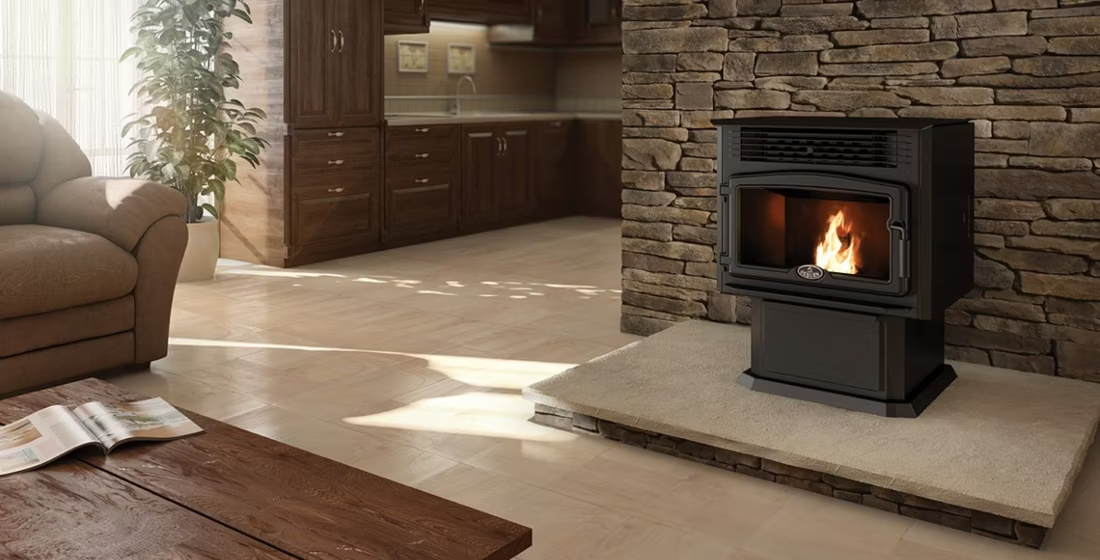
That doesn't mean pellet is off the table. A handful of Johnstown homeowners still install pellet stoves—usually for a finished basement, a sunroom that the furnace doesn't reach well, or as a lower-maintenance alternative to a wood stove. Regional pellet brands including Energex, Hamer Pellet Fuel, and Greene Team Pellet Fuel are distributed through the area, though supply is thinner than in markets where pellet heat is the norm, so ordering a season's worth of bags ahead of winter is worth planning for. One tradeoff to know going in: pellet stoves run on an electric auger and blower, so they depend on Pennsylvania Electric Co. (Penelec) power staying on—unlike a wood stove, they won't function during an outage unless paired with battery backup.
Three steps. No salesperson until you're ready.
Tell us about your project
Your zip code, your situation, and the fuel you're leaning toward—or let the answers point you to one.
See what's actually available
The brands dealers within 100 miles genuinely carry—real options, never a catalog mirage.
Get your dealer & Project Guide
A trusted local dealer, plus the free Project Guide & Parts List that names every component of the job.
Frequently Asked Questions
How much does a pellet stove installation cost in Johnstown?
Most pellet stove installations run in the $3,500 to $6,500 range nationally, and Johnstown pricing generally falls in that band—though because pellet is a smaller niche here than gas or electric, you may have fewer local installers to compare quotes against than you would for a furnace or gas insert. Costs depend on the stove size, whether venting runs through an exterior wall or existing chimney, and any electrical work needed for the hopper and blower circuit. Ask any dealer you're considering how many pellet installs they've done in Cambria County specifically—experience with this fuel type varies more here than with gas or wood.
Why aren't pellet stoves more common in Johnstown?
Johnstown's heating infrastructure grew up around coal and steel-era utilities, and when that transitioned, most homes moved to natural gas or electric rather than biomass. Add in the fact that Cambria County's building stock is largely older row homes and hillside houses where retrofitting a pellet stove's venting and electrical needs is a bigger project than swapping a furnace, and pellet simply never built the installer base or supply chain that it has in more rural, wood-heat-dependent parts of the state. It's a legitimate option—just a minority one.
Where can I buy pellets locally in Johnstown?
Energex, Hamer Pellet Fuel, and Greene Team Pellet Fuel are the regional brands most likely to show up at hardware stores and farm supply outlets serving the Johnstown area. Because pellet demand is lower here than in markets where it's a primary heat source, availability can tighten in January and February if a store under-orders for the season. Buying a full season's supply—typically 100 to 150 forty-pound bags for a average-sized home through a Johnstown winter—in October or November before demand spikes is the safer move.
Will my pellet stove work if the power goes out?
Not without a battery backup. Pellet stoves rely on an electric auger to feed fuel and a blower to distribute heat, so a Penelec (Pennsylvania Electric Co.) outage shuts the stove down along with everything else. Some homeowners pair a pellet stove with a small backup battery or generator specifically for this reason, especially given Johnstown's exposure to ice storms and heavy lake-effect snow bands off Lake Erie that can knock out power for a day or more. If reliable off-grid heat during outages is your main goal, a wood stove or a gas unit with battery-ignition backup is usually a better fit than pellet.
What size pellet stove do I need for a Johnstown home?
With 6,324 heating degree days and winter lows averaging around 19°F, Johnstown sits solidly in a cold-climate heating zone even though pellet isn't the dominant fuel choice. A stove rated for 1,000 to 1,500 square feet handles a single large room or finished basement as supplemental heat; something closer to 2,000+ square feet of rated output is needed if you're trying to offset a meaningful share of whole-home heating load. Given how few Johnstown homes run pellet as primary heat, most local installs skew toward the smaller end—supplemental use in one zone of the house rather than whole-home reliance.
Do I need a permit to install a pellet stove in Johnstown?
Most likely yes—new fuel-burning appliances typically require a building permit and inspection through your local building department, and pellet stoves are no exception even though they're less common than gas furnaces. A qualified local installer will know exactly what Cambria County and the City of Johnstown require and typically handles the paperwork as part of the job. Because pellet installs are less frequent here, it's worth confirming your installer has pulled permits for this specific appliance type before, not just for gas or wood units.
Pellet stove vs. wood stove—which makes more sense in Johnstown?
Wood is technically the more traditional option given the oak, hickory, maple, and cherry forests around Cambria County, and it works without electricity—a real plus during winter storm outages. Pellet stoves are more convenient (load a hopper, set a thermostat, less ash) and burn more consistently, but they need continuous power and rely on bagged fuel you buy rather than cut yourself. Neither fuel is common as a primary heat source in Johnstown, since most homes run on gas or electric—so this comparison usually comes down to which supplemental-heat tradeoff you'd rather live with, not which one is objectively better for the region.
Pellet vs. natural gas—why would I choose pellet in a gas-heavy market like Johnstown?
Natural gas is the default here for good reason: it's widely available, ignites instantly, and doesn't require you to store fuel bags in the garage. Pellet stoves make sense mainly for homeowners who want a visible, radiant-heat appliance with some biomass character without the hassle of splitting and stacking wood, or who are heating a space—like a converted garage or detached room—where running new gas line is more expensive than adding a pellet stove and electrical circuit. In a market like Johnstown where gas infrastructure is already in most homes, pellet is more of a lifestyle or supplemental choice than an economic one.
How much maintenance does a pellet stove need?
Pellet stoves need more frequent attention than a gas insert but less than a wood stove's chimney sweeping. Plan on emptying the ash pan every few days during regular use, a deeper cleaning of the burn pot and heat exchanger every one to two weeks, and an annual professional service to check the auger motor, blower, and venting. Because pellet installers are less common in the Johnstown area than gas or electric technicians, it's worth asking your dealer up front whether they offer ongoing service, or whether you'll need to handle burn-pot cleaning yourself between professional visits.
Why is my open fireplace making my house colder?
Open fireplaces suck—literally. As the fire burns, it consumes air your furnace already paid to heat and pulls it out through the chimney, so the house is actually colder after the fire goes out than before you lit it. An insert fixes this: it seals the chimney, puts fixed glass across the front, and turns that hole in your house into a real heat source.
Why is a fireplace insert so efficient?
An insert does two things: it seals the chimney completely, so you stop losing air you already paid to heat, and it radiates warmth into the room through the firebox and glass. Most add a heat-exchange fan that pulls cool room air underneath, wraps it around the hot firebox, and pushes it back out warm. Your home is more efficient before you've even lit the first fire.
How much should I budget for a fireplace?
For an average home—covering the fireplace, the vent pipe, and basic installation—a budget between $3,900 and $5,500 gives you a lot of options across wood, gas, and pellet. By the time you add finish work, gas line, and electrical, the average complete installation lands between $5,000 and $12,000 all-in. In a remodel or new build, a good rule is to put about 2.5% of the total project cost toward the fireplace.
Does a fireplace add value to my home?
On average, a fireplace adds back to the home about the same amount you spent installing it. Add the monthly savings from heating the rooms you actually use instead of the whole house—often hundreds of dollars a year—and the value case is strong before you even count what a fire does for how your family uses the room.
Nearby Dealers
Hearth shops serving Johnstown and the surrounding area. Every listing shows whether it is a WhyFire partner, a dealer we have verified as authorized for the brands we recommend, or a local business carrying hearth products. No manufacturer pays for placement. How we verify dealers →
Bantly Hardware
Heating World
Pellet Brands Stocked Around Johnstown
Manufacturers will point you to the nearest stocking dealer.
Find your pellet stove in Johnstown, PA.
Tell us about your home and we'll match you with a trusted local dealer who actually stocks and installs pellet appliances in Cambria County, plus a free Project Guide & Parts List—the exact parts, including the vent kit, and the dealer we recommend for your project.
Find Your Fireplace →