
Reliable Heat for Johnstown's Long Allegheny Winters.
Johnstown's river valley winters run cold and damp for months at a time. Find the right gas fireplace or insert for your home, and connect with a trusted local dealer who can install it correctly.
Every Project Starts From One of These Five Situations
Steady warmth for the Alleghenies, without the wood pile.
Johnstown sits at 1,161 feet in a steep Allegheny Mountain valley where the Conemaugh, Stonycreek, and Little Conemaugh Rivers meet. With roughly 6,324 heating degree days and average winter lows near 19°F, the demand on a home's heating system here is close to what you'd see in Buffalo, NY—long stretches of gray, damp cold from November into March. Much of Johnstown's housing stock dates to the steel-era boom: tightly packed rowhouses and hillside homes with shared walls and narrow lot lines, where running a new wood-burning chimney with proper clearances is often impractical. That building reality is a big part of why gas, not wood, has become the practical heating upgrade for most homes inside city limits.
Natural gas service reaches much of the city of Johnstown, and homes already plumbed for a gas range, water heater, or furnace can usually add a fireplace with a straightforward gas line tap. In the more rural stretches of Cambria County—up on the ridges and outside the service footprint—propane fills the gap, delivered and stored in a tank on the property. Either way, a properly sized direct-vent gas fireplace or insert gives you real, on-demand heat during the region's frequent ice storms and lake-effect snow squalls, without the wood storage, ash cleanup, or chimney maintenance that a masonry fireplace in a rowhouse would otherwise require.
Three steps. No salesperson until you're ready.
Tell us about your project
Your zip code, your situation, and the fuel you're leaning toward—or let the answers point you to one.
See what's actually available
The brands dealers within 100 miles genuinely carry—real options, never a catalog mirage.
Get your dealer & Project Guide
A trusted local dealer, plus the free Project Guide & Parts List that names every component of the job.
Frequently Asked Questions
How much does a gas fireplace installation cost in Johnstown?
Most gas fireplace and insert installations in the Johnstown area run somewhere between $3,500 and $9,500, depending on the unit, the venting path, and whether new gas line work is needed. A direct-vent insert dropped into an existing masonry firebox—common in Johnstown's older rowhouses—tends to land on the lower end when a gas line is already nearby. A new built-in fireplace in a remodel, or a home that needs a gas line run from the street or meter, will push toward the higher end. A local dealer will give you a firm number after seeing the space in person.
Can I convert my existing wood-burning fireplace to gas?
Yes, and it's one of the more common upgrades in Johnstown's older housing stock, where many rowhomes and hillside houses still have their original masonry fireboxes that were built for oak, hickory, or maple cordwood but rarely get used. A gas insert typically slides into that existing opening, uses a stainless liner run through the original chimney, and connects to a new or existing gas line. It keeps the look of the original fireplace while giving you push-button heat instead of the wood handling and creosote buildup that come with an open masonry hearth.
Do I need natural gas, or can I use propane instead?
Both work fine, and the choice mostly comes down to where you live. Inside Johnstown proper, natural gas service reaches most neighborhoods, so if your home already has gas for the furnace or water heater, adding a fireplace is a relatively simple tap-in. Out in the hillier, more rural parts of Cambria County where gas mains don't run, propane is the standard fallback—you'll either use an existing propane tank or have one installed by a local supplier. Nearly every gas fireplace on the market can be set up for either fuel; your installer just configures the correct orifice and regulator for the one you have.
Will a gas fireplace still work if the power goes out?
Most will, which matters here—ice storms and heavy lake-effect snow squalls off Lake Erie can knock out power in the Alleghenies for a day or more at a time. Units with standing pilot or IPI (intermittent pilot ignition) systems run on millivolt circuits or small battery backups, so they'll light and heat the room even when Pennsylvania Electric Co. service is down. Valor units go a step further: their pilot's thermocouple generates the small amount of electricity the fireplace needs, so there's no battery to remember to replace. If backup heat during outages matters to you, ask your local dealer about the ignition system before you buy.
What's the difference between a gas fireplace, insert, and stove?
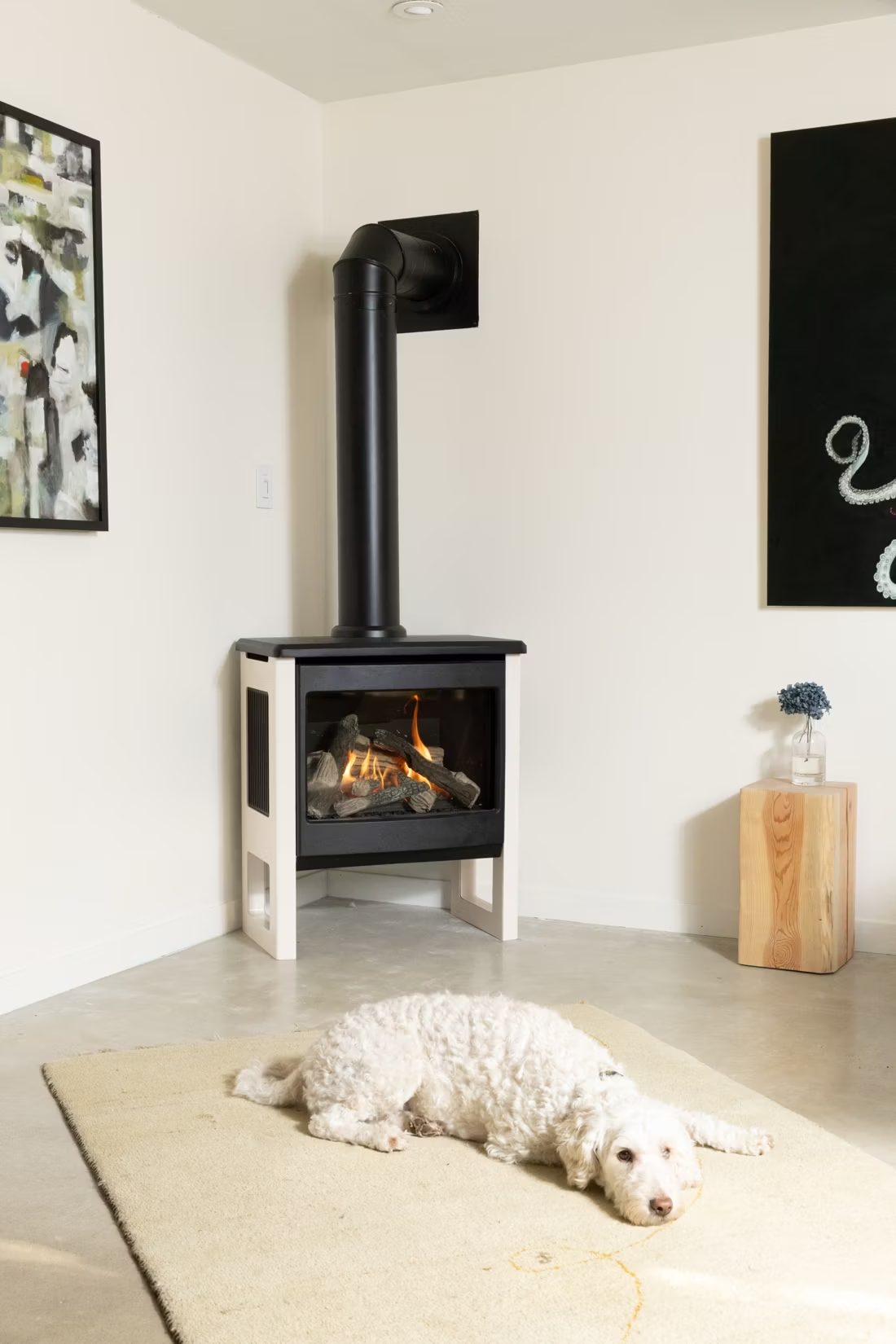
A gas fireplace is a built-in unit framed into a wall—the right call for new construction or a remodel where there's no existing firebox. A gas insert is built to slide into an existing masonry fireplace opening, which describes a lot of the original hearths in Johnstown's older rowhouses and hillside homes. A gas stove is a freestanding cabinet-style unit that sits out in the room like a wood stove would, useful when there's no fireplace opening to work with at all. For most Johnstown homeowners upgrading a fireplace that's already there, an insert is the straightforward choice.
Do I need a permit to install a gas fireplace in Johnstown?
Generally yes—a building permit and a gas line permit are typically required for a new gas fireplace or insert installation, whether the work falls under the city's code enforcement office or Cambria County's building department depending on your address. The gas line itself needs to be run or tied in by a licensed gas-fitter. This is one of the practical reasons to work through a certified hearth dealer rather than a handyman: they coordinate the permitting, the gas work, and the inspection instead of leaving you to juggle separate trades.
Should I get a vented or vent-free gas fireplace?
Vented (direct-vent) units pull combustion air from outside and exhaust it back outside through a sealed pipe—they're the standard choice almost everywhere, including Johnstown, and they don't put any combustion byproducts into your living space. Vent-free units burn without any outside venting at all; they're legal to install in Pennsylvania but come with strict room-size and ventilation requirements, and some states ban them outright. For Johnstown's older, tighter rowhouse floor plans, a direct-vent unit is usually the safer and more flexible option, since it doesn't depend on room volume calculations to run safely. A local dealer can walk you through both if you're weighing the tradeoff.
How often does a gas fireplace need to be serviced?
Plan on an annual inspection, ideally in late summer or early fall before the coldest stretch of the Allegheny winter sets in. A technician checks the burner, pilot assembly, venting, and gas connections, and cleans the glass and interior—a much smaller job than a wood chimney sweep, but still important, since a dirty or misaligned burner can produce soot staining or, worse, incomplete combustion. Most gas appliance service calls in the Johnstown area run $150 to $250 for a standard inspection and cleaning.
Why is gas more common than wood in Johnstown?
It comes down to the housing. A lot of Johnstown's neighborhoods were built during the steel era as tightly packed rowhouses with shared walls and narrow lots, where running a new wood-burning chimney with correct clearances to combustibles is often impossible without major structural work. Gas sidesteps that problem entirely—a direct-vent pipe runs straight out a wall instead of needing a full masonry or Class A chimney. Wood heat still has a place out in the more forested, rural stretches of Cambria County where oak, hickory, and cherry are plentiful and lots are larger, but inside the city, gas is simply the more practical fit for most homes.
Is my gas fireplace wasting gas?
If it was installed more than 15 years ago, probably. Older gas fireplaces keep a standing pilot light burning all the time, and that little flame can cost a couple hundred dollars a year. Newer models use pilot-on-demand ignition—the pilot lights only when you use the fireplace and goes out when you turn it off.
Why is a fireplace insert so efficient?
An insert does two things: it seals the chimney completely, so you stop losing air you already paid to heat, and it radiates warmth into the room through the firebox and glass. Most add a heat-exchange fan that pulls cool room air underneath, wraps it around the hot firebox, and pushes it back out warm. Your home is more efficient before you've even lit the first fire.
Does a fireplace add value to my home?
On average, a fireplace adds back to the home about the same amount you spent installing it. Add the monthly savings from heating the rooms you actually use instead of the whole house—often hundreds of dollars a year—and the value case is strong before you even count what a fire does for how your family uses the room.
What is an in-home preview and do I need one?
It's a visit where a hearth professional measures your space, confirms the model you picked actually works in your home, and walks the specs—framing, gas line, venting, finish work—before anything is ordered. Some details you just can't know until you see the house. Never make a down payment without one; it's the single most-skipped step that burns buyers.
Nearby Dealers
Hearth shops serving Johnstown and the surrounding area. Every listing shows whether it is a WhyFire partner, a dealer we have verified as authorized for the brands we recommend, or a local business carrying hearth products. No manufacturer pays for placement. How we verify dealers →
Bantly Hardware
Heating World
Find your gas fireplace in Johnstown.
Tell us a bit about your home and we'll match you with a trusted local dealer and send over your free Project Guide & Parts List—the exact fireplace or insert, venting, and parts recommended for your Johnstown home.
Find Your Fireplace →