
Steady heat for Indiana County's long, cold stretch of winter.
With winter lows averaging 18°F and a long, demanding heating season, Indiana County homes need heat that keeps up night after night. Find the right pellet stove or insert and connect with a trusted local dealer.
Every Project Starts From One of These Five Situations
Consistent warmth without the woodpile.
Indiana County sits on the Allegheny Plateau in western Pennsylvania, home to about 28,000 residents spread across the county seat of Indiana, boroughs like Blairsville and Homer City, and a wide stretch of farmland and wooded hills in between. Winters here run long—climate zone 5A, an average winter low of 18°F, and a heating season on par with a Madison, WI winter. That's a heating season that starts in October and doesn't fully let go until April, and it's why so many local homeowners look for something more reliable than a thermostat alone.
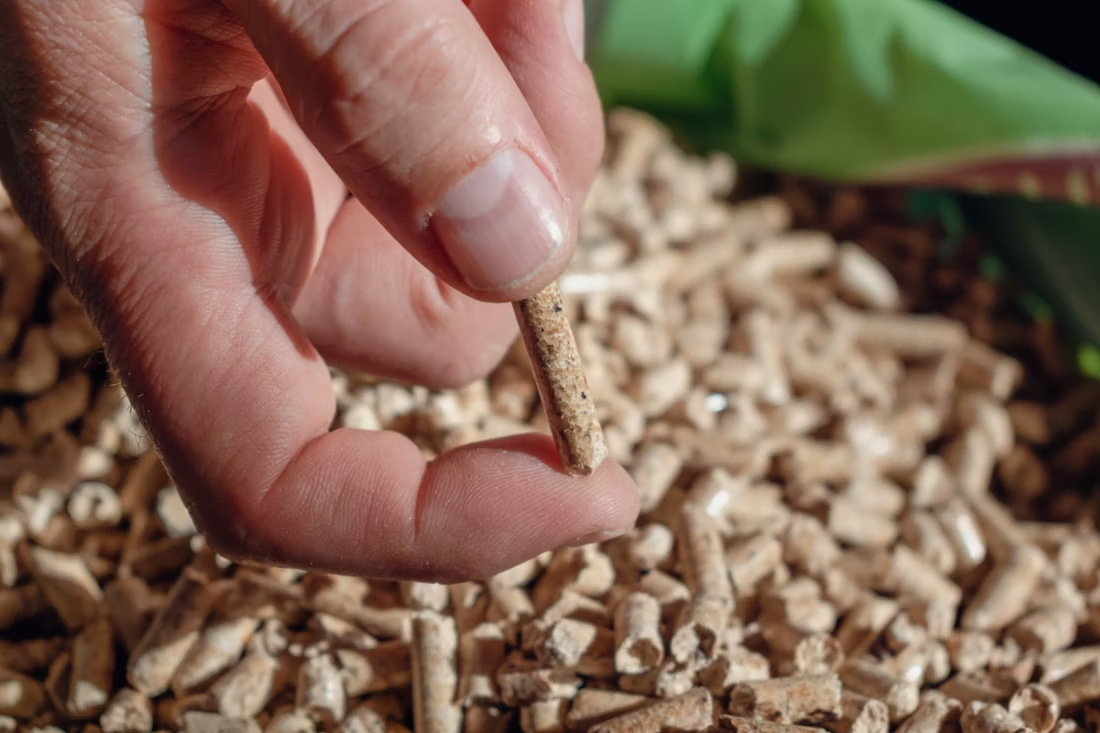
Pellet stoves and inserts fit that need well. They deliver even, thermostat-controlled heat without the daily work of splitting and stacking cordwood, and Indiana County sits within easy reach of regional hardwood pellet producers—Energex, Hamer Pellet Fuel, and Greene Team Pellet Fuel all supply this part of Pennsylvania, often milling pellets from the same oak, hickory, maple, and cherry stands that fill the county's hardwood forests. With no local air quality restrictions or burn curtailment days to work around, a pellet appliance can run whenever the temperature calls for it—a real advantage during the stretch of the season when overnight lows sit in the teens for weeks at a time.
Three steps. No salesperson until you're ready.
Tell us about your project
Your zip code, your situation, and the fuel you're leaning toward—or let the answers point you to one.
See what's actually available
The brands dealers within 100 miles genuinely carry—real options, never a catalog mirage.
Get your dealer & Project Guide
A trusted local dealer, plus the free Project Guide & Parts List that names every component of the job.
Frequently Asked Questions
How much does a pellet stove installation cost in Indiana County?
Most pellet stove and insert installations in Indiana County fall between roughly $3,000 and $6,500, depending on the unit, whether it's a freestanding stove or an insert going into an existing masonry fireplace, and how much venting and electrical work is involved. Pellet appliances need a small-diameter PL venting run (through a wall or existing chimney) and a standard 120V outlet to run the auger and combustion blower, so homes without an existing fireplace or nearby outlet may see costs toward the higher end. A local dealer can give you a firm number after seeing your specific setup.
What size pellet stove do I need for my home?
Sizing depends on square footage, insulation, and whether the stove is your primary or supplemental heat source. Given Indiana County's long, demanding winter season, most homes here need a unit on the larger end of a given size class compared to a milder climate—a stove rated for 1,500 sq ft in the Southeast might be better matched to 1,200 sq ft in a drafty Indiana County farmhouse. Older housing stock common in the county's rural townships, with less insulation and higher ceilings, often benefits from sizing up rather than down. A local retailer will factor in your home's construction and layout during an in-home consultation, which is worth having before you commit to a model.
Where can I find pellet stove installers near me in Indiana County?
Look for hearth retailers or HVAC contractors with NFI (National Fireplace Institute) pellet-specialist certification, which covers the specific venting, clearance, and electrical requirements pellet appliances have. Indiana County doesn't run permitting through one central county building department—many boroughs and townships (Indiana Borough, White Township, Blairsville, and others) handle permits locally—so it helps to work with an installer who already knows which office to call for your address. A certified dealer will typically coordinate that permit as part of the installation rather than leaving it to you.
What's the difference between a pellet stove and a pellet insert?
A pellet stove is a freestanding unit that sits on its own hearth pad and vents through a wall or existing chimney—it can go almost anywhere in a room with the right clearances. A pellet insert is built to slide into an existing masonry fireplace opening, turning an old wood-burning fireplace into a sealed, high-efficiency pellet appliance while reusing the chimney chase for venting. For Indiana County homes with an existing fireplace, especially in the county's older housing stock, an insert is often the more straightforward retrofit. Homes without an existing fireplace typically go with a freestanding stove instead.
Do I need a permit to install a pellet stove in Indiana County?
Yes—installing a new pellet stove or insert generally requires a permit under Pennsylvania's Uniform Construction Code, but in Indiana County that permit is issued by your specific municipality rather than a single county office. Indiana Borough, White Township, Blairsville, and the county's other boroughs and townships each handle this locally. Most hearth dealers who install pellet appliances in the area are familiar with the process for the municipalities they regularly work in and will pull the permit as part of the job.
What's the best pellet stove for Indiana County's climate?
With winter lows averaging 18°F and a heating season that stretches from October through April, look for a pellet stove with a large hopper capacity so you're not refilling every few hours overnight. Harman, manufactured in Halifax, Pennsylvania, is a common choice among western PA dealers and holds up well in sustained cold-climate use, alongside other established brands like Englander and Lopi. Pair the stove with hardwood pellets from a regional producer like Energex, Hamer Pellet Fuel, or Greene Team Pellet Fuel—all supply this part of the state—and ask your local dealer whether a larger hopper or auto-ignition model makes sense for your specific home.
Where can I buy pellets in Indiana County?
Hardwood pellets from regional producers—Energex, Hamer Pellet Fuel, and Greene Team Pellet Fuel—are commonly stocked at hearth dealers, farm supply stores, and hardware stores throughout western Pennsylvania, usually sold in 40-pound bags or by the ton on pallets. Regional pricing for hardwood pellets typically runs somewhere in the $250 to $350 per ton range, though it's worth checking with a couple of local suppliers each fall, since pricing can shift with hardwood mill supply and demand ahead of the heating season. Buying early, before the coldest months hit, often means better availability and fewer sold-out pallets.
How often does a pellet stove need to be cleaned and serviced?
Pellet stoves need more frequent attention than a gas fireplace but less than a wood stove's annual chimney sweep. Plan on cleaning the burn pot and ash area every few days during heavy winter use, a deeper cleaning of the exhaust venting and combustion blower once a season, and an annual professional inspection to check the auger, gaskets, and electronic controls. Given Indiana County's long heating season, a pellet stove running as primary heat from October through April will need more frequent ash removal than one used only as backup—your dealer can walk you through a maintenance schedule suited to how you plan to use it.
Pellet stove vs. wood stove—which is right for my Indiana County home?
Wood stoves run on cordwood—plentiful in a county surrounded by oak, hickory, maple, and cherry forest—and keep working without electricity, which matters during winter storms when rural power lines in the county can go down for hours or longer. Pellet stoves are easier to operate day to day, produce less ash, and burn more consistently, but the auger and blower both need electricity, so a pellet stove isn't a reliable backup source during an outage unless it's paired with a battery backup or generator. For Indiana County homes where losing power in a January storm is a real possibility, many people keep a wood stove as their storm backup and use a pellet stove or insert for convenient daily heat.
Why is my open fireplace making my house colder?
Open fireplaces suck—literally. As the fire burns, it consumes air your furnace already paid to heat and pulls it out through the chimney, so the house is actually colder after the fire goes out than before you lit it. An insert fixes this: it seals the chimney, puts fixed glass across the front, and turns that hole in your house into a real heat source.
Why is a fireplace insert so efficient?
An insert does two things: it seals the chimney completely, so you stop losing air you already paid to heat, and it radiates warmth into the room through the firebox and glass. Most add a heat-exchange fan that pulls cool room air underneath, wraps it around the hot firebox, and pushes it back out warm. Your home is more efficient before you've even lit the first fire.
How much should I budget for a fireplace?
For an average home—covering the fireplace, the vent pipe, and basic installation—a budget between $3,900 and $5,500 gives you a lot of options across wood, gas, and pellet. By the time you add finish work, gas line, and electrical, the average complete installation lands between $5,000 and $12,000 all-in. In a remodel or new build, a good rule is to put about 2.5% of the total project cost toward the fireplace.
What is an in-home preview and do I need one?
It's a visit where a hearth professional measures your space, confirms the model you picked actually works in your home, and walks the specs—framing, gas line, venting, finish work—before anything is ordered. Some details you just can't know until you see the house. Never make a down payment without one; it's the single most-skipped step that burns buyers.
Pellet Brands Stocked Around Indiana County
Manufacturers will point you to the nearest stocking dealer.
Find your pellet stove in Indiana County.
Tell us a bit about your home and we'll match you with a trusted local dealer and send over a free Project Guide & Parts List—the exact parts, including the vent kit, for your pellet project in Indiana County.
Find Your Fireplace →