
Every fuel type, every corner of Indiana County.
Wood, gas, pellet, and electric fireplace resources for the whole county—from the borough of Indiana out through Blairsville, Homer City, and the rural townships toward Marion Center. Pick a fuel and get matched with a local dealer who actually installs it here.
Every Project Starts From One of These Five Situations
Appalachian foothill winters, 6,146 heating degree days, and a county still built on hardwood.
Indiana County sits in the Appalachian Plateau of western Pennsylvania, a landscape of ridges and hardwood forest that surrounds the borough of Indiana, home to Indiana University of Pennsylvania. Average winter lows near 18°F and 6,146 heating degree days put the county in roughly the same heating-load range as Buffalo, New York—a real winter with a long shoulder season, not a mild one. Oak, hickory, maple, and cherry are the wood species most households here actually burn, much of it split from a homeowner's own woodlot or bought from one of the small firewood operations scattered through the county, which keeps wood heat both practical and cheap relative to other fuels.
Indiana County has no air-quality nonattainment designations or burn-curtailment restrictions, which is a real point of difference from smokier basin or valley counties further west—a certified wood stove here can run every cold night of the season without a curtailment calendar to check. Natural gas service, largely through Columbia Gas of Pennsylvania, reaches the borough of Indiana and the larger municipalities like Blairsville and Homer City, while homes further out in the townships typically run on propane. Pennsylvania's Uniform Construction Code governs hearth installations countywide, with permits handled at the municipal level—Indiana Borough, Blairsville, White Township, and the rest each run their own code enforcement office. This hub rolls up hearth retailers, service techs, and fuel suppliers across the whole county, from Indiana south to Saltsburg and Blairsville, east toward Marion Center and Clymer. Pick your fuel below for local dealers, install costs, and unit recommendations specific to your town.
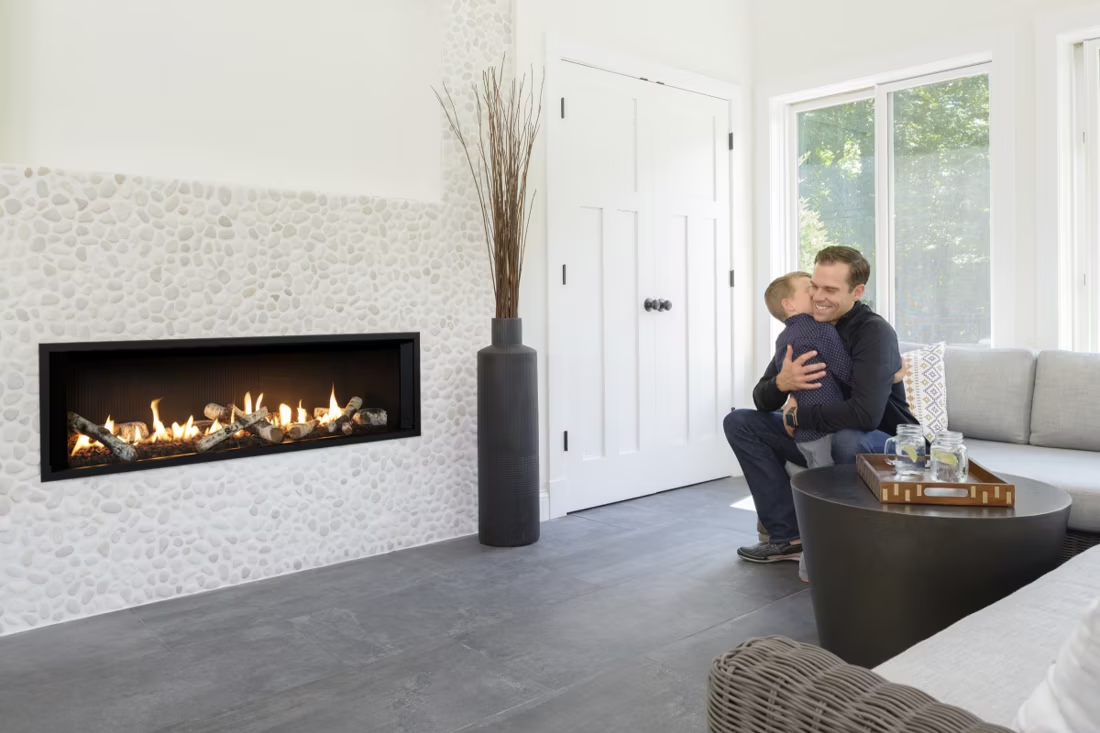
Four fuels. One honest answer for Indiana County.
Three steps. No salesperson until you're ready.
Tell us about your project
Your zip code, your situation, and the fuel you're leaning toward—or let the answers point you to one.
See what's actually available
The brands dealers within 100 miles genuinely carry—real options, never a catalog mirage.
Get your dealer & Project Guide
A trusted local dealer, plus the free Project Guide & Parts List that names every component of the job.
Frequently Asked Questions
Which fireplace fuel makes the most sense in Indiana County?
All four fuels see real use here, and the right pick usually comes down to what's already reaching your property. Wood is the traditional backbone in the townships, where oak, hickory, maple, and cherry are abundant and many homeowners split their own—a good catalytic stove will hold overnight through an 18°F January night without much trouble, and with no curtailment restrictions in this county, there's nothing stopping you from burning every cold night of the season. Gas is the convenient choice in the borough of Indiana and other municipalities served by Columbia Gas of Pennsylvania; homes outside those service areas typically run propane instead. Pellet stoves have a solid local footing too, helped by three regional Pennsylvania brands—Energex, Hamer Pellet Fuel, and Greene Team Pellet Fuel—all within reasonable trucking distance. Electric fireplaces work well as supplemental heat in bedrooms or finished basements, but they're not sized to carry a home through a 6,146-HDD winter on their own.
Do I need a permit to install a wood stove, insert, or gas fireplace in Indiana County?
Yes, and it's handled at the municipal level under Pennsylvania's Uniform Construction Code rather than through a single county office. Indiana Borough, Blairsville, Homer City, and each township run their own code enforcement, so the permit process depends on where your property sits. New wood stoves and inserts need to meet EPA emissions standards to pass inspection, gas installations require a licensed gas fitter and a separate gas-line permit, and pellet stove installs follow a similar path to wood without additional restrictions since the county has no burn-curtailment program. Electric fireplace installs rarely need a permit unless you're adding a dedicated circuit for a built-in unit. Most hearth retailers we match homeowners with pull the permit as part of the install, so it's rarely something you're navigating alone.
Can I find a hearth retailer that carries more than one fuel type?
Most retailers serving Indiana County stock two or three fuel types rather than specializing narrowly, which fits how households here actually heat—plenty of homes run a wood stove as the primary heat source with a gas or electric unit elsewhere in the house for convenience. A multi-fuel dealer lets you compare working wood, gas, and pellet displays side by side and talk through what actually fits your address, whether you're inside Columbia Gas's service territory or relying on propane out in the townships. We match you with the retailer whose lineup and service area genuinely covers your project rather than sending you to whichever dealer has the biggest showroom.
How does installation and service work for homes outside the borough of Indiana?
Installation crews and service techs are concentrated around Indiana and Blairsville but regularly travel out to Homer City, Marion Center, Clymer, Saltsburg, and the surrounding townships. Expect a modest trip charge for the farthest calls, and expect scheduling to fill up fast once temperatures drop in late fall—booking your annual chimney sweep or gas inspection in late summer, well before the first hard freeze, keeps you ahead of the rush. For properties well outside town limits, it's worth asking your installer about spare igniter parts for gas units, since a winter storm on rural roads can push a return service visit back by a few days.
What does a fireplace installation typically cost in Indiana County?
Costs track fairly closely with regional Pennsylvania pricing, adjusted for how much venting or gas-line work your home needs. Wood stove or insert installs generally run $4,000–$8,500, with full new-construction chimney work pushing higher. Gas fireplaces, inserts, and stoves typically land between $4,000–$10,000, with the range driven mostly by whether Columbia Gas service already reaches your house or you're extending a line. Pellet stove and insert installs usually fall around $4,000–$7,000. Electric fireplaces are the low-cost outlier—$200–$3,000 for the unit, plus $400–$1,200 in labor for anything more involved than a plug-and-play placement. The county + fuel pages above break these numbers down further with local retailer pricing.
Is firewood easy to source in Indiana County, and does it matter which species I burn?
Firewood is genuinely abundant here—the county's oak-hickory forest cover means most rural homeowners either cut their own or buy from a nearby small-scale dealer rather than trucking wood in from elsewhere. Species matters for how your stove performs: oak and hickory are dense, high-BTU woods that burn long and hot once properly seasoned, which is exactly what you want for holding a fire through an 18°F overnight low; cherry and maple burn a bit faster and cooler, useful for shoulder-season fires in October or April when you don't need max output. Whatever you're burning, plan on at least six to twelve months of seasoning time before it's ready—green oak in particular takes longer to dry than most people expect, and a moisture meter is a worthwhile five-dollar tool for anyone buying wood from a new supplier.
What is an in-home preview and do I need one?
It's a visit where a hearth professional measures your space, confirms the model you picked actually works in your home, and walks the specs—framing, gas line, venting, finish work—before anything is ordered. Some details you just can't know until you see the house. Never make a down payment without one; it's the single most-skipped step that burns buyers.
Wood, gas, pellet, or electric—how do I choose?
Match the fuel to your life, not the other way around. Wood: lowest fuel cost and total power-outage independence, but you're hauling and stacking. Gas: press a button, set a thermostat, no maintenance to speak of. Pellet: wood economics with automatic feeding, in exchange for weekly cleaning and a need for electricity. Electric: plugs in anywhere with honest supplemental heat. Nobody regrets the fuel that fits how they actually live.
Can I install a fireplace myself?
If you're putting a fire in your house on purpose, it's best to work with an expert. Unless you're genuinely experienced in framing, gas line, vent pipe, and the national code on clearances to combustibles, have a professional do it—and ideally the same company that sells you the fireplace, so warranty, service, and liability all live under one roof.
Does a fireplace add value to my home?
On average, a fireplace adds back to the home about the same amount you spent installing it. Add the monthly savings from heating the rooms you actually use instead of the whole house—often hundreds of dollars a year—and the value case is strong before you even count what a fire does for how your family uses the room.
Stove and Fireplace Dealers in Indiana County
Listings include WhyFire partner dealers, dealers we have verified as authorized for the brands we recommend, and established local businesses that carry hearth products. Every listing shows which one it is. The ones marked Preferred run on WhyFire's software, so they can show you real pricing and book your appointment right here. No manufacturer pays for placement. How we verify dealers →
Bantly Hardware
Get matched with a local Indiana County dealer.
Pick your fuel below and we'll put together a free Project Guide & Parts List—the right unit, the vent kit it needs, and the local dealer we recommend for your project.
Find Your Fireplace →