
Zone Heat That Plugs In, No Chimney Required.
A straightforward way to add real supplemental warmth to a Homeacre-Lyndora home or finished basement, without venting, gas lines, or a masonry chimney to maintain.
Every Project Starts From One of These Five Situations
Reliable heat without a flue to maintain.
Homeacre-Lyndora sits in Butler County at about 1,216 feet on the edge of the Allegheny Plateau, where winters average a low of 17°F and the area logs roughly 6,457 heating degree days a year—a cold-climate demand not far off from Buffalo, NY. The borough's housing stock leans older: compact early-20th-century homes built for the steel and rail workers who once filled the Lyndora yards, many on tight lots with modest floor plans. That combination—real cold and tight, older houses—is exactly where electric fireplaces earn their keep as supplemental zone heat.
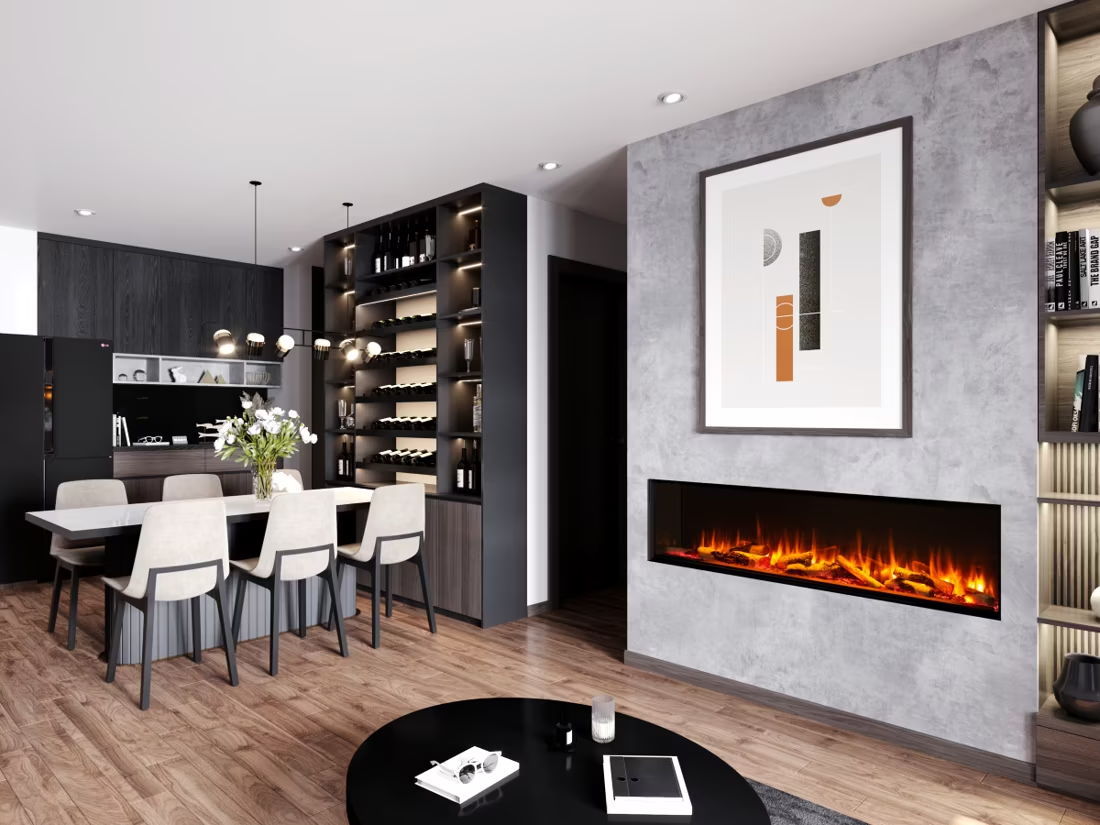
Electric service here runs through West Penn Power Company and Pennsylvania Power Co., and because electric units don't burn fuel on-site, there's no venting, no gas line, and no combustion byproducts to manage—which matters in a borough where homes sit close together on narrow lots. A well-placed electric insert or wall-mount unit can knock the chill off a finished basement, a converted attic bedroom, or a sunroom without touching your furnace's ductwork or your homeowner's insurance policy.
Three steps. No salesperson until you're ready.
Tell us about your project
Your zip code, your situation, and the fuel you're leaning toward—or let the answers point you to one.
See what's actually available
The brands dealers within 100 miles genuinely carry—real options, never a catalog mirage.
Get your dealer & Project Guide
A trusted local dealer, plus the free Project Guide & Parts List that names every component of the job.
Frequently Asked Questions
How much does an electric fireplace installation cost in Homeacre-Lyndora?
Plug-in electric fireplaces and freestanding stoves that run on a standard 120-volt outlet typically cost $300 to $1,500 installed, since there's often no wiring work involved beyond hanging or setting the unit. Built-in electric fireplaces or larger units that need a dedicated 20-amp or 240-volt circuit run higher—usually $2,000 to $4,500 once you add an electrician's time, wall framing or trim carpentry, and the unit itself. Homes in Homeacre-Lyndora's older housing stock sometimes need panel or wiring updates first if the existing circuits are already loaded, which a local electrician can flag during a quick walkthrough.
Does an electric fireplace actually put out heat, or is it just for looks?
Most electric fireplaces include a built-in heater, typically rated around 1,500 watts, that can noticeably warm a 400 to 1,000 square foot space depending on insulation and ceiling height. What it won't do is replace your furnace on a 17°F January morning—electric fireplaces are zone heaters, not whole-home heating systems. In Homeacre-Lyndora, they're most often used to take the edge off a finished basement, a converted attic room, or a sunroom while the rest of the house stays on central heat, or to add ambiance with the heater switched off in shoulder-season months.
Do I need a permit to install an electric fireplace in Homeacre-Lyndora?
A plug-in electric fireplace that uses an existing outlet generally doesn't require a permit—it's treated like any other appliance. If you're adding a built-in unit that needs a new dedicated circuit or a 240-volt line, the electrical work itself typically requires a permit, which the licensed electrician handling the wiring will pull through Butler County. It's worth confirming directly with whichever contractor you hire, since permit requirements can vary slightly depending on whether the work touches your panel.
What's the difference between a plug-in electric fireplace and a built-in electric insert?
A plug-in unit—whether a freestanding stove-style cabinet or a wall-mounted model—runs off a standard outlet and can usually be relocated later, which makes it a good fit for renters or homeowners who aren't ready to commit to permanent construction. A built-in electric insert is recessed into a wall or existing fireplace opening, finished with trim or a mantel surround, and often wired on its own circuit for higher heat output. For Homeacre-Lyndora's older homes with an existing but unused masonry fireplace, a built-in insert can convert that opening into usable, code-simple heat without touching the chimney flue.
Will an electric fireplace raise my electric bill much?
It depends on how much you run the heater function versus just the flame effect. A 1,500-watt heater running for a few hours an evening adds a modest amount to a West Penn Power Company or Pennsylvania Power Co. bill—real Pennsylvania residential rates generally sit in the low-to-mid teens per kWh, though your exact rate and any riders will be on your latest statement. Running the fireplace as a supplemental heater in one room, rather than as your primary heat source, keeps the added cost reasonable while letting you turn down the thermostat elsewhere in the house.
Electric vs. gas fireplace—which makes more sense for my Homeacre-Lyndora home?
Gas fireplaces are a standard, well-supported option in this part of Butler County and put out considerably more heat, but they require a gas line and proper venting, which adds cost and construction in an older home. Electric fireplaces skip both of those requirements entirely—no gas hookup, no vent penetration through an exterior wall, no annual gas appliance service call. For a finished basement, a rental property, or a room where running gas line isn't practical, electric is usually the simpler and less invasive choice. For a primary living space where you want serious heat output, gas is worth the extra installation complexity.
Can I put an electric fireplace in a finished basement that doesn't already have the right outlet?
Yes, and it's one of the more common projects in Homeacre-Lyndora's older housing stock, where basements were often finished decades after the home was built and don't always have outlets in the ideal spot. A local electrician can run a new circuit to wherever you want the unit, whether that's a plug-in wall-mount or a built-in insert framed into a stud wall. Because there's no venting to route, the electrical work is usually the only trade involved, which keeps the project simpler than a comparable gas installation.
What about a wood or pellet stove instead—are those an option here?
They're uncommon in Homeacre-Lyndora, and it's mostly a function of the housing stock rather than air quality rules—the borough has no notable air quality restrictions, but its older, tightly-set lots don't leave much room for a woodpile, clearance-to-combustibles requirements, or a new chimney chase. Butler County's woodlands do produce plenty of oak, hickory, maple, and cherry for the handful of homeowners who do burn wood, but most residents here lean toward electric or gas simply because those options fit the existing house without major structural changes.
How long does an electric fireplace last, and what maintenance does it need?
Most electric fireplaces last 8 to 12 years before the heating element or LED components need replacing, and many manufacturers sell replacement parts rather than requiring a full unit swap. Maintenance is minimal compared to gas or wood: no annual chimney sweep, no combustion inspection, no CO testing. Occasional dusting of the vents and a check that the fan isn't clogged with pet hair or debris is typically all it takes to keep one running well through a Homeacre-Lyndora winter.
Can I put a TV above my fireplace?
Yes—with an asterisk. Fireplaces are hot and TVs don't like heat. Either put a mantel between them to deflect rising warmth, or choose a fireplace with heat-management technology that creates a cool zone on the wall above—the wall stays around 125 degrees, barely warm, while the room still gets full heat. If you like clean lines and don't want a mantel, heat management is the answer.
Do electric fireplaces actually produce heat?
Yes—most put out around 4,800–5,000 BTUs from a standard outlet, which comfortably warms a bedroom, office, or den as a comfort-zone heater. What they won't do is carry a whole house the way wood, gas, or pellet can. Think of electric as ambiance-first with honest supplemental heat: flames on with no heat in July, flames plus warmth in January.
Can a fireplace actually lower my heating bill?
Yes—by creating a comfort zone. A furnace heats every square foot of the house just to warm the one room you're in; a gas fireplace on low burns roughly a sixth of the gas a typical furnace does. Set the furnace around 55–60 degrees as a baseline, then heat the rooms your family actually uses. Families who heat this way commonly save $20–$60 a month.
Can I install a fireplace myself?
If you're putting a fire in your house on purpose, it's best to work with an expert. Unless you're genuinely experienced in framing, gas line, vent pipe, and the national code on clearances to combustibles, have a professional do it—and ideally the same company that sells you the fireplace, so warranty, service, and liability all live under one roof.
Nearby Dealers
Hearth shops serving Homeacre-Lyndora and the surrounding area. Every listing shows whether it is a WhyFire partner, a dealer we have verified as authorized for the brands we recommend, or a local business carrying hearth products. No manufacturer pays for placement. How we verify dealers →
Home Improvement Center
Fireplace And Patio Place
Suburban Insulation
Northern Woodworking
Halls Pools & Fireplaces
Soot Seekers Chimney Service
Buck Stove & Fireplace
Electric Service in Homeacre-Lyndora
An electric fireplace's heater draws about 1,500 watts—pennies per hour at local rates.
West Penn Power Company
Pennsylvania Power Co
Find your electric fireplace in Homeacre-Lyndora.
Tell us about your space and we'll put together a free Project Guide & Parts List—the right unit, the wiring it needs, and a trusted local dealer near Homeacre-Lyndora to install it.
Find Your Fireplace →