
Your fireplace, matched to Butler County winters.
Wood, gas, pellet, and electric fireplace resources for every town in Butler County—from Butler and Cranberry Township out to Slippery Rock and Saxonburg. Find the right unit and connect with a trusted local hearth retailer.
Every Project Starts From One of These Five Situations
Hardwood country on the Allegheny Plateau.
Butler County sits on the rolling Allegheny Plateau north of Pittsburgh, with most communities between 1,000 and 1,400 feet in elevation. Winters run long—an average heating season of roughly 6,457 heating degree days puts Butler County in the same cold-climate range as Buffalo, NY, and average winter lows hover around 17°F. Oak, hickory, maple, and cherry are the dominant local wood species, and they're about as good as firewood gets: dense, long-burning, and slow to season but worth the wait. There's no formal wood-smoke non-attainment designation here, so burning decisions come down to good practice—seasoned wood, a properly sized stove, and regular chimney maintenance—rather than curtailment schedules.
What you'll find on this hub: hearth retailers, service technicians, and fuel suppliers serving communities across the county—Butler, Cranberry Township, Zelienople, Mars, Harmony, Evans City, Saxonburg, and Slippery Rock among them. Pick your fuel below to drill into specifics—local dealers, installation costs, recommended units, and permit details for your municipality. Whether you're heating a farmhouse near Prospect or a newer build in Cranberry Township, this is the starting point.
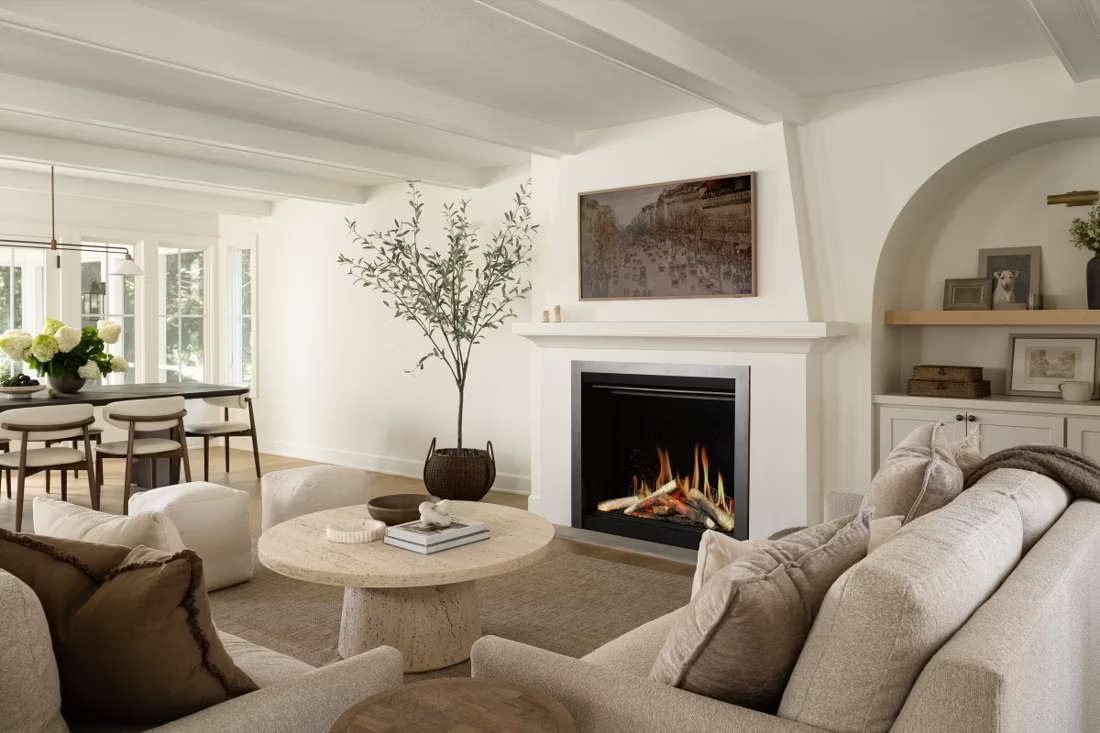
Four fuels. One honest answer for Butler County.
Three steps. No salesperson until you're ready.
Tell us about your project
Your zip code, your situation, and the fuel you're leaning toward—or let the answers point you to one.
See what's actually available
The brands dealers within 100 miles genuinely carry—real options, never a catalog mirage.
Get your dealer & Project Guide
A trusted local dealer, plus the free Project Guide & Parts List that names every component of the job.
Frequently Asked Questions
Which fuel works best in Butler County?
It depends on your home and your priorities, but all four fuels genuinely work here. Wood is the traditional choice given the abundance of local oak, hickory, maple, and cherry—dense hardwoods that season well and burn long through 17°F winter nights. Gas is the convenience pick in areas with natural gas service, particularly around Cranberry Township and the more built-up boroughs; propane fills the gap in rural townships without gas lines. Pellet is a strong middle ground—regional brands like Energex, Hamer Pellet Fuel, and Greene Team Pellet Fuel are widely stocked, giving wood-style ambiance without the splitting and stacking. Electric is supplemental here, not a primary heat source for a 6,457-HDD climate, but it works well for bedrooms, finished basements, and homes where venting isn't practical. Most Butler County homes end up mixing fuels—wood or pellet doing the heavy lifting, gas or electric handling secondary spaces.
Do I need a permit to install a fireplace in Butler County?
In most cases, yes, but permitting runs through your specific municipality rather than a single county office. Butler Borough, Cranberry Township, Center Township, and the other townships and boroughs each administer their own building permits under the Pennsylvania Uniform Construction Code. New wood stoves, wood inserts, gas fireplaces, gas inserts, and pellet stoves typically require a permit; gas work also needs a licensed gas-fitter for the connection itself. Electric fireplaces usually don't need a permit unless you're hardwiring a built-in unit into new circuitry. Most local hearth retailers handle the permit application as part of the installation, so it's worth asking upfront whether that's included in your quote.
Are there air quality restrictions on wood burning in Butler County?
No—Butler County doesn't sit in a non-attainment area and there's no history of winter burn curtailment here, unlike some western basin and valley communities that deal with temperature inversions. That said, good practice still matters: burn only seasoned hardwood (oak and hickory need at least 6–12 months of drying time to season properly), have your chimney swept annually to manage creosote buildup, and if you're replacing an older stove, an EPA-certified unit will burn cleaner and use less wood for the same heat output. There's no regulatory requirement pushing you toward a newer stove, but the efficiency gain alone is usually worth it in a climate this cold.
Can one local hearth retailer handle all four fuel types?
Many Butler County hearth retailers carry at least three of the four fuel types, and a handful carry all of them. Larger showrooms based in Butler or along the Cranberry Township retail corridor tend to stock wood, gas, and pellet units side by side, with electric fireplaces as a smaller display section. Smaller dealers in boroughs like Zelienople or Slippery Rock may focus more narrowly—often wood and pellet, since those fuels see steady demand from rural and township customers who split their own firewood or buy bagged pellets locally. If you're still deciding between fuels, a multi-fuel dealer can show you working displays side by side and walk through venting and cost trade-offs specific to your home.
How does service work in rural areas of Butler County?
Most service technicians are based near Butler or Cranberry Township and travel out to the more rural townships—areas like Worth, Slippery Rock, Marion, and Concord—for both installs and annual maintenance. Expect a modest travel fee for calls further from the population centers, and expect scheduling to tighten up fast once the weather turns; booking your annual chimney sweep or gas inspection in September or October, before the first cold snap, is far easier than trying to get a mid-January emergency slot. If you're heating with wood or pellet as a primary source in a more remote part of the county, it's worth keeping a backup plan—a couple days of dry split wood on hand covers most short outages regardless of your main fuel type.
What's the typical cost range for fireplace installation across all fuel types in Butler County?
Ranges vary by fuel and by how much existing infrastructure you have to work with. Wood stove or insert installation: roughly $4,000–$8,500 for a typical install, higher if new chimney or hearth work is required. Gas fireplace, insert, or stove: roughly $4,000–$9,500, with cost driven mainly by gas line work and venting—lower if you're converting a masonry fireplace with an existing gas line nearby. Pellet stove or insert: roughly $4,000–$7,000 for most installs. Electric fireplace: $200–$2,500 for the unit itself, plus $400–$1,000 in labor for anything beyond a simple plug-in setup. For details tied to your specific fuel, see the county + fuel pages above.
How much should I budget for a fireplace?
For an average home—covering the fireplace, the vent pipe, and basic installation—a budget between $3,900 and $5,500 gives you a lot of options across wood, gas, and pellet. By the time you add finish work, gas line, and electrical, the average complete installation lands between $5,000 and $12,000 all-in. In a remodel or new build, a good rule is to put about 2.5% of the total project cost toward the fireplace.
What is an in-home preview and do I need one?
It's a visit where a hearth professional measures your space, confirms the model you picked actually works in your home, and walks the specs—framing, gas line, venting, finish work—before anything is ordered. Some details you just can't know until you see the house. Never make a down payment without one; it's the single most-skipped step that burns buyers.
Can I install a fireplace myself?
If you're putting a fire in your house on purpose, it's best to work with an expert. Unless you're genuinely experienced in framing, gas line, vent pipe, and the national code on clearances to combustibles, have a professional do it—and ideally the same company that sells you the fireplace, so warranty, service, and liability all live under one roof.
What are the biggest mistakes people make buying a fireplace?
Five come up constantly: budgeting for the unit but not the full job (vent, gas line, electrical, finish work); drowning in options instead of starting from style and fuel; buying without an in-home preview; handing installation to a handyman instead of a pro; and giving up out of sheer indecision. Every one is avoidable with a clear plan—step one, step two, step three.
Stove and Fireplace Dealers in Butler County
Listings include WhyFire partner dealers, dealers we have verified as authorized for the brands we recommend, and established local businesses that carry hearth products. Every listing shows which one it is. The ones marked Preferred run on WhyFire's software, so they can show you real pricing and book your appointment right here. No manufacturer pays for placement. How we verify dealers →
Home Improvement Center
Fireplace And Patio Place
Suburban Insulation
Northern Woodworking
Soot Seekers Chimney Service
Buck Stove & Fireplace
Halls Pools & Fireplaces
Find your fireplace in Butler County.
Pick your fuel below, and we'll match you with a trusted local dealer and send over a free Project Guide & Parts List—the exact parts, including the vent kit, and the local pro we recommend for your project.
Find Your Fireplace →