
Pellet Stoves Are Uncommon in Green Tree—But Not Impossible.
Green Tree's tight lots and gas-and-electric infrastructure mean pellet heat is the exception here, not the rule. If it's still the right fit for your home, we'll help you find a dealer who actually knows how to do it right.
Every Project Starts From One of These Five Situations
A small, built-out borough where pellet stoves are the exception, not the rule.
Green Tree is a compact borough of under 5,000 people tucked into Pittsburgh's South Hills, with narrow lots, older housing stock, and limited space for the kind of bulk pellet storage and delivery that pellet heating depends on. Winters here are real—average lows around 20°F and roughly 5,379 heating degree days puts Green Tree solidly in climate zone 5A—but most homeowners meet that cold with natural gas or electric resistance heat rather than a hopper-fed stove. That's simply the housing stock and utility infrastructure talking, not a knock on pellet heat itself.
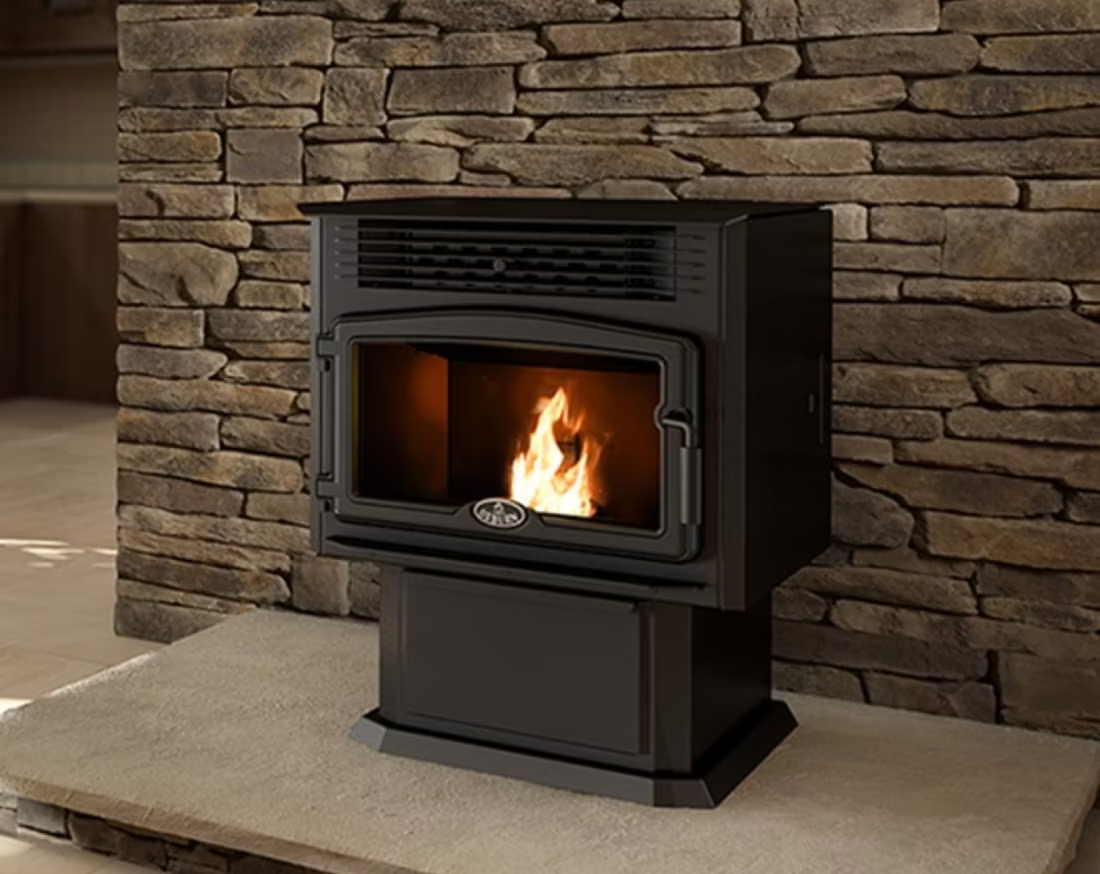
Allegheny County is also a designated non-attainment area for air quality, which means any solid-fuel appliance—pellet included—needs to be EPA-certified and installed to code, not just bolted into a corner. If you've got the space (a garage, a basement mudroom, an accessible exterior wall for venting) and you like the idea of a self-feeding, thermostat-controlled stove, pellet can still work well in Green Tree. It's just not the default choice your neighbors are making, and that means finding a dealer who genuinely stocks and services this equipment locally matters more here than in a place where pellet stoves are everywhere.
Three steps. No salesperson until you're ready.
Tell us about your project
Your zip code, your situation, and the fuel you're leaning toward—or let the answers point you to one.
See what's actually available
The brands dealers within 100 miles genuinely carry—real options, never a catalog mirage.
Get your dealer & Project Guide
A trusted local dealer, plus the free Project Guide & Parts List that names every component of the job.
Frequently Asked Questions
Are pellet stoves actually common in Green Tree?
Not really, and we'd rather tell you that up front than pretend otherwise. Green Tree's older, close-together homes and easy access to natural gas and grid electric (through Duquesne Light Co. and Pennsylvania Power Co.) mean most residents heat with one of those two instead. Pellet stoves show up more often in the rural parts of western Pennsylvania where firewood and bulk pellet delivery are part of daily life. That said, a pellet stove can still make sense in a Green Tree home with a finished basement, a detached garage, or a homeowner who specifically wants a solid-fuel backup that doesn't require the mess of cordwood.
What does a pellet stove installation cost in a borough like Green Tree?
Nationally, a pellet stove installation—unit, venting, and labor—typically runs $3,500 to $7,000, and that range holds reasonably well for the Pittsburgh area too. Because pellet installs are uncommon in Green Tree specifically, there isn't a large pool of local installers competing for the work, so it's worth getting quotes from dealers who serve the broader Pittsburgh metro rather than assuming a borough-based contractor will have pellet experience on hand. Venting through an exterior wall (rather than an existing chimney) is usually the more straightforward and less expensive path in Green Tree's older housing stock.
If pellet isn't common here, what do most Green Tree homes use instead?
Gas and electric are the two workhorses in Green Tree. Natural gas fireplaces and inserts are widely installed given how built-out and gas-served the borough already is, and electric fireplaces are a popular low-commitment option for homeowners who want supplemental warmth or ambiance without venting, gas lines, or fuel storage at all. At Duquesne Light Co.'s residential rate of roughly 19.5 cents per kWh, an electric insert is inexpensive to run for occasional use but adds up quickly as a primary heat source—something worth factoring in if you're comparing it against pellet.
Where would I even buy pellets if I installed a stove in Green Tree?
You wouldn't be buying from a shop around the corner—that's part of why pellet is a niche choice here. Regional producers like Energex, Hamer Pellet Fuel, and Greene Team Pellet Fuel supply the western Pennsylvania market and are typically available through hardware stores, farm supply retailers, or delivery services serving the greater Pittsburgh area rather than within Green Tree itself. Most pellet stove owners in built-out boroughs like this one plan on stocking up a few pallets at a time each fall rather than making frequent small purchases.
Is a pellet stove or an electric fireplace the better fit for a Green Tree home?
It depends on what you're solving for. A pellet stove burns real fuel, produces genuine heat output, and can serve as backup warmth during a power outage if paired with a battery backup for the auger and igniter—a real consideration given how many older Green Tree homes have overhead utility lines exposed to winter storms. An electric fireplace or insert is simpler to install, requires no venting or fuel storage, and works well for supplemental heat or ambiance in a living room or den. In a borough where space is at a premium, electric is usually the lower-friction choice; pellet is worth it mainly if you specifically want solid-fuel independence.
Do I need a permit to install a pellet stove in Green Tree?
Yes—any new solid-fuel appliance, including a pellet stove, typically requires a building permit through your local Allegheny County municipal building office, and the unit needs to meet current EPA certification standards. Because Allegheny County is a non-attainment area for air quality, inspectors tend to pay close attention to venting and clearance details on solid-fuel installs. A dealer who regularly pulls permits in the greater Pittsburgh area will know the process; this is one more reason to work with an installer who's done pellet work locally rather than a general contractor.
Why does the non-attainment air quality designation matter for a pellet stove?
Allegheny County's non-attainment status means the region already struggles to meet federal particulate standards, so any new combustion appliance gets more scrutiny. In practice, this means your pellet stove needs to be EPA-certified (nearly all pellet stoves sold today are, since they burn far cleaner than older wood stoves), and it reinforces why a well-sized, professionally installed unit matters more here than in a region with looser air quality rules. It's also worth noting that pellet stoves are generally viewed favorably even in non-attainment areas because they burn more completely and produce far less particulate than open wood burning.
What should I look for in a pellet stove given Green Tree's winters?
With winter lows averaging around 20°F and roughly 5,379 heating degree days per year, Green Tree sees a real heating season even if it's milder than the mountain regions of central Pennsylvania. A mid-size pellet stove with a hopper capacity of 40–60 pounds will typically run 24 to 36 hours on a fill during average cold snaps, which is a manageable daily routine rather than a constant chore. Look for a model with a battery backup option for the auger motor and blower—without one, a pellet stove goes cold the moment the power does, which matters in a borough where storm-related outages aren't rare.
Should I even bother with pellet, or just go with gas or electric instead?
For most Green Tree homeowners, yes—gas or electric will be the simpler, cheaper-to-install, and easier-to-maintain choice, which is exactly why they're the dominant options in the borough. Pellet makes sense if you specifically want a solid-fuel appliance for independence during outages, prefer the visual and radiant qualities of a real flame over gas or electric, or have a detached structure (garage, workshop, cabin-style addition) where venting and fuel storage are easier to accommodate. If none of those describe your situation, a local dealer will likely steer you toward gas or electric anyway—and that's honest advice, not a sales pitch.
What's the difference between an insert and a zero-clearance fireplace?
An insert is a fireplace that slides into a pre-existing wood-burning fireplace—if you don't have one, there's nothing to insert it into. A zero-clearance fireplace is built into a framed wall, which makes it the answer for remodels and new construction. Simple test: existing masonry fireplace means insert; blank or framed wall means zero-clearance.
Why is a fireplace insert so efficient?
An insert does two things: it seals the chimney completely, so you stop losing air you already paid to heat, and it radiates warmth into the room through the firebox and glass. Most add a heat-exchange fan that pulls cool room air underneath, wraps it around the hot firebox, and pushes it back out warm. Your home is more efficient before you've even lit the first fire.
Can I install a fireplace myself?
If you're putting a fire in your house on purpose, it's best to work with an expert. Unless you're genuinely experienced in framing, gas line, vent pipe, and the national code on clearances to combustibles, have a professional do it—and ideally the same company that sells you the fireplace, so warranty, service, and liability all live under one roof.
Can a fireplace actually lower my heating bill?
Yes—by creating a comfort zone. A furnace heats every square foot of the house just to warm the one room you're in; a gas fireplace on low burns roughly a sixth of the gas a typical furnace does. Set the furnace around 55–60 degrees as a baseline, then heat the rooms your family actually uses. Families who heat this way commonly save $20–$60 a month.
Nearby Dealers
Hearth shops serving Green Tree and the surrounding area. Every listing shows whether it is a WhyFire partner, a dealer we have verified as authorized for the brands we recommend, or a local business carrying hearth products. No manufacturer pays for placement. How we verify dealers →
Fireplace & Patioplace
All Seasons Fireplace & Home
The Stove Place
Tri-State Stoves
Northern Woodworking
Howell Craft Inc.
A Capital Roofing
Samson Glass And Mirror
Fireplace And Patio Place
Suburban Insulation
Halls Pools & Fireplaces
Buck Stove & Fireplace
Clear Water Pools LLC
Scenery Hill Hardware
Fireplace And Patio Place
Tomayko Construction & Alternative Heating Llc.
Pellet Brands Stocked Around Green Tree
Manufacturers will point you to the nearest stocking dealer.
Find your pellet stove fit in Green Tree.
Tell us about your home and whether pellet is really the right call, and we'll connect you with a local dealer and a free Project Guide & Parts List—including the vent kit and equipment sized for your space.
Find Your Fireplace →