
Instant Heat for Forest County's Long, Cold Winters.
With a long, demanding heating season and winter lows averaging 13°F, Forest County homes need heat that starts the moment you flip a switch. Find the right gas fireplace or insert and connect with a vetted local dealer who knows propane, permitting, and this county's housing stock.
Every Project Starts From One of These Five Situations
Clean heat for the least populated county in Pennsylvania.
Forest County is home to just 3,191 people spread across a landscape dominated by the Allegheny National Forest, oak-hickory-maple-cherry woodlots, and small communities like Tionesta and Marienville. Climate zone 5A and a long heating season that stretches from early fall well into spring mean overnight lows average 13°F for much of the year. In a county this rural and this sparsely built, the fireplace or insert you choose has to work reliably through long stretches of cold—not just look good.
Because Forest County's population is so thin and spread out, natural gas mains are limited mostly to Tionesta and a handful of clustered communities; most homes outside those pockets run on propane delivered by regional suppliers. That makes gas fireplaces and inserts here a slightly different conversation than in a piped-gas suburb—the fuel source is propane more often than not, tank placement matters, and a local dealer who already works this county's rural properties is worth more than a big-box showroom. Either fuel source powers the same benefit: instant, zone-level heat that doesn't depend on splitting wood or tending a fire through a February ice storm.
Three steps. No salesperson until you're ready.
Tell us about your project
Your zip code, your situation, and the fuel you're leaning toward—or let the answers point you to one.
See what's actually available
The brands dealers within 100 miles genuinely carry—real options, never a catalog mirage.
Get your dealer & Project Guide
A trusted local dealer, plus the free Project Guide & Parts List that names every component of the job.
Frequently Asked Questions
How much does a gas fireplace installation cost in Forest County?
Costs vary more here than in denser counties because so much depends on whether you're on propane or one of the limited natural gas pockets around Tionesta. A direct-vent insert going into an existing masonry fireplace with a gas line or propane hookup already nearby is on the lower end of typical national ranges (roughly $3,000–$6,000). A new build-in unit requiring fresh gas line runs, framing, and venting—or a new propane tank installation for a rural property outside town—pushes toward the higher end, sometimes $8,000–$10,000. Because Forest County is so rural, expect a local dealer to factor in some travel time for outlying properties near Marienville or along the Allegheny National Forest boundary. A firm number comes after an in-home look at your existing setup.
Can I convert my existing wood fireplace to gas?
Yes, and it's a common project in a county where many homes are older farmhouses with existing masonry fireplaces built for the oak and hickory that's plentiful locally. A gas insert with a stainless liner run up your existing chimney is usually the most cost-effective path, and it works whether you're on propane or one of the few natural-gas-served streets near Tionesta. The main variable is whether you already have a fuel line nearby or need one run—propane tank placement especially matters on rural lots with septic systems and well setbacks to work around.
Do I need natural gas, or is propane the standard here?
For most of Forest County, propane is the standard, not the exception. Natural gas mains are concentrated around Tionesta and a few clustered pockets; outside those areas, homes rely on propane delivered and stored on-site by regional suppliers. Nearly every gas fireplace or insert on the market today can be configured for either fuel with the correct orifice and regulator, so the fireplace selection itself isn't limited—it's really a question of whether you need a new propane tank installed or already have gas service run to your home. Your local dealer will know which streets in Marienville or Tionesta have mains and which don't.
Will my gas fireplace work during a power outage?
Most will, which matters in a county this rural where downed lines during ice storms can mean multi-day outages. Units with intermittent pilot ignition (IPI) run on battery backup—usually AA batteries built into the unit—so the fireplace still lights and operates with the power out. Valor's gas fireplaces take a different approach: the pilot's thermocouple generates its own electricity, so there are no batteries to remember at all. For a Forest County property that's a 20-minute drive from the nearest neighbor, that kind of self-sufficiency is worth asking about directly when you're comparing units with a local dealer.
What's the difference between a gas fireplace, gas insert, and gas stove?
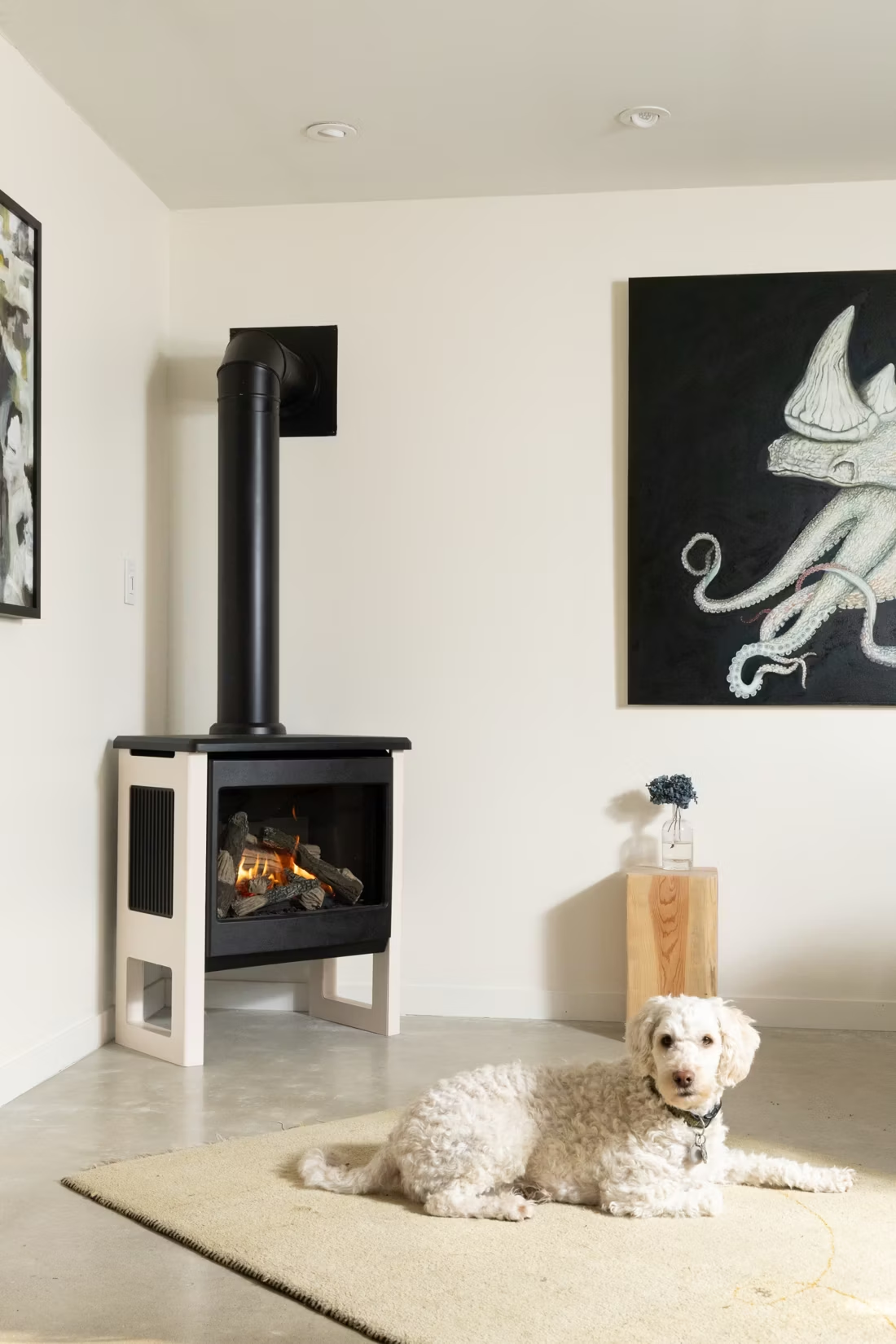
A gas fireplace is a fully built-in unit framed into a wall—typically used in new construction or a larger remodel. A gas insert slides into an existing masonry fireplace opening and uses the existing chimney (with a liner) as its vent path, which fits a lot of Forest County's older housing stock. A gas stove is freestanding, sitting on its own hearth pad like a wood stove would, and works well in a cabin or camp near Cook Forest that doesn't have an existing fireplace to convert. For most homeowners here with an existing hearth, the insert is the simplest and most affordable route.
Do I need a permit to install a gas fireplace in Forest County?
Yes—a building permit and gas line work (whether natural gas or propane) generally require sign-off from your local municipality, whether that's Tionesta Borough or one of the county's smaller townships. Because Forest County is unincorporated in many areas, permitting can run through the township rather than a single county office, so it's worth confirming the right jurisdiction before work starts. A licensed gas-fitter is required for the fuel line regardless of which fuel you're on, which is one reason working with an established local hearth dealer—rather than coordinating separate trades yourself—saves time in a county without a lot of contractor overlap.
What's the difference between vented and vent-free gas fireplaces?
Vented (direct-vent) fireplaces pull combustion air from outside and exhaust it back outside through a sealed pipe—the standard, code-compliant choice everywhere, including Pennsylvania. Vent-free units burn directly into the room without external venting; they're legal in Pennsylvania but come with strict room-sizing rules and oxygen-depletion sensors, and they add moisture and combustion byproducts to indoor air. For a county with a long, demanding heating season and homes that are often older and less tightly sealed, direct-vent units are the more practical choice—they deliver full heat output without adding humidity load inside the house during a long Forest County winter.
How often should my gas fireplace be serviced?
Plan on an annual inspection, ideally in early fall before the heating season starts in earnest. A technician checks the burner, pilot assembly, venting, and gas connections (propane or natural gas), and cleans the glass and interior. Given how spread out service providers are in a low-population county like Forest, it's worth scheduling this before the first cold snap rather than waiting until a unit acts up mid-winter—travel time to a rural property can mean a longer wait for an appointment once demand picks up.
Gas vs. wood—which is right for my home?
Wood is deeply practical in Forest County: the Allegheny National Forest issues cutting permits for $20 per cord from May through October, and oak, hickory, maple, and cherry are all abundant and burn well. Wood also keeps working when the power and the propane truck both can't get down your road in an ice storm. Gas trades that self-sufficiency for convenience—instant on-off heat, no splitting or hauling, and a cleaner look, but it depends on either a propane delivery or a natural gas line reaching your property. Many Forest County households end up with both: gas for daily, no-fuss heat in the main living space, and a wood stove or insert elsewhere as backup and for the ritual of a real fire.
Is my gas fireplace wasting gas?
If it was installed more than 15 years ago, probably. Older gas fireplaces keep a standing pilot light burning all the time, and that little flame can cost a couple hundred dollars a year. Newer models use pilot-on-demand ignition—the pilot lights only when you use the fireplace and goes out when you turn it off.
Why is my open fireplace making my house colder?
Open fireplaces suck—literally. As the fire burns, it consumes air your furnace already paid to heat and pulls it out through the chimney, so the house is actually colder after the fire goes out than before you lit it. An insert fixes this: it seals the chimney, puts fixed glass across the front, and turns that hole in your house into a real heat source.
What is an in-home preview and do I need one?
It's a visit where a hearth professional measures your space, confirms the model you picked actually works in your home, and walks the specs—framing, gas line, venting, finish work—before anything is ordered. Some details you just can't know until you see the house. Never make a down payment without one; it's the single most-skipped step that burns buyers.
How much should I budget for a fireplace?
For an average home—covering the fireplace, the vent pipe, and basic installation—a budget between $3,900 and $5,500 gives you a lot of options across wood, gas, and pellet. By the time you add finish work, gas line, and electrical, the average complete installation lands between $5,000 and $12,000 all-in. In a remodel or new build, a good rule is to put about 2.5% of the total project cost toward the fireplace.
Find your gas fireplace in Forest County.
Tell us about your home—including whether you're on propane or one of Forest County's limited natural gas lines—and we'll match you with a trusted local dealer and send you a free Project Guide & Parts List for your gas fireplace project, right down to the vent kit.
Find Your Fireplace →