
Heat your home through long Allegheny National Forest winters.
Wood, gas, pellet, and electric fireplace resources for Tionesta, Marienville, West Hickory, Kellettville, Cooksburg, and every community tucked into Forest County's forestland. Find the right unit and get matched with a local hearth retailer who actually services this corner of Pennsylvania.
Every Project Starts From One of These Five Situations
Deep hardwood forests, deep winters, in Forest County, Pennsylvania.
Forest County is Pennsylvania's least-populous county—just over 3,000 residents spread across a landscape that's mostly Allegheny National Forest. Winters here run long and cold: an average winter low near 13°F, roughly 7,206 heating degree days a year, and a climate zone (5A) that puts Forest County in the same heating-load range as Buffalo, New York. The forest itself is the fuel supply—oak, hickory, maple, and the region's famous black cherry (prized by furniture makers and just as prized by wood-stove owners once it's seasoned a full year). Firewood cutting permits on national forest land go through the Allegheny National Forest office, and that permit system has quietly kept woodsheds full here for generations.
What you'll find on this hub: hearth retailers, service technicians, and fuel suppliers who cover Forest County's scattered communities—Tionesta on the Allegheny River, Marienville to the south, West Hickory and Kellettville along the water, and the unincorporated crossroads in between. Because the county is so sparsely populated, several of the businesses listed here are based in neighboring Warren or Clarion County and drive in for installs and service calls. Pick your fuel below for local dealers, typical installation costs, and the resources that match your project—whether you're heating a hunting camp near the national forest boundary or a year-round home in Tionesta.
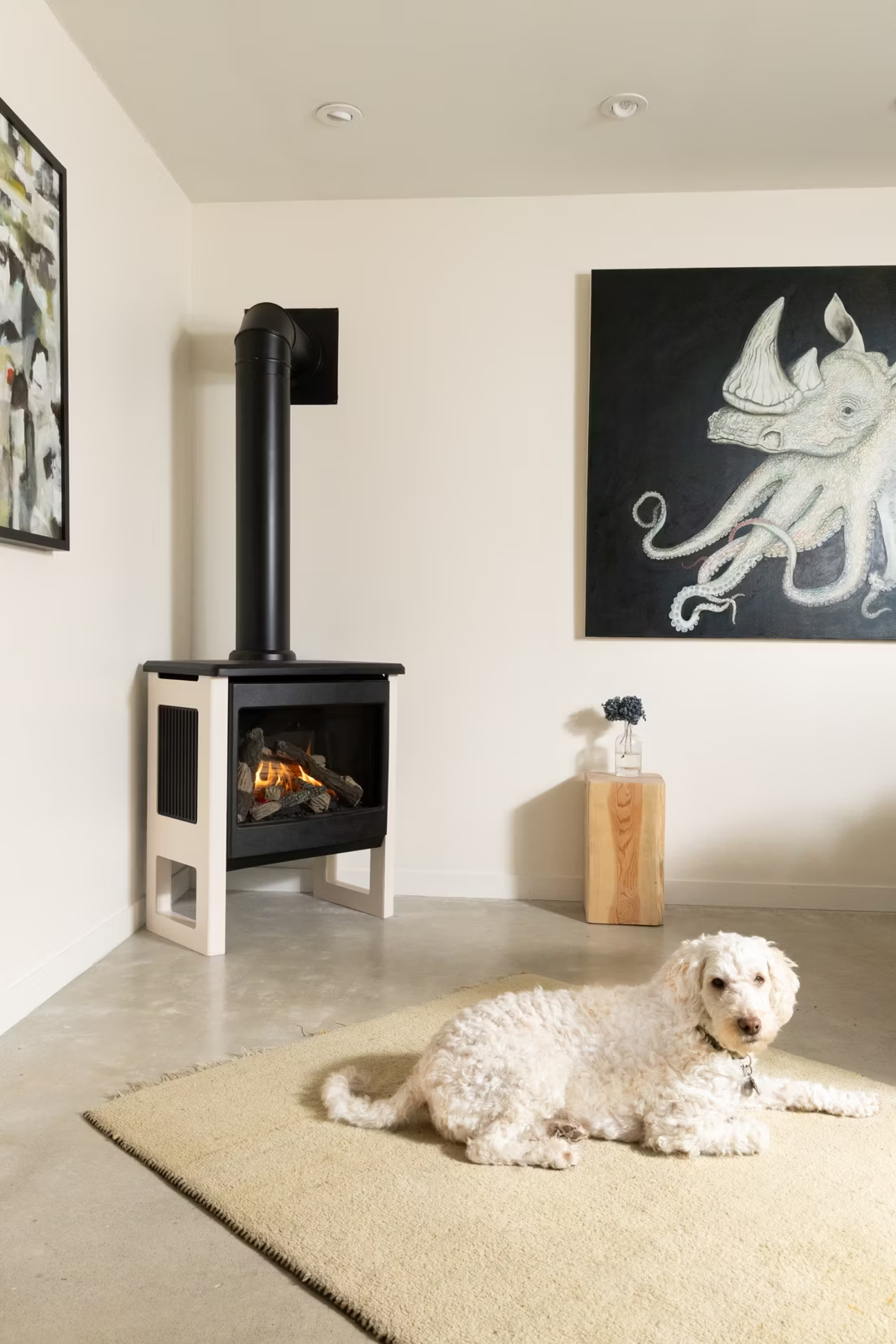
Four fuels. One honest answer for Forest County.
Three steps. No salesperson until you're ready.
Tell us about your project
Your zip code, your situation, and the fuel you're leaning toward—or let the answers point you to one.
See what's actually available
The brands dealers within 100 miles genuinely carry—real options, never a catalog mirage.
Get your dealer & Project Guide
A trusted local dealer, plus the free Project Guide & Parts List that names every component of the job.
Frequently Asked Questions
Which fuel works best in Forest County?
Wood remains the backbone fuel here, and for good reason—Forest County sits inside the Allegheny National Forest, and cutting permits keep firewood costs low for residents willing to buck and split their own oak, hickory, maple, or cherry. A catalytic or high-efficiency stove can carry a home through a 13°F overnight low without burning through a full cord in a week. Propane fills the gas role for most homes, since natural gas mains don't reach far into a county this rural—propane fireplaces and inserts offer instant, thermostat-controlled heat with none of the wood-hauling labor. Pellet is a strong middle option: regional brands like Energex, Hamer Pellet Fuel, and Greene Team Pellet Fuel are all sold within driving distance, so supply isn't the obstacle it can be in more remote parts of the country. Electric fireplaces work well as supplemental heat in bedrooms or additions, but given the heating load here, they're not a realistic primary source through a full Forest County winter. Most year-round homes end up pairing wood or pellet as the main heater with propane or electric backup in secondary rooms.
Do I need a permit to install a fireplace in Forest County?
It depends on where you're building and what you're installing. Forest County itself doesn't run a countywide building permit office—most municipalities here are small enough that permitting, when required, falls under Pennsylvania's Uniform Construction Code and is handled at the township or borough level, or coordinated directly by your installer for code compliance and gas-line work. If you're cutting your own firewood on Allegheny National Forest land, that's a separate matter—a firewood permit from the Allegheny National Forest office, not a construction permit. Gas fireplace or propane installations typically require a licensed gas-fitter for the fuel line connection regardless of local permitting rules. Most hearth retailers who regularly work in a rural county like this one already know which townships require paperwork and which don't, and they'll flag it before install day.
Are there air quality restrictions on wood burning in Forest County?
No—Forest County has no listed air quality non-attainment issues, winter inversion problems, or wildfire smoke concerns, which puts it in a different position than western wood-burning regions that see curtailment days. There's no local burn-ban program to check before lighting a fire here. That said, general safety codes around clearance, chimney height, and spark arrestors still apply to any wood-burning installation, and a well-seasoned load of local oak or cherry (moisture content under 20%) will always burn cleaner and produce less visible smoke than green wood, regardless of regulation.
Can one local hearth retailer handle all four fuel types?
Given Forest County's population of roughly 3,000, most of the retailers who serve this area are set up to be generalists rather than single-fuel specialists—a rural market this small can't support four separate niche stores. Businesses like Tionesta Hearth & Home and Allegheny Stove Supply typically carry wood, gas/propane, and pellet units under one roof, with electric fireplaces available as a smaller line. Some dealers based in neighboring Warren or Clarion County that regularly service Forest County customers carry the full four-fuel lineup, including electric built-ins. If you're comparing fuels side by side, a multi-fuel dealer with working showroom displays is worth the extra drive.
How does service work in a county this remote?
Most chimney sweeps, gas techs, and pellet service providers covering Forest County are based outside it—commonly out of Warren, Clarion, or Franklin—and build the drive time into their pricing. Expect a modest travel fee for service calls out toward Kellettville, Cooksburg, or the more remote national forest access roads, and expect scheduling to tighten up fast once cold weather hits. Booking your annual chimney sweep or gas inspection in September or October, before the first hard freeze, is the difference between a routine appointment and a multi-week wait in January. Camp and cabin owners who are only in the county part-time should plan service around their visit schedule rather than waiting for a problem to force the issue.
What's the typical cost range for fireplace installation across all fuel types in Forest County?
Costs run in line with rural Northeast pricing, with travel distance sometimes adding to labor. Wood stove or insert installation: roughly $4,000–$8,500 for a typical install, more if new masonry chimney work is involved. Propane fireplace, insert, or stove: roughly $4,000–$10,000, with cost driven mainly by whether an existing propane tank and line are already in place. Pellet stove or insert: roughly $4,000–$7,000 for a standard install. Electric fireplace: $200–$3,000 for the unit itself, plus $300–$1,000 in labor for anything beyond a simple plug-in wall unit. Because dealer travel time factors into rural pricing here, get a written quote before committing—it's part of what the local retailer match through this hub is meant to surface.
Does a fireplace add value to my home?
On average, a fireplace adds back to the home about the same amount you spent installing it. Add the monthly savings from heating the rooms you actually use instead of the whole house—often hundreds of dollars a year—and the value case is strong before you even count what a fire does for how your family uses the room.
How much should I budget for a fireplace?
For an average home—covering the fireplace, the vent pipe, and basic installation—a budget between $3,900 and $5,500 gives you a lot of options across wood, gas, and pellet. By the time you add finish work, gas line, and electrical, the average complete installation lands between $5,000 and $12,000 all-in. In a remodel or new build, a good rule is to put about 2.5% of the total project cost toward the fireplace.
Can a fireplace actually lower my heating bill?
Yes—by creating a comfort zone. A furnace heats every square foot of the house just to warm the one room you're in; a gas fireplace on low burns roughly a sixth of the gas a typical furnace does. Set the furnace around 55–60 degrees as a baseline, then heat the rooms your family actually uses. Families who heat this way commonly save $20–$60 a month.
Can I install a fireplace myself?
If you're putting a fire in your house on purpose, it's best to work with an expert. Unless you're genuinely experienced in framing, gas line, vent pipe, and the national code on clearances to combustibles, have a professional do it—and ideally the same company that sells you the fireplace, so warranty, service, and liability all live under one roof.
Stove and Fireplace Dealers in Forest County
Listings include WhyFire partner dealers, dealers we have verified as authorized for the brands we recommend, and established local businesses that carry hearth products. Every listing shows which one it is. The ones marked Preferred run on WhyFire's software, so they can show you real pricing and book your appointment right here. No manufacturer pays for placement. How we verify dealers →
Reeds Chimney Cleaning
Peterson Refrigeration & Ac
CJ's Home Decor & Fireplaces
Find your fireplace in Forest County.
Tell us about your project and we'll match you with a trusted local dealer serving Forest County, plus send a free Project Guide & Parts List—the exact parts, vent kit included, and the dealer we recommend for your home.
Find Your Fireplace →