
Real fireplace warmth for Forest County, PA—no chimney, no permit hassle.
With only 3,191 residents spread across camps, cabins, and small boroughs near the Allegheny National Forest, Forest County has plenty of rooms and seasonal properties that need heat without a venting project. Find the right electric fireplace and connect with a trusted local dealer.
Every Project Starts From One of These Five Situations
Instant heat and ambiance, without the venting work.
Forest County is Pennsylvania's least populated county, and much of it sits inside or beside the Allegheny National Forest. That means a mix of year-round homes in places like Tionesta and Marienville and a large number of seasonal camps and cabins that sit closed up for weeks at a time. At climate zone 5A with a long, demanding heating season—on par with Burlington, Vermont—and average winter lows around 13°F, this is a genuinely cold county. Most of it heats primarily with wood, given the abundant oak, hickory, maple, and cherry on the landscape, or with pellet stoves. Electric fireplaces fill a different role here.
For a camp that's unoccupied through the work week, an electric fireplace means no chimney to inspect, no gas line to run, and no combustion risk if a pilot light gets left unattended over a long stretch. For a finished basement, a sunroom addition, or a bedroom too far from the wood stove's reach, an electric unit adds real zone heat and the look of a fire with a standard outlet or a single dedicated circuit. It won't replace a wood or pellet stove as primary heat in a county this cold, but as supplemental warmth and ambiance in a specific room, it's often the simplest, least invasive option available to Forest County homeowners and camp owners alike.
Three steps. No salesperson until you're ready.
Tell us about your project
Your zip code, your situation, and the fuel you're leaning toward—or let the answers point you to one.
See what's actually available
The brands dealers within 100 miles genuinely carry—real options, never a catalog mirage.
Get your dealer & Project Guide
A trusted local dealer, plus the free Project Guide & Parts List that names every component of the job.
Frequently Asked Questions
How much does an electric fireplace installation cost in Forest County?
Electric fireplaces are the least expensive fireplace fuel type to install because there's no chimney, no gas line, and typically no combustion permit involved. A plug-in freestanding unit or a simple insert into an existing opening usually runs $300 to $600 installed. A built-in wall unit or a linear electric fireplace that requires framing, trim work, and a dedicated 120V or 240V circuit run by a licensed electrician typically lands between $800 and $2,000. For a camp with older wiring near Tionesta or out toward the national forest boundary, budget on the higher end if the electrical panel needs upgrading to support a new circuit.
What size electric fireplace do I need for a Forest County cabin or camp?
Most electric fireplaces are rated to supplement heat in a single room of 400 to 1,000 square feet rather than heat a whole structure—which matters in a county with a long, demanding heating season and winter lows around 13°F. For a camp living room or a finished basement, a 1,500-watt unit with a strong fan-forced heater is usually enough to take the chill off. For larger open rooms or camps with minimal insulation, look at wider linear units or plan on the electric fireplace working alongside a wood stove or baseboard heat rather than carrying the room alone.
Can an electric fireplace be my only heat source in Forest County?
Not reliably. Forest County's climate—a long, demanding heating season and stretches of single-digit and low-teens overnight temperatures—is demanding, and most electric fireplaces are built and rated as zone heaters for one room, not whole-home systems. For a year-round residence in Tionesta or Marienville, an electric fireplace works well as supplemental heat in a living room or bedroom, paired with a furnace, wood stove, or pellet stove for the rest of the home. For an occasionally used camp, it can serve as the main heat source during short stays, provided the space is small and reasonably well insulated.
What's the difference between an electric fireplace, insert, and stove?
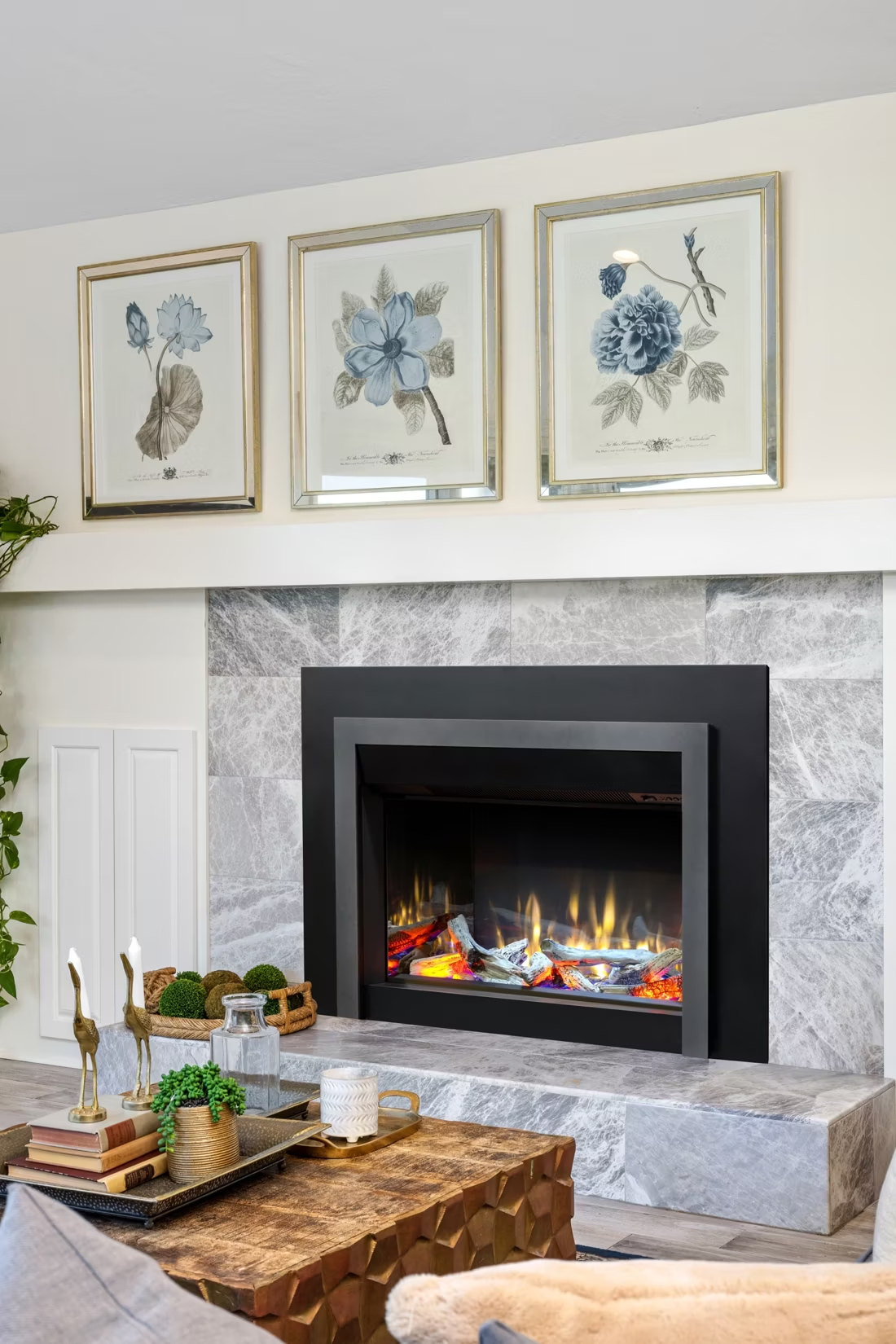
An electric fireplace is typically a built-in or wall-mounted unit designed to look like a framed fireplace, often with a mantel surround. An electric insert is sized to slide into an existing masonry fireplace opening, letting you keep the look of an old wood-burning fireplace while eliminating the chimney draft and ash cleanup. An electric stove is a freestanding cabinet-style unit that mimics a wood stove's silhouette, popular in cabins and camps around Forest County where that look fits the setting. All three plug into standard household power or a dedicated circuit, and none require venting.
Do I need a permit to install an electric fireplace in Forest County?
A plug-in electric fireplace that uses an existing outlet generally doesn't require a permit, since there's no combustion appliance and no new gas or venting work involved. If your installation requires a new dedicated electrical circuit—common for larger built-in units—the electrical work itself typically needs to be done by a licensed electrician and may require an electrical permit through the local jurisdiction. Because Forest County's building department covers a small, spread-out population, it's worth confirming permit requirements before work begins, especially for older camps with dated wiring.
What's the best electric fireplace for a cold Pennsylvania winter like Forest County's?
Look for a unit with a 1,500-watt fan-forced heater rated for the actual square footage of the room you're heating, not just the overall floor plan—with average winter lows near 13°F, undersized heaters will run constantly and still fall short. Realistic flame technology and adjustable heat settings let you run the unit for ambiance alone during mild stretches and full heat output during Forest County's colder snaps. For camps that sit empty part of the week, units with a built-in thermostat that can be set to a low-maintenance mode help prevent pipes from freezing without running the heater at full output the whole time.
Electric vs. wood—which is right for my Forest County property?
Wood remains the backbone of home heating for much of Forest County, and with oak, hickory, maple, and cherry all common on the landscape—plus Allegheny National Forest cutting permits running about $20 per cord from May through October—it's an affordable, high-output option that keeps working when the power goes out. Electric offers none of that fuel-gathering effort or backup capability, since it stops working the moment the power does, but it also requires no chimney, no ash, and no wood storage. Many Forest County homeowners use both: wood or pellet as the primary or backup heat source, and an electric fireplace in a room where running a chimney isn't practical.
Will my electric fireplace still work during a power outage?
No—electric fireplaces require power to run both the flame effect and the heater, so they go dark the moment the power does. This matters in Forest County, where winter storms in a heavily forested, rural area can knock out power for longer stretches than in more developed parts of the state. If backup heat during outages is a real concern for your home, pair an electric fireplace with a wood stove or a pellet stove with a battery backup rather than relying on electric alone.
Electric vs. pellet stove—which makes more sense for my Forest County home?
Pellet stoves, using bagged fuel from regional suppliers like Energex, Hamer Pellet Fuel, or Greene Team Pellet Fuel, deliver real whole-room or whole-home heat output and can serve as a primary heat source in Forest County's cold climate—but they need a vent through an exterior wall or roof, a hopper to load, and electricity to run the auger and blower. Electric fireplaces need none of that installation work, run on plug-in power, and are far simpler to add to an existing room, but their heat output tops out at zone-heating levels. For a camp or an accent room, electric is usually the simpler answer. For year-round primary heat, pellet is the better-performing choice.
Can I put a TV above my fireplace?
Yes—with an asterisk. Fireplaces are hot and TVs don't like heat. Either put a mantel between them to deflect rising warmth, or choose a fireplace with heat-management technology that creates a cool zone on the wall above—the wall stays around 125 degrees, barely warm, while the room still gets full heat. If you like clean lines and don't want a mantel, heat management is the answer.
Does an electric fireplace need a vent or chimney?
No—that's its superpower. An electric fireplace needs a wall and an outlet, period. No vent pipe, no gas line, no clearances to design around, which is why it works in bedrooms, offices, apartments, and walls where venting a gas or wood unit would be impractical or impossible. Installation is typically the simplest and least expensive of any fireplace type.
Can a fireplace actually lower my heating bill?
Yes—by creating a comfort zone. A furnace heats every square foot of the house just to warm the one room you're in; a gas fireplace on low burns roughly a sixth of the gas a typical furnace does. Set the furnace around 55–60 degrees as a baseline, then heat the rooms your family actually uses. Families who heat this way commonly save $20–$60 a month.
Does a fireplace add value to my home?
On average, a fireplace adds back to the home about the same amount you spent installing it. Add the monthly savings from heating the rooms you actually use instead of the whole house—often hundreds of dollars a year—and the value case is strong before you even count what a fire does for how your family uses the room.
Find your electric fireplace in Forest County.
Tell us a bit about your home or camp and we'll match you with the right electric fireplace, insert, or stove—plus a free Project Guide & Parts List and a trusted local dealer to install it.
Find Your Fireplace →