
Keep Your Family Warm and Safe—No Matter What
Between tight rowhome lots and a milder Delaware County winter, most Collingdale homes run on gas or electric. For the households where wood still makes sense, we'll connect you with a local specialist who knows the constraints.
Every Project Starts From One of These Five Situations
A dense borough where gas and electric do the heavy lifting.
Collingdale is a small, densely built borough of under a square mile, packed with rowhomes and twins that share walls and sit close to the lot line. That layout leaves little room for the clearances, chimney chases, and exterior venting a wood stove needs—and it's a big part of why wood heat never took hold here the way it did in more rural corners of Pennsylvania. The climate doesn't push homeowners toward wood either: at climate zone 4A with about 4,510 heating degree days and winter lows averaging 26°F, Collingdale is meaningfully milder than the inland and northern parts of the state, let alone genuinely cold-climate places like Burlington, VT or Duluth, MN, where wood heat is a practical necessity rather than a lifestyle choice.
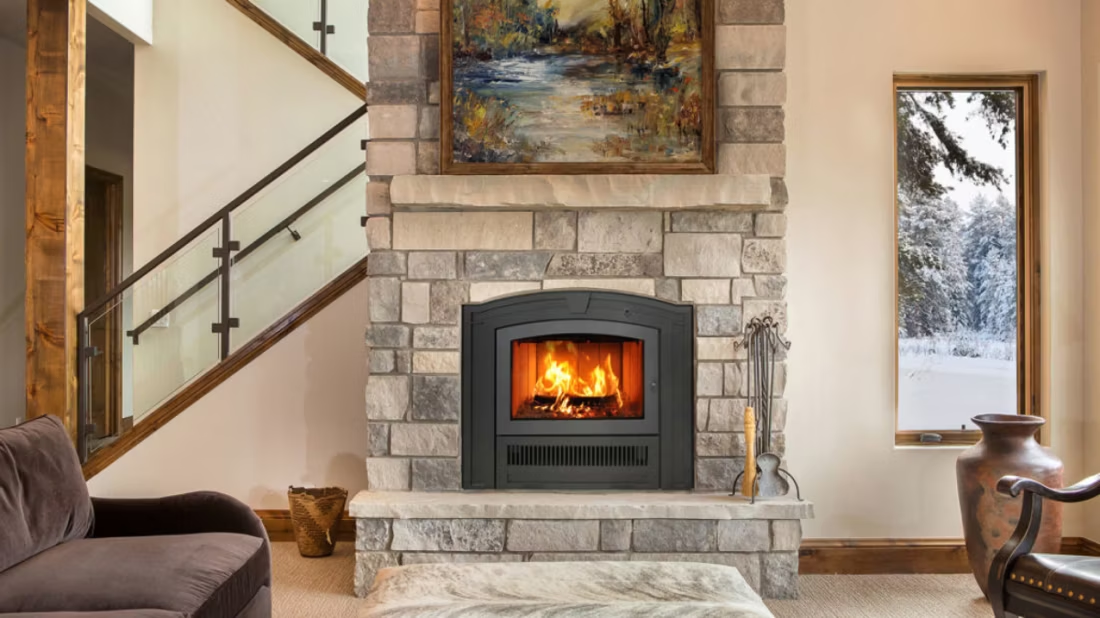
None of that means wood is off the table. A handful of Collingdale homeowners with detached houses, an existing masonry fireplace from the borough's older housing stock, or a stronger appetite for backup heat during a PECO outage still install a wood-burning insert or freestanding stove. Regional hardwoods like oak, hickory, maple, and cherry are readily available from Delaware County firewood dealers, and a well-fitted insert can turn a rarely used fireplace into real supplemental heat. It's simply a smaller, more specialized project here than in colder or more rural markets—which is exactly why it pays to work with an installer who's done it in a borough like this one.
Three steps. No salesperson until you're ready.
Tell us about your project
Your zip code, your situation, and the fuel you're leaning toward—or let the answers point you to one.
See what's actually available
The brands dealers within 100 miles genuinely carry—real options, never a catalog mirage.
Get your dealer & Project Guide
A trusted local dealer, plus the free Project Guide & Parts List that names every component of the job.
Frequently Asked Questions
How much does a wood stove or insert cost to install in Collingdale?
Because so few Collingdale homes install wood-burning appliances, there isn't much hyperlocal pricing data to point to. Nationally, a wood insert going into an existing masonry fireplace typically runs $3,500 to $7,500 depending on the unit and liner work, while a freestanding stove requiring new Class A chimney pipe through a rowhome roofline can run higher once the venting path and clearance framing are accounted for. Given the tight lot lines common in Collingdale, get a firm in-home quote before assuming a number—clearance-to-combustibles rules alone can change the scope significantly.
Is a wood stove even practical in a Collingdale rowhome?
It depends on the home. Attached rowhomes with shared party walls have real limits on where a chimney chase or sidewall vent can go, and Collingdale Borough's code enforcement office will review clearance-to-combustible and setback requirements before permitting any solid-fuel appliance. Detached homes, corner lots, and twins with more exterior wall exposure have far more flexibility. If you're in a tightly attached row, a wood-burning option is worth a conversation with a local installer early—before you fall in love with a specific stove—so you know what's actually buildable on your lot.
What kind of firewood is available around Collingdale?
The hardwood mix common to this part of Delaware County—oak, hickory, maple, and cherry—burns hot and seasons well, and it's the same wood most regional suppliers around greater Philadelphia stock. Because wood isn't a dominant heating fuel here, dedicated firewood delivery services are less common than in rural Pennsylvania counties, so expect to plan further ahead and buy seasoned wood rather than green, since there's less of a built-in local supply chain to lean on.
Should I get a wood stove or a wood insert for my Collingdale home?
If your home already has a working masonry fireplace—common in Collingdale's older housing stock—an insert is almost always the better fit. It uses the chimney you already have, closes off the heat loss of an open hearth, and doesn't require finding new space for clearances. A freestanding stove makes more sense in a detached home or an addition where there's no existing chimney to work with, but that also means building a full venting path from scratch, which is a bigger project on a small urban lot.
Do I need a permit to install a wood stove in Collingdale?
Yes. Any new solid-fuel appliance requires a building permit reviewed by Collingdale Borough's code enforcement office, and the installation needs to meet current EPA emissions standards along with local clearance-to-combustible rules. Because wood installs are infrequent here, it's worth confirming with the borough directly before finalizing a stove choice—a certified local installer who has pulled these permits before will know exactly what the reviewer expects to see.
What size or style of wood stove makes sense for Collingdale's climate?
With about 4,510 heating degree days and winter lows averaging in the mid-20s, Collingdale doesn't demand the 20-plus-hour catalytic burn times that homes in genuinely cold climates like Bozeman, MT or Fargo, ND need to get through the night. Most Collingdale installs make more sense as a mid-size, non-catalytic stove or insert used for supplemental heat, ambiance, and outage backup rather than as a primary heat source running around the clock all winter.
How often does a wood-burning chimney need inspection in Collingdale?
The CSIA recommends an annual inspection for any wood-burning appliance regardless of how often it's used, and that holds in Collingdale too—if anything, infrequent-use fireplaces and inserts can build creosote just as easily as heavily used ones because they're not always monitored closely. Given how few chimney sweeps specialize in wood-burning systems in this immediate area compared to gas service techs, it's worth booking your annual sweep before burning season rather than waiting for a slot to open up in November.
Where can I buy or have firewood delivered near Collingdale?
Firewood delivery in the greater Philadelphia and Delaware County area typically runs $250 to $350 per cord depending on species and seasoning, with oak and hickory commanding the higher end of that range for their longer burn times. Because wood isn't the dominant local heating fuel, there isn't a dense network of dedicated firewood suppliers the way there is in rural Pennsylvania—ordering a season's supply ahead of the first cold snap is the safer bet rather than trying to source wood mid-winter.
Does wood heat make sense compared to gas or electric in Collingdale?
For most Collingdale households, no—gas and electric service through PECO Energy are the practical default, and with winters this mild relative to true cold-climate markets, the case for wood as primary heat just isn't there. Where wood still earns its place is as backup: a stove or insert that keeps a room warm during a PECO outage, or preserves the character of an existing masonry fireplace rather than leaving it unused. If either of those describes your situation, wood is worth a real look; if you're simply choosing a primary heat source for a rowhome, gas or electric will almost always be the more practical path.
Why is my open fireplace making my house colder?
Open fireplaces suck—literally. As the fire burns, it consumes air your furnace already paid to heat and pulls it out through the chimney, so the house is actually colder after the fire goes out than before you lit it. An insert fixes this: it seals the chimney, puts fixed glass across the front, and turns that hole in your house into a real heat source.
Why is a fireplace insert so efficient?
An insert does two things: it seals the chimney completely, so you stop losing air you already paid to heat, and it radiates warmth into the room through the firebox and glass. Most add a heat-exchange fan that pulls cool room air underneath, wraps it around the hot firebox, and pushes it back out warm. Your home is more efficient before you've even lit the first fire.
Can I install a fireplace myself?
If you're putting a fire in your house on purpose, it's best to work with an expert. Unless you're genuinely experienced in framing, gas line, vent pipe, and the national code on clearances to combustibles, have a professional do it—and ideally the same company that sells you the fireplace, so warranty, service, and liability all live under one roof.
Does a fireplace add value to my home?
On average, a fireplace adds back to the home about the same amount you spent installing it. Add the monthly savings from heating the rooms you actually use instead of the whole house—often hundreds of dollars a year—and the value case is strong before you even count what a fire does for how your family uses the room.
Nearby Dealers
Hearth shops serving Collingdale and the surrounding area. Every listing shows whether it is a WhyFire partner, a dealer we have verified as authorized for the brands we recommend, or a local business carrying hearth products. No manufacturer pays for placement. How we verify dealers →
Rettinger Fireplace Systems Inc
Comfort Home & Hearth
Norristown Chimney
McCloskey's Garden & Hearth
Halligan's Hearth And Home
Ambler Fireplace And Patio
Halco Grills And Fireplaces
Maple Glen Mechanical
Kester Fireplace
South Jersey Hearthside LLC Dba Modern Gas Products
Athenia Mason Supply Wilmington LLC
Find your wood stove or insert option in Collingdale.
Tell us about your home and whether wood heat makes sense for it, and we'll match you with a trusted local dealer plus a free Project Guide & Parts List—the exact parts, venting, and next steps for your Collingdale project.
Find Your Fireplace →