
Find the right pellet stove for your Clinton County home.
Steady, thermostat-controlled heat for the ridge-and-valley winters around Lock Haven and the West Branch Susquehanna—matched with a local dealer who can size and install it right.
Every Project Starts From One of These Five Situations
Consistent heat without the wood-splitting.
Clinton County sits in Pennsylvania's ridge-and-valley country, with roughly 6,068 heating degree days a year and average winter lows around 18°F—a cold season on par with places like Madison, WI, that runs from late fall through early spring. Hardwood forests of oak, hickory, and maple cover the surrounding ridges, and plenty of county households already burn cordwood. But pellet stoves have found a solid footing here too, especially for homeowners who want the radiant, dry heat of a wood-burning appliance without cutting, splitting, or hauling cordwood themselves.
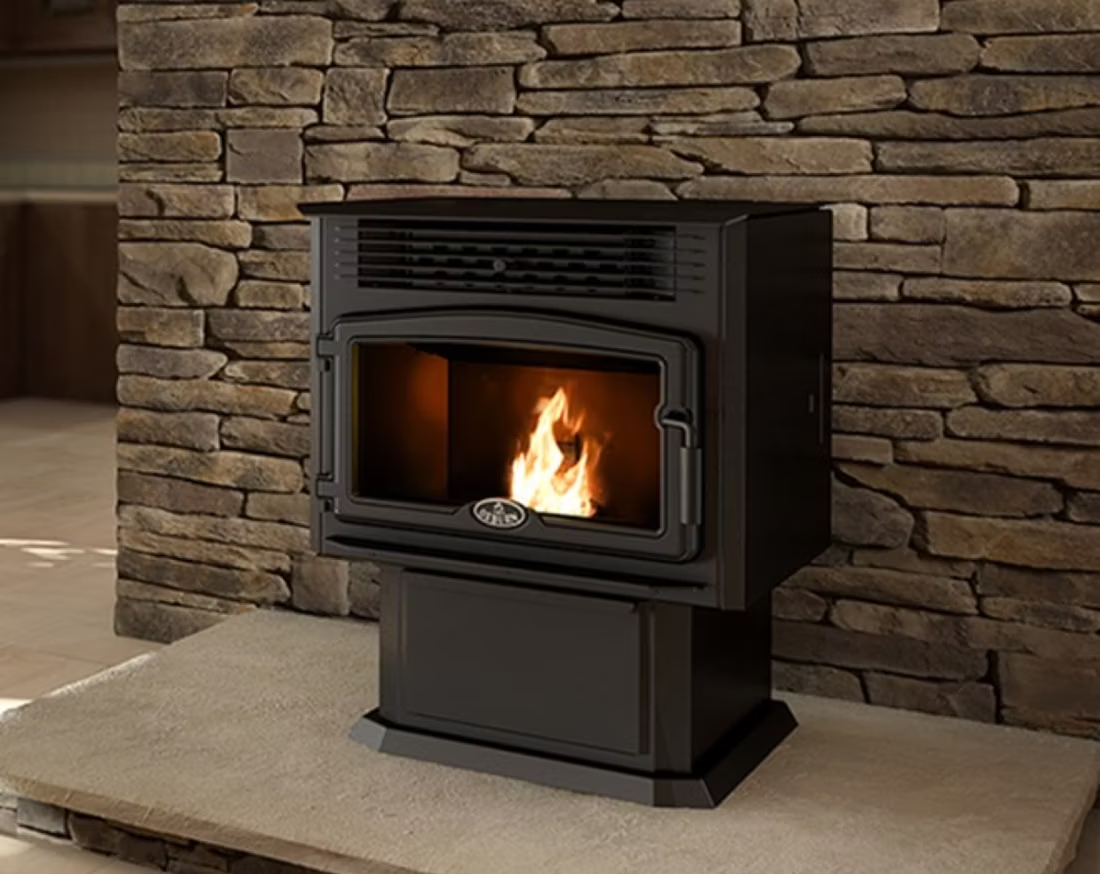
Regional pellet brands like Energex, Hamer Pellet Fuel, and Greene Team Pellet Fuel are sold through hearth and hardware retailers within a short drive of Lock Haven, Renovo, and Mill Hall, so fuel supply isn't a concern for most of the county. A pellet stove loads from a hopper, runs on a thermostat, and burns far more consistently than cordwood—a real advantage during the long stretches of single-digit nights that the West Branch valley sees most winters. With no local air quality non-attainment issues on record, there's no regulatory hurdle standing between a homeowner and a pellet install here—it comes down to matching the right stove size to the house.
Three steps. No salesperson until you're ready.
Tell us about your project
Your zip code, your situation, and the fuel you're leaning toward—or let the answers point you to one.
See what's actually available
The brands dealers within 100 miles genuinely carry—real options, never a catalog mirage.
Get your dealer & Project Guide
A trusted local dealer, plus the free Project Guide & Parts List that names every component of the job.
Frequently Asked Questions
How much does a pellet stove installation cost in Clinton County?
Pellet stove and insert installations in Clinton County typically run in the range most installers quote nationally for the appliance and labor involved, with the final number driven by whether you're installing a freestanding stove, converting an existing masonry fireplace to a pellet insert, or running new venting through an exterior wall. Homes without an existing chimney or vent path will land on the higher end once wall penetration and venting materials are factored in. A local dealer will walk your home and give you a firm number rather than a phone estimate.
What size pellet stove do I need for my Clinton County home?
Sizing depends on square footage, insulation, and whether the stove is your primary or supplemental heat source. Given Clinton County's roughly 6,068 heating degree days and regular single-digit overnight lows in the valley, a stove sized for the mid-to-larger end of its rated range is usually the safer call for full-time heating, while smaller units work fine for zone heating a living room or finished basement. Older farmhouses and homes with high ceilings around Lock Haven and the outlying townships often need more capacity than their square footage alone would suggest. A local dealer can walk the space and size it properly rather than going off a chart.
Where can I buy pellet fuel in Clinton County?
Regional pellet brands including Energex, Hamer Pellet Fuel, and Greene Team Pellet Fuel are available through hearth shops and farm supply retailers serving the Lock Haven and Mill Hall area. Buying by the ton ahead of the winter season, rather than by the bag as needed, is the more economical approach most local dealers recommend, and it guarantees supply before the coldest stretch of the year hits.
What's the difference between a pellet stove and a pellet insert?
A pellet stove is a freestanding appliance that sits on its own hearth pad and vents through a wall or existing chimney—it can go almost anywhere in the house with proper clearances. A pellet insert is built to slide into an existing masonry fireplace opening, turning an old open hearth into a sealed, thermostat-controlled heat source using the existing chimney as the vent path. For Clinton County homes with an older fireplace already in place, an insert is usually the more efficient upgrade; homes without an existing fireplace typically go with a freestanding stove instead.
Do I need a permit to install a pellet stove in Clinton County?
Most jurisdictions require a building permit for a new pellet stove installation, covering the appliance clearances, hearth pad, and venting termination point. The specifics can vary between the borough of Lock Haven and the surrounding townships, so it's worth confirming with your local code office before work starts. Most established local dealers handle the permit application as part of the installation, which is one of the practical reasons to work with a trusted installer rather than a big-box purchase and DIY install.
What's the best pellet stove for Clinton County's climate?
For a climate with regular single-digit overnight lows and a long heating season, look for a stove with a wide BTU range and a reliable auger feed system rather than the cheapest hopper capacity you can find—you want a unit that can run for a full winter without constant babysitting. Homeowners planning to heat a whole floor rather than a single room should lean toward the higher end of a model's rated square footage, since Clinton County's older farmhouse stock tends to run drafty. A local dealer familiar with the regional pellet supply (Energex, Hamer, Greene Team) can also steer you toward a stove that burns cleanly on the pellet brands actually stocked nearby.
How often does a pellet stove need cleaning and maintenance?
Pellet stoves need more frequent attention than a wood stove but far less than people expect: the ash pot should be emptied every few days of regular use, the glass wiped down as needed, and a full burn-pot and venting cleaning done every few weeks during heavy winter use. An annual professional inspection—checking the auger motor, exhaust fan, and venting for a full sweep—is recommended before each heating season starts, particularly given the long burn season Clinton County winters demand of a stove running as primary heat.
Will my pellet stove work during a power outage?
Pellet stoves require electricity to run the auger, igniter, and exhaust blower, so a standard unit will not operate during a power outage—this is one of the real tradeoffs versus a wood stove. Homeowners in more rural parts of Clinton County who worry about winter storm outages sometimes pair a pellet stove with a small battery backup or generator to keep it running, or keep a wood-burning appliance as backup heat. It's worth discussing outage risk with your local dealer if your property has a history of losing power in winter weather.
Pellet stove vs. wood stove—which is right for me?
Wood stoves work without electricity, burn free or low-cost cordwood cut from the abundant oak, hickory, and maple on the surrounding ridges, and offer the biggest heat output per load—but they require splitting, stacking, and tending a fire by hand. Pellet stoves load from a hopper, run on a thermostat, burn far more consistently overnight, and produce very little ash—but they need electricity and a steady pellet supply. For Clinton County households that want low-maintenance, consistent heat and don't mind an electrical dependency, pellet often wins. For those who value self-sufficiency during outages and already have a wood supply, a wood stove may be the better fit. Either way, a local dealer can walk you through both options for your specific home.
Why is a fireplace insert so efficient?
An insert does two things: it seals the chimney completely, so you stop losing air you already paid to heat, and it radiates warmth into the room through the firebox and glass. Most add a heat-exchange fan that pulls cool room air underneath, wraps it around the hot firebox, and pushes it back out warm. Your home is more efficient before you've even lit the first fire.
What do I measure to size a fireplace insert?
Four numbers tell you what fits: the front width, the front height, the back width, and the overall depth of your existing fireplace opening. Grab a tape measure, jot those down, and snap a photo of the wall—those two things do more to move your project forward than anything else you can do today.
How much should I budget for a fireplace?
For an average home—covering the fireplace, the vent pipe, and basic installation—a budget between $3,900 and $5,500 gives you a lot of options across wood, gas, and pellet. By the time you add finish work, gas line, and electrical, the average complete installation lands between $5,000 and $12,000 all-in. In a remodel or new build, a good rule is to put about 2.5% of the total project cost toward the fireplace.
Can a fireplace actually lower my heating bill?
Yes—by creating a comfort zone. A furnace heats every square foot of the house just to warm the one room you're in; a gas fireplace on low burns roughly a sixth of the gas a typical furnace does. Set the furnace around 55–60 degrees as a baseline, then heat the rooms your family actually uses. Families who heat this way commonly save $20–$60 a month.
Stove and Fireplace Dealers in Clinton County
Pellet Brands Stocked Around Clinton County
Manufacturers will point you to the nearest stocking dealer.
Get matched with a pellet dealer in Clinton County.
Tell us about your home and heating goals, and we'll match you with a trusted local dealer plus a free Project Guide & Parts List—the exact parts, vent kit, and recommended installer for your pellet project.
Find Your Fireplace →