
Find your electric fireplace in Clinton County.
Zero-clearance, plug-in heat for Clinton County homes—from Lock Haven to Renovo and the West Branch Susquehanna valley in between. Find the right unit and connect with a trusted local dealer.
Every Project Starts From One of These Five Situations
Supplemental warmth without the chimney.
Clinton County sits in the ridge-and-valley country of north-central Pennsylvania, with over 6,000 heating degree days a year and winter lows that regularly settle into the high teens. That's a real heating load—comparable to what homes in Madison, Wisconsin deal with most winters—and it's exactly why wood, gas, and pellet stoves remain common throughout the county, from Lock Haven to Renovo to the smaller boroughs tucked into the Bald Eagle and Sugar Valleys. Electric fireplaces don't compete with those fuels as a primary heat source here; instead, they fill a different role.
For Clinton County homeowners, an electric fireplace or insert is most often chosen for rooms where running a flue isn't practical—finished basements, apartments above Water Street storefronts in Lock Haven, bedrooms, or additions where a mason chimney was never part of the plan. Because electric units don't require venting or a chimney, there's no Clinton County building permit process to navigate the way there is for a new wood stove or gas line—installation is closer to hanging a large mirror than building a hearth. The tradeoff is heat output: electric units are built for zone comfort and ambiance in a single room, not for carrying a drafty farmhouse through a January cold snap the way a well-loaded wood stove or gas insert can.
Three steps. No salesperson until you're ready.
Tell us about your project
Your zip code, your situation, and the fuel you're leaning toward—or let the answers point you to one.
See what's actually available
The brands dealers within 100 miles genuinely carry—real options, never a catalog mirage.
Get your dealer & Project Guide
A trusted local dealer, plus the free Project Guide & Parts List that names every component of the job.
Frequently Asked Questions
How much does an electric fireplace installation cost in Clinton County?
Most electric fireplace and insert installations in Clinton County run $400 to $1,200, and that range covers nearly everything: a plug-in freestanding unit at the low end, and a built-in wall insert with dedicated 120V or 240V wiring, trim kit, and finish carpentry at the high end. Because there's no venting or chimney work involved, labor costs stay modest even in older Lock Haven and Renovo homes with older electrical panels—the main cost driver is whether an electrician needs to add a dedicated circuit. Local dealers can tell you within a few minutes of looking at your electrical panel and the wall you have in mind whether you're looking at a simple plug-in job or one that needs an electrician involved.
Do I need a permit to install an electric fireplace in Clinton County?
In most cases, no. Because electric fireplaces don't burn fuel and don't require venting, they fall outside the scope of the building permits that apply to wood stoves and gas fireplaces in Clinton County. The one exception is if you're having an electrician run a new dedicated circuit or breaker for a higher-draw built-in unit—that electrical work may require its own permit and inspection, separate from any fireplace-specific approval. A local dealer can tell you whether your chosen model needs new wiring or can run off an existing standard outlet.
Can an electric fireplace actually heat a room in a Clinton County winter?
An electric fireplace can comfortably supplement heat in a single room—most units put out around 5,000 to 5,500 BTUs, enough to noticeably warm a bedroom, den, or finished basement space. But with Clinton County averaging over 6,000 heating degree days a year and winter lows around 18°F, an electric unit isn't going to substitute for your furnace or a wood stove on the coldest nights. Think of it the way most local homeowners do: extra warmth and ambiance in the room you use most, layered on top of your home's main heating system, not a replacement for it.
What's the difference between an electric fireplace insert and a freestanding electric stove?
An electric insert is built to slide into an existing fireplace opening or a framed wall cavity, giving you a built-in look with a flush trim kit—a popular choice for Lock Haven homes with an old, unused masonry fireplace that's no longer worth running a liner in. A freestanding electric stove or mantel-style unit sits on the floor like furniture and can be moved room to room, which makes it a good fit for renters or homeowners who aren't ready to commit to a permanent installation. Both plug into a standard outlet in most cases, so the choice usually comes down to whether you're filling an existing opening or starting from a blank wall.
Will an electric fireplace work during a power outage?
No—this is the one real limitation worth knowing before you buy. Electric fireplaces require power to run both the heating element and the flame-effect display, so during an outage they shut off entirely, unlike a wood stove or a battery-backed gas insert. In Clinton County, where ice storms and downed lines in the ridge country around Renovo and the upper West Branch valley can knock out power for stretches, many households pair an electric fireplace for everyday comfort with a wood stove or gas appliance elsewhere in the home for backup heat during outages.
How does an electric fireplace compare to a pellet stove for a Clinton County home?
Pellet stoves burning local supply from brands like Energex, Hamer Pellet Fuel, or Greene Team Pellet Fuel put out real heat—often enough to serve as a home's primary or near-primary heat source through Clinton County's long winter—but they require a hopper to be loaded, a vent through an exterior wall or chimney, and electricity to run the auger and blower (so they also go down in an outage). An electric fireplace skips the venting and fuel handling entirely but tops out at a fraction of the heat output. If you want genuine heating capacity, a pellet stove is the better investment; if you want low-maintenance ambiance and zone warmth in one room without any installation hassle, electric wins.
Where's the best place to put an electric fireplace in an older Clinton County home?
Because electric units don't need a chimney or exterior venting, they work well in places older Lock Haven and Mill Hall homes often lack: finished basements, added family rooms, and bedrooms on upper floors far from the original hearth. An existing but unused masonry fireplace is also a strong candidate for an electric insert—it reuses the opening you already have without the cost of relining a chimney for gas or fixing decades of wear for wood use. A local dealer can walk your specific space and tell you whether a recessed wall unit, a mantel package, or an insert into your existing opening makes the most sense.
Are electric fireplaces expensive to run compared to gas or wood?
Running cost depends heavily on your electric rate and how many hours a day you use the heat function versus just the flame effect. Most 1,500-watt units cost somewhere in the range of 15 to 25 cents an hour to run on full heat at typical Pennsylvania electric rates—reasonable for a few hours of evening use in one room, but not designed to run all day the way a furnace does. Compared to burning oak or hickory cut locally, or running a gas insert off a propane tank, electric heat is generally the more expensive option per BTU—the tradeoff local homeowners are making is convenience and zero maintenance rather than lowest operating cost.
Electric vs. wood—which is right for my Clinton County home?
Wood—burning oak, hickory, maple, or cherry cut from the county's own hardwood forests—delivers real heat output, works with no electricity during outages, and has been the backbone heating choice in this part of Pennsylvania for generations. Electric delivers instant ambiance, zero maintenance, no venting, and the ability to install in rooms a chimney could never reach. For most Clinton County households, the two aren't really competing: wood or a gas insert handles serious winter heat in the main living space, and electric fills in a bedroom, basement, or second living area where running a flue was never realistic. A local dealer can help you figure out where each fuel makes sense in your specific floor plan.
Does an electric fireplace need a vent or chimney?
No—that's its superpower. An electric fireplace needs a wall and an outlet, period. No vent pipe, no gas line, no clearances to design around, which is why it works in bedrooms, offices, apartments, and walls where venting a gas or wood unit would be impractical or impossible. Installation is typically the simplest and least expensive of any fireplace type.
Can I put a TV above my fireplace?
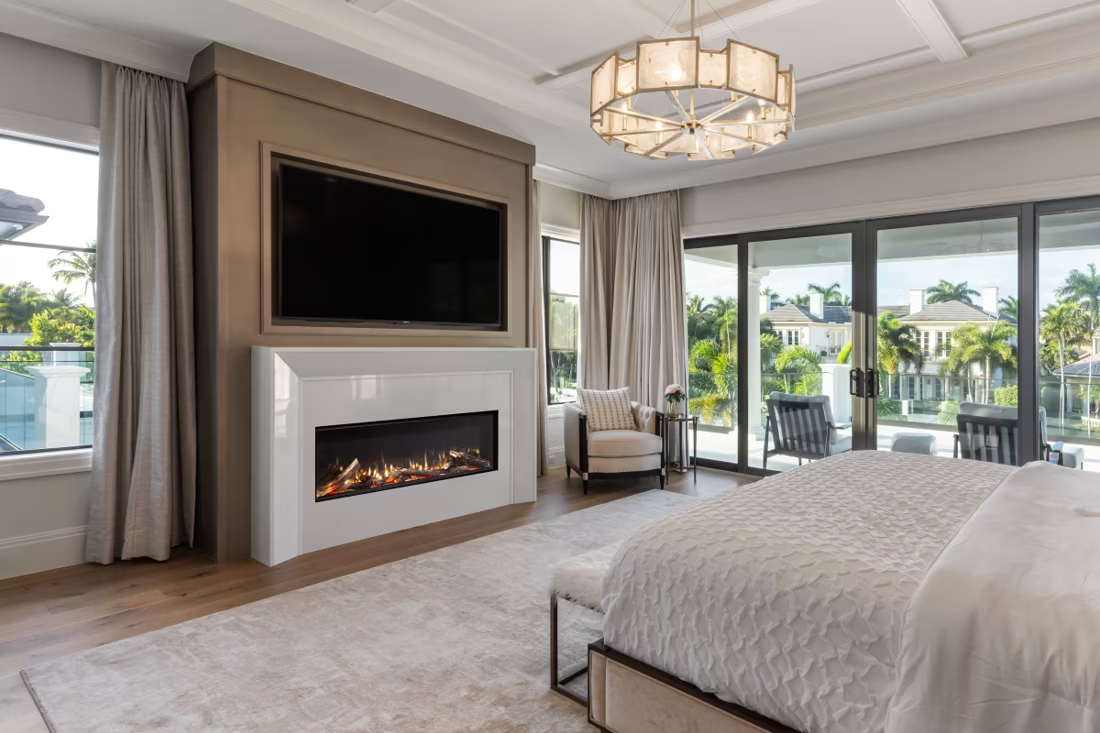
Yes—with an asterisk. Fireplaces are hot and TVs don't like heat. Either put a mantel between them to deflect rising warmth, or choose a fireplace with heat-management technology that creates a cool zone on the wall above—the wall stays around 125 degrees, barely warm, while the room still gets full heat. If you like clean lines and don't want a mantel, heat management is the answer.
How much should I budget for a fireplace?
For an average home—covering the fireplace, the vent pipe, and basic installation—a budget between $3,900 and $5,500 gives you a lot of options across wood, gas, and pellet. By the time you add finish work, gas line, and electrical, the average complete installation lands between $5,000 and $12,000 all-in. In a remodel or new build, a good rule is to put about 2.5% of the total project cost toward the fireplace.
What is an in-home preview and do I need one?
It's a visit where a hearth professional measures your space, confirms the model you picked actually works in your home, and walks the specs—framing, gas line, venting, finish work—before anything is ordered. Some details you just can't know until you see the house. Never make a down payment without one; it's the single most-skipped step that burns buyers.
Stove and Fireplace Dealers in Clinton County
Get your Clinton County electric fireplace Project Guide.
Tell us a bit about your home and we'll put together a free Project Guide & Parts List—the right electric fireplace or insert for your room, plus a match with a trusted local Clinton County dealer to install it.
Find Your Fireplace →